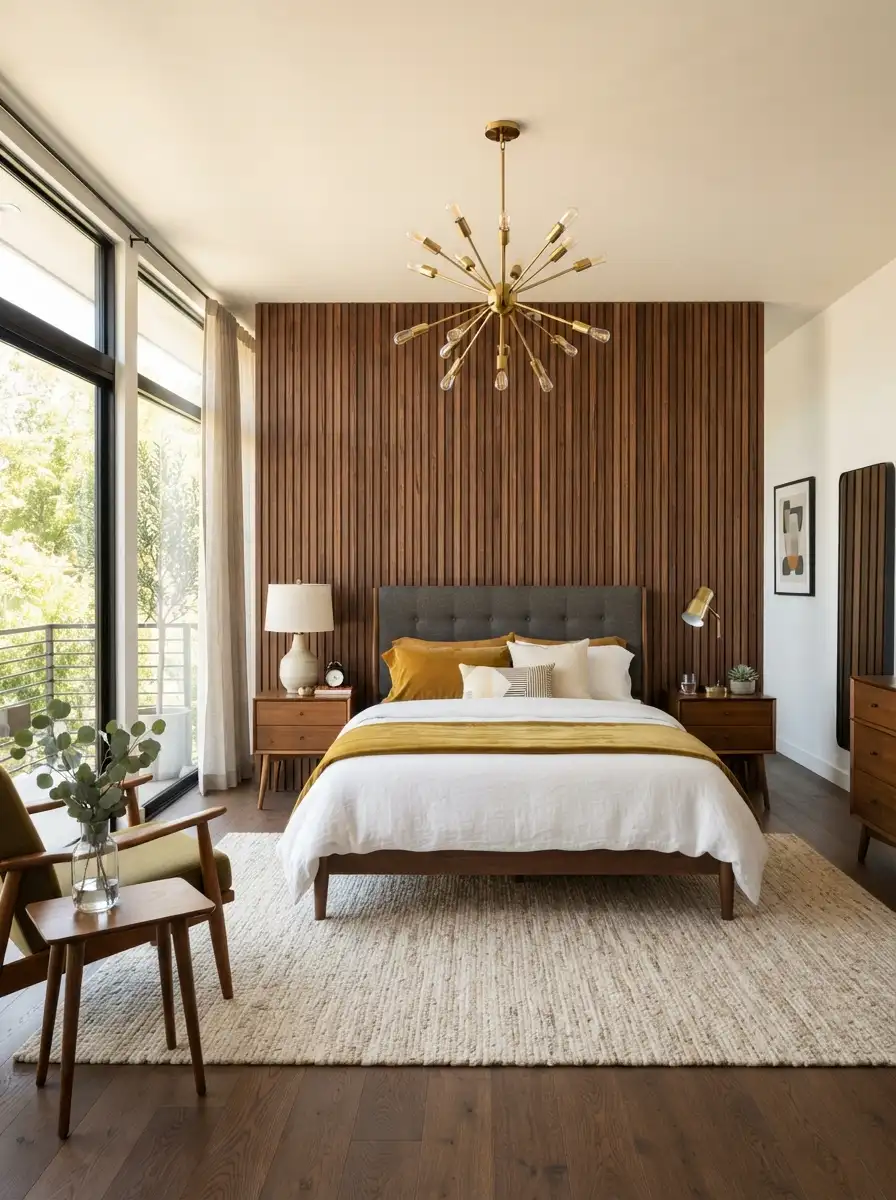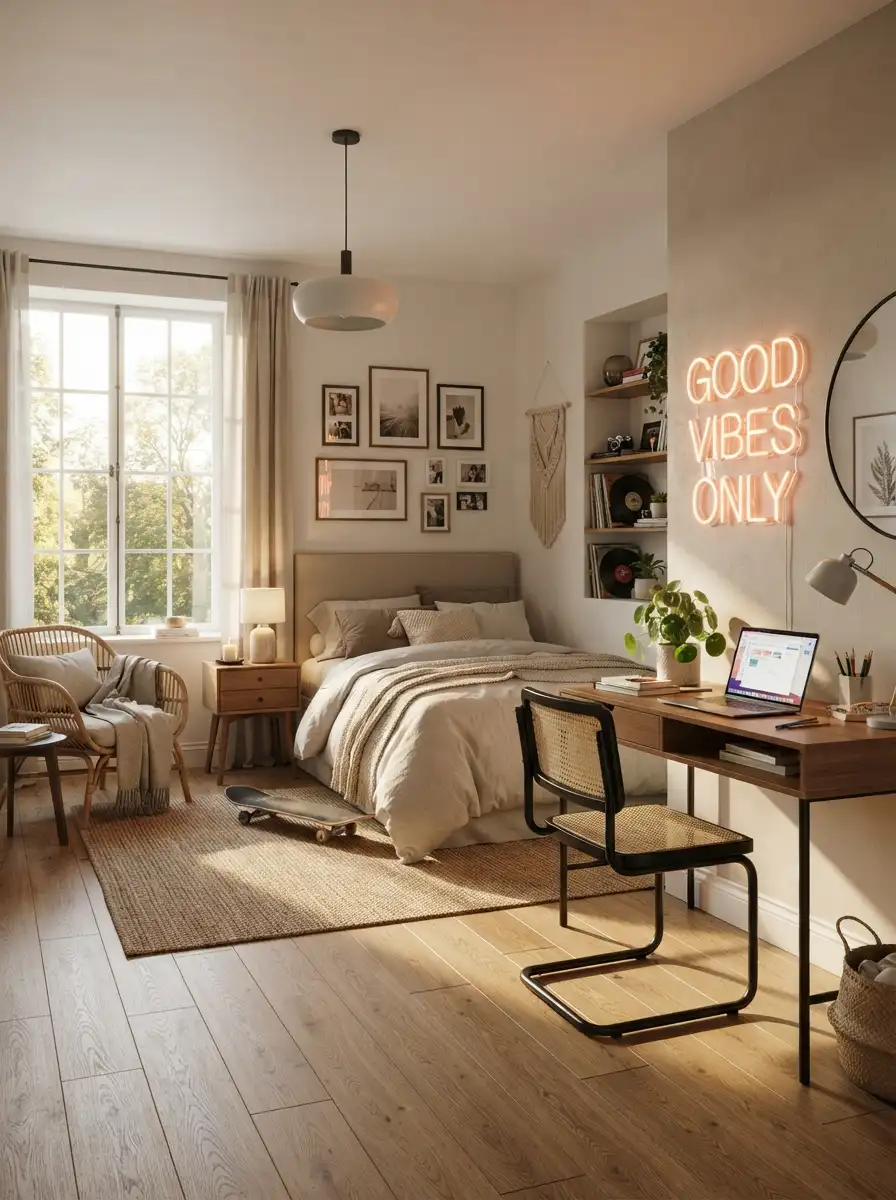
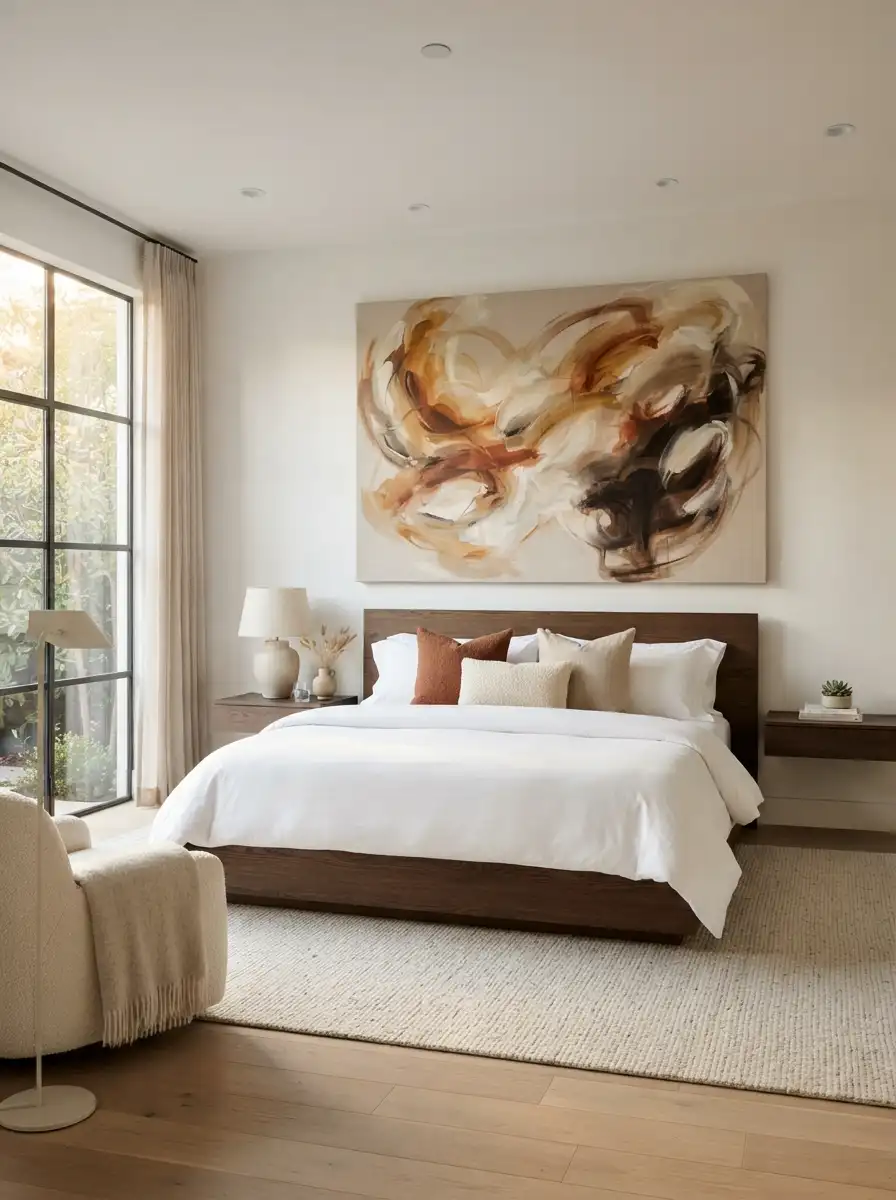
Bedroom wall art ideas are the defining elements that can instantly transform a standard, uninspired sleeping quarter into a highly curated, deeply personal sanctuary. When designing a home, the bedroom is often the last place we dedicate our decorating budget. We focus heavily on the living room to impress our guests, or the kitchen for its functional necessity. Yet, the bedroom is the most intimate space in your home. It is the room where you start your morning and where you retreat to decompress at night. The blank walls surrounding your bed are not just empty spaces; they are massive, blank canvases waiting to tell a visual story that dictates the entire mood of the room.
The artwork you choose for your bedroom walls does much more than just fill a void. It acts as the room’s primary focal point, anchoring the furniture and drawing the eye upward. It introduces essential color palettes, provides necessary texture, and establishes the foundational aesthetic of the space. A bedroom without art can feel sterile, incomplete, and deeply impersonal. Conversely, a bedroom with the right art feels intentional, luxurious, and completely finished.
Many homeowners struggle with bedroom art because they are intimidated by scale, proportion, and framing. We often make the mistake of hanging tiny, insignificant frames on massive walls, causing the art to feel entirely swallowed by the room. High-end interior design relies on confidence—using bold pieces, cohesive galleries, and unexpected textures to create breathtaking visual moments.
Whether you are designing a sleek, minimalist master suite, a dark and moody retreat, or a warm, organic bohemian space, the artwork you select is the crowning jewel of your design. If you are staring at blank walls and wondering how to bring your room to life, these 13 bedroom wall art ideas will inspire you to elevate your space and create the dream sanctuary you deserve.
1. The Oversized Abstract Canvas
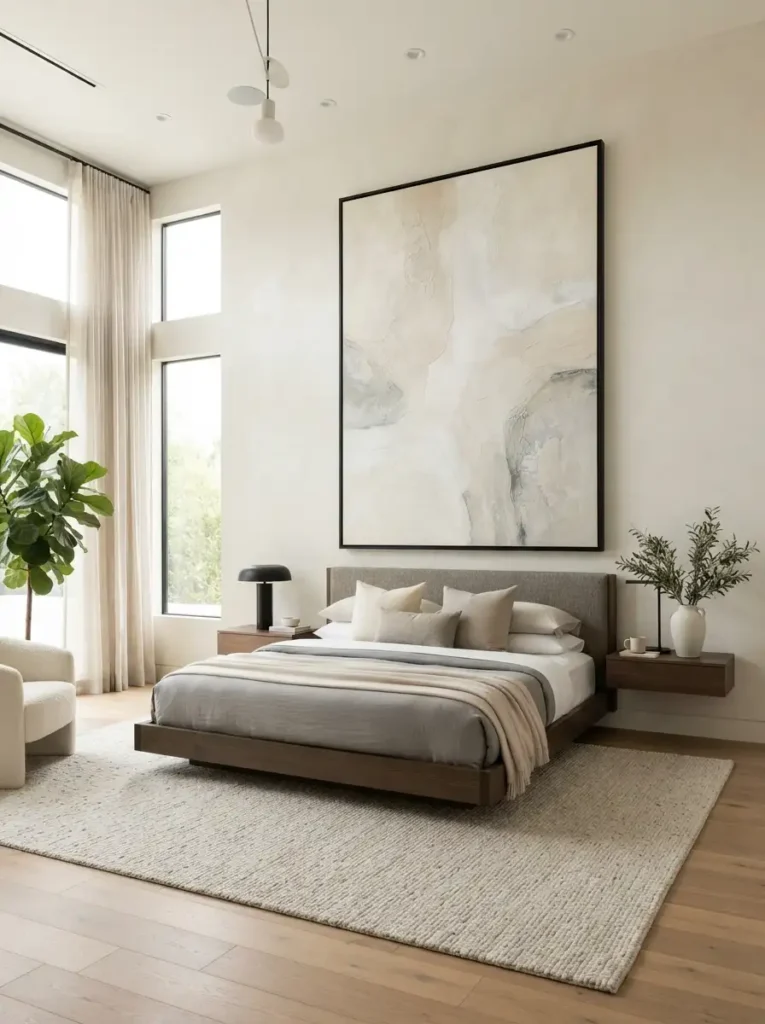
One of the most common mistakes in interior design is hanging artwork that is far too small for the wall it occupies. To create an immediate sense of luxury and grand scale, nothing beats a massive, oversized abstract canvas hung directly above the headboard.
An oversized piece—often measuring 40×60 inches or larger—acts as a massive visual anchor. Abstract art is particularly effective in the bedroom because it is not overly literal; it relies on sweeping brushstrokes, color fields, and emotion rather than distinct figures or landscapes. This allows the mind to rest and interpret the piece softly, making it perfect for a calming environment.
Why it works: A single, massive piece of art completely eliminates visual clutter. It makes a bold, confident architectural statement that mimics the aesthetic of high-end boutique hotels. It instantly makes the ceilings feel higher and the room feel grander. How to style it: Choose a canvas that incorporates one or two subtle colors from your bedding or area rug to tie the room together. Frame the canvas in a thin, minimalist “floating frame” (where there is a tiny gap between the canvas and the frame edge) in light oak or matte black for a highly sophisticated, museum-quality finish.
2. The Symmetrical Triptych
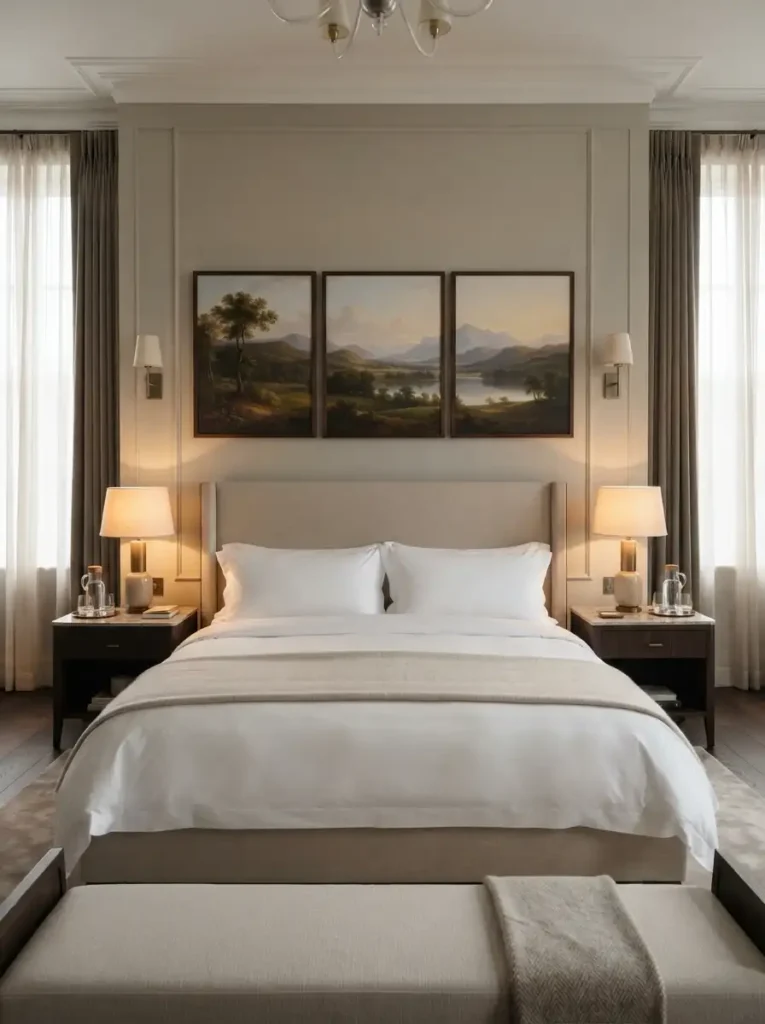
If a single massive canvas feels too overwhelming or difficult to transport, the triptych is a brilliantly elegant alternative. A triptych is a single piece of art or a cohesive series divided across three separate, evenly sized panels.
When hung side-by-side with exactly two to three inches of space between them, the triptych spans the width of a king or queen-size bed perfectly. The artwork could be a continuous panoramic landscape, a massive botanical sketch, or three related geometric patterns.
Why it works: The human eye is naturally drawn to symmetry and the “rule of three.” The slight gaps between the panels provide a sense of architectural rhythm and visual breathing room, which prevents the art from feeling too heavy on the wall. How to style it: Symmetrical art demands a symmetrical room layout. Center the triptych perfectly over the headboard, and ensure you have matching nightstands and identical table lamps flanking the bed. This creates a deeply balanced, incredibly restful visual environment that feels ordered, clean, and highly luxurious.
3. The Eclectic Vintage Gallery Wall
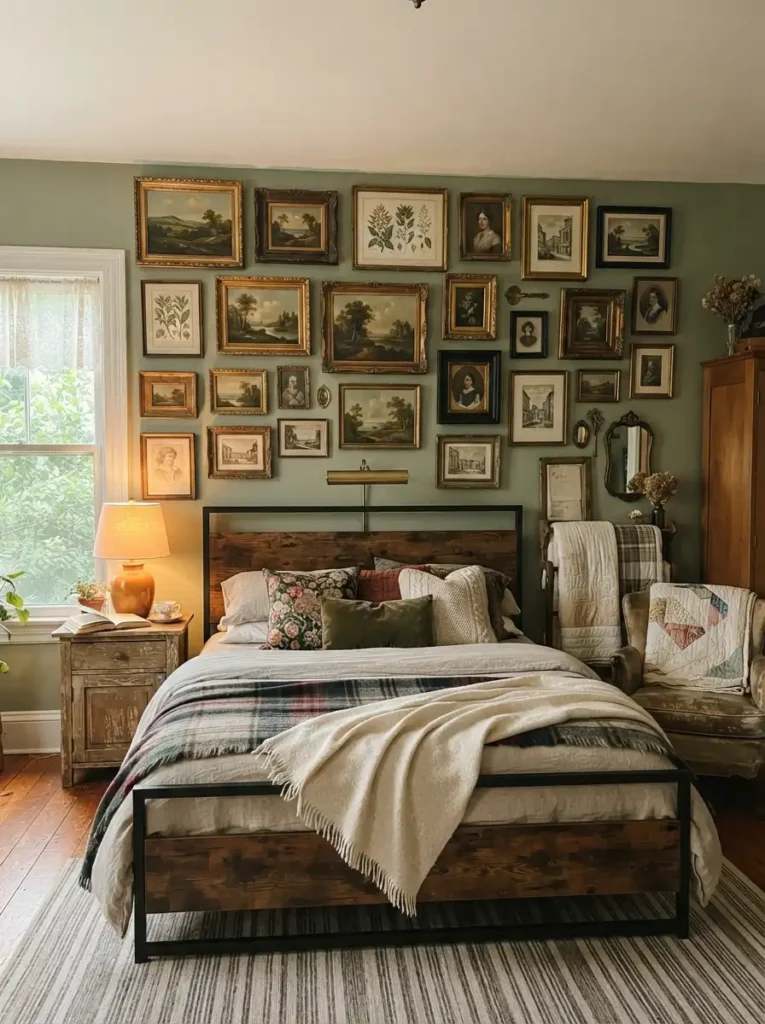
For those who prefer a room with immense character, history, and a collected-over-time aesthetic, the eclectic vintage gallery wall is the ultimate statement. Instead of one large piece, this idea involves curating a diverse collection of smaller artworks and arranging them in a visually stimulating, puzzle-like configuration.
A vintage gallery wall thrives on variety. It involves mixing oil portraits, classical landscapes, tiny botanical etchings, and perhaps a small antique mirror.
Why it works: A gallery wall allows you to display multiple pieces that you love without having to choose just one. It brings a massive amount of personality and historic charm to the room. It feels deeply bespoke, ensuring that your bedroom looks completely unique and impossible to replicate. How to style it: The secret to a successful eclectic gallery wall is mixing the frames while maintaining a cohesive color palette in the art itself. Combine thick, ornate gold vintage frames with simple, distressed wood and sleek black frames. Before putting holes in the wall, trace your frames onto kraft paper, cut them out, and tape them to the wall to perfect your layout. Ensure the arrangement feels balanced but not perfectly symmetrical.
4. Textured Plaster and Wabi-Sabi Art
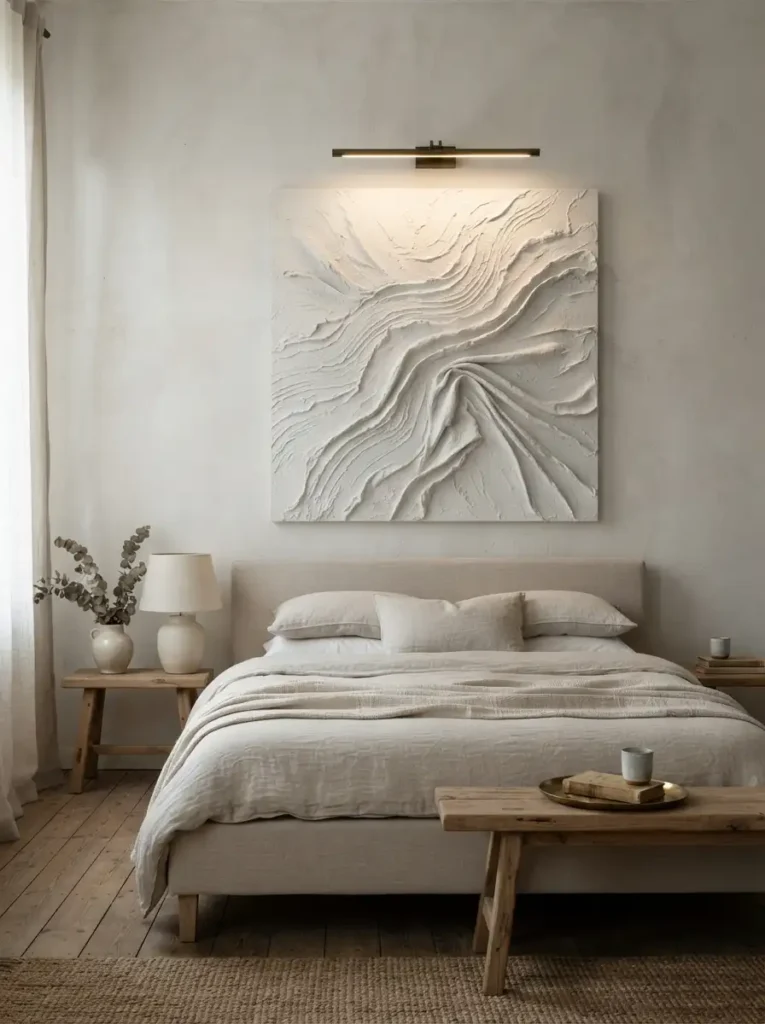
As interior design trends lean heavily toward organic modernism, flat, 2D printed art is being replaced by highly tactile, 3D textured pieces. Textured plaster art, heavily influenced by the Japanese philosophy of Wabi-Sabi (finding beauty in imperfection), is an incredible addition to a minimalist luxury bedroom.
These pieces are often monochromatic—stark white, cream, or beige—but feature massive swoops, ridges, and waves created by applying thick plaster or modeling paste to a canvas.
Why it works: Because these pieces are typically the same color as the wall, they do not overwhelm the space with loud colors. Instead, they rely entirely on texture and the play of light. As the ambient light in the room changes throughout the day, the shadows cast by the 3D ridges change, making the artwork feel alive and dynamic. How to style it: Textured art looks best in a minimalist, serene environment. Pair it with soft, organic textures in the room, such as a bouclé accent chair, pure linen bedding, and limewash walls. To truly make the art pop, install a picture light above the canvas so the light washes directly downward, illuminating the dramatic, sweeping plaster textures.
5. Large-Scale Botanical Photography
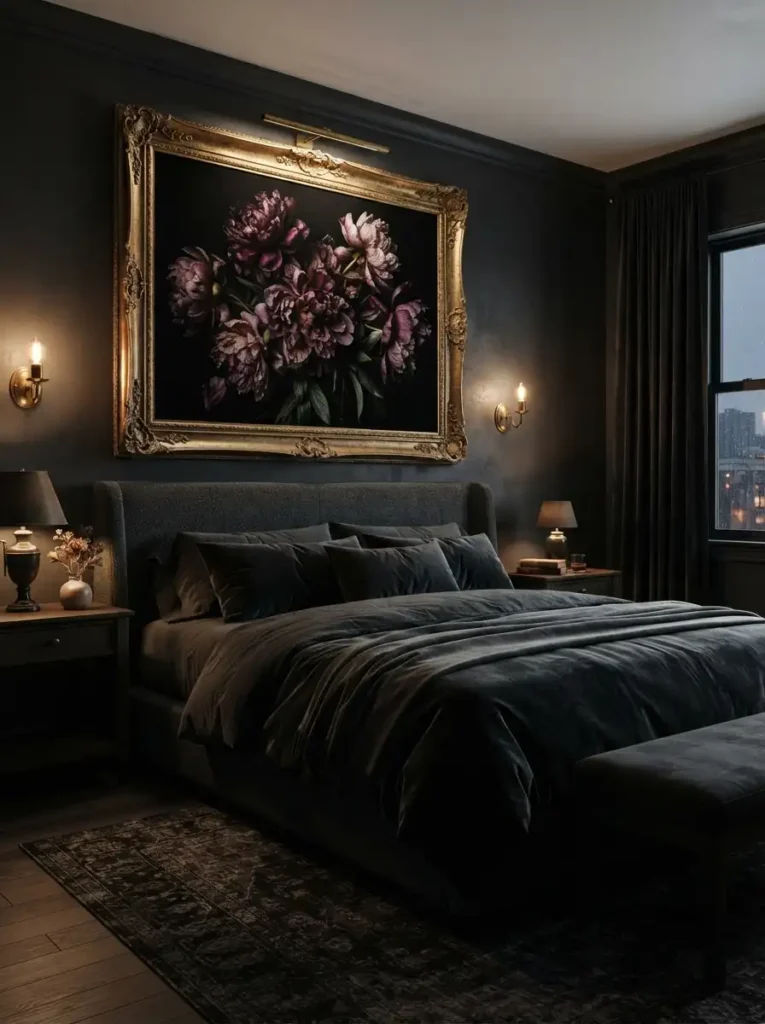
Bringing the outdoors in is a proven way to create a restful, anxiety-reducing environment. Large-scale botanical photography elevates the classic floral print into a high-end, dramatic piece of modern art.
Instead of small, delicate watercolor flowers, look for massive, macro-photography prints of single palm fronds, close-up details of a Monstera leaf, or moody, dark, Dutch-master-style photographs of wilting peonies against a black background.
Why it works: Botanical art introduces organic, sweeping lines that soften the rigid, right angles of bedroom furniture. Depending on the style of photography, it can either make the room feel like a vibrant, fresh greenhouse or a dark, romantic, and moody sanctuary. How to style it: For a bright, airy room, choose crisp green botanicals framed in light blonde wood. For a moody, dramatic bedroom (like a room painted in dark charcoal or navy), choose “dark floral” photography and frame it in an ornate, heavy gold or matte black frame. Hang it opposite the bed so it is the first thing you see when you wake up.
6. Framed Textile and Tapestry Art
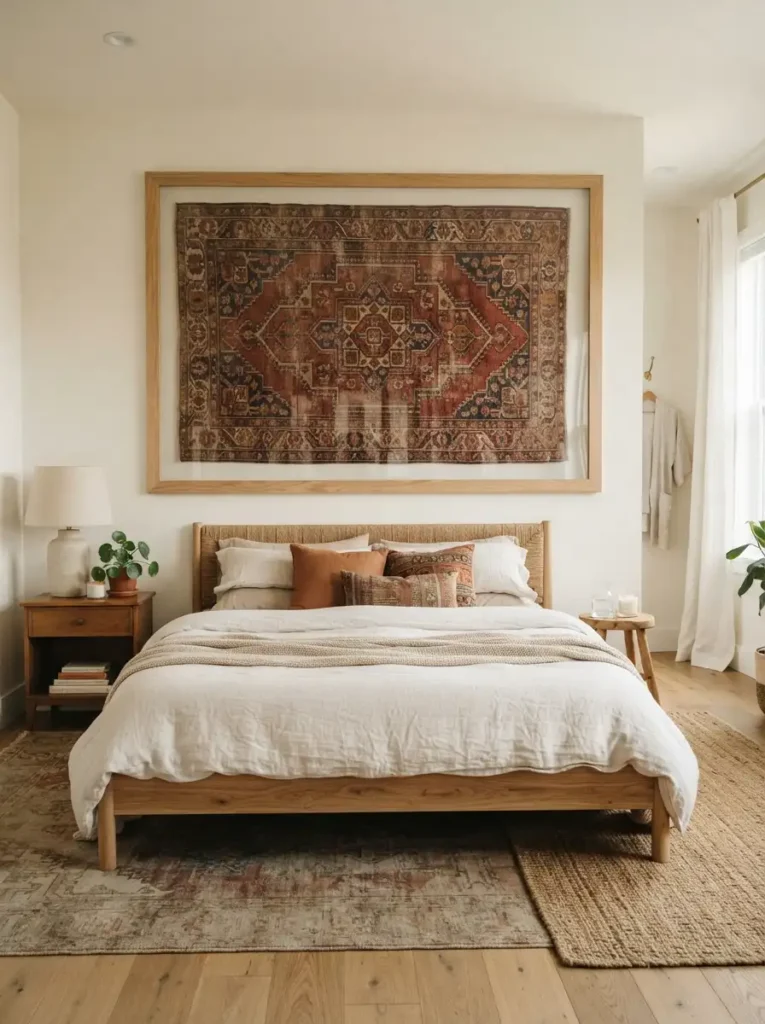
Artwork does not have to be painted on canvas or printed on photo paper. Framed textiles offer a brilliant, highly sophisticated way to introduce both art and fabric texture to your bedroom walls.
This could be a piece of a beautiful, antique Turkish rug, an intricately patterned vintage silk scarf (like an Hermès scarf), a piece of hand-woven mudcloth, or an embroidered tapestry. By taking a soft textile and stretching it tightly behind a glass frame, you elevate it into a museum-quality artifact.
Why it works: Textiles inherently bring physical and visual warmth to a space. Furthermore, fabric absorbs sound. Adding framed textiles to your walls helps dampen acoustic echoes in large bedrooms, making the space literally quieter and more restful for sleeping. How to style it: A large textile piece acts as a brilliant substitute for a headboard. If you have a simple platform bed without a headboard, hang a massive, beautifully framed tapestry directly behind the pillows. It grounds the bed and provides an incredible splash of color and woven texture.
7. Architectural Minimalist Line Art
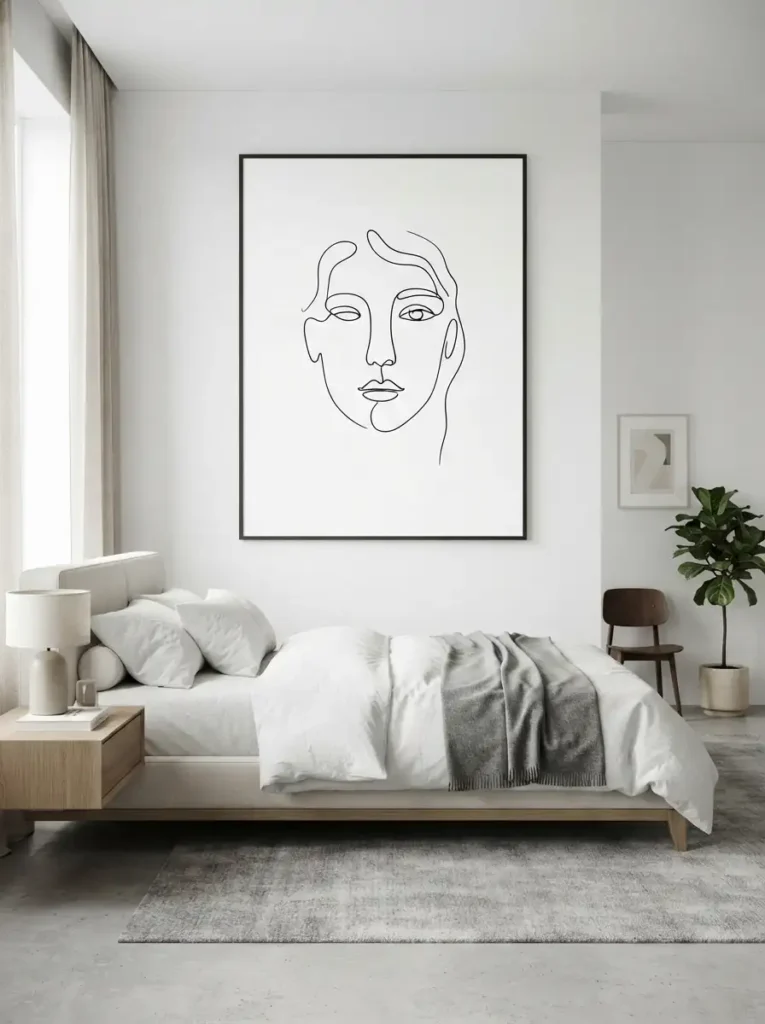
If you want to add art to your walls but fear cluttering the space, minimalist continuous line art is the perfect solution. This style of art involves drawings—often of the human form, faces, or abstract architecture—created with a single, unbroken fluid line against a vast expanse of white negative space.
Why it works: Line art is incredibly elegant, quiet, and unobtrusive. The massive amount of negative space around the drawing acts as a visual palate cleanser, allowing the room to feel open, airy, and deeply sophisticated without leaving the walls entirely blank. How to style it: The framing is just as important as the art itself. Use an oversized white mat board inside the frame. For example, place an 8×10 inch line drawing inside a massive 24×36 inch frame with a custom white mat. This huge border of white space draws the eye directly to the delicate, sweeping lines of the artwork, making it feel highly expensive and curated.
8. Floating Canvas Landscapes
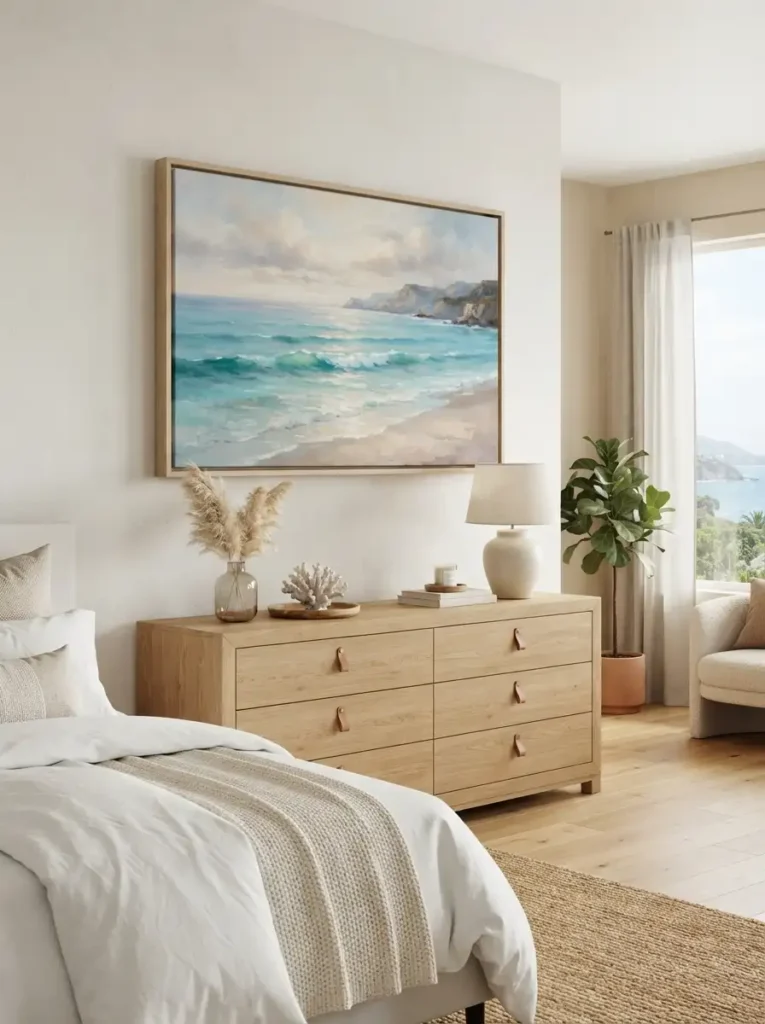
Landscape art is perhaps the most traditional choice for a bedroom, but how it is presented determines whether it feels dated or modern. To elevate a classic landscape—such as a serene ocean horizon, a misty mountain range, or a sweeping valley—choose a canvas painting presented in a modern floating frame.
Why it works: Landscapes featuring a strong horizontal line (like the horizon where the ocean meets the sky) are psychologically calming. The horizontal line mimics a resting position, subconsciously signaling to the brain that it is time to relax and sleep. The modern floating frame prevents the traditional landscape from feeling like it belongs in a dusty antique shop. How to style it: Choose landscapes that reflect the color palette of your room. If your room features cool blues and greys, a coastal landscape is perfect. Hang it directly above a long, low dresser. The horizontal lines of the dresser will perfectly mirror the horizontal horizon line in the painting, creating brilliant architectural harmony.
9. Sculptural 3D Wall Art
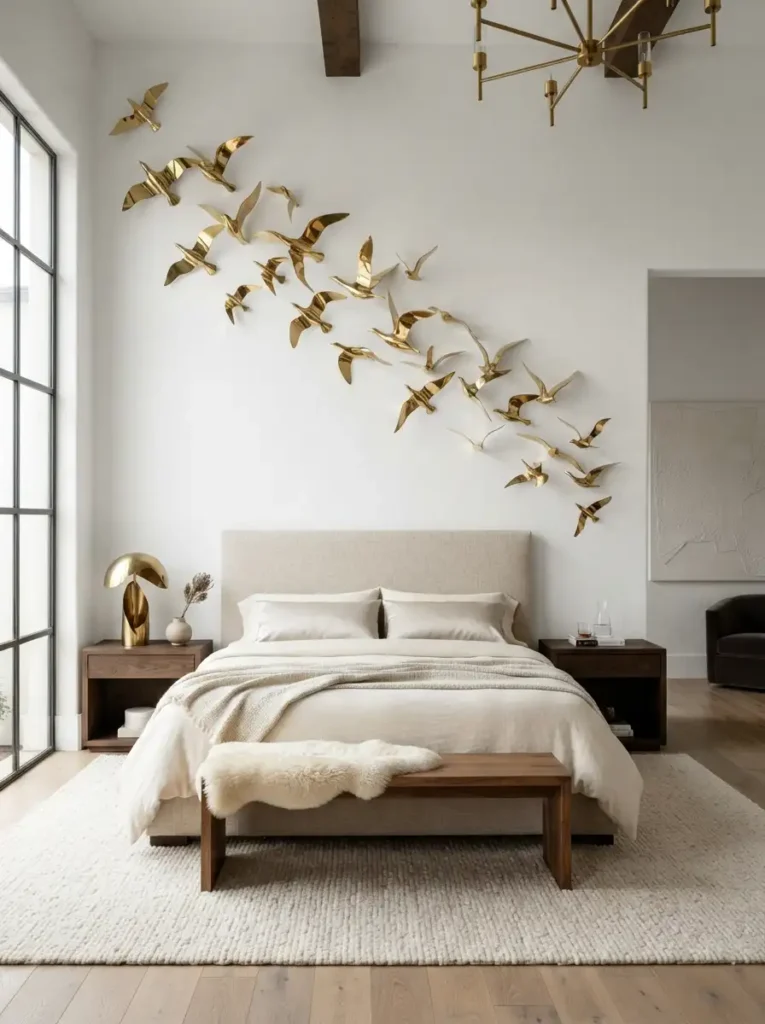
Moving entirely away from traditional frames, sculptural 3D wall art involves mounting physical, structural objects directly onto the drywall. This could be a flock of brass birds in mid-flight, a series of carved wooden discs, geometric ceramic shapes, or climbing metallic floral sculptures.
Why it works: Sculptural art breaks the flat plane of the wall. It physically invades the space of the room, providing massive visual interest, depth, and highly tactile elements. It feels incredibly bespoke and high-end, as if the art is an organic part of the home’s architecture. How to style it: Sculptural art looks best when it is allowed to “flow” across the wall rather than being confined to a perfect square. Mount a series of sculptural pieces diagonally across the wall above the bed, starting low on one side and trailing upward toward the ceiling on the other. This creates a sense of movement and draws the eye upward, highlighting the height of the room.
10. Neon Typography on Dark Walls
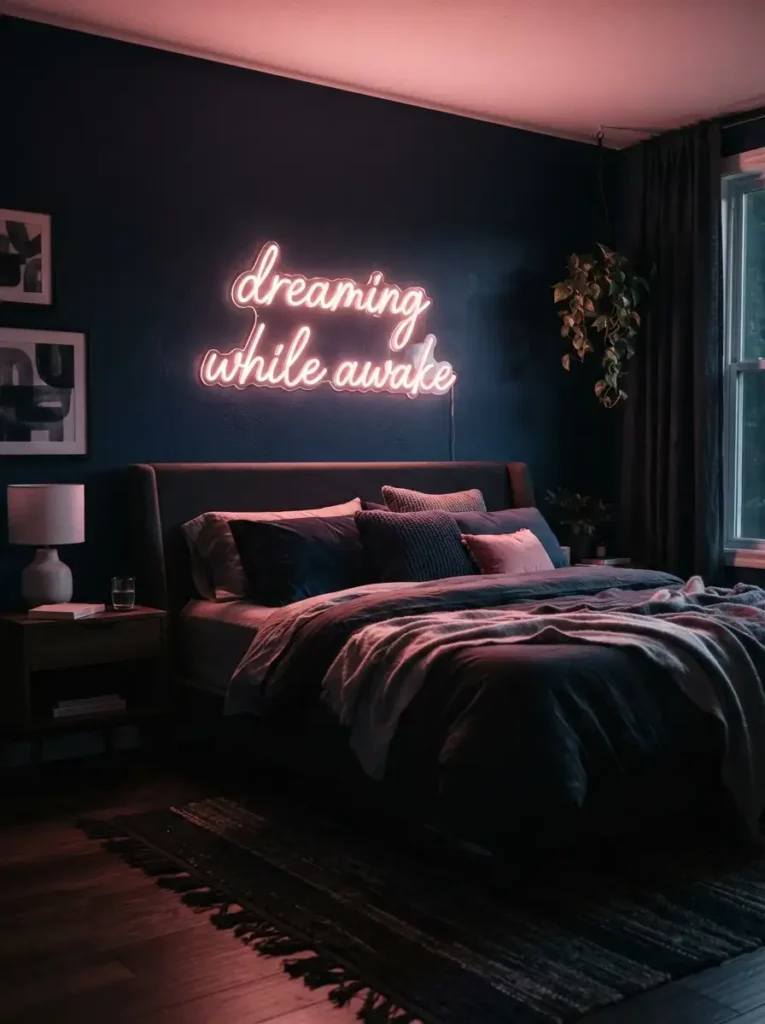
For a bedroom that is edgy, modern, and highly personalized, a custom LED neon typography sign is a show-stopping alternative to traditional wall art. Whether it is your favorite song lyric, a romantic phrase, or a simple, glowing abstract shape, a neon sign acts as a vibrant piece of luminous art.
Why it works: Neon art serves a dual purpose: it is a striking visual centerpiece, and it acts as incredibly moody, ambient secondary lighting. It adds a vibrant, energetic, yet cozy glow to the room that completely changes the atmosphere after dark. How to style it: A neon sign needs contrast to truly pop. Do not hang it on a plain white wall. Instead, paint the accent wall behind the bed in a dark, moody color—like matte navy blue, deep forest green, or charcoal grey. Mount a warm white or soft pink neon sign directly in the center. The dark backdrop will absorb the light beautifully, making the glowing letters look incredibly dramatic and cinematic.
11. Grid-Style Black and White Photography
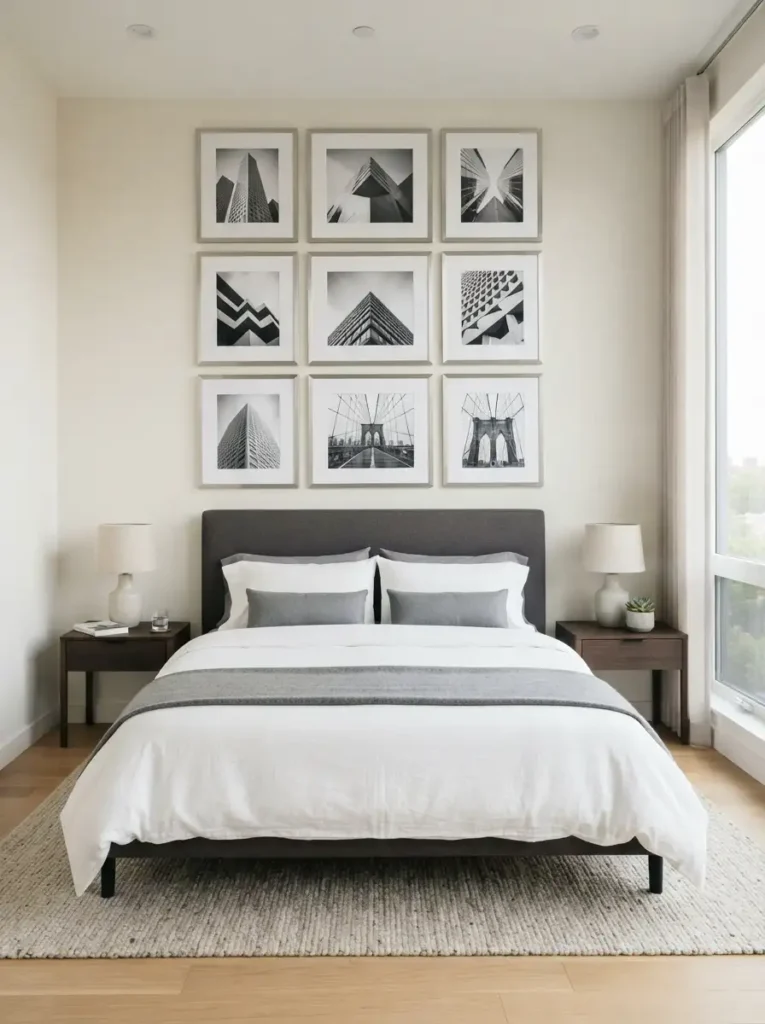
For a bedroom that leans toward modern, precise, and highly architectural aesthetics, a grid-style gallery of black and white photography is a flawless choice. Instead of the chaotic, puzzle-like layout of a vintage gallery wall, the grid gallery involves hanging a series of identical frames in perfect, symmetrical alignment (such as a 2×3 or 3×3 grid).
Why it works: Black and white photography strips away distracting colors, focusing entirely on contrast, shadow, and subject matter. The rigid, perfect grid alignment provides an intense sense of order, cleanliness, and precision. It is visually soothing because the brain does not have to work hard to process the layout. How to style it: Consistency is everything. Use the exact same black or silver metal frames, the exact same white matting, and ensure the photographs share a common theme (e.g., architectural details, moody landscapes, or classic portraits). Use a laser level to ensure there is exactly two inches of space between every frame. This creates a breathtaking, cohesive art installation.
12. Woven Macrame and Natural Fiber Hangings
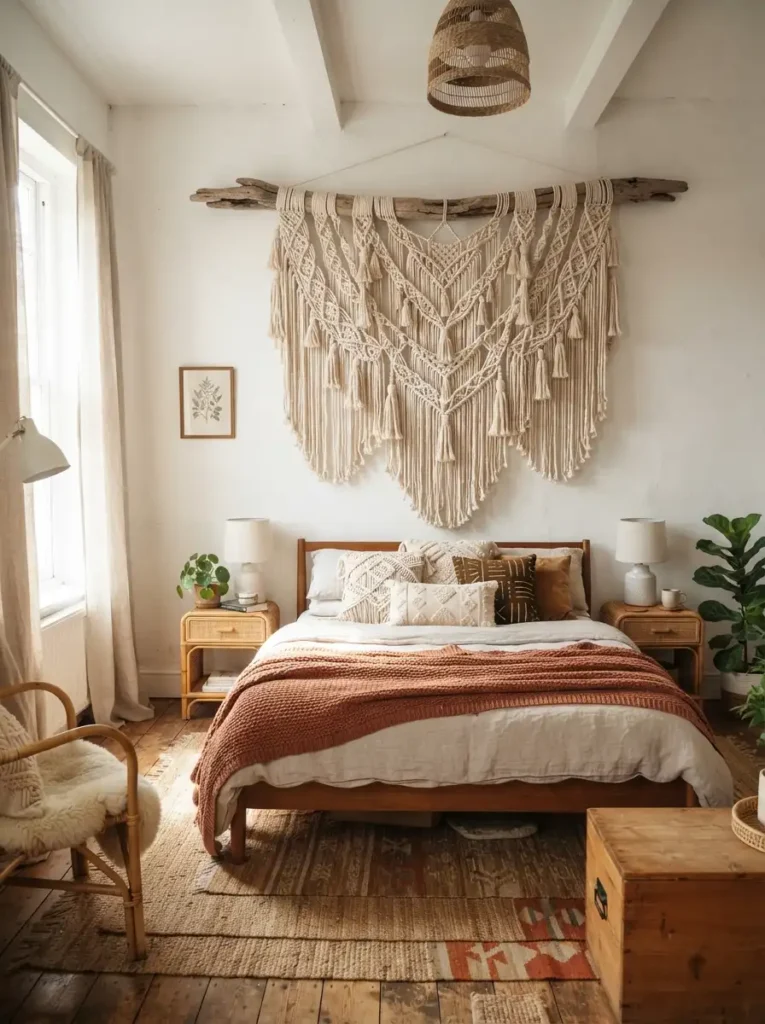
If you want to inject immense warmth, softness, and a touch of bohemian luxury into your bedroom, a large-scale woven macrame or natural fiber wall hanging is an exquisite choice. These pieces are crafted from thick cotton ropes, dyed wool, or natural jute, intricately knotted into sweeping, cascading patterns.
Why it works: Bedrooms are full of hard, flat surfaces (drywall, wooden dressers, glass mirrors). Natural fiber art introduces deep, three-dimensional texture that softens the acoustics and the aesthetic of the room. It makes the space feel incredibly grounding, earthy, and warm. How to style it: Hang a massive, dip-dyed macrame piece suspended from a natural piece of driftwood directly above the bed. Ensure the colors of the dyed yarn match your throw pillows or area rug. Keep the rest of the wall relatively bare; a piece this textured commands attention and needs breathing room to be fully appreciated.
13. Framed Mural or Scenic Wallpaper Panels
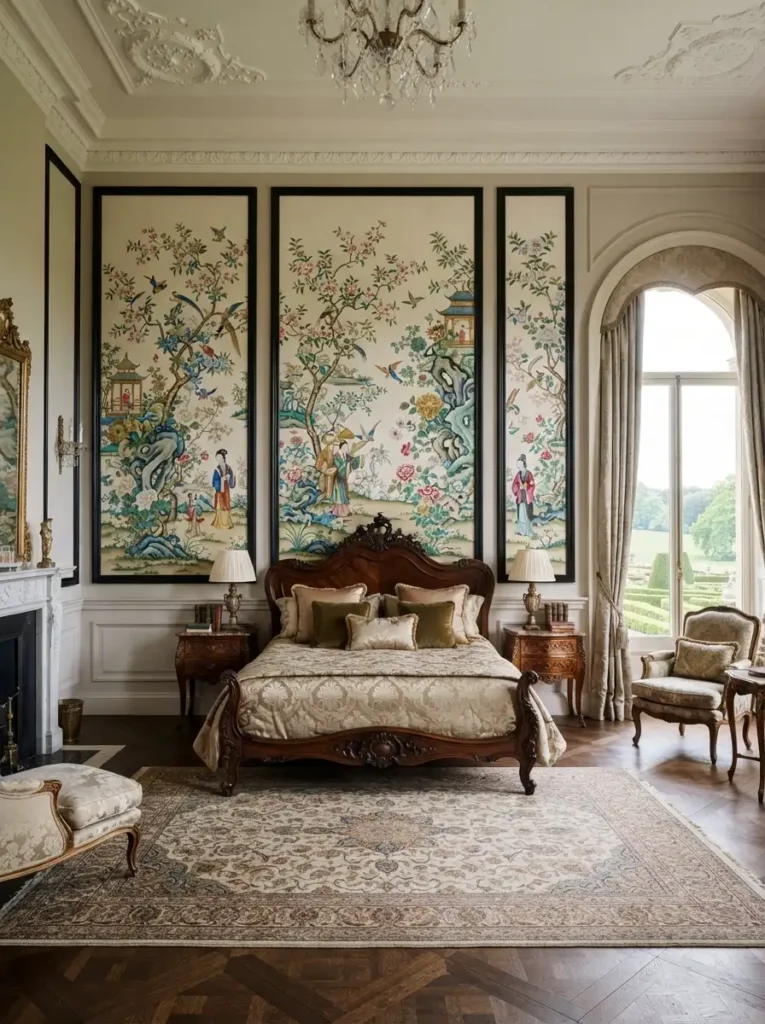
Wallpaper is a massive commitment, but you can capture the breathtaking luxury of a scenic mural without wallpapering the entire room. Instead, purchase a roll of highly detailed, hand-painted style scenic wallpaper—such as a classical French Chinoiserie pattern or an immersive forest landscape—and frame large sections of it as artwork.
Why it works: It provides the incredible scale and intricate detailing of a luxury mural without the permanence or high cost of installation. By adding a physical frame around the wallpaper panel, you elevate it from a simple wall covering into a massive, grand piece of custom art. How to style it: Create a massive triptych by framing three large, floor-to-ceiling panels of scenic wallpaper in simple wooden trim directly on the wall. This acts as a breathtaking, immersive backdrop behind the bed, giving the room the ambiance of an ultra-luxurious, historic European estate.
How to Choose the Right Art for Your Bedroom Dimensions
Even the most breathtaking piece of art will look terrible if it is not scaled or hung correctly. When selecting your bedroom wall art, keep these foundational interior design rules in mind:
- Scale Over the Bed: If you are hanging art directly over your headboard, the artwork (whether a single piece or a gallery grouping) should span roughly two-thirds to three-quarters of the width of the bed. If it is smaller than this, it will look like it is floating aimlessly on a massive wall.
- The 57-Inch Rule: A common mistake is hanging art far too high, forcing you to crane your neck to look at it. Galleries and museums hang art so the absolute center of the piece is exactly 57 to 60 inches from the floor (eye level for the average person). If hanging above a bed or dresser, the bottom edge of the frame should sit just 6 to 8 inches above the top of the furniture.
- Color Coordination: Art does not need to perfectly match your room, but it should “speak” to it. Pull one or two secondary accent colors from your bedding, rugs, or curtains, and ensure those colors are present in the artwork to create a highly cohesive, intentional design loop.
Bringing Your Sanctuary to Life
Your bedroom is your ultimate private retreat, and the art you choose to hang on its walls should reflect your personal story, your aesthetic preferences, and the specific mood you want to cultivate.
Do not be afraid to think outside the standard 8×10 picture frame. Whether you embrace the massive scale of an oversized abstract canvas, the tactile warmth of a woven tapestry, or the sleek precision of a black-and-white photography grid, intentional wall art is the final, crucial step in bedroom design. By utilizing these 13 bedroom wall art ideas, you can confidently elevate your space from a simple place to sleep into a deeply inspiring, luxurious, and beautifully finished sanctuary.