Cozy eclectic home ideas are exactly what you need if you have ever felt that traditional interior design rules are too restrictive, too sterile, or simply lack soul. When you step into a beautifully designed eclectic home, you do not feel like you are walking into a generic furniture showroom. Instead, you are stepping into a physical autobiography of the person who lives there. It is a space that tells a deeply personal story, woven together through collected artifacts, contrasting eras, vibrant colors, and unparalleled warmth.
The word “eclectic” is often misunderstood in the design world. Many people assume it is synonymous with “cluttered,” “messy,” or a random assortment of mismatched items thrown into a room. However, true luxury eclectic design is highly intentional. It is the delicate, masterful art of balancing contrasting elements—old and new, rough and smooth, quiet and loud—to create a space that is visually stimulating yet deeply harmonious. When you add the element of “cozy” to this aesthetic, the focus shifts toward extreme comfort, tactile fabrics, ambient lighting, and an inviting atmosphere that practically begs you to sit down and stay awhile.
Creating a warm and personality-filled space requires bravery. It means abandoning the idea that all your wood tones must match, or that your chairs must come in a perfect set of four. It is about trusting your own eye and surrounding yourself only with items that spark genuine joy and curiosity.
If you are tired of cookie-cutter interiors and want to build a sanctuary that is as unique, complex, and beautiful as you are, you are in the right place. These 13 cozy eclectic home ideas will inspire you to break the rules, mix your favorite styles, and create a breathtaking, personality-filled retreat.
1. Layered Rugs for Grounded Warmth
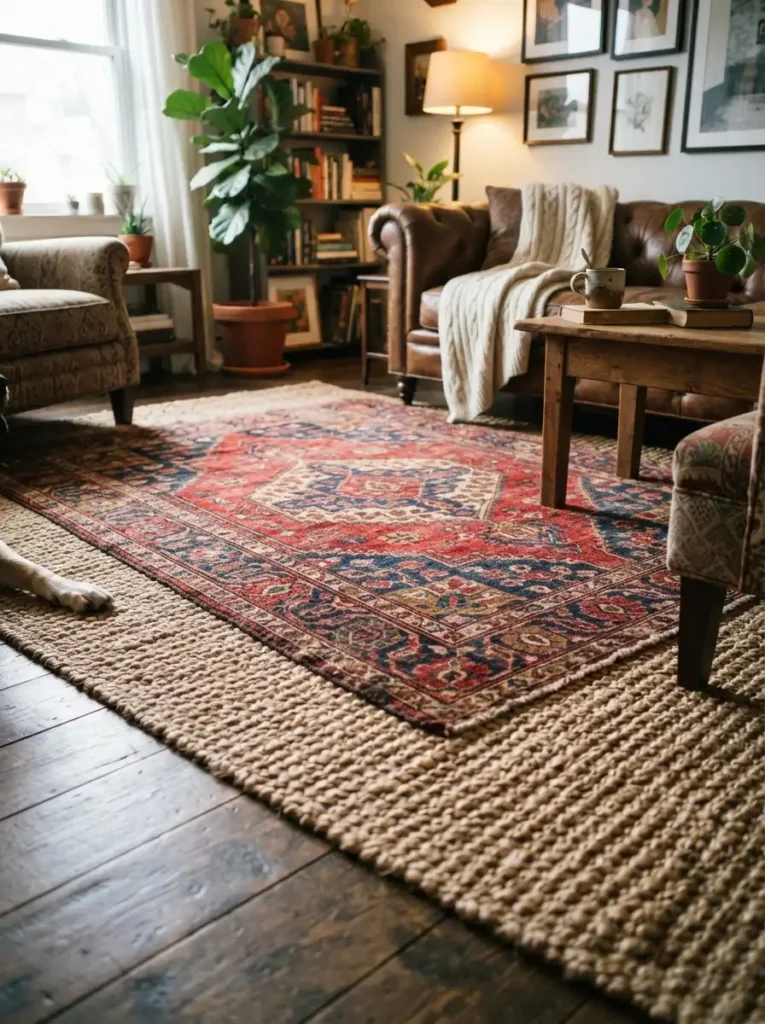
In an eclectic home, the floor is never just an afterthought; it is the foundational canvas for your design. While a single area rug is standard, the truly cozy eclectic aesthetic utilizes the brilliant technique of rug layering. This involves placing a highly patterned, smaller rug directly on top of a larger, neutral rug.
Why it works: Layering rugs introduces massive amounts of physical and visual warmth. It solves the common problem of having a beautiful vintage rug that is simply too small to anchor a large living room. By placing it over a massive, inexpensive natural fiber rug, you get the necessary scale while maintaining the vintage charm. It also provides incredible acoustic softening, making the room sound quieter and feel more insulated. How to style it: Start with a large, flat-weave natural fiber rug, such as a chunky jute, sisal, or seagrass, that covers the majority of your living room floor. Then, layer a vibrantly colored, deeply patterned vintage Persian, Turkish, or Moroccan rug diagonally or perfectly centered over the seating area. The rough, organic texture of the jute perfectly contrasts with the soft, intricate weave of the vintage piece above it.
2. The Art of Mixing Historic Eras
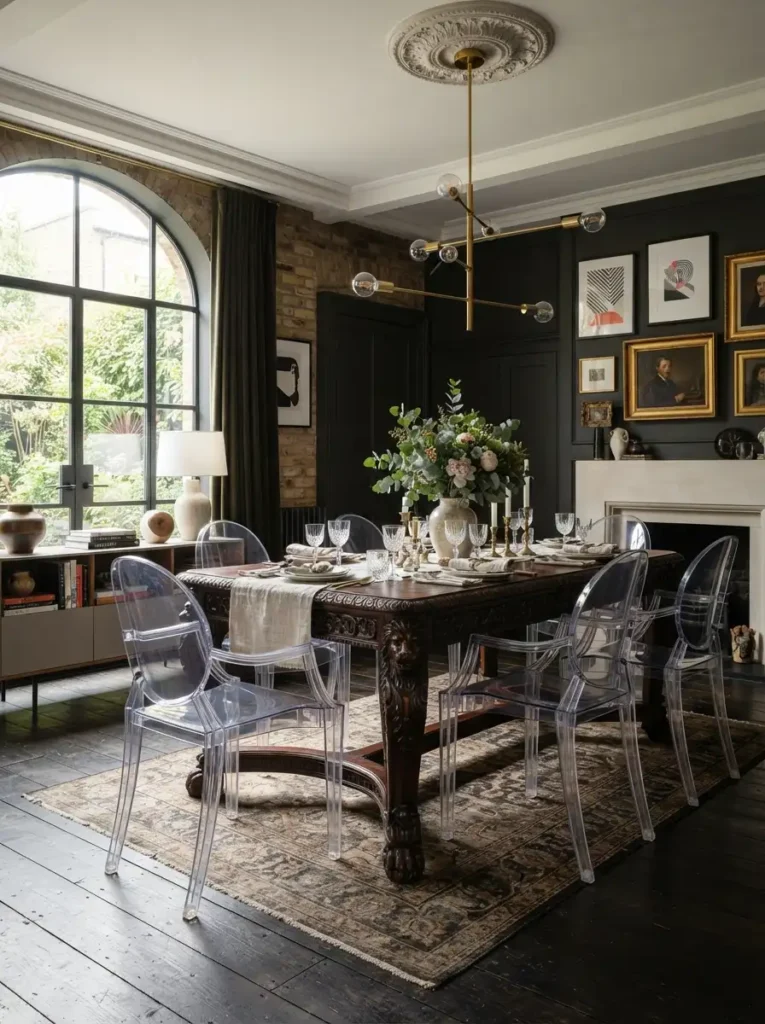
The most defining characteristic of eclectic design is the fearless combination of different historical design periods. An eclectic home actively rejects the idea of buying a matching “bedroom set” or “living room suite” from a single catalog.
Why it works: When everything in a room is from the exact same era (for example, mid-century modern), the room can quickly look like a movie set or a time capsule rather than a lived-in home. Mixing eras creates a dynamic visual tension. The juxtaposition of a centuries-old antique placed next to a cutting-edge modern piece highlights the beauty of both items far more effectively than if they were alone. How to style it: The secret to mixing eras without creating chaos is maintaining a unifying element, such as color or scale. Pair a sleek, low-profile, ultra-modern white linen sofa with a heavily carved, dark mahogany Victorian coffee table. Flank a rustic, distressed 19th-century farmhouse dining table with sleek, transparent acrylic ghost chairs or mid-century wire chairs. The stark contrast between ornate history and sleek modernity is breathtaking.
3. The Floor-to-Ceiling Eclectic Gallery Wall
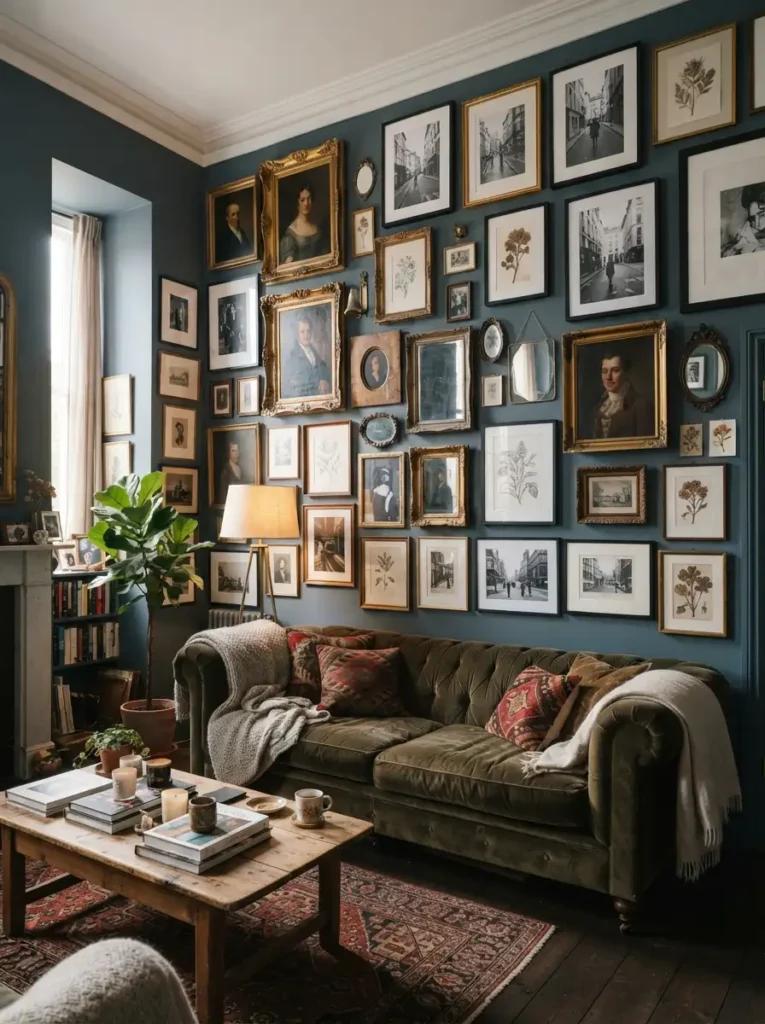
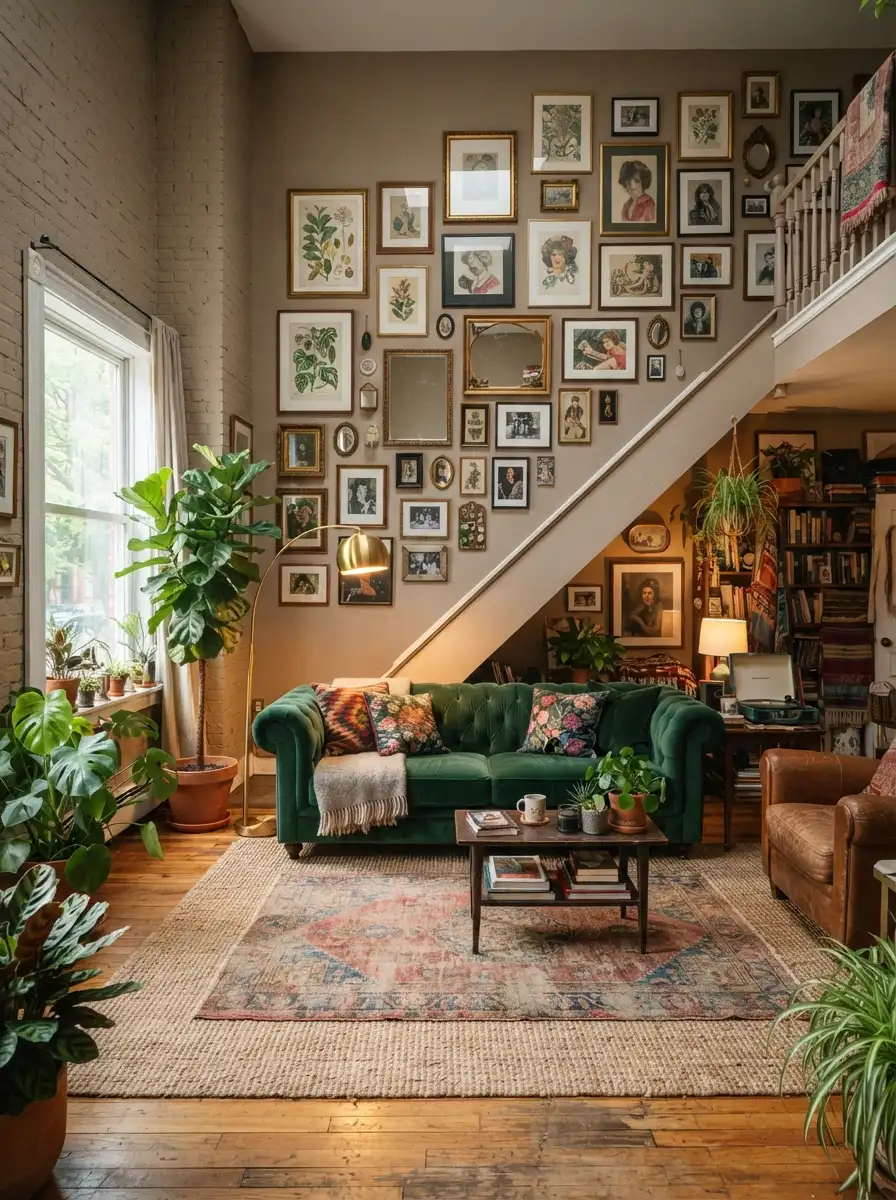
A cozy eclectic home is a celebration of art, history, and personal memories. Rather than hanging a single, generic piece of mass-produced canvas art above the sofa, the eclectic aesthetic relies on the floor-to-ceiling, asymmetrical gallery wall.
Why it works: A massive gallery wall acts as a window into your soul. It provides an opportunity to display everything you love—photography, oil paintings, typography, and 3D objects—in one massive, curated installation. It draws the eye upward, making the room feel taller, and adds an undeniable sense of rich, collected history to the space. How to style it: Abandon perfect grids and symmetrical layouts. Mix your mediums aggressively. Hang a moody vintage oil landscape next to a stark, modern black-and-white photograph, followed by a framed botanical sketch, a small woven basket, and an antique mirror. Mix thick, ornate gold frames with sleek, minimalist black frames and raw wood. Lay the arrangement out on the floor first to ensure the visual weight is balanced before you start hammering nails.
4. Saturated Jewel Tones with Earthy Neutrals
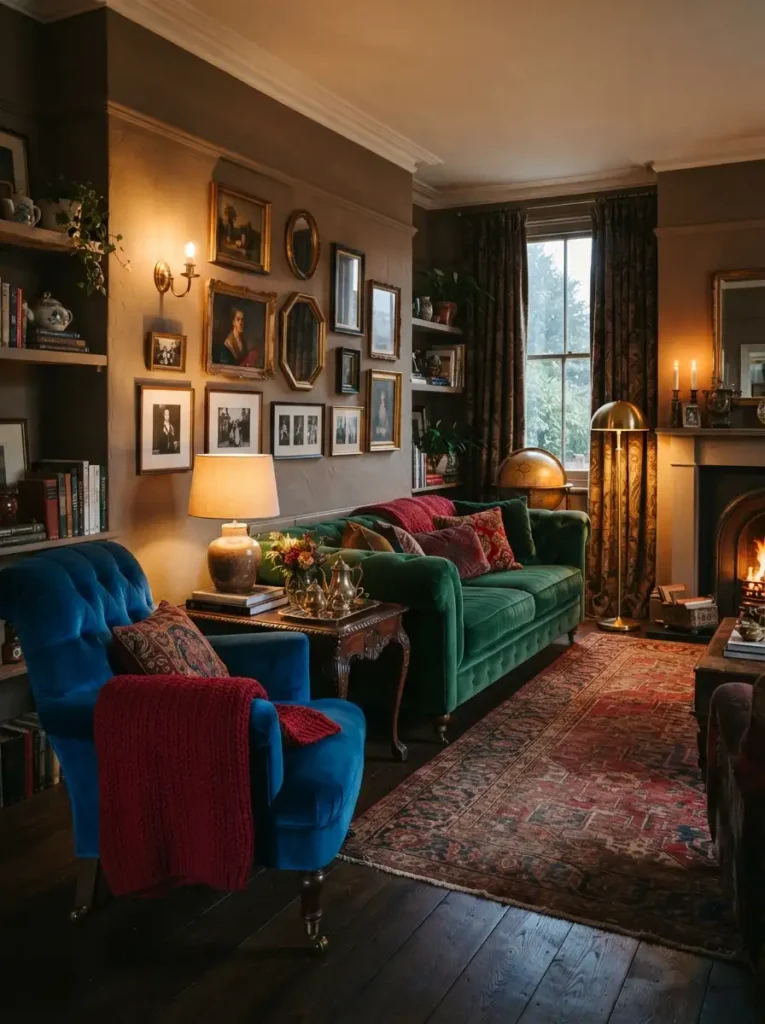
Color is one of the most powerful tools in the eclectic design arsenal. While minimalist spaces rely heavily on whites and greys, a cozy eclectic space embraces deep, saturated, moody colors. However, to keep it cozy and not overwhelming, these bold colors must be grounded by earthy neutrals.
Why it works: Jewel tones—like emerald green, sapphire blue, amethyst purple, and ruby red—are inherently luxurious, dramatic, and deeply cozy. When paired with earthy neutrals like terracotta, mustard yellow, and warm beige, the room achieves a perfect balance between high-end glamour and approachable, grounded warmth. How to style it: Paint your walls in a warm, earthy neutral like soft mushroom, creamy off-white, or dusty taupe. Then, introduce your jewel tones through heavy, substantial pieces of furniture and textiles. An emerald green velvet sofa, a pair of sapphire blue accent chairs, and heavy, ruby-toned woven throw blankets will pop brilliantly against the calm, neutral backdrop, creating a deeply inviting lounge atmosphere.
5. Mismatched, Ambient Lighting Scapes
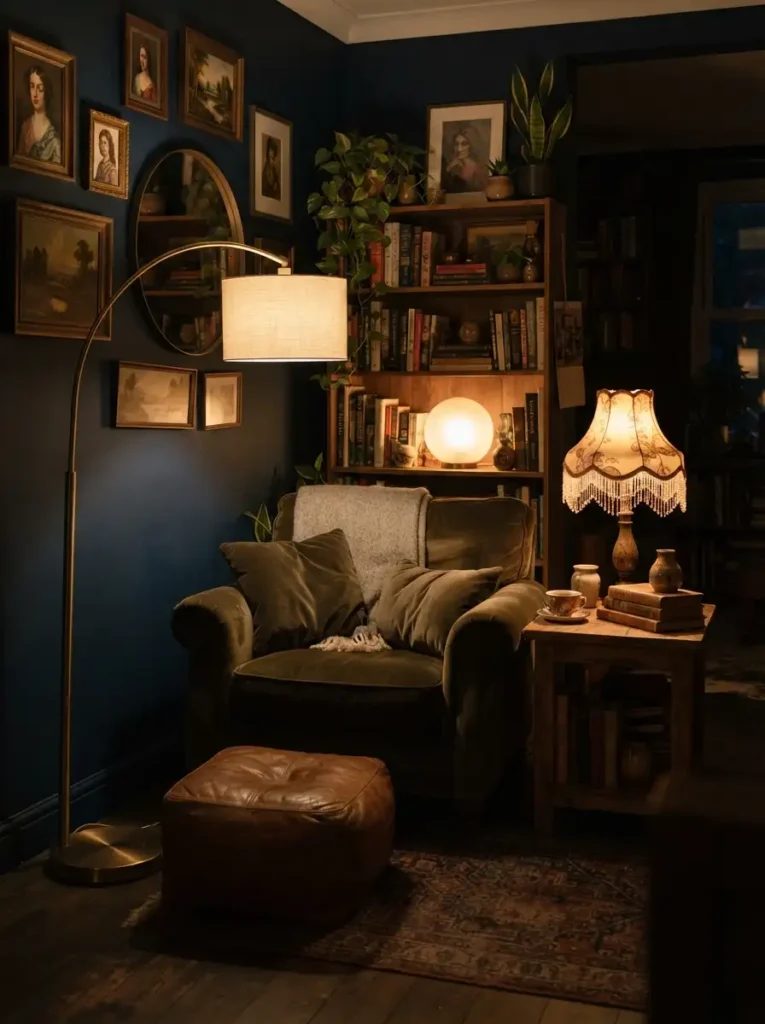
Nothing destroys the cozy vibe of a room faster than a single, harsh, bright overhead light. The eclectic aesthetic relies heavily on “lighting scapes”—creating multiple, overlapping pools of warm, ambient light using a variety of unique, mismatched fixtures.
Why it works: Layered lighting softens the hard architectural angles of a room, creating a moody, intimate, and highly protective atmosphere. By using mismatched lamps, the lighting fixtures themselves become pieces of decorative sculpture that contribute to the collected, eclectic vibe of the home during the day. How to style it: Ensure you have at least three different sources of light in your living room, none of which are the ceiling fixture. Place a tall, sleek mid-century brass arc lamp in one corner. On a side table, use a vintage, fringed Victorian lampshade. On a bookshelf, tuck a glowing, spherical frosted glass globe. Use warm-toned LED bulbs (around 2700K) to ensure all the mismatched lamps cast the same cozy, golden, fire-like glow.
6. The “Curated Clutter” Bookshelf
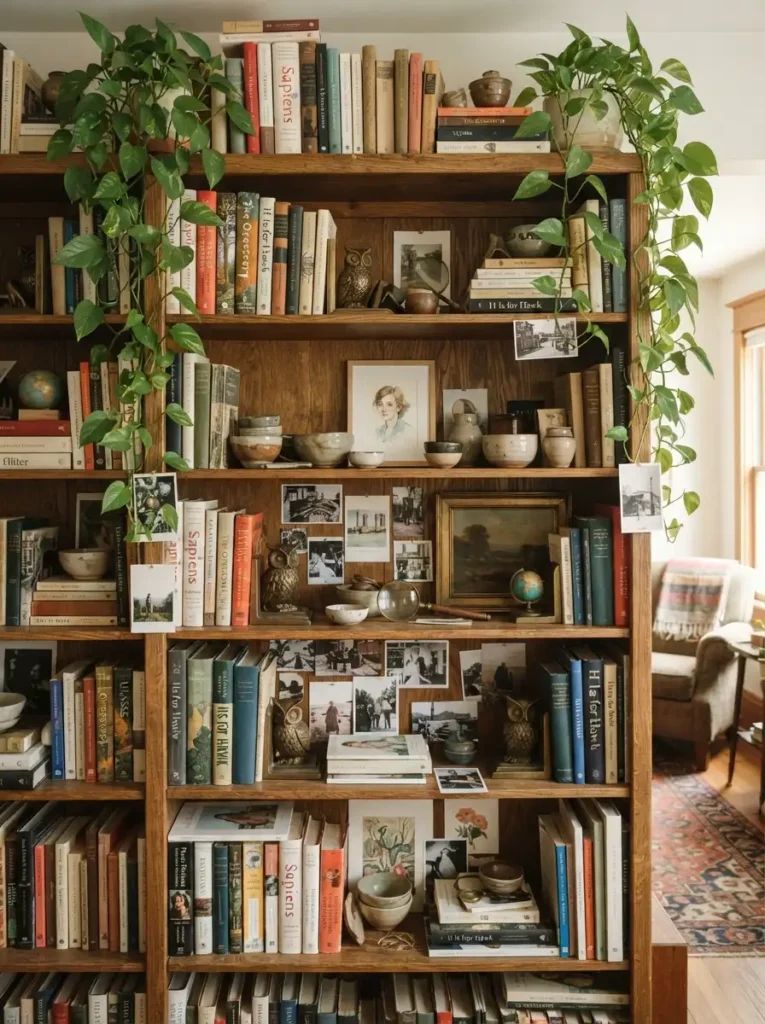
In a minimalist home, bookshelves are often styled sparsely, with books turned backward or color-coded perfectly. In a cozy eclectic home, bookshelves are bursting with life, intellect, and what designers affectionately call “curated clutter.”
Why it works: Bookshelves should look like they actually belong to a reader and a traveler. A densely packed, visually rich bookshelf adds immense warmth and texture to the room. It invites guests to walk up, browse your collection, and start a conversation. It makes the room feel highly intellectual, deeply personal, and intimately lived-in. How to style it: Mix horizontal stacks of books with vertical rows. Do not just use the shelves for books—integrate your personality. Place a cascading pothos plant on the top shelf, use vintage brass bookends, and intersperse personal artifacts like a piece of coral from a beach trip, a small piece of framed art leaning against the back of the shelf, and sculptural ceramic bowls.
7. Mixing Heavy and Light Textures
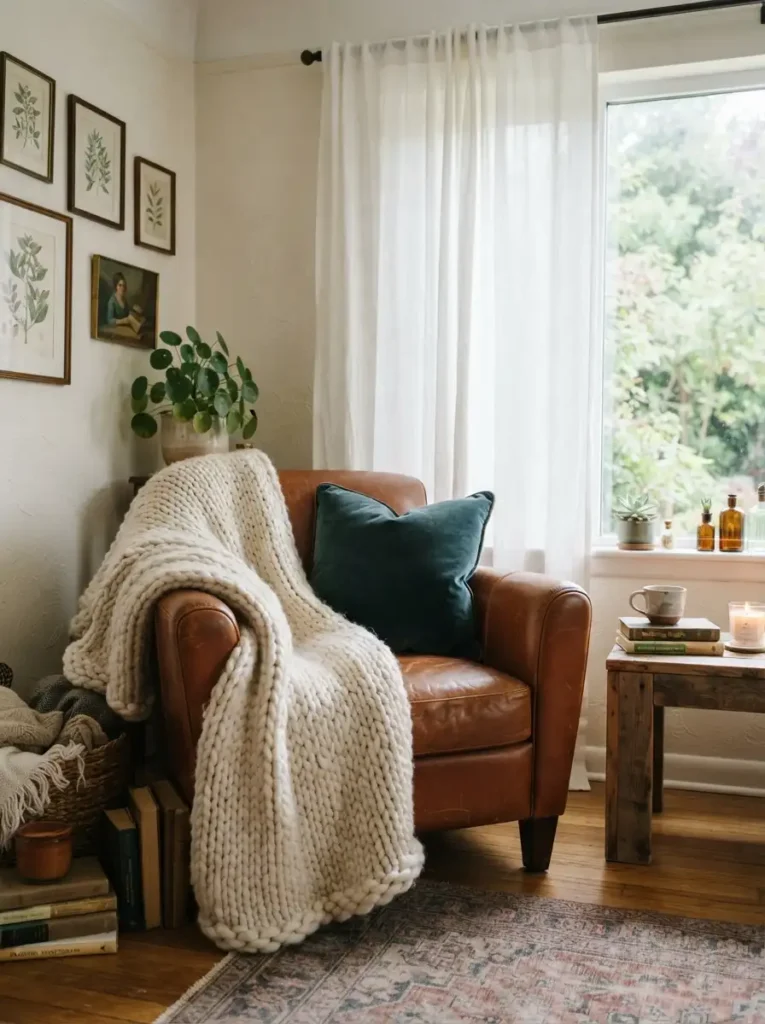
Because eclectic design involves so many different visual elements, you must use physical texture to tie the room together and boost the “cozy” factor. This involves heavily contrasting soft, luxurious fabrics with rough, organic materials.
Why it works: A room where every fabric is the same (e.g., all cotton or all leather) feels flat and one-dimensional. Mixing heavy and light textures engages the senses. It provides a tactile richness that makes you physically want to touch the furniture, sink into the cushions, and wrap yourself in the blankets. How to style it: Contrast is key. If you have a sleek, smooth leather sofa, drape a thick, chunky-knit wool throw blanket over the arm. Pair soft, heavy velvet throw pillows with crisp, light linen curtains. Place a fluffy, faux-sheepskin rug draped casually over the back of a hard, wooden dining chair. The push-and-pull between heavy and light, rough and smooth, is the essence of eclectic coziness.
8. Biophilic Abundance (Indoor Jungles)
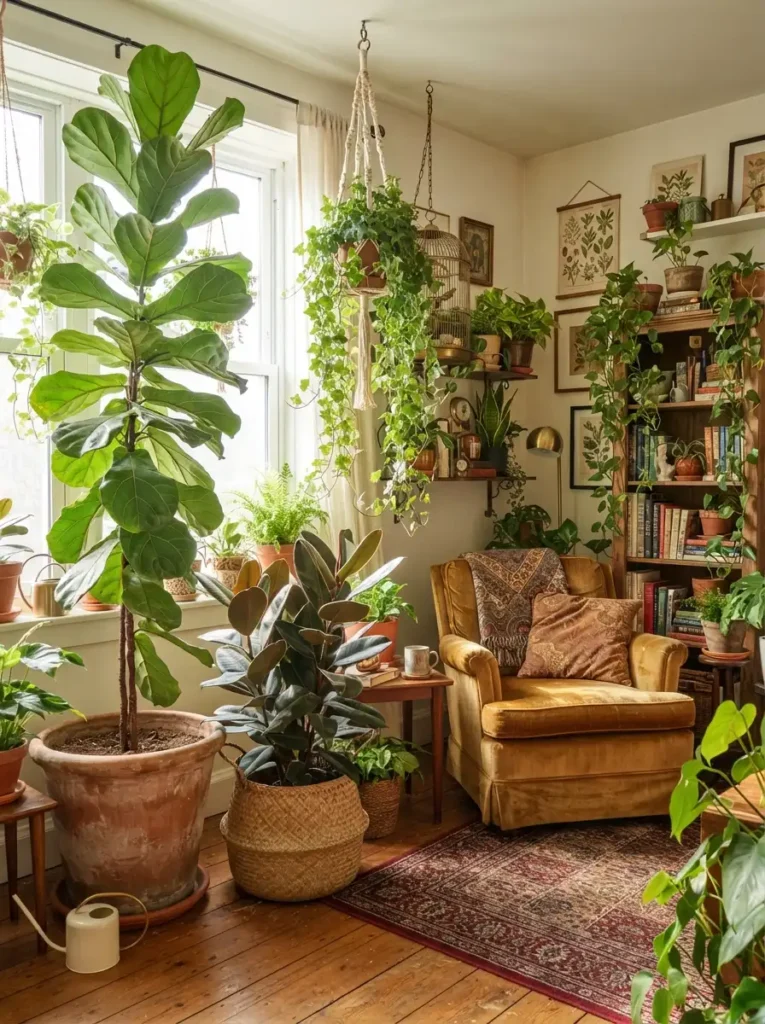
Eclectic homes are never sterile, and nothing brings a room to life quite like an abundance of indoor plants. Biophilic design—the concept of connecting indoor spaces with the natural world—is a massive component of the cozy eclectic aesthetic.
Why it works: Plants naturally soften the harsh, right-angled architecture of a room. They introduce vibrant, organic splashes of green, improve indoor air quality, and provide a sense of growth and vitality. An eclectic home embraces the wild, slightly untamed look of an indoor jungle. How to style it: Avoid buying matching, uniform plastic planters. Instead, pot your plants in a wildly diverse collection of containers: weathered terracotta pots, glazed mid-century ceramics, woven seagrass baskets, and upcycled brass buckets. Mix tall, structural plants like a Fiddle Leaf Fig or a Rubber Tree on the floor with trailing plants like English Ivy or String of Pearls cascading from high shelves or macrame ceiling hangers.
9. Incorporating Global and Travel Artifacts
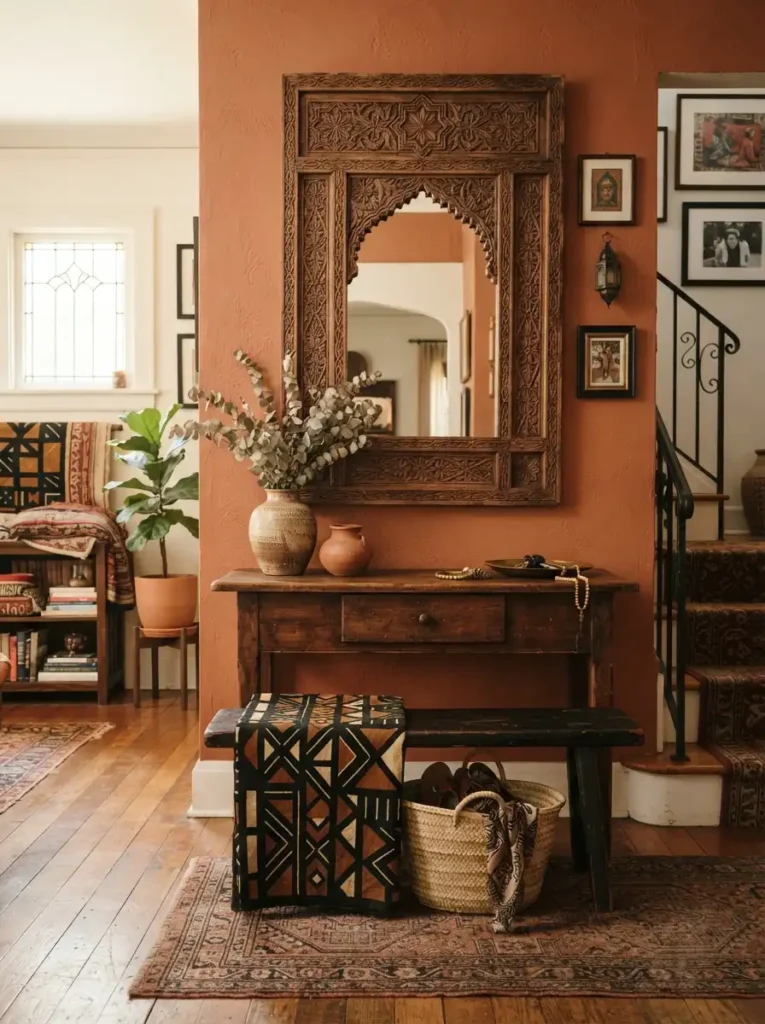
A true eclectic home reflects the worldview and experiences of the people who live in it. Integrating global textiles, cultural artifacts, and travel souvenirs ensures your space feels entirely bespoke and completely distinct from a catalog showroom.
Why it works: Global artifacts bring in patterns, materials, and craftsmanship that are impossible to find in mass-market furniture stores. They tell a story of adventure and curiosity. These pieces add a layer of worldly sophistication and bohemian charm that makes the home feel incredibly warm and culturally rich. How to style it: Use authentic, hand-woven textiles whenever possible. Drape a vibrant Mexican serape or a West African mudcloth over the foot of your bed. Hang a beautifully carved Moroccan wooden mirror in the entryway. Display artisan pottery or hand-carved wooden sculptures purchased during your travels on your coffee table. Let these items serve as daily reminders of your favorite memories.
10. Fearlessly Mixing Wood Finishes
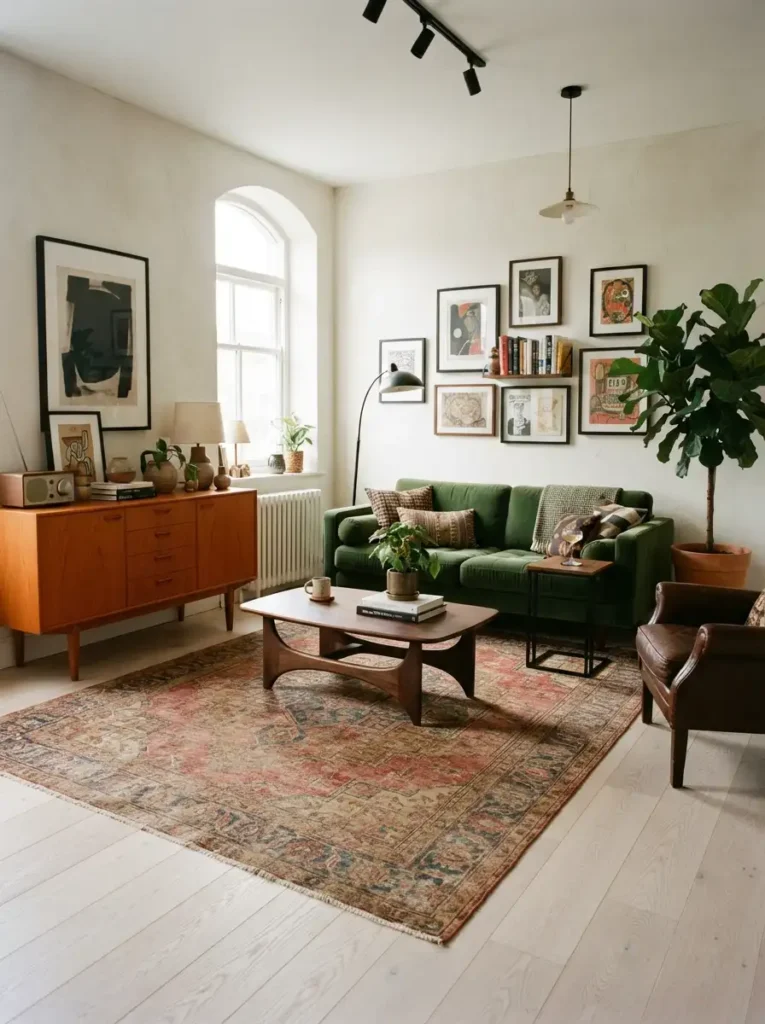
One of the most outdated rules in interior design is the belief that all the wood in a room must perfectly match. In a cozy eclectic space, matching wood tones is actually discouraged.
Why it works: When every piece of wood in a room is the exact same color—say, all dark espresso or all light ash—the room feels flat, artificial, and overly coordinated. Mixing wood tones gives the room a sense of history, making it look as though the furniture was collected slowly over generations rather than purchased all at once on a single Saturday. How to style it: The trick to mixing woods is ensuring you mix them evenly throughout the room so it looks intentional. Pair a warm, orange-toned mid-century teak credenza with a dark, cool-toned walnut coffee table and light, whitewashed oak floors. To bridge the gap between the different woods, use a large area rug to visually separate the furniture from the floor, and use metal accents (like brass or matte black iron) to tie the pieces together.
11. Statement Wallpaper in Unexpected Places
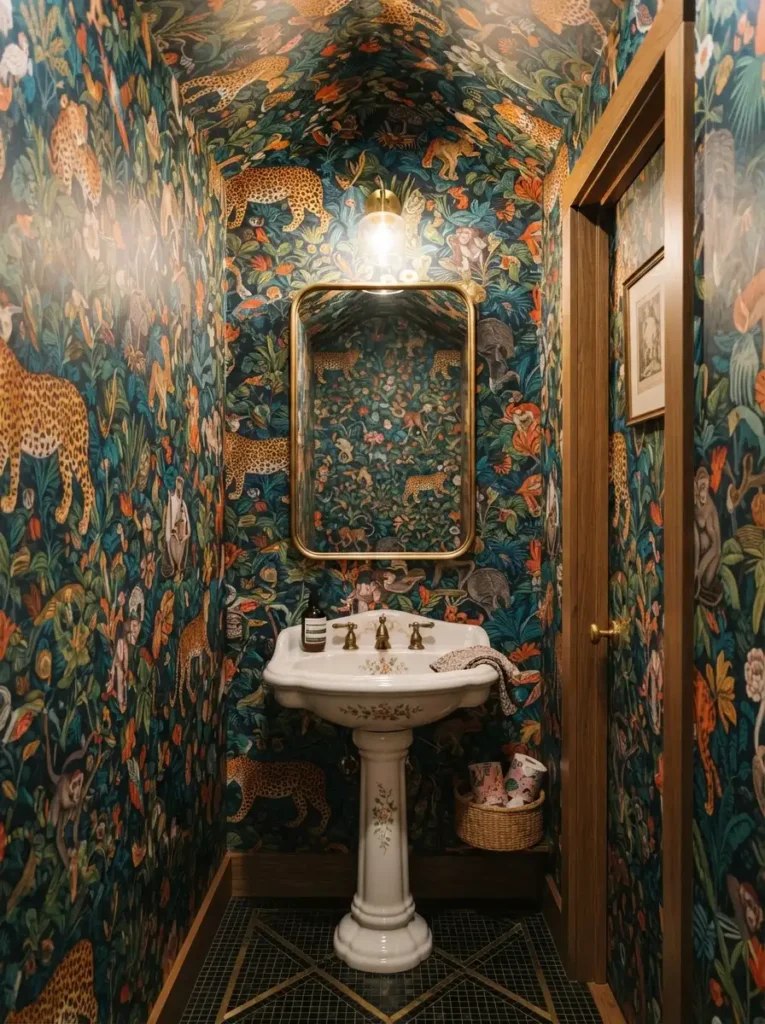
Wallpaper is a fantastic way to introduce pattern and personality, but in an eclectic home, you do not have to use it in the traditional way. Instead of wallpapering a massive living room, use bold, highly illustrative wallpaper in unexpected, small doses.
Why it works: Applying bold wallpaper in small, unexpected areas creates moments of “surprise and delight” throughout the home. It adds incredible depth and a highly customized, jewel-box feel without visually overwhelming the primary living spaces. How to style it: Use a wildly vibrant, large-scale botanical or whimsical animal-print wallpaper in a tiny powder room, wrapping it on all four walls and the ceiling. Alternatively, use a bold geometric wallpaper to line the back panels of a built-in bookshelf, or apply a stunning, mural-style wallpaper to the ceiling of a cozy bedroom, drawing the eye upward.
12. The Upcycled or Painted Vintage Focal Point
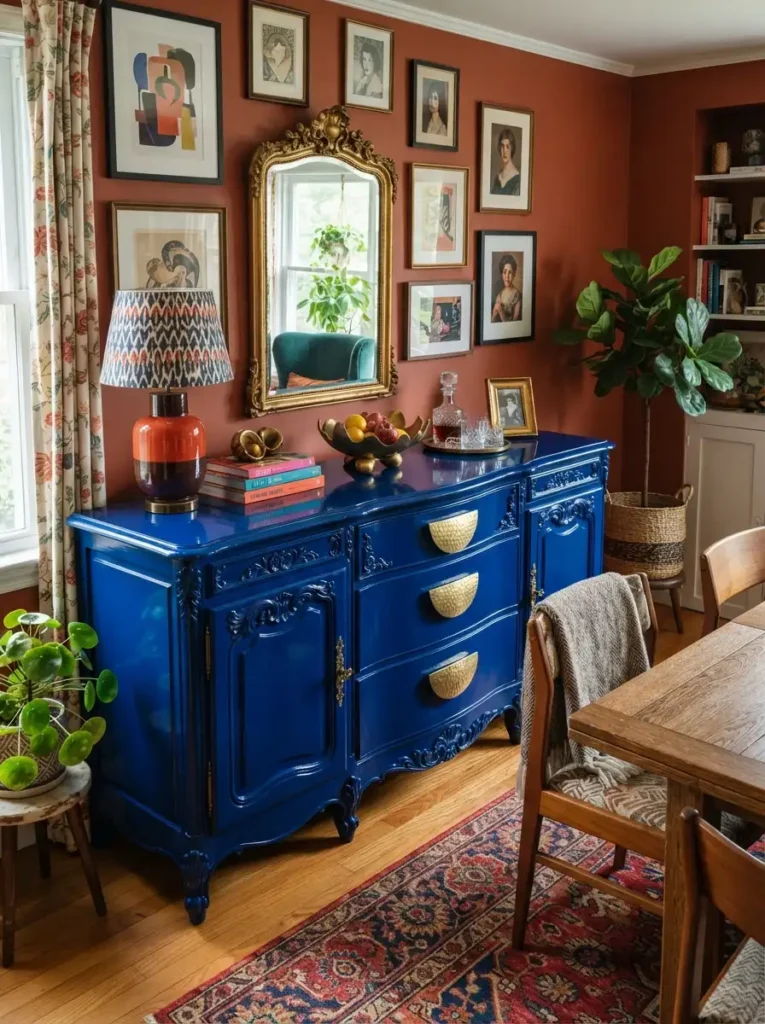
Eclectic design champions sustainability and creativity. Taking a forgotten, damaged, or outdated piece of vintage furniture and giving it a highly personalized, creative new life is a cornerstone of this aesthetic.
Why it works: It guarantees that you have a 100% unique piece of furniture that no one else in the world owns. A painted or upcycled vintage piece injects a massive burst of personality, color, and bespoke craftsmanship into the room, serving as an incredible conversation starter. How to style it: Find an old, ornate French provincial dresser or a heavy, carved wooden sideboard at a thrift store. Paint it in a high-gloss, wildly unexpected color—like vibrant coral, deep mustard, or electric cobalt blue. Swap out the old hardware for oversized, modern brass pulls or quirky ceramic knobs. Place it in your entryway or dining room as an undeniable, functional work of art.
13. Intimate, Mismatched Conversation Nooks
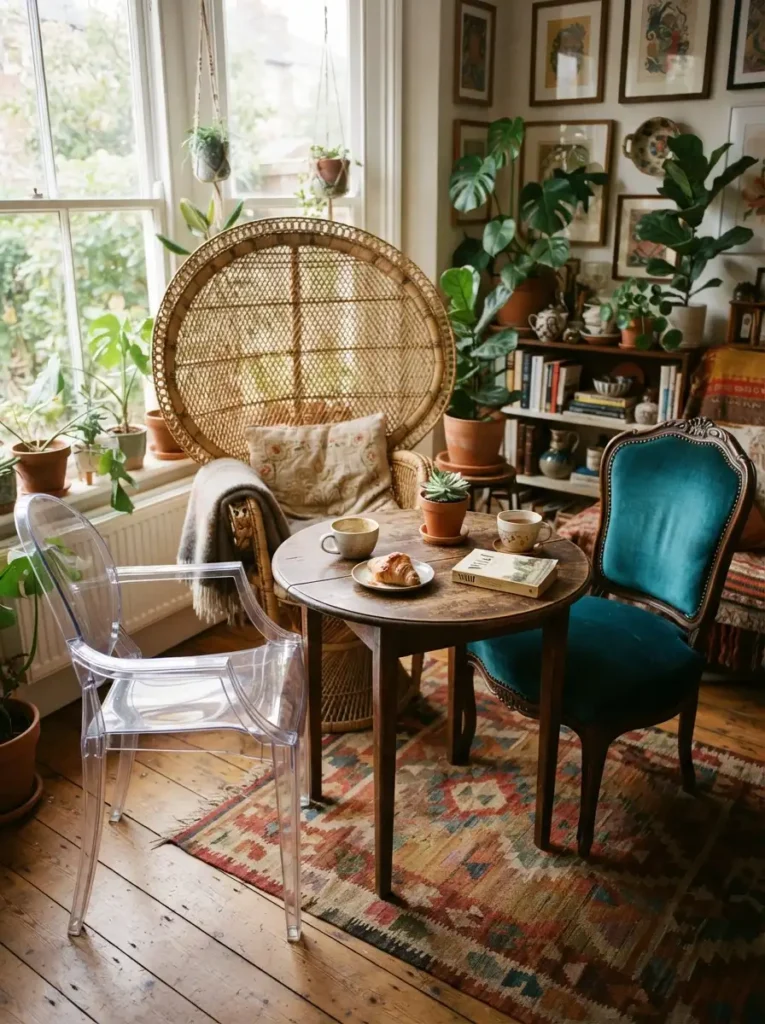
Finally, a cozy eclectic home prioritizes human connection and relaxation. Instead of arranging all your furniture to face a massive television screen, create small, intimate conversation nooks using completely mismatched seating.
Why it works: Mismatched seating breaks the formality of traditional living rooms. It creates a highly relaxed, café-like atmosphere that encourages guests to pull up a chair, grab a cup of coffee or a glass of wine, and engage in deep conversation. It feels incredibly inviting and unpretentious. How to style it: In a sunny corner of your living room or bedroom, set up a small, round vintage bistro table. Surround it with entirely different chairs: perhaps one modern acrylic ghost chair, one woven rattan peacock chair, and one plush, velvet-upholstered antique dining chair. The unifying factor should simply be the circular layout, inviting people to sit and connect in a deeply stylish, personalized setting.
Embracing Your Unique Sanctuary
Designing a cozy, eclectic home is not about following a strict set of rules or replicating a specific photograph from a magazine. It is the ultimate exercise in self-expression, creative freedom, and rule-breaking. It is about viewing your home as a living, breathing canvas that evolves alongside you.
When you master the art of mixing contrasting eras, layering deeply textured fabrics, and curating personal artifacts, you stop living in a generic house and start living in a true sanctuary. By implementing these 13 cozy eclectic ideas, you can build a space that rejects the sterile perfection of modern showrooms in favor of something far more valuable: a home that is profoundly warm, endlessly fascinating, and undeniably, beautifully yours.