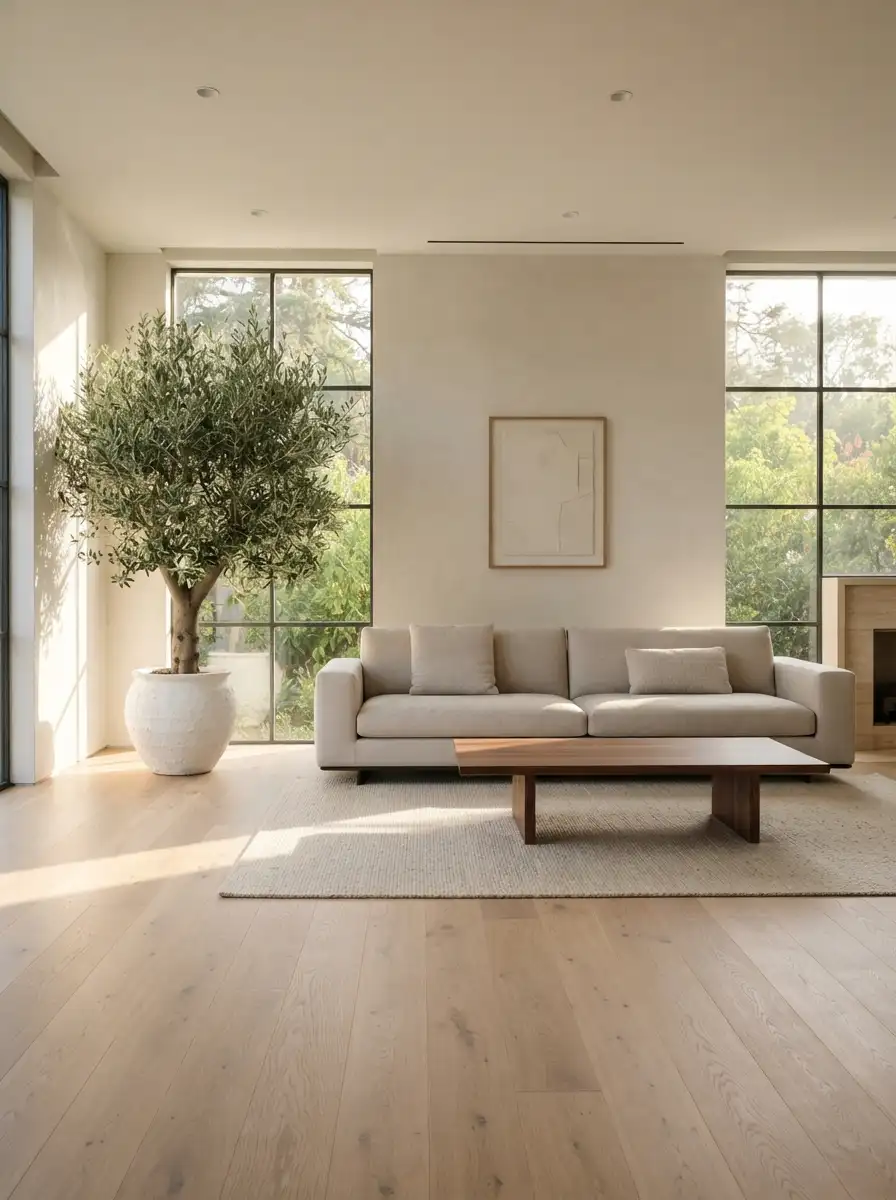
Decluttering hacks and ideas have fundamentally transformed the way modern interior designers and homeowners approach the concept of a sanctuary. In today’s fast-paced, hyper-stimulated world, the physical state of your home is a direct reflection of your internal mental state. Clutter is no longer just viewed as a mild annoyance or a harmless byproduct of a busy life; it is scientifically recognized as a source of visual noise that actively spikes cortisol levels, induces subconscious anxiety, and severely diminishes your ability to focus and relax. When every surface of your home is covered in unsorted mail, unused gadgets, and overflowing laundry, your brain is constantly forced to process this overwhelming stimuli, leaving you feeling drained before you even start your day.
The most luxurious, high-end homes in contemporary US interior design do not feel expensive simply because of the price tag on their furniture. They feel expensive because of what they lack. They lack visual chaos. They boast expansive negative space, beautifully curated surfaces, and a profound sense of intentionality. Achieving this aesthetic is not about throwing away everything you own or living in a sterile, joyless white box. True decluttering is about rigorous curation. It is a systematic, mindful process of stripping away the excess so that the items you genuinely love, use, and need can finally take center stage.
If you are ready to reclaim your space, lower your daily stress, and elevate the aesthetic appeal of your environment, you need actionable, high-value strategies that go beyond simply “cleaning up.” Here are 16 highly detailed, transformative concepts to help you master the art of decluttering. Each idea dives deep into the practical implementation, styling secrets, and the underlying human psychology that will help you maintain a beautifully curated home forever.
1. The 90/90 Minimalism Rule
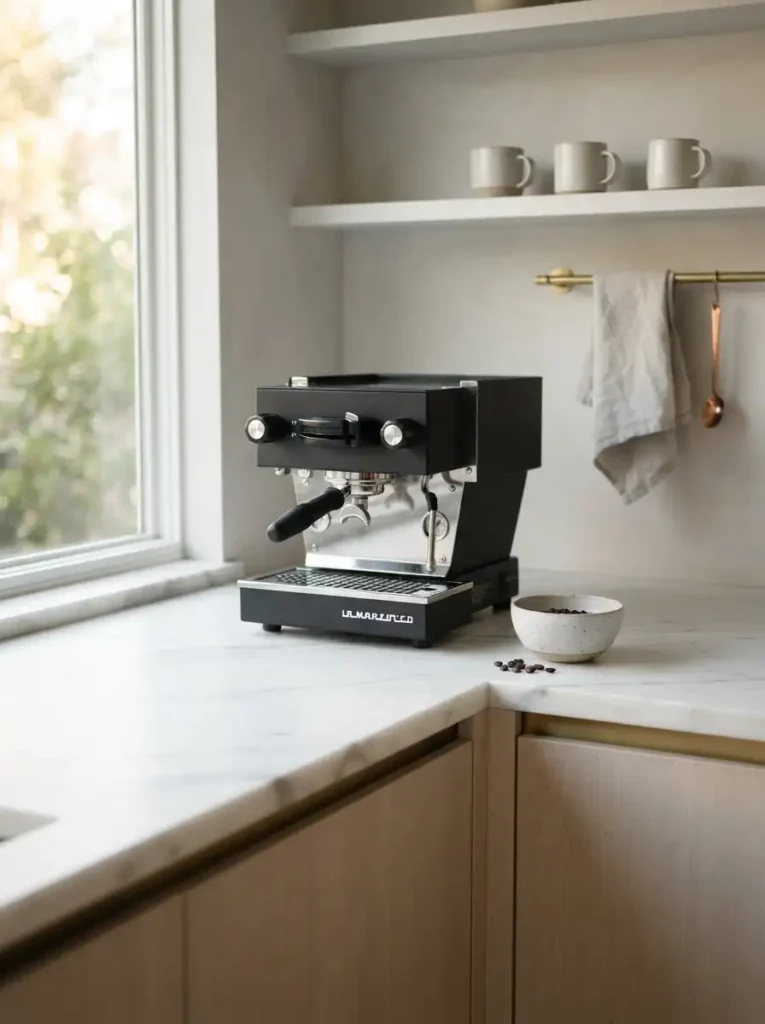
One of the most effective ways to aggressively cut down on household bloat is by applying the 90/90 rule, a concept popularized by minimalist thinkers. It forces you to look at your possessions through a lens of strict temporal utility rather than vague future potential. Implementation: Pick up an object—a kitchen gadget, a piece of clothing, or a decorative item. Ask yourself: “Have I used this in the last 90 days?” If the answer is no, ask the follow-up question: “Will I definitively use it in the next 90 days?” If the answer is still no, the item must be donated, sold, or thrown away. Organizational Tips: Apply this aggressively to utility spaces like the kitchen and the bathroom vanity. Keep only the tools that serve your current daily routines, not the fantasy routines you hope to start “someday.” Design Psychology: We often keep items out of “just in case” anxiety, anchoring ourselves to a hypothetical future. The 90/90 rule completely bypasses this psychological trap by grounding your decisions in hard, factual reality. It forces you to design your home for the person you are today, resulting in a highly functional, deeply authentic living space.
2. The “One In, One Out” Spatial Equilibrium
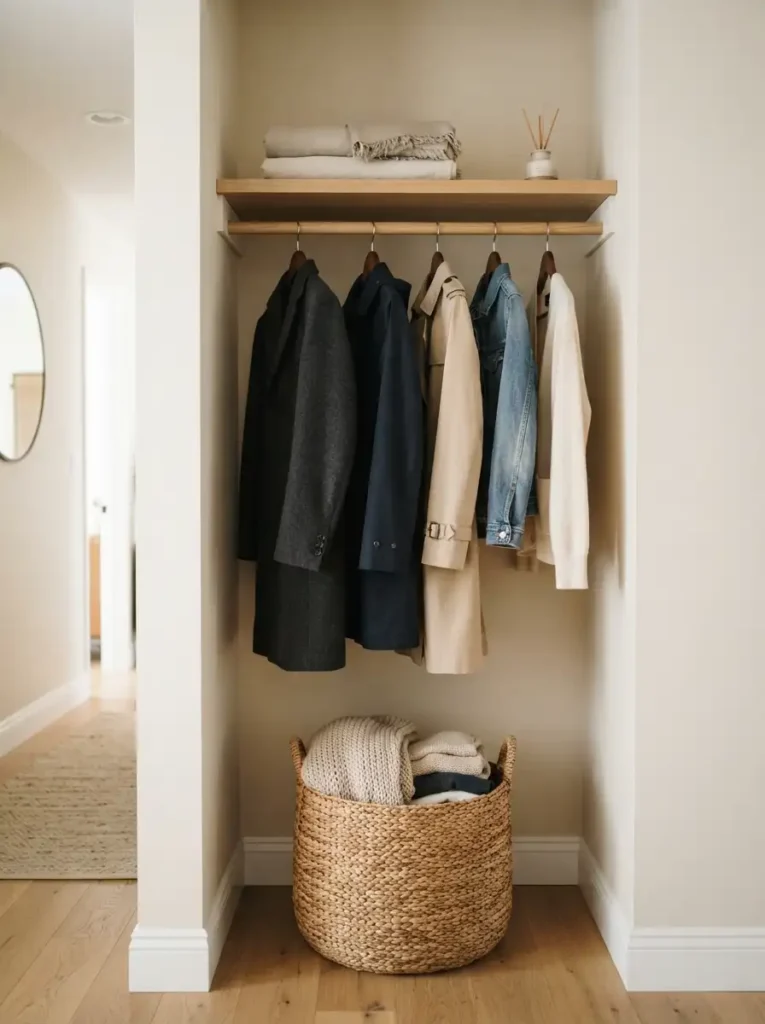
Clutter happens when the rate of items entering your home exceeds the rate of items leaving it. To maintain a beautifully curated space without constantly needing massive weekend decluttering sessions, you must establish a strict spatial equilibrium. Implementation: Adopt a non-negotiable household policy: for every single new item that enters the house, a similar item must be removed. If you buy a new coffee mug, an old one must be donated. If you buy a new pair of sneakers, a worn-out pair must leave the closet. Organizational Tips: Keep a permanent, beautifully woven “donation basket” in the bottom of your coat closet or garage. When you buy something new, immediately place the outgoing item into the basket. When the basket is full, drop it off at a local charity. Design Psychology: This hack completely rewires your consumer habits. It forces you to evaluate the true value of a potential purchase by weighing it against the pain of losing something you already own. It transitions your mindset from mindless accumulation to intentional curation, ensuring your home’s inventory never expands beyond its physical boundaries.
3. The Reverse Hanger Visual Audit
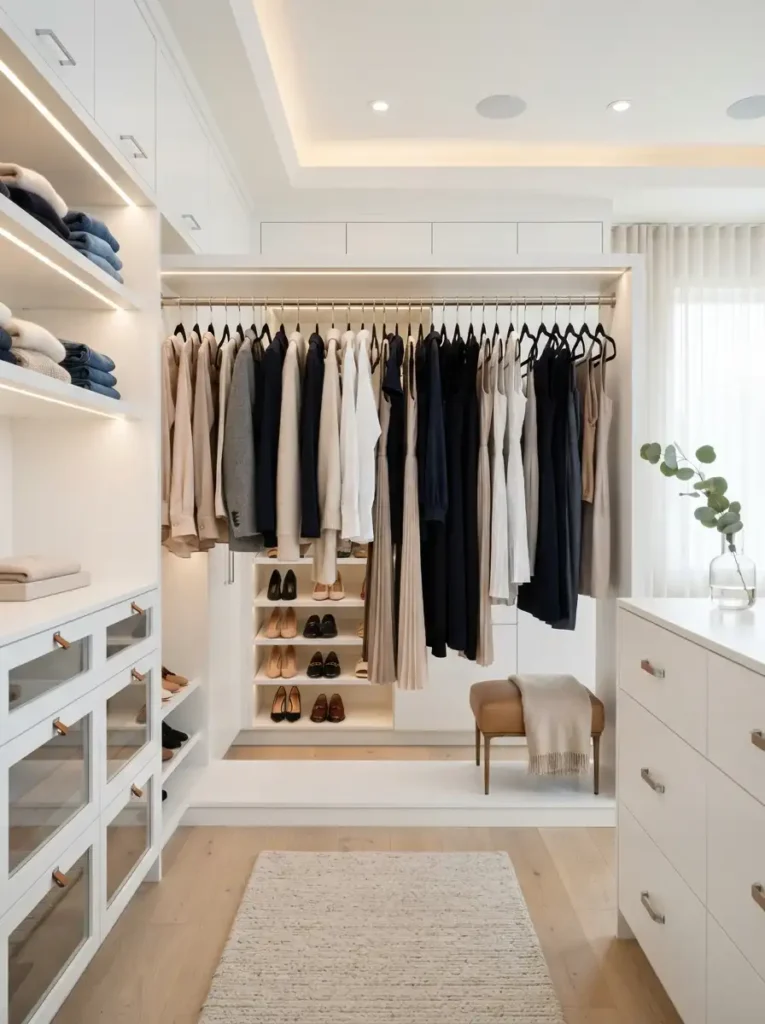
The primary bedroom closet is notoriously one of the most difficult spaces to declutter because of our emotional attachment to our wardrobe. The reverse hanger method removes emotion from the equation and provides undeniable visual data. Implementation: At the beginning of the season, turn every single hanger in your closet so that the hook is facing backward (pointing toward you). Whenever you wear an item of clothing and return it to the closet, hang it back up normally (hook facing away from you). Organizational Tips: Use unified, slim velvet hangers in a single color (like black or cream) for this exercise. At the end of six months, immediately pull out any clothing still on a backward-facing hanger. You now have hard proof that you do not wear these items. Donate them immediately. Design Psychology: Humans suffer heavily from the “sunk cost fallacy”—the inability to let go of something because we spent money on it. We convince ourselves we wear clothes that we actually haven’t touched in years. This method bypasses your emotional biases and relies entirely on behavioral data, making the purging process logical, swift, and completely guilt-free.
4. Decanting for Visual Noise Reduction

Have you ever wondered why high-end, celebrity pantries and bathrooms look so incredibly soothing? It is because they have entirely eliminated “visual noise.” Commercial packaging is designed to be loud, bright, and attention-grabbing, which creates immense visual clutter even when items are perfectly lined up. Implementation: Remove everyday items from their original cardboard boxes, plastic bags, and brightly colored commercial packaging. Transfer them into uniform, clear glass jars, matte ceramic canisters, or acrylic bins. Organizational Tips: Decant your pantry staples (flour, rice, pasta, cereal) into matching airtight glass containers with minimalist, waterproof custom labels. Do the same in the bathroom—put cotton swabs, bath salts, and soap into elegant glass apothecary jars. Design Psychology: The human brain processes every single printed word, logo, and bright color it sees. A pantry full of commercial packaging forces your brain to read and process 50 different micro-advertisements at once, causing subconscious fatigue. Unified decanting strips away this text and color, turning chaotic supplies into a soothing, harmonious, and highly luxurious architectural display.
5. The “Flat Surface Diet”
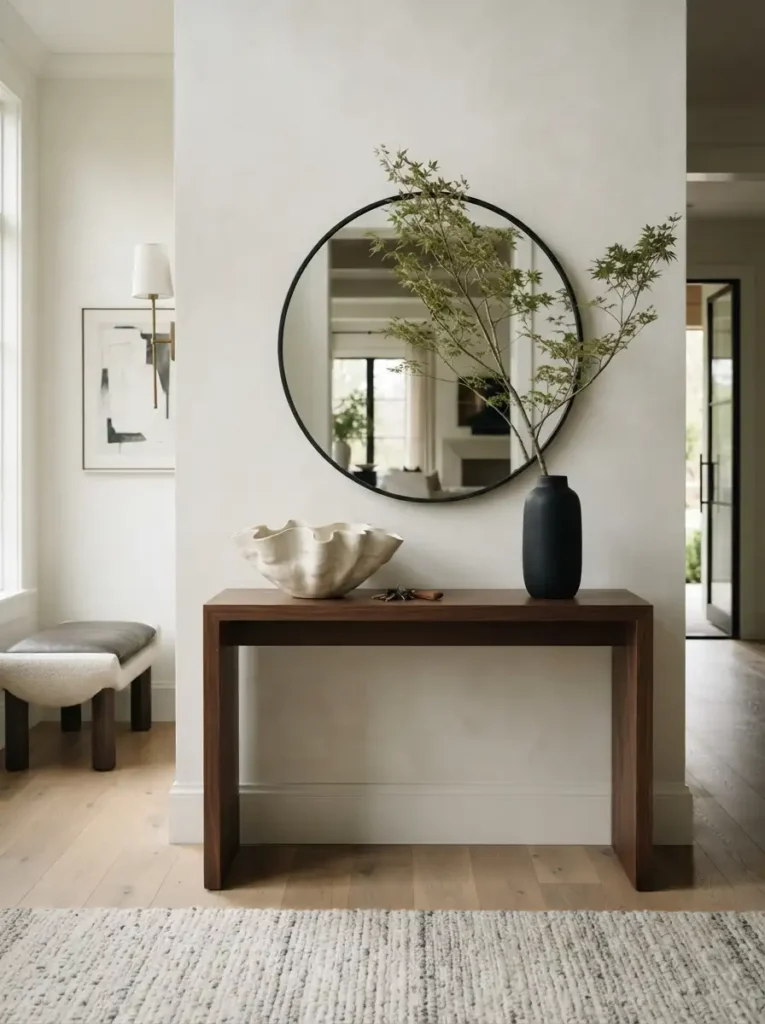
In interior design, flat surfaces—such as kitchen counters, dining tables, entryway consoles, and bedroom dressers—are visual breathing spaces. However, in most homes, they become magnetic catch-alls for mail, keys, random receipts, and abandoned projects. Implementation: Put your home on a strict “flat surface diet.” Institute a rule that horizontal surfaces are for working or decorating, not for storing. Clear everything off your kitchen counters except the two appliances you use daily (e.g., the coffee maker and toaster). Organizational Tips: To stop the entryway table from becoming a dumping ground, place a single, highly aesthetic decorative bowl on it exclusively for keys, and a sleek hidden drawer or woven basket beneath it for mail. If an item does not fit in the designated vessel, it must be put away properly. Design Psychology: Clutter attracts clutter. If there is one piece of junk mail left on a dining table, psychological friction is lowered, and it becomes acceptable to place a second piece there. By keeping flat surfaces ruthlessly clear, you establish a high standard of cleanliness that makes any new clutter immediately obvious and intolerable, prompting instant cleanup.
6. The “Quarantine” Box for Sentimental Paralysis
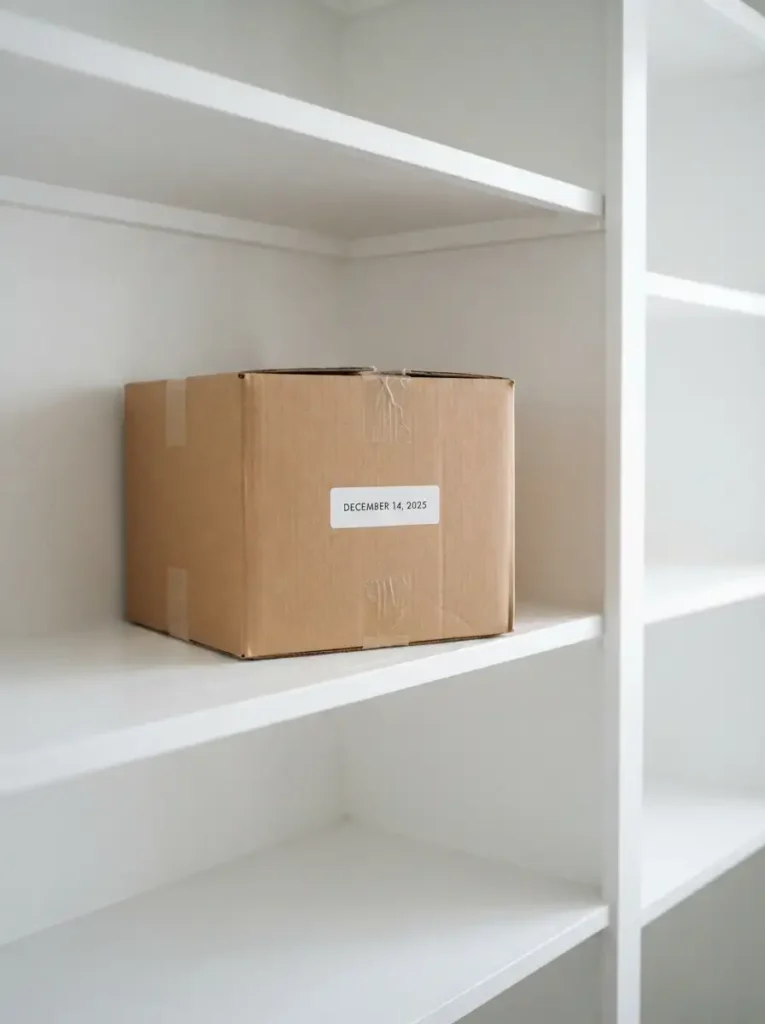
Decluttering often halts completely when we encounter items we don’t use, but feel too guilty or anxious to throw away (like gifts, heirlooms, or expensive mistakes). The quarantine box provides a psychological safety net. Implementation: When you find an item you are terrified to let go of but know you don’t need, place it in a designated cardboard box. Tape the box shut, write a date on it for six months in the future, and hide it in the basement, attic, or top shelf of a closet. Organizational Tips: Set a reminder on your phone for the six-month mark. When the alarm goes off, if you have not needed, thought about, or missed the items in the box, you must donate the entire box without opening it. Design Psychology: This technique brilliantly manipulates “loss aversion.” The brain fears the immediate finality of throwing something away. By merely “relocating” the item to a box, you remove the immediate panic. Over six months, the emotional attachment naturally severs. Throwing the taped box away later feels effortless because you have already proven to yourself that you can live perfectly well without its contents.
7. Boundary-Based Volume Limits
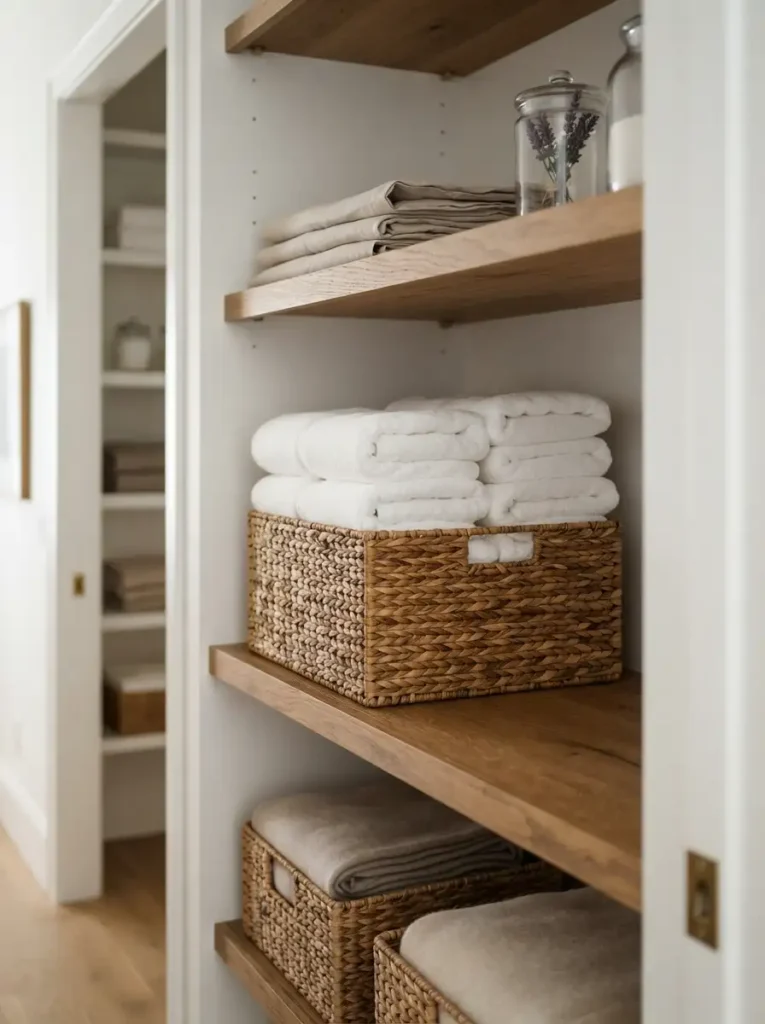
Instead of trying to decide how many pens, cables, or t-shirts you should own, let the physical architecture of your home make the decision for you through boundary-based limits. Implementation: Assign a specific, fixed-size container or drawer to a category of items. For example, dedicate one medium-sized basket to your winter scarves. The rule is simple: you can keep as many scarves as you want, as long as they fit easily into the basket without overflowing. Organizational Tips: Apply this to children’s toys using beautiful canvas bins, or to your Tupperware cabinet. The moment the drawer cannot close smoothly or the basket overflows, you are required to pull items out and donate them until the boundary is respected again. Design Psychology: This completely removes the abstract, overwhelming question of “how much is too much?” It outsources the decision-making process to the physical container. It frames decluttering not as a punishment, but as a puzzle of curating the “best of the best” to fit comfortably within your luxurious, pre-determined spatial limits.
8. Zone-Based Micro-Decluttering (The 15-Minute Sweep)
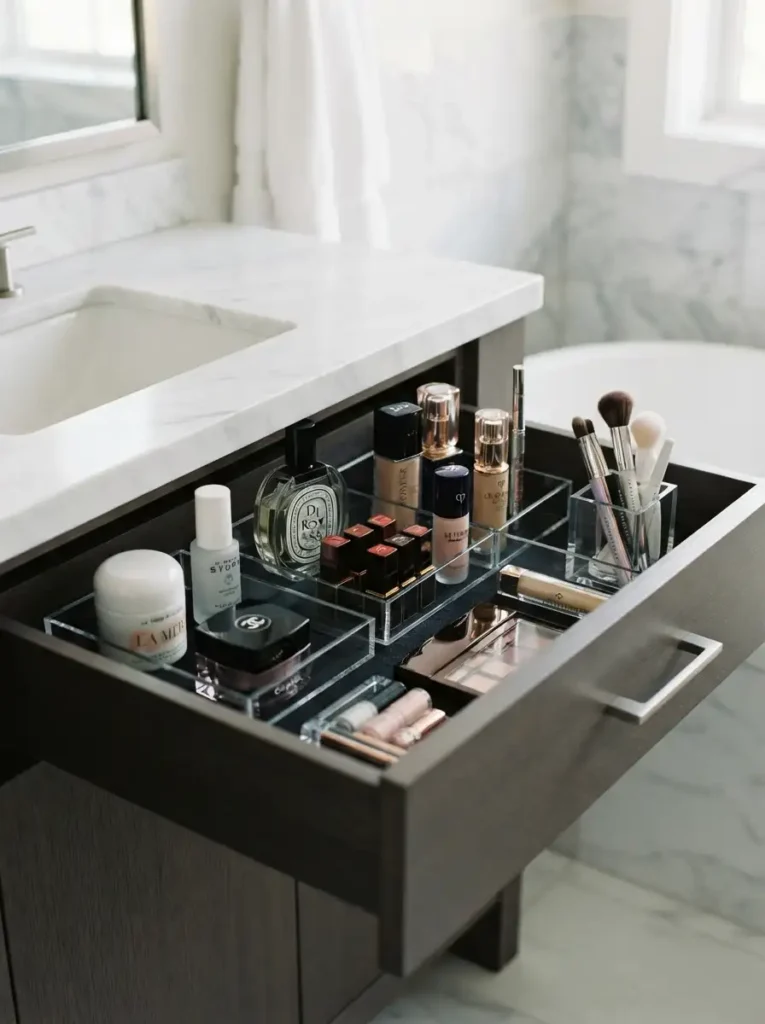
The thought of “decluttering the entire house” is a massive, paralyzing goal that often leads to procrastination. The secret to a consistently clean home is breaking the process down into highly manageable, low-stakes micro-tasks. Implementation: Stop trying to tackle whole rooms. Instead, set a timer on your phone for exactly 15 minutes. Pick one hyper-specific micro-zone: a single junk drawer, the shelf under the bathroom sink, or the glovebox of your car. Organizational Tips: Keep a small trash bag and a donation box right next to you. Work as fast as possible until the timer goes off. When the 15 minutes is up, you are officially done for the day, regardless of whether the zone is finished or not. Design Psychology: This leverages the psychological principle of “habit stacking” and overcomes the barrier to entry. The brain can easily agree to 15 minutes of work because it is a low-energy commitment. However, the dopamine hit you receive from perfectly organizing one small drawer creates a positive feedback loop, dramatically increasing your motivation to tackle another zone the next day.
9. Hidden Multi-Functional Storage Furniture
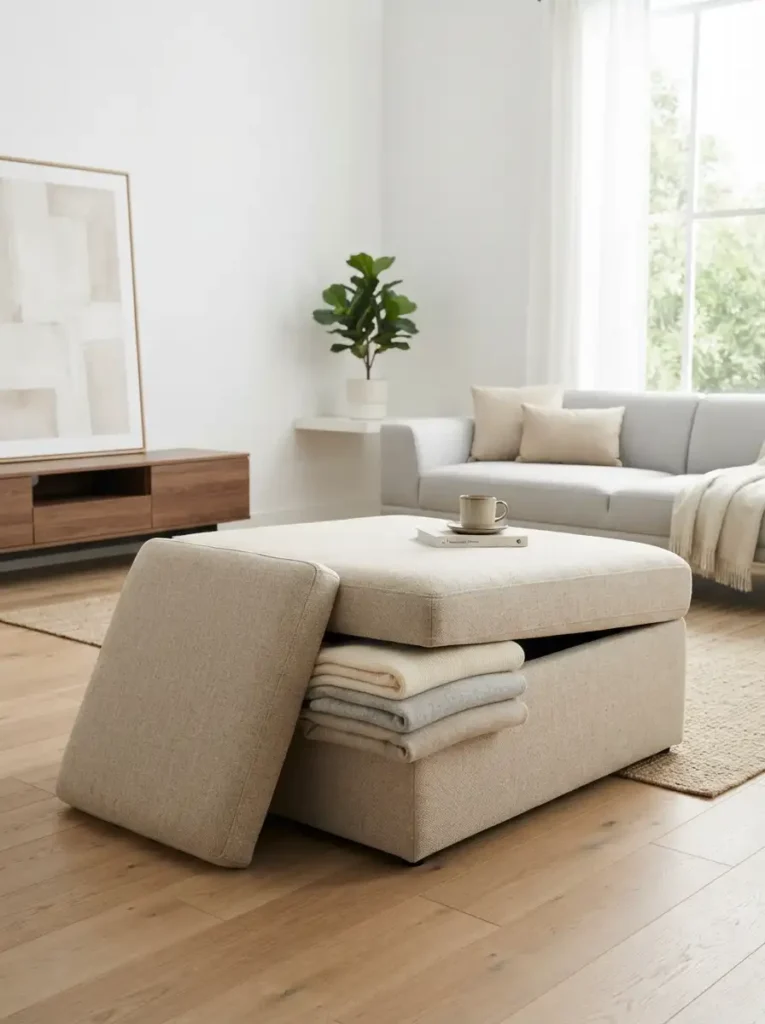
To achieve the pristine, uncluttered “clean aesthetic” trending in US interior design, you must completely hide your functional clutter from the naked eye. This requires furniture that works twice as hard. Implementation: Swap out purely decorative furniture for pieces that offer cavernous, concealed storage. Replace a standard coffee table with an upholstered storage ottoman or a solid wood trunk. Upgrade your bedframe to a model that features seamless, built-in hydraulic lift storage underneath the mattress. Organizational Tips: Use these hidden compartments for bulky, visually unappealing items that ruin a room’s aesthetic—extra throw blankets, seasonal coats, board games, or bulky exercise equipment. Design Psychology: Visual space translates to mental peace. By hiding your essential but ugly items inside beautiful, streamlined furniture, you trick the eye into perceiving the room as much larger and airier than it actually is. It allows you to own the items you need for a comfortable life without letting them physically dominate your living space.
10. Digitizing Sentimental Paperwork and Art
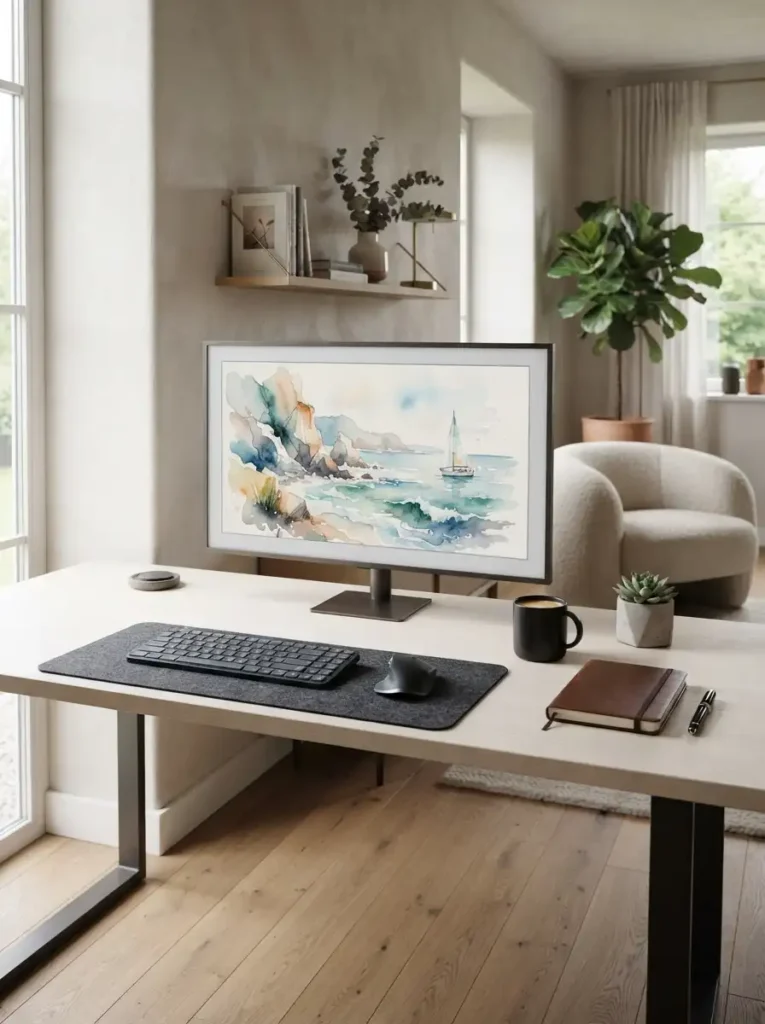
Paper clutter—children’s artwork, old greeting cards, concert tickets, and sentimental letters—is insidious. It piles up quickly, looks incredibly messy, but feels like a betrayal to throw away in the trash. Implementation: Create a strict digitization process. Purchase a high-quality scanner or use a premium scanning app on your smartphone. Take beautiful, well-lit digital captures of the birthday cards, the messy finger paintings, and the old event tickets, and save them in a dedicated, backed-up cloud folder. Organizational Tips: Once digitized, throw the physical paper into the recycling bin. If you want to display the memories, invest in a high-end, matte-screen digital art frame (like the Samsung Frame or Aura) and have the digitized memories cycle beautifully on your wall. Keep only a tiny, strict archival box for the absolute most precious physical documents (like a marriage certificate). Design Psychology: We cling to paper because we are terrified of losing the memory attached to it. Digitization separates the memory from the physical object. You retain 100% of the nostalgic value in a pristine digital format, allowing you to confidently discard the physical paper that is currently creating anxiety-inducing visual clutter on your countertops.
11. The “Would I Buy This Today?” Test
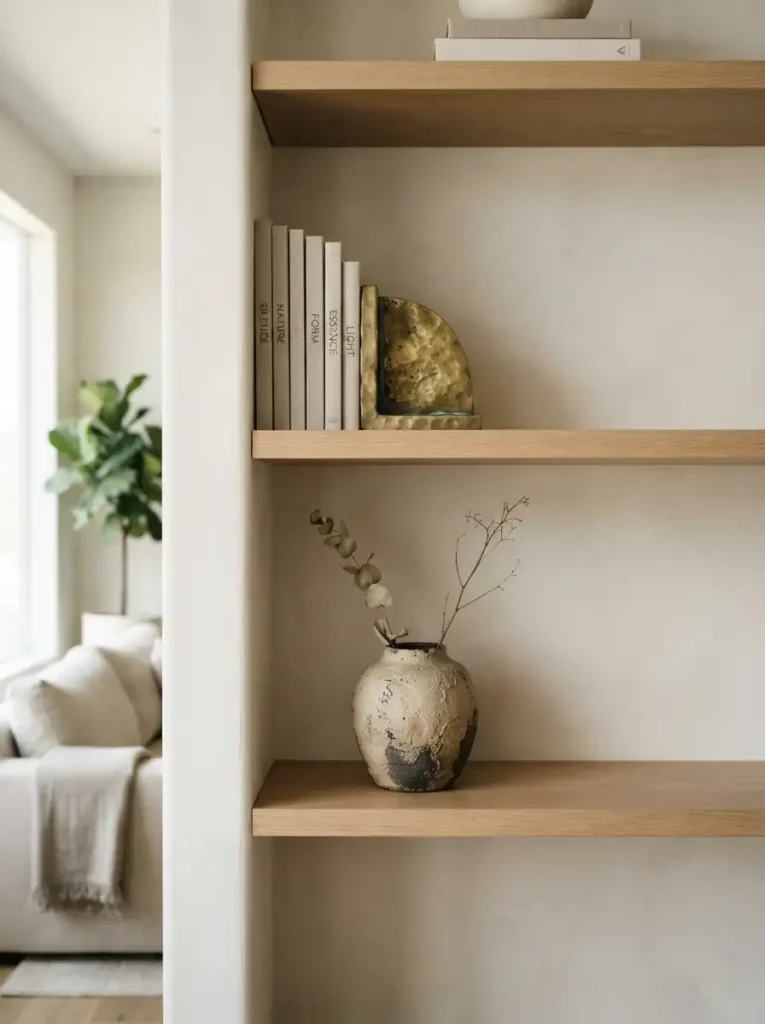
Over time, our homes become filled with items that matched our style five years ago but no longer reflect who we are today. To curate a space that feels intentional, you must ruthlessly audit your decor. Implementation: Walk through your living room or bedroom and look at every piece of decor—throw pillows, vases, framed art, and side tables. Ask yourself: “If I were in a store right now, and I saw this item, would I spend my hard-earned money to buy it again today?” Organizational Tips: If the answer is an immediate “No,” remove the item from the room. Place it in a donation box. Do not leave it on the shelf simply because the shelf looks empty. Embrace the negative space until you find a piece you truly love. Design Psychology: As humans grow, our tastes evolve. Keeping items that no longer resonate with your current aesthetic creates a disjointed, confusing home environment. This test forces you to evaluate items based on your present-day identity, ensuring your home feels like an authentic, highly curated reflection of who you are right now, rather than a museum of who you used to be.
12. Removing Repetitive Duplicates
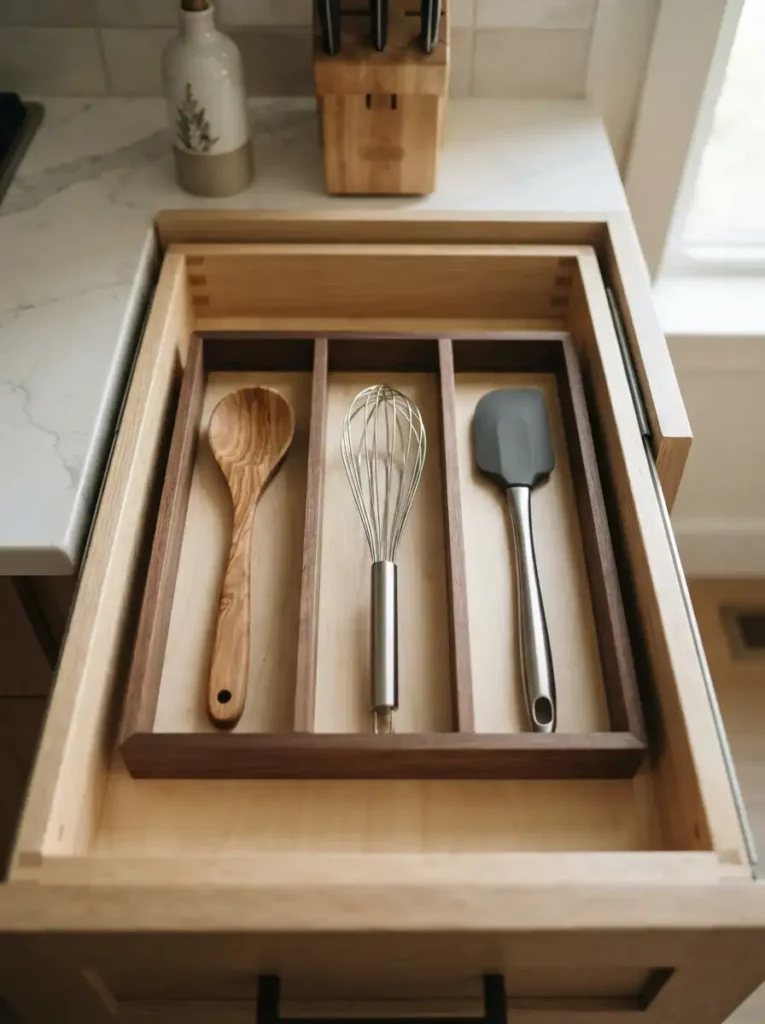
A massive source of unseen clutter in the modern home is the hoarding of duplicates. We often keep multiple versions of the exact same item out of an unfounded fear of scarcity. Implementation: Audit your utility spaces and force yourself to keep only the single best version of a repeated item. You do not need four spatulas; keep the highest-quality silicone one and donate the rest. You do not need five black umbrellas, seven pairs of nearly identical black leggings, or three different tape measures. Organizational Tips: Consolidate everything into one spot before making a decision. Put all your wooden spoons on the counter. Seeing five of them side-by-side makes the absurdity of the duplication obvious, making it incredibly easy to pick your favorite and discard the rest. Design Psychology: Hoarding duplicates stems from a deeply ingrained evolutionary survival mechanism—a scarcity mindset. However, we live in an era of unprecedented abundance. By forcing yourself to keep only the “best in class” item, you elevate your daily experience (always using the best tool) while massively reducing the volume of items crowding your drawers.
13. Core Function Room Zoning
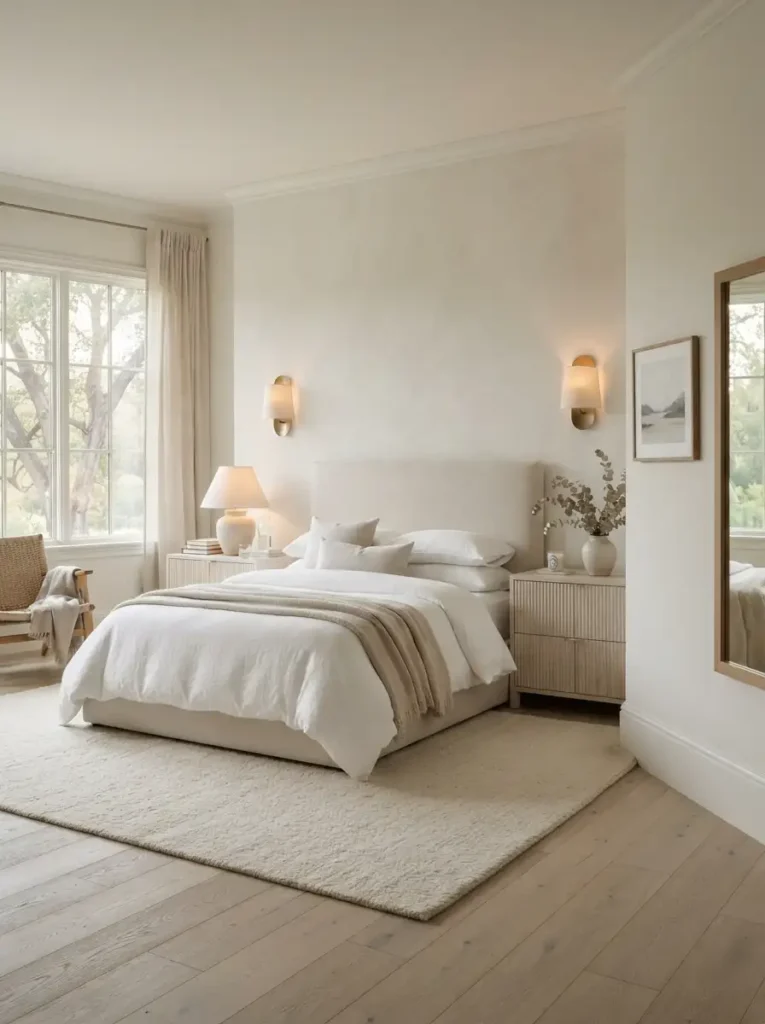
Rooms become intensely cluttered when they lose their identity. When a bedroom becomes a home office, a gym, and a laundry folding station all at once, it becomes a chaotic, unmanageable space. Implementation: Define the “Core Function” of every single room in your house. The bedroom’s core function is sleep and intimacy. The dining room’s core function is eating and hosting. Once defined, violently evict any item that does not support that core function. Organizational Tips: Remove the exercise bike and the stack of work laptops from the primary bedroom immediately. If an item belongs in another zone, put it in a basket and carry it to its rightful room. Design Psychology: Spatial boundaries act as psychological cues for the brain. When you walk into a bedroom that contains nothing but a bed, soft lighting, and clean nightstands, your brain immediately shifts into a relaxed, sleep-ready state. Mixing functional items (like work papers in a sleeping space) creates severe cognitive dissonance, making it impossible to fully relax.
14. Vertical Door-Back Utilization
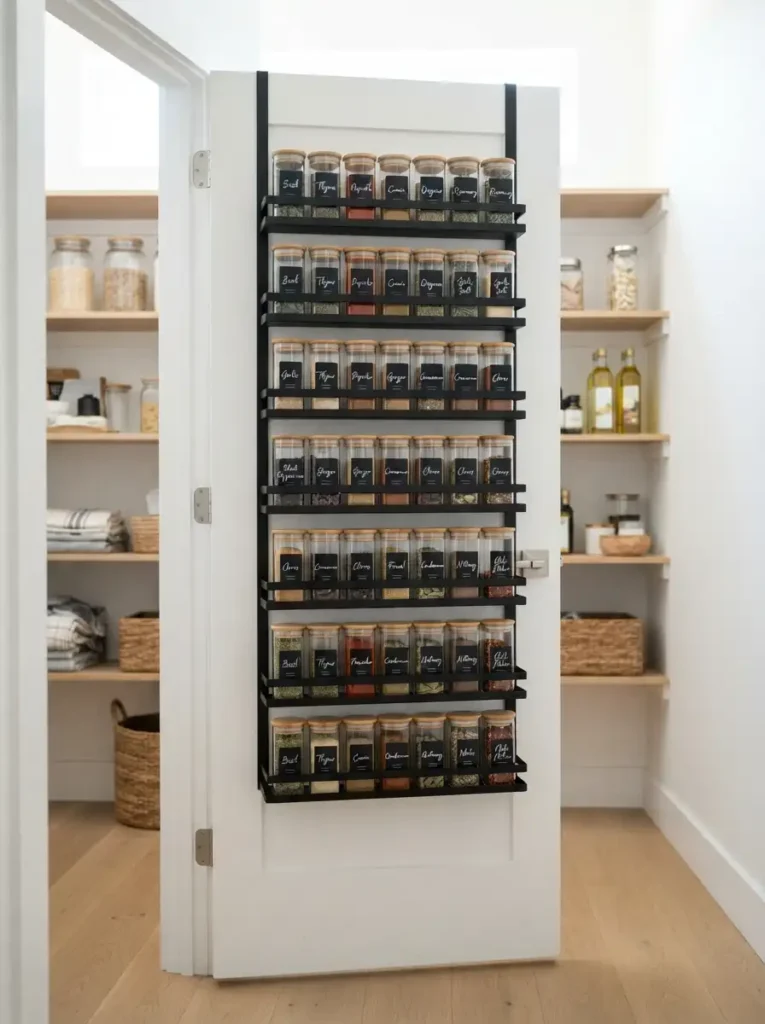
When you have purged everything you can and still lack space, the solution is not to buy a bigger house; the solution is to find the invisible square footage hiding right in front of you. Implementation: The backs of doors are the most underutilized real estate in interior design. Install high-quality, heavy-duty over-the-door organizing racks on the inside of your pantry door, your bathroom door, and your linen closet doors. Organizational Tips: Use sleek, matching wire or acrylic shelving racks—not cheap, sagging plastic shoe organizers. Store spices and small jars on the pantry door, hair tools and lotions on the bathroom door, and cleaning supplies on the laundry room door. Design Psychology: Utilizing the back of a door provides immense, highly accessible storage that completely vanishes the moment the door is closed. It removes hundreds of small, cluttered items from your main shelves and countertops, maintaining a pristine, minimalist aesthetic in the room while keeping your daily essentials perfectly organized and out of sight.
15. The “Touch It Once” Rule for Daily Maintenance
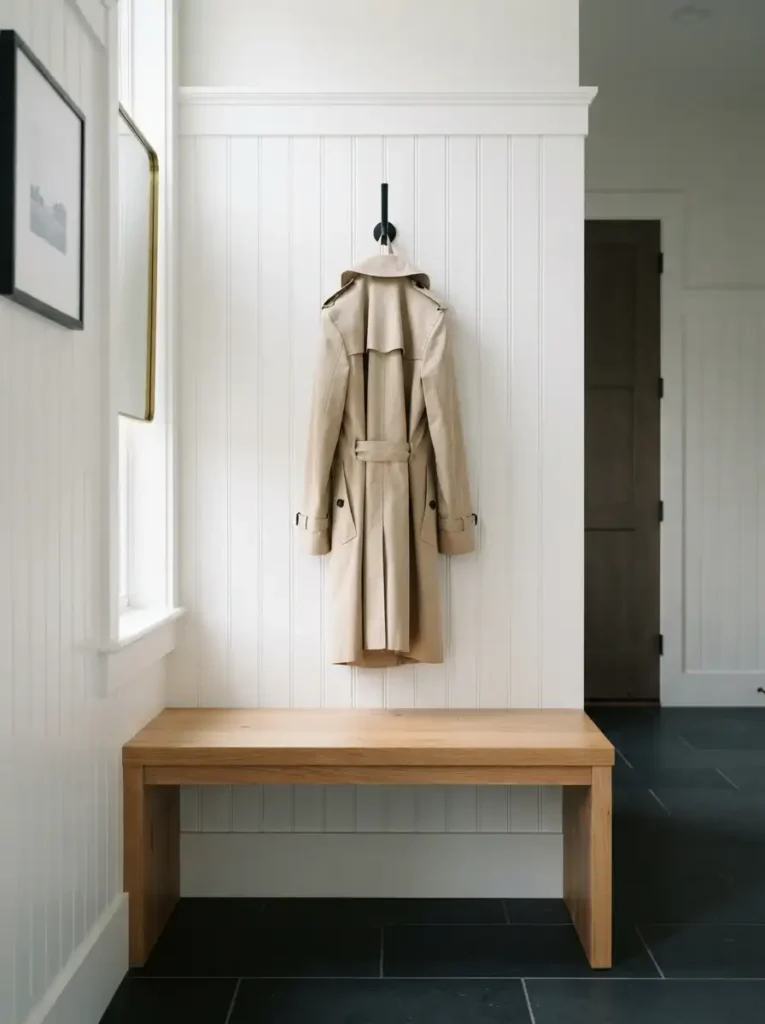
Clutter is simply delayed decision-making. A pile of mail on the counter is a physical manifestation of you deciding to “deal with it later.” The “Touch It Once” rule halts this procrastination in its tracks. Implementation: When you pick an item up, you are not allowed to set it down until it is in its final, permanent resting place. When you bring the mail inside, do not drop it on the counter. Touch it once: carry it directly to the trash can to throw away the junk, and put the bills directly into your filing system. Organizational Tips: Apply this to your clothes. When you take a jacket off, do not throw it on the armchair. Touch it once—put it directly onto a hanger in the closet. Design Psychology: Every time you pick an item up, set it down in the wrong place, and then pick it up again later to put it away, you are doubling your physical effort and cognitive load. By forcing yourself to “touch it once,” you drastically increase your daily efficiency. It turns the act of tidying from a grueling weekend chore into a seamless, invisible part of your daily rhythm.
16. The Nightly Architectural Reset
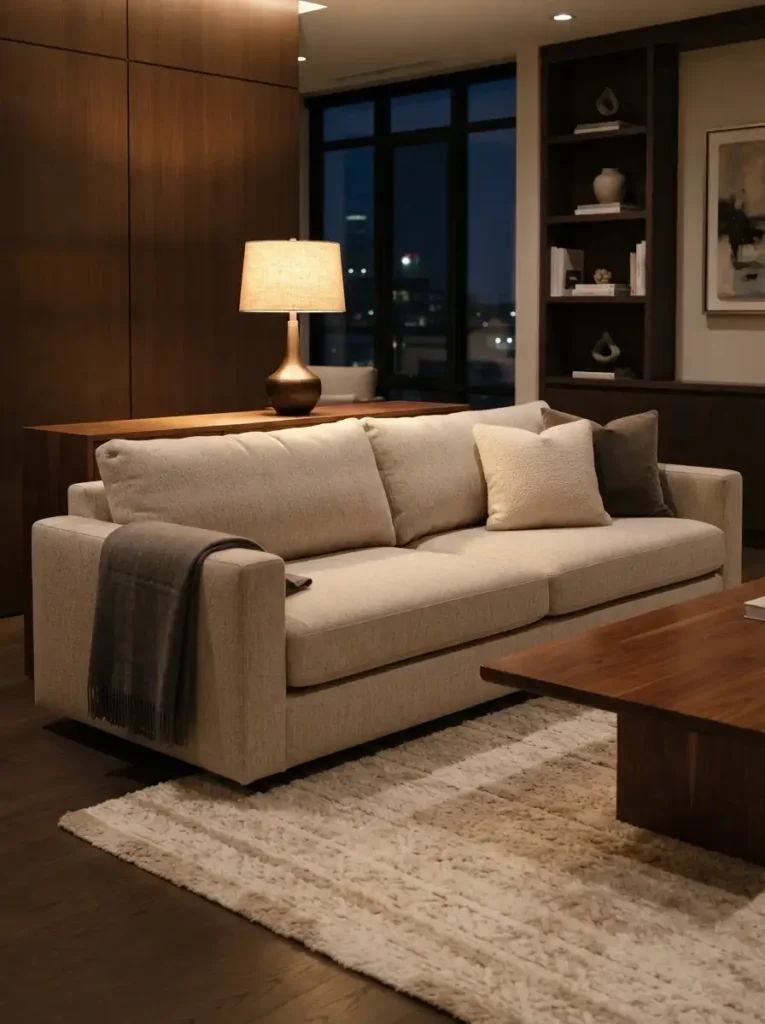
The most powerful decluttering hack is not a one-time purge; it is a daily ritual that protects the sanctity of your home. You must close down your house every single night, just like a high-end boutique closes down its storefront. Implementation: Dedicate the last 15 minutes before you go to bed to the “Nightly Reset.” Walk through your main living areas. Fluff the sofa pillows, fold the throw blankets, put the TV remotes in their designated drawer, place dirty dishes in the dishwasher, and wipe down the kitchen counters. Organizational Tips: Do not do deep cleaning during this time—no vacuuming or scrubbing. This is purely a visual, architectural reset to ensure all items are returned to their designated boundaries. Turn off the main lights and leave only a soft ambient lamp glowing to signal that the space is “closed.” Design Psychology: Waking up to a chaotic, messy kitchen instantly spikes your morning cortisol and starts your day on a stressful, defensive note. Waking up to a pristine, perfectly curated home feels like walking into a luxury hotel. It sets a tone of calm, control, and optimism, providing an incredible psychological boost that carries you through the rest of your day.
Embracing Your Newly Curated Sanctuary
The journey to a beautifully decluttered home is not about achieving cold, sterile perfection. It is about fundamentally redefining your relationship with the objects you allow into your life. Every single item in your house demands a fraction of your time, your energy, and your visual bandwidth. By aggressively editing your possessions using the 90/90 rule, hiding functional necessities in multi-purpose furniture, and adopting a daily maintenance mindset, you are actively reclaiming that stolen energy.
When you strip away the excess, the visual noise, and the items tied to guilt and obligation, you are left with something incredibly powerful: space. This newfound physical space translates directly into profound mental clarity. Your home finally stops acting as a chaotic storage unit and transforms into what it was always meant to be—a restorative, luxurious, and highly personalized sanctuary. By consistently applying these sophisticated decluttering concepts, you ensure that your environment remains a constant source of peace, inspiration, and ultimate comfort for years to come.