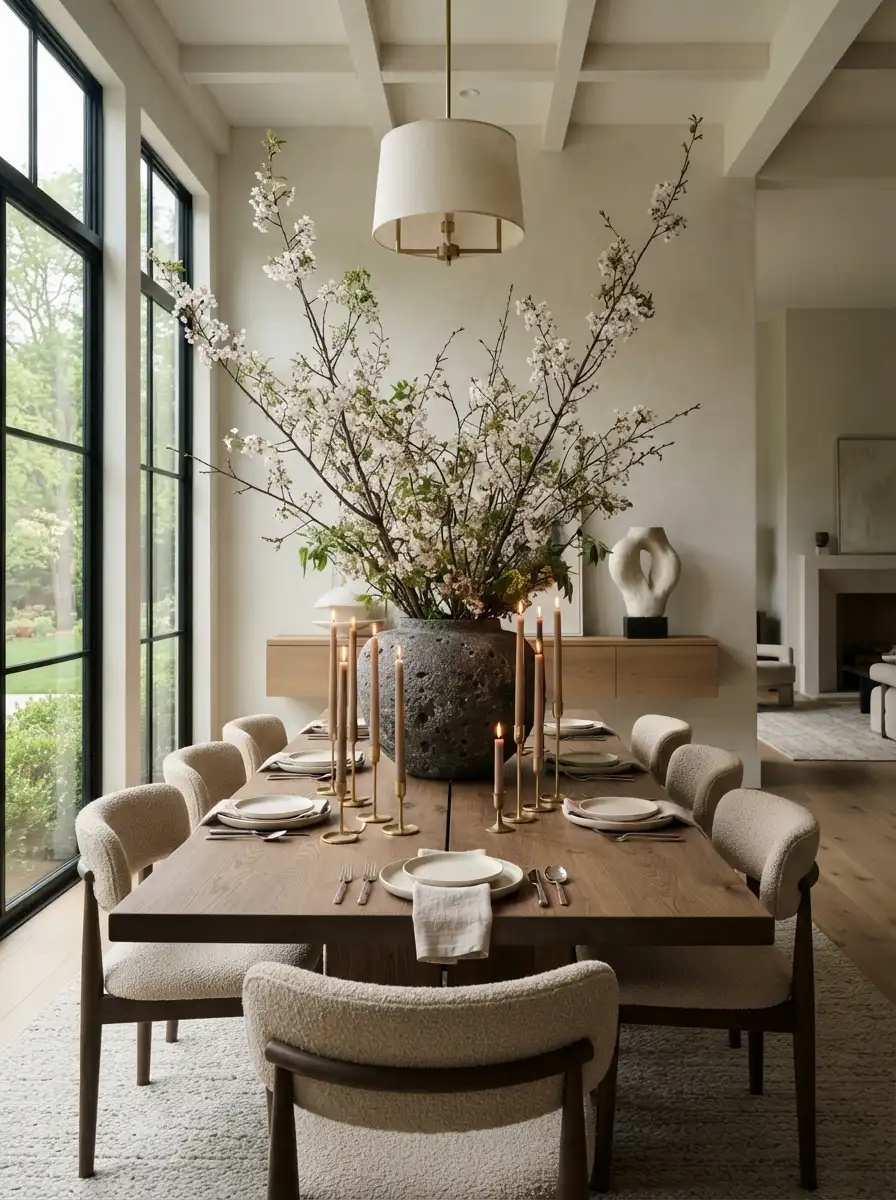
Dining table decor ideas are currently undergoing a massive transformation in the world of high-end interior design, shifting completely away from the dusty, formal, and overly stiff traditions of the past. For decades, the dining room was treated as a museum exhibit—a space completely closed off from the rest of the house, anchored by a massive table covered in an intimidating, untouched floral arrangement and a rigid set of fine china. Today, the modern US home embraces a much more fluid, organic, and highly functional approach. The dining table has reclaimed its rightful place as the beating heart of the household. It is a multi-purpose architectural anchor where families gather for casual breakfasts, children complete their homework, adults work remotely, and friends linger over glasses of wine late into the evening.
Because this piece of furniture serves so many varying roles throughout the day, the way we decorate it must be highly adaptable, deeply intentional, and incredibly stylish. A bare dining table can often look cold, abandoned, and cavernous, especially in open-concept floor plans where the table bridges the gap between the kitchen and the living room. Conversely, a cluttered table induces subconscious stress and makes the entire home feel disorganized. The secret to modern table styling is discovering the perfect middle ground: curating a focal point that adds immense texture, verticality, and warmth to the room without acting as a physical barricade that halts human connection.
Whether you are working with a grand, twelve-foot solid oak banquet table or a cozy, mid-century modern circular marble top in a small apartment, the principles of excellent design remain the same. It is all about the masterful manipulation of scale, the layering of raw organic materials, and a deep understanding of visual weight. To help you transform your dining space into a breathtaking, magazine-worthy sanctuary, here are 16 highly detailed, transformative dining table decor concepts. Each idea explores the practical implementation, the designer styling secrets, and the underlying design psychology that makes these arrangements profoundly captivating.
1. The Low-Profile Organic Tablescape
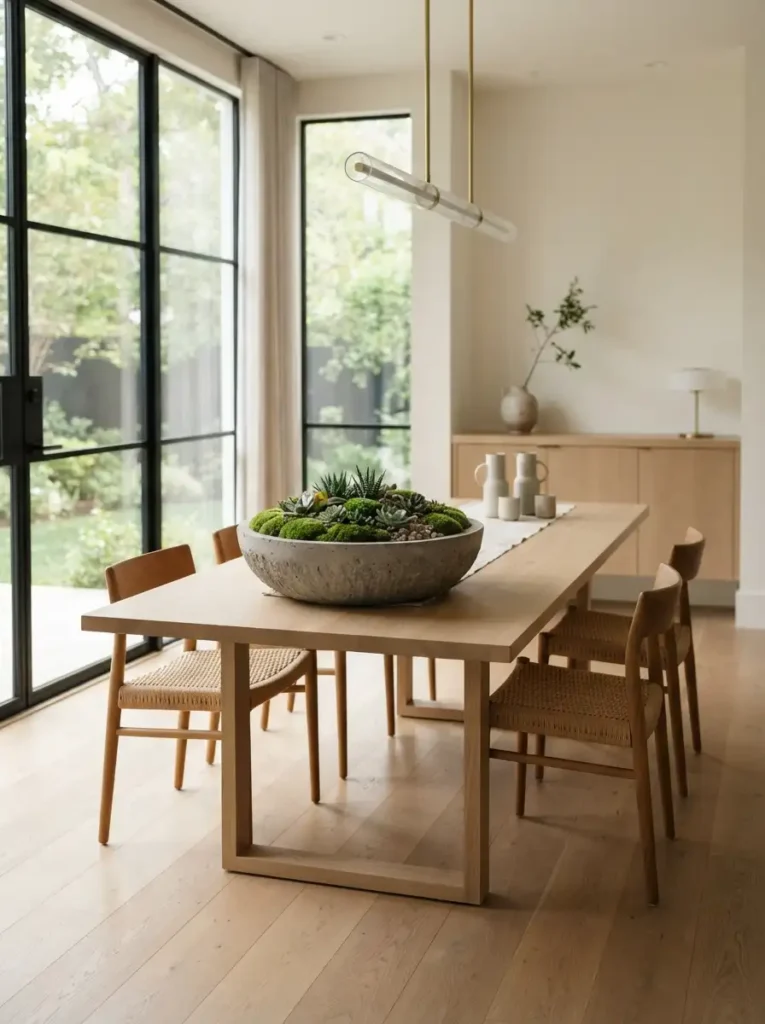
When a table is actively being used for dining and conversation, tall, imposing centerpieces become a massive hindrance. The low-profile organic tablescape solves this by utilizing the horizontal plane to its absolute fullest potential.
Implementation: Select a wide, shallow vessel—such as a heavily textured concrete basin, a hand-carved wooden dough bowl, or a low-slung brass tray. Fill it with elements that sit just below eye level, such as small succulents, a bed of vibrant green moss, or smooth river stones.
Styling Tips: The maximum height of this centerpiece should never exceed 10 to 12 inches. If you are using botanicals, allow them to trail slightly over the edges of the bowl to soften the geometry. Center it perfectly on the table, leaving vast expanses of beautiful, bare wood or stone on either side.
Design Psychology: A low-profile design removes all physical and visual barriers between guests. Psychologically, it fosters a highly intimate, convivial atmosphere by encouraging unbroken eye contact and seamless conversation across the table. It communicates that human connection is the most important element of the dining experience, taking precedence over flashy decor.
2. Monumental Asymmetrical Branches
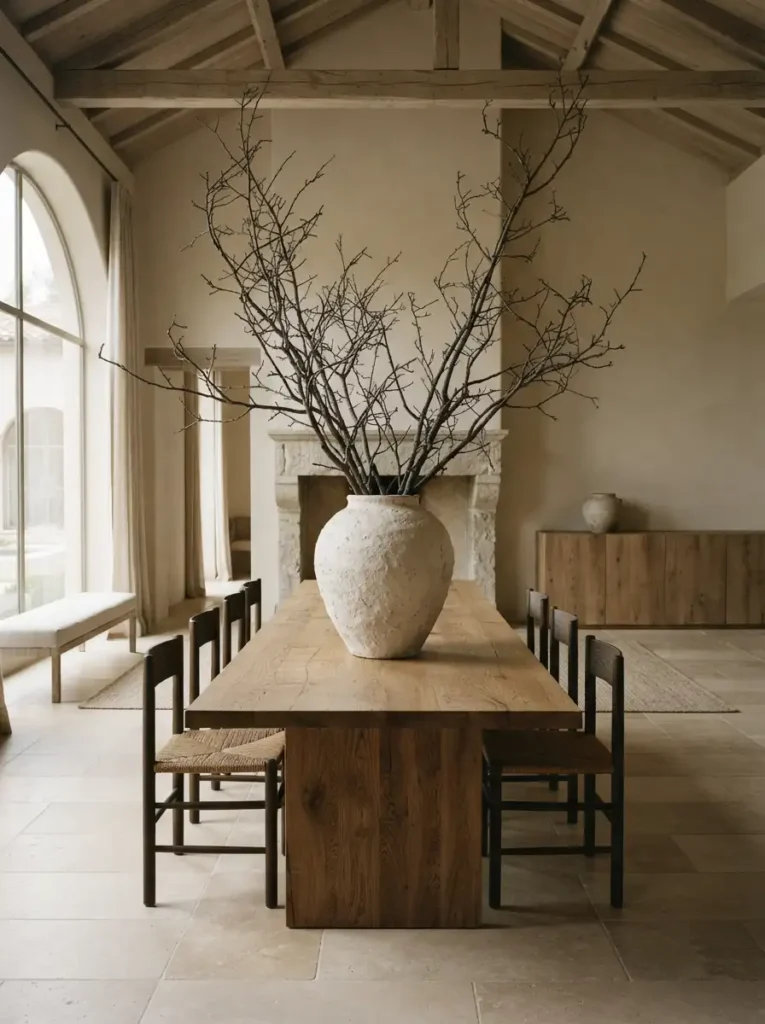
When the table is not being used for a seated dinner, it acts as a massive blank canvas. This is the perfect opportunity to introduce staggering, awe-inspiring vertical height that completely redefines the architecture of the room.
Implementation: Source massive, towering architectural branches. Depending on the season, this could be twisted corkscrew willow, blossoming cherry branches, or heavily leafed oak branches spanning three to five feet in height. Place them in an oversized, heavy, matte ceramic floor vase sitting directly on the table.
Styling Tips: Do not aim for a perfectly round, symmetrical bouquet. Allow the branches to reach wildly and asymmetrically toward the ceiling and across the room. Use a hidden structural grid (like chicken wire wadded inside the vase) to hold the heavy branches securely in place.
Design Psychology: Tall branches immediately draw the eye upward, highlighting the ceiling height and making the room feel infinitely grander. The chaotic, untamed, unpredictable geometry of the branches provides a stunning, wild contrast to the rigid, flat, horizontal plane of the dining table, injecting the room with dynamic, living energy.
3. The Curated Ceramic Vessel Cluster
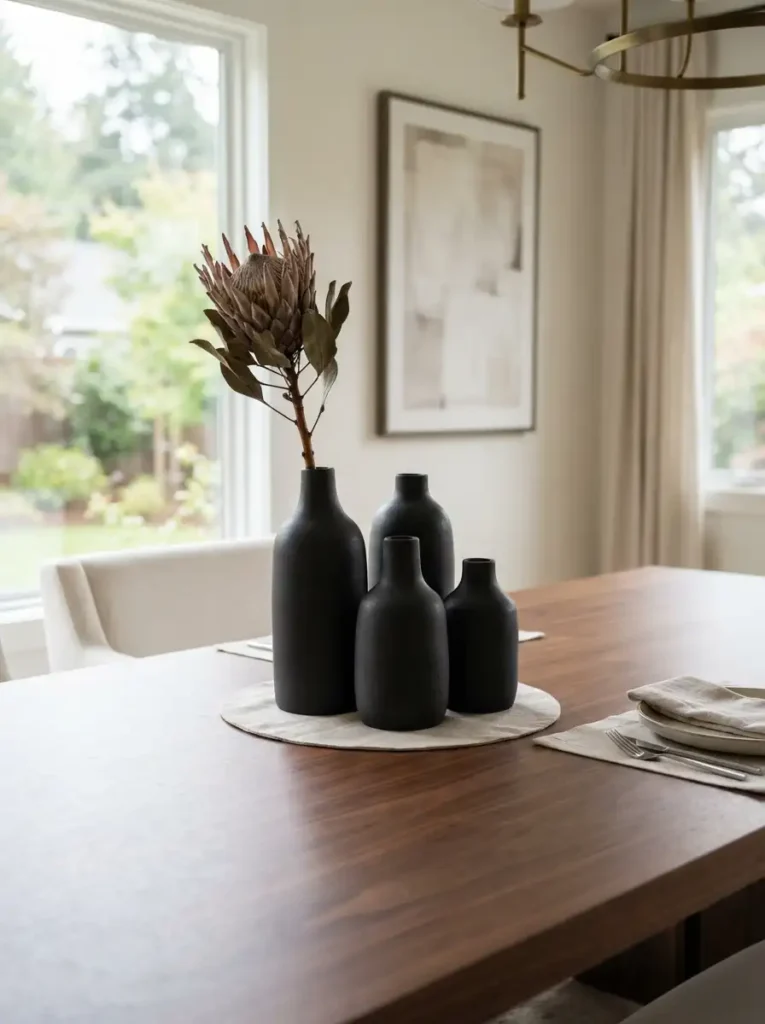
Sometimes a single centerpiece feels too heavy or static. Deconstructing the centerpiece into a curated collection of varying shapes offers a lighter, more gallery-like aesthetic.
Implementation: Gather a collection of three to five ceramic vases, jugs, or sculptural vessels. Ensure they share a cohesive aesthetic—such as all being matte black stoneware, or all featuring raw, unglazed terracotta textures—but make sure every single piece is a completely different height and shape.
Styling Tips: Arrange the vessels in a tight, overlapping cluster in the dead center of the table. Leave the majority of the vases completely empty to act as pure sculpture, and place a single, striking botanical stem (like a dried protea or a fresh eucalyptus branch) in just one of the taller vases.
Design Psychology: The human brain naturally seeks out patterns and finds groupings of odd numbers (the “Rule of Three”) highly satisfying and balanced. By clustering multiple shapes, you create a miniature architectural skyline on your table. Leaving vessels empty emphasizes their physical form and celebrates the Wabi-Sabi beauty of negative space.
4. Layered Linen and Raw Textiles
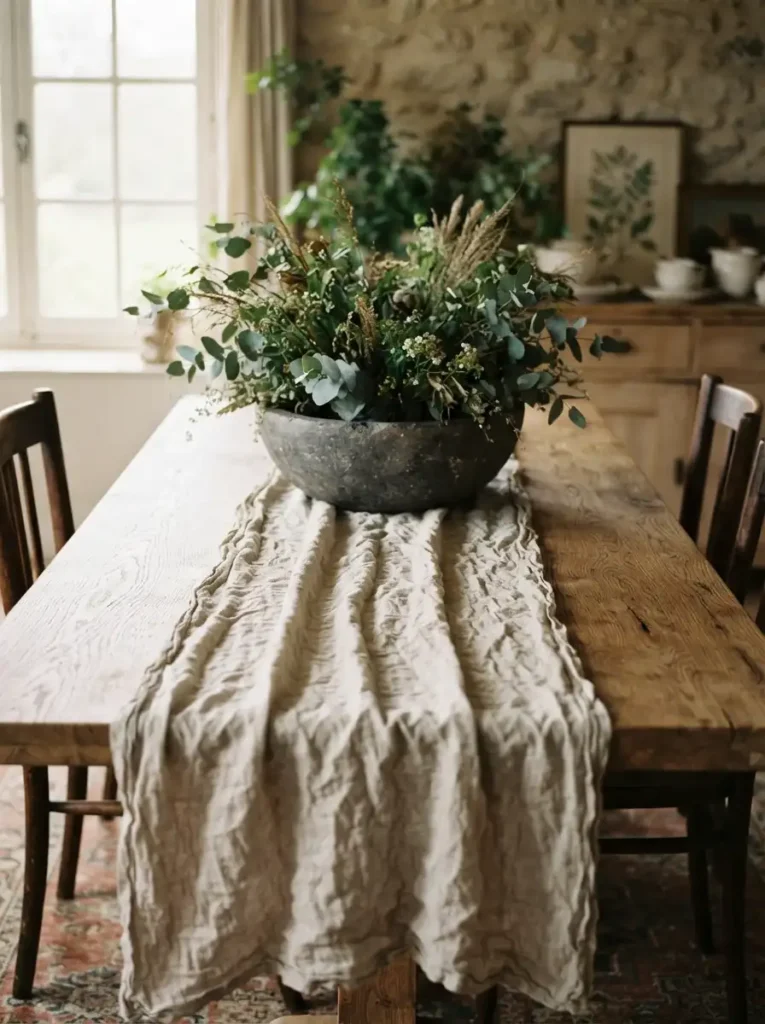
Textiles instantly soften the hard, echoing acoustics of a dining room, introducing a vital element of warmth, approachability, and tactile comfort.
Implementation: Ditch the stiff, formal, perfectly ironed damask table runners. Instead, utilize raw, heavily wrinkled, 100% French flax linen.
Styling Tips: Do not lay the runner perfectly flat and straight down the middle of the table. Instead, let it pool and gather organically. Drape it loosely so that the fabric forms natural waves and folds, and allow the ends to puddle slightly onto the floor or drape heavily over the edge of the table. Place a beautiful, heavy candle or a small bowl directly onto the gathered fabric to anchor it.
Design Psychology: Heavily textured, unironed textiles communicate a relaxed, unpretentious elegance. They invite guests to touch, to relax, and to feel at home. The soft, undulating folds of the fabric counteract the sharp, 90-degree angles of modern dining tables and chairs, making the room feel less like a boardroom and more like a cozy, inviting sanctuary.
5. Fruit and Produce as Edible Art
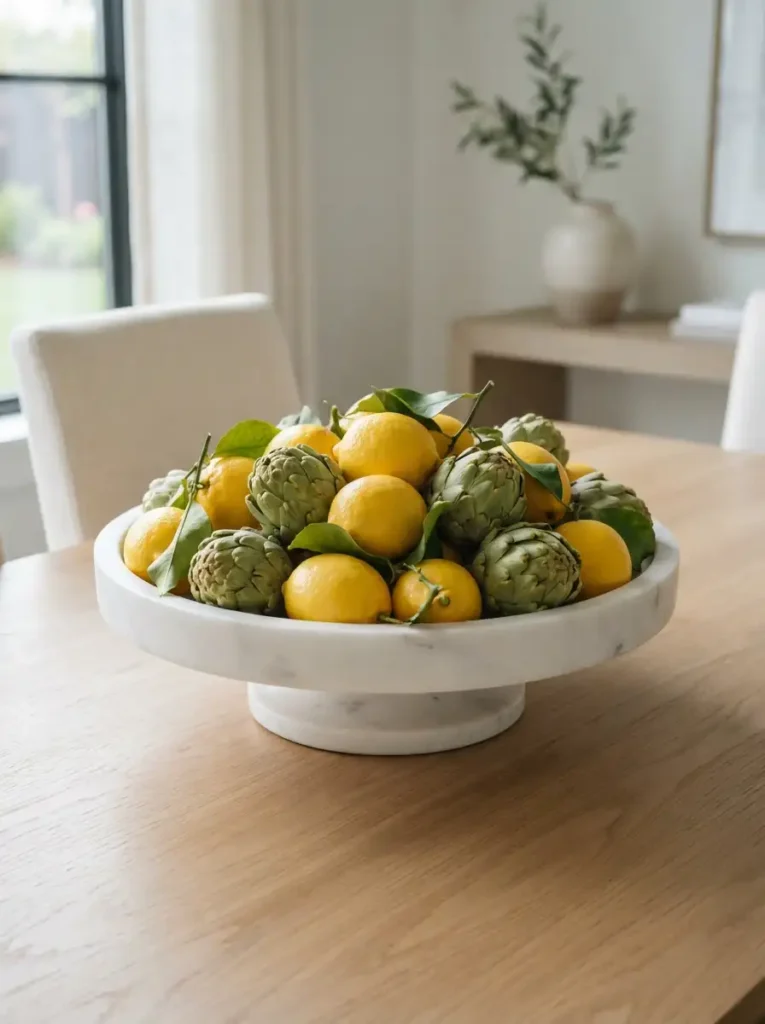
Replacing traditional cut flowers with robust, fresh produce is a massive trend in high-end European and modern US interior design. It is practical, textural, and undeniably vibrant.
Implementation: Select a wide, shallow marble pedestal bowl or an authentic, vintage copper basin. Fill it abundantly with a carefully curated selection of fresh, structural produce.
Styling Tips: Do not create a chaotic fruit salad. Stick to one or two complementary items for a massive visual impact. A bowl overflowing entirely with bright yellow lemons (with green leaves still attached), deep red pomegranates, or muted green artichokes looks incredibly chic. Let a few pieces naturally spill out of the bowl and rest directly on the table.
Design Psychology: Displaying fresh food taps into deep, ancestral feelings of harvest, abundance, and hospitality. It makes the dining room feel actively used, warm, and nurturing. The vibrant, organic colors of the produce stimulate the appetite and inject a massive dose of joyful, optimistic energy into a neutral-toned room.
6. The Deconstructed Candlestick Grid
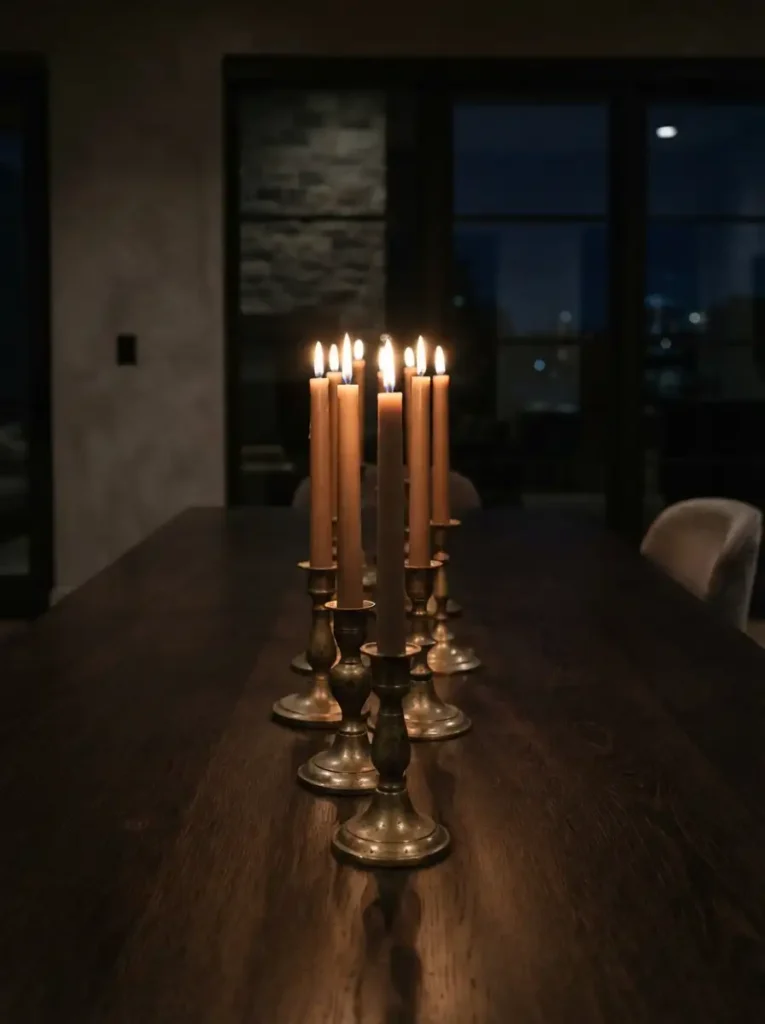
If you have a long, rectangular dining table, a single round centerpiece in the middle often looks disproportionately small, leaving the ends of the table looking barren. A linear candlestick arrangement beautifully solves this issue.
Implementation: Collect 8 to 12 matching taper candle holders. These can be sleek, modern matte black metal, or heavy, unlacquered brass.
Styling Tips: Arrange the candlesticks in a perfectly straight line, or a slightly staggered zig-zag pattern, marching straight down the center line of the table from end to end. Use high-quality, dripless taper candles in a muted, sophisticated color like taupe, sage, or charcoal.
Design Psychology: A linear arrangement mirrors the exact geometry of a long table, creating immense spatial harmony. Repetition of identical objects creates a highly soothing, mathematical visual rhythm. When lit, this deconstructed grid bathes the entire length of the table in a warm, glowing light, ensuring every single guest feels included in the ambient atmosphere.
7. Floating Botanicals in Shallow Basins
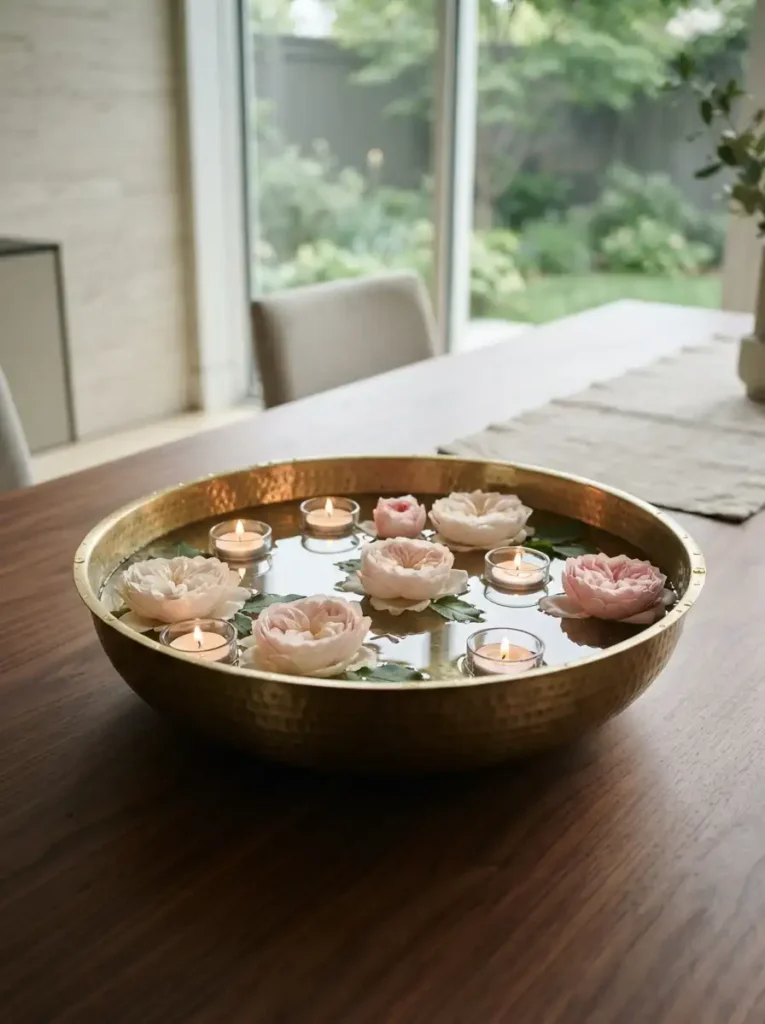
To introduce a deeply romantic, sensory, and spa-like experience to your dining space, incorporating the element of water offers a dynamic, mesmerizing focal point.
Implementation: Source a wide, shallow, watertight vessel—like a sleek glass cylinder dish or a hammered metal basin. Fill it halfway with crystal-clear water.
Styling Tips: Snip the heavy, open heads off of beautiful, fragrant blooms (like garden roses, peonies, or magnolias) and gently float them on the surface of the water. Intermingle the flowers with floating, unscented tealight candles.
Design Psychology: Water symbolizes purity, clarity, and life force. The gentle movement of the floating blooms and the shimmering reflection of the candlelight on the water’s surface creates a hypnotic, deeply calming visual display. It softens the hard architectural edges of the room and immediately lowers cortisol levels, promoting a profoundly relaxed dining experience.
8. Wabi-Sabi Stoneware Centerpieces
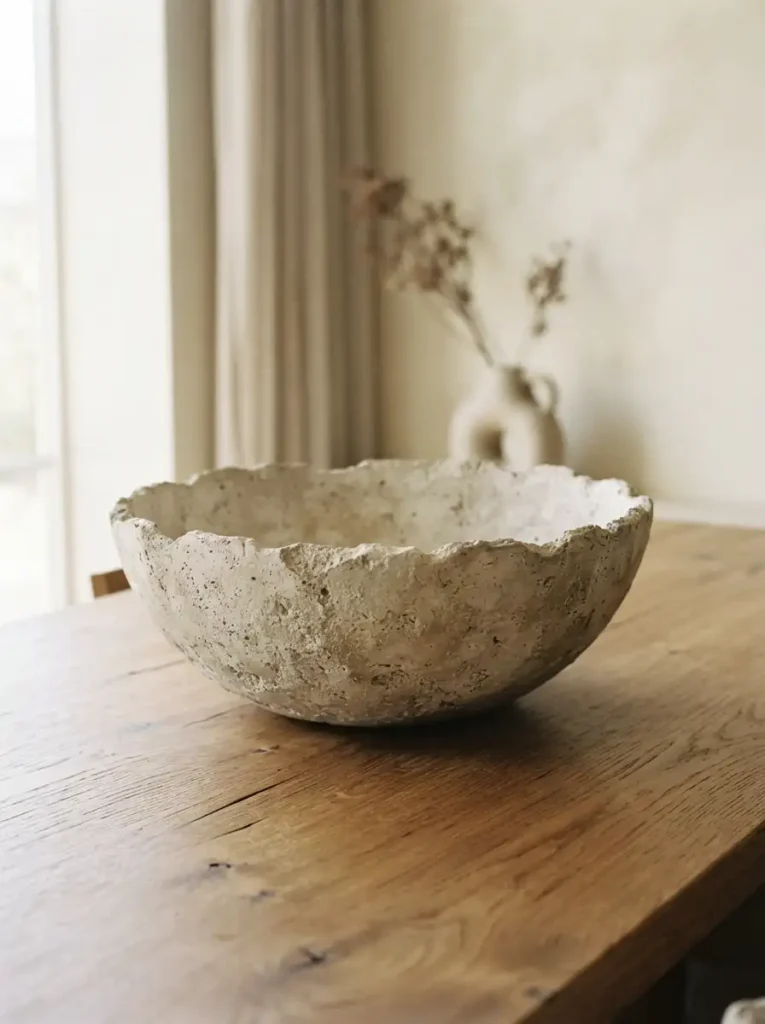
For minimalist homes that crave warmth without clutter, relying on the ancient Japanese philosophy of Wabi-Sabi—finding perfection in imperfection—creates a breathtaking tablescape.
Implementation: Invest in a single, massive, hand-thrown stoneware or raw plaster bowl. The shape should be intentionally irregular, featuring a rough, pitted, or chalky surface texture.
Styling Tips: The secret to this aesthetic is extreme restraint. Leave the massive bowl completely, entirely empty. Place it directly in the center of the table. If you absolutely must add something, drape a single string of oversized, raw wooden prayer beads over the rim.
Design Psychology: An imperfect, heavily textured, empty bowl acts as a brilliant monument to negative space. It provides a visual resting place for the eyes in a busy modern home, lowering visual noise and communicating a profound sense of monastic peace. It elevates raw material over excessive decoration.
9. The Ikebana Minimalist Approach
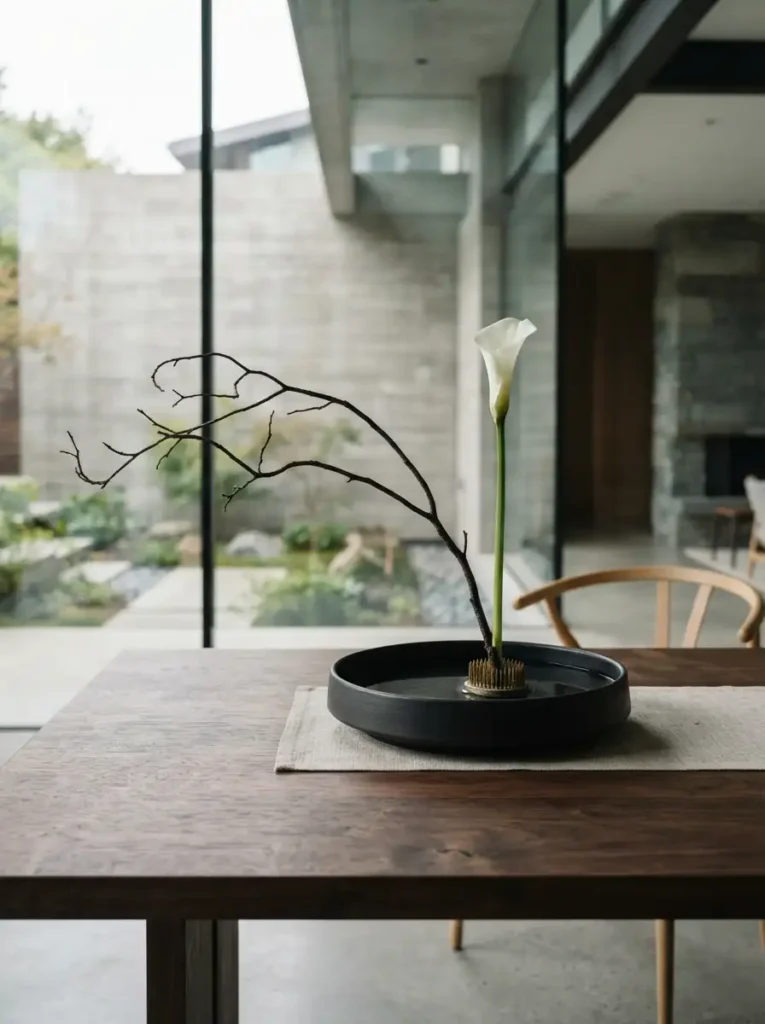
Western floral design focuses heavily on density and abundance; Japanese Ikebana focuses on line, form, and discipline, making it the perfect centerpiece for a clean, Japandi or contemporary interior.
Implementation: Use a heavy, shallow ceramic dish. Inside the dish, place a kenzan (a heavy metal frog with sharp spikes used in traditional Ikebana). Carefully impale just two or three carefully selected stems onto the spikes.
Styling Tips: Select one dramatic, sweeping branch, one tall structural flower, and one low, broad leaf. Leave the mechanics (the kenzan) visible or slightly covered by a shallow pool of water. Embrace extreme asymmetry; do not try to balance the arrangement. Let the empty space do the balancing.
Design Psychology: Ikebana is a moving meditation on the distinct beauty of nature’s individual elements. By stripping away excess filler flowers, you force the viewer to deeply appreciate the unique curve of a single stem. It introduces a highly intentional, sculptural, and disciplined form of life into the room that feels incredibly poetic.
10. Heavy Travertine and Marble Plinths
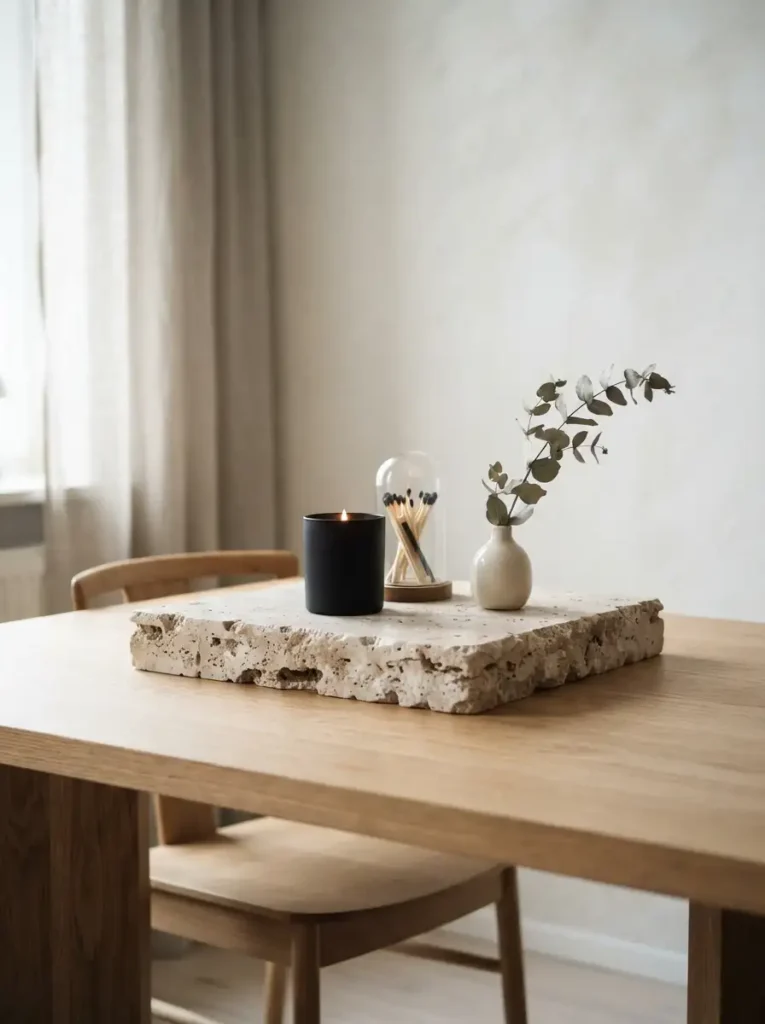
A centerpiece does not always have to be a bowl, vase, or basket. Elevating the concept of a decorative tray into a massive, raw piece of geology creates an incredibly commanding architectural statement.
Implementation: Source a thick, heavy slab of raw, unpolished travertine, honed marble, or dark soapstone. The slab should act as a low-profile podium or plinth in the center of your table.
Styling Tips: Place a few highly curated items directly on the stone slab: a small, beautiful match cloche, a high-end architectural candle, and a tiny bud vase. The stone slab physically elevates these everyday items, framing them collectively as a deliberate work of art.
Design Psychology: A thick slab of natural stone communicates immense weight, luxury, and geological permanence. It acts as a visual anchor, grounding the entire room. Providing a defined “stage” for smaller objects prevents them from looking like scattered, accidental clutter, instantly organizing the table into a cohesive, sophisticated vignette.
11. Dried Flora and Foraged Pampas
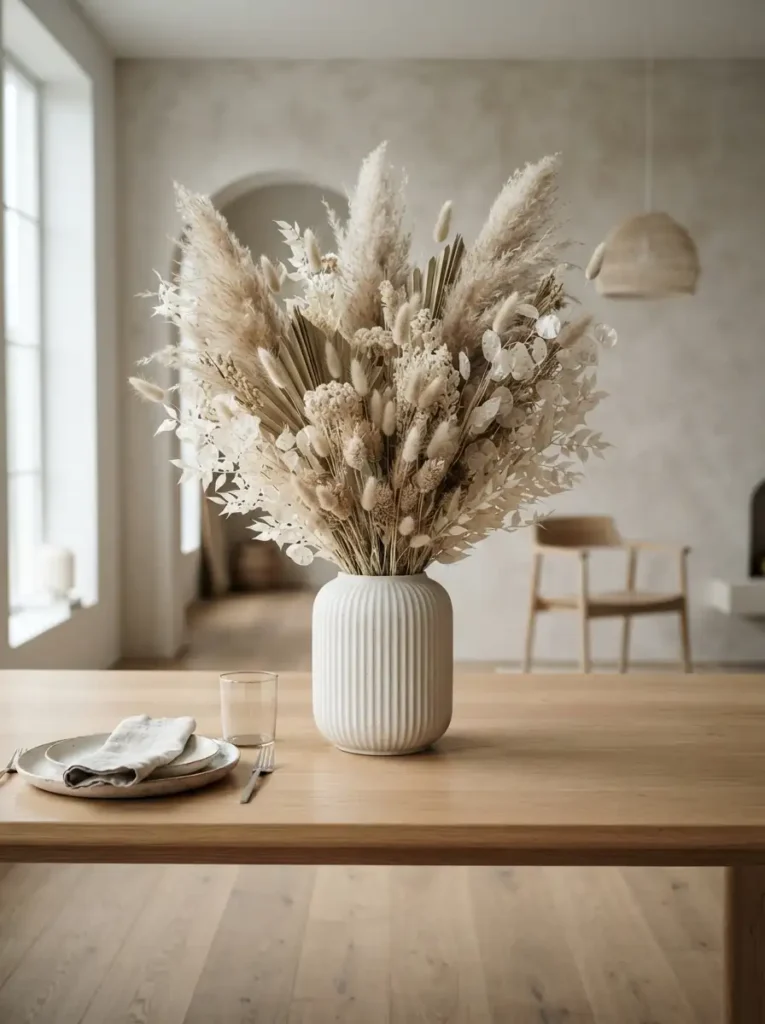
For a centerpiece that looks incredibly high-end but requires absolutely zero weekly maintenance or replacement, dried botanicals offer unmatched textural depth and a beautiful, muted color palette.
Implementation: Create a voluminous arrangement using tall, fluffy stalks of beige pampas grass, dried bleached ferns, dried palm spears, and bunny tails. House them in a matte, ribbed ceramic or raw wood vase.
Styling Tips: Because dried botanicals are entirely monochromatic (various shades of tan, cream, and brown), the success of this centerpiece relies entirely on contrasting shapes. Mix the fluffy, cloud-like pampas grass with the rigid, sharp geometry of the dried palm spears for maximum visual interest.
Design Psychology: Dried botanicals represent the quiet, beautiful dormancy of nature. Their muted, earthy tones blend seamlessly with high-end, neutral interior design palettes. The soft, wispy texture of the pampas catches the light and adds a sense of ethereal lightness to the room, softening the harsh acoustics of modern dining rooms.
12. The Continuous Garland Runner
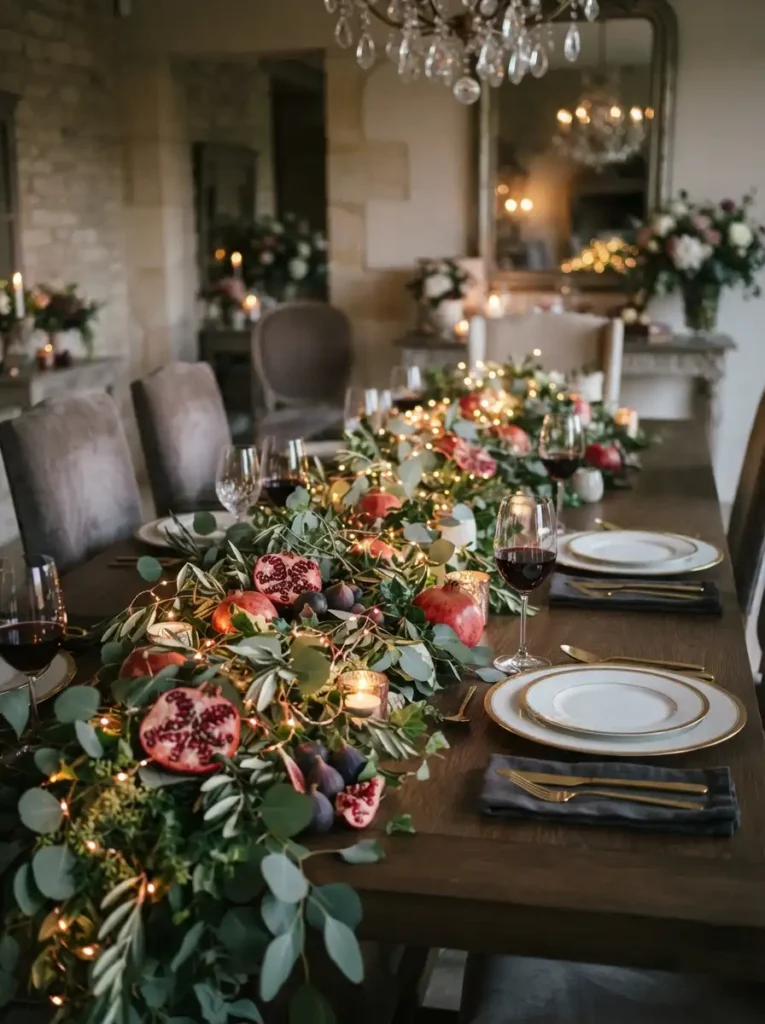
For holiday banquets, large dinner parties, or incredibly long tables, the continuous living garland provides an immersive, lush, and highly celebratory aesthetic.
Implementation: Instead of a single focal point, lay down overlapping branches of fresh, seeded eucalyptus, olive branches, or deep green salal, trailing them continuously down the absolute center of the table from edge to edge.
Styling Tips: Weave a delicate, battery-operated copper wire fairy light string deeply through the leaves. Intersperse the greenery with fresh figs, halved pomegranates, or small clusters of dark grapes. Place small, glowing votive candles periodically throughout the foliage.
Design Psychology: A continuous living runner connects every single guest at the table, creating a unified, communal dining experience. By keeping the greenery below eye level, it removes all physical barriers, encouraging eye contact, open communication, and a highly intimate, Renaissance-inspired banquet atmosphere.
13. Amber Glass and Vintage Apothecary Vibes
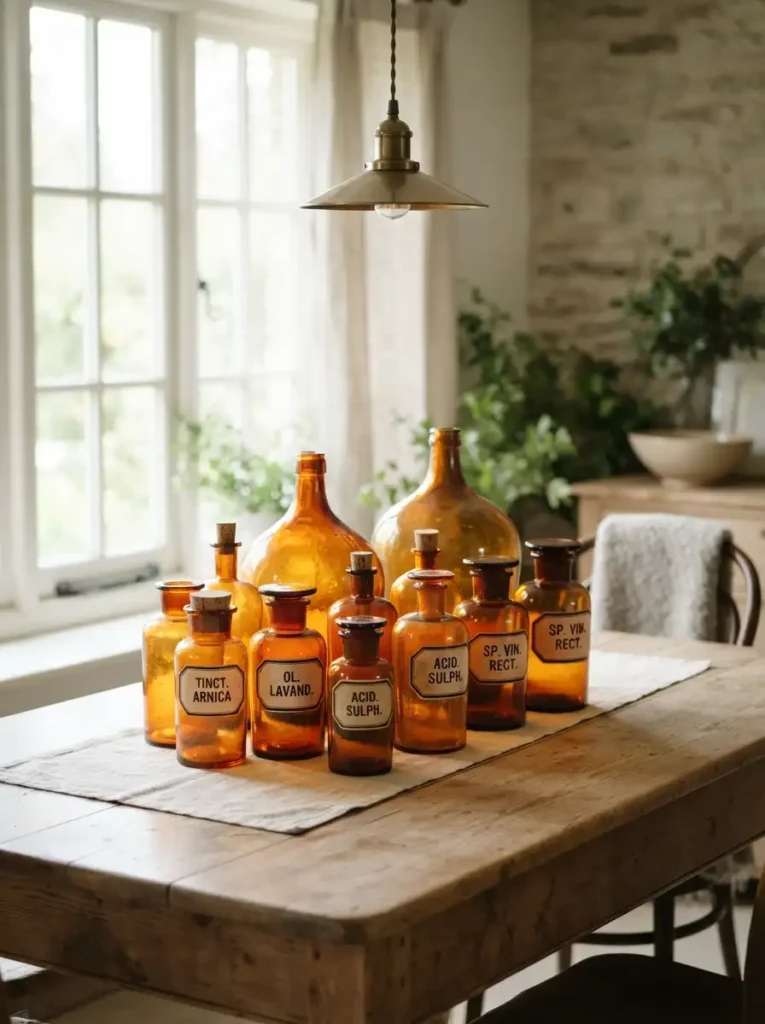
If you want to create a centerpiece that allows natural light to flow freely through it, a curated collection of antique or colored glass bottles is a stunning, luminous choice.
Implementation: Source a collection of vintage glass bottles, demijohns, and apothecary jars in varying heights and shapes. Stick to a specific glass color to maintain a cohesive look, such as warm, glowing amber or recycled, pale sea-glass green.
Styling Tips: Group the bottles tightly together in the center of the table. Leave the majority of them empty to let the light shine through, and place a single, delicate green sprig or a dried wheat stalk in just one or two of the vessels.
Design Psychology: Glass takes up physical volume but carries almost zero visual weight because it is transparent. Grouping amber glass vessels together catches the natural sunlight from the windows, turning the centerpiece into a glowing, prismatic light feature that makes the room feel airy, bright, and deeply curated.
14. Seasonal Metallic Accents (Brass and Copper)
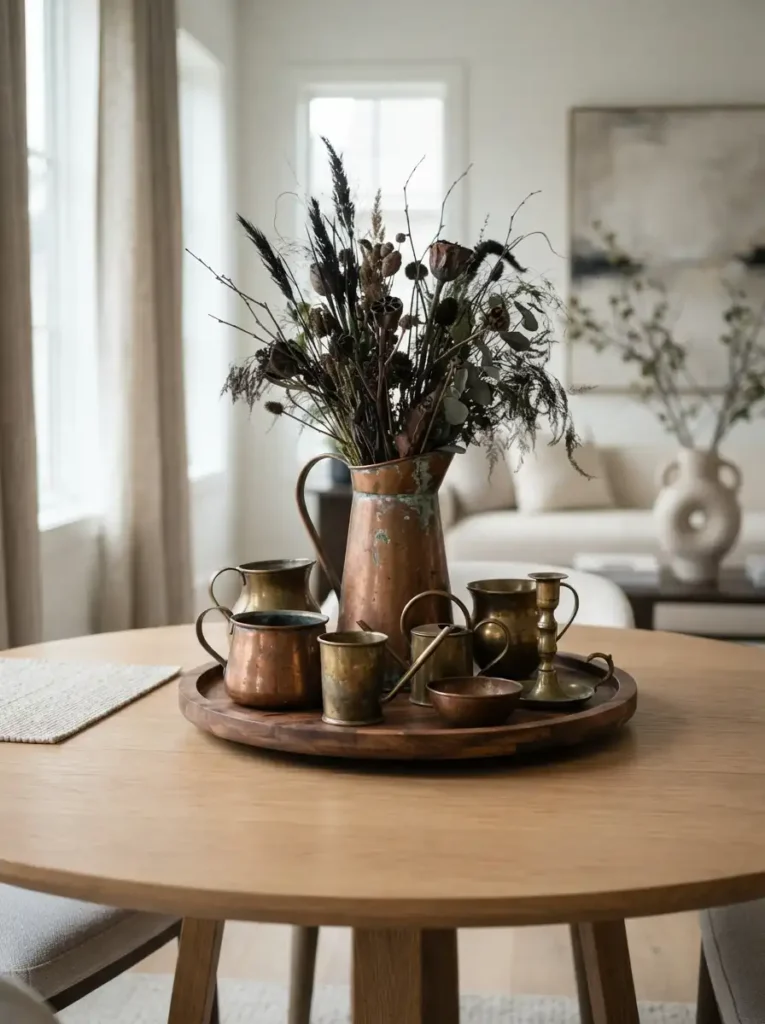
For homes that lean towards organic modern or transitional aesthetics, incorporating historical, warm metals into your table decor adds immense soulful character and luxurious sparkle.
Implementation: Curate a collection of vintage, heavy brass or copper vessels—perhaps a large antique copper kettle, an ornate brass footed bowl, and a slender brass pitcher. Group them together on a raw wooden tray.
Styling Tips: Do not polish the metals to a mirror shine. The beauty lies in the dark, oxidized patina that naturally develops over decades. Place a wild, asymmetrical arrangement of dark, moody foliage inside the tallest vessel, leaving the others empty to act as sculptural support.
Design Psychology: Aged metals introduce a sense of history, permanence, and narrative into a brand-new home. The warm, reflective tones of brass and copper contrast beautifully with modern, matte surfaces, providing a luxurious, jewelry-like sparkle that makes the table feel collected, bespoke, and intimately inviting.
15. The Bare, Sculptural Wood Approach
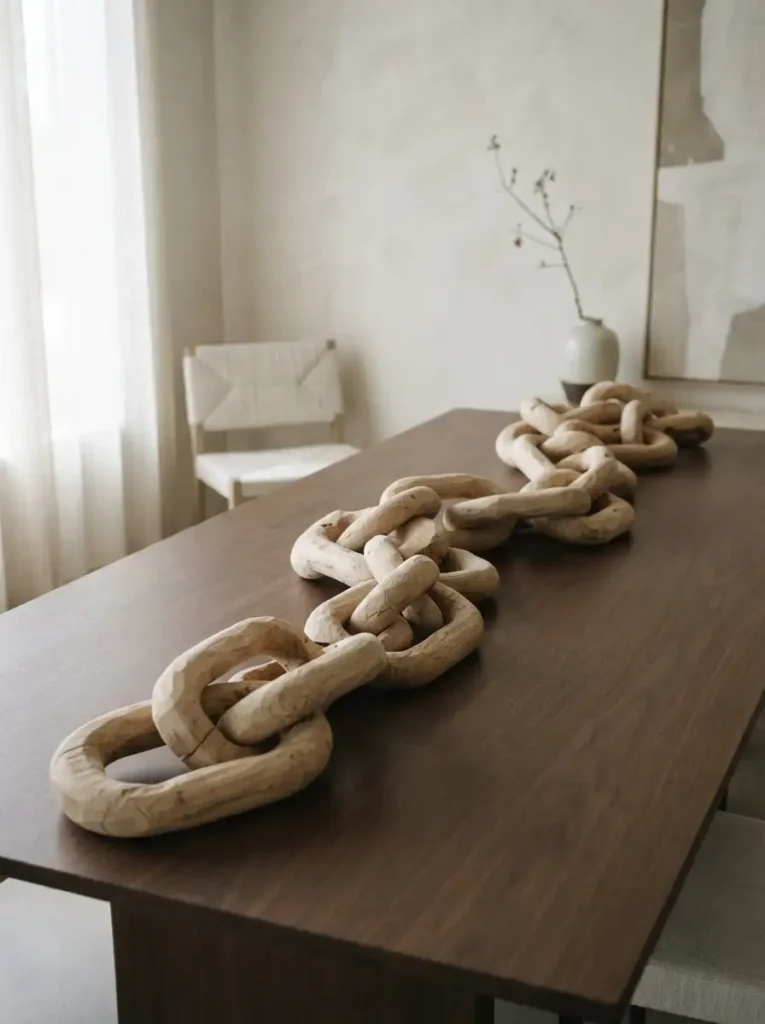
Sometimes the most breathtaking decor is a single, uninterrupted piece of highly skilled craftsmanship that celebrates the raw beauty of timber.
Implementation: Invest in a massive, hand-carved wooden chain link sculpture, or a stunning, asymmetrical piece of smooth driftwood.
Styling Tips: Simply lay the oversized wooden chain directly down the center of the dining table. Do not add candles, do not add flowers. Let the interlocking wooden links cascade naturally, providing a deeply tactile, sculptural element that requires absolutely zero maintenance.
Design Psychology: A wooden chain represents connection, strength, and continuous loops. Placing an intricately carved wooden sculpture on top of a wooden dining table creates a beautiful tone-on-tone textural play. It provides a highly modern, gallery-like aesthetic that appeals to the minimalist desire for clean lines and profound artistic expression.
16. Elevated Everyday Functional Decor
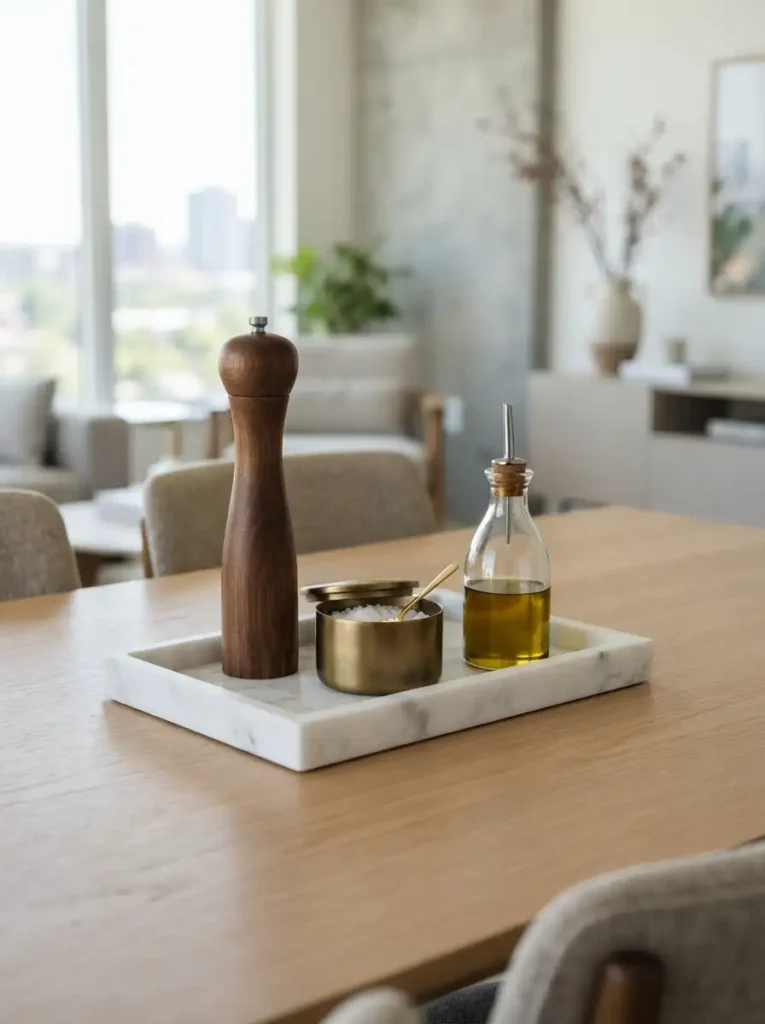
In a home where the dining table is used constantly for three meals a day, it is highly impractical to constantly move a massive floral arrangement out of the way. The solution is to elevate your everyday functional items into works of art.
Implementation: Keep the center of your table dedicated strictly to the items you use to season your food, but upgrade them to absolute luxury status.
Styling Tips: Use a beautiful, heavy marble tray. On it, place a stunning, tall wooden pepper mill (like a classic Peugeot or a sculptural Scandinavian design). Add a heavy brass or marble salt cellar with a tiny golden spoon, and a sleek, tinted glass cruet filled with high-end, bright green olive oil.
Design Psychology: This approach embraces the philosophy of utilitarian beauty. It acknowledges that the dining table is a place of function and sustenance. By investing in hyper-luxurious, beautiful versions of everyday tools, you eliminate clutter while still providing a highly curated, sophisticated focal point that actively supports your daily life.
Setting the Stage for Meaningful Gatherings
The dining table is prime real estate within your home. It is the gravitational pull of the room, the point around which your family, your guests, and your daily life revolve. Approaching your table decor with the same level of architectural intention that you apply to selecting a sofa or painting a wall completely transforms the emotional resonance of your home. By stepping away from thoughtless, generic centerpieces and embracing the highly curated concepts detailed above, you turn an empty wooden surface into a profound statement of personal style.
Remember that the ultimate dining table design is one that effortlessly adapts to the rhythm of your life. It can be the towering, awe-inspiring drama of foraged oak branches during a formal holiday party, seamlessly transitioning into the quiet, monastic peace of an empty Wabi-Sabi bowl or a functional marble salt cellar during a quiet, restorative weekend at home. By mastering the delicate balance of scale, texture, negative space, and organic vitality, you ensure that your dining space serves as a beautiful, intentional, and deeply welcoming anchor for all the memories you create around it.