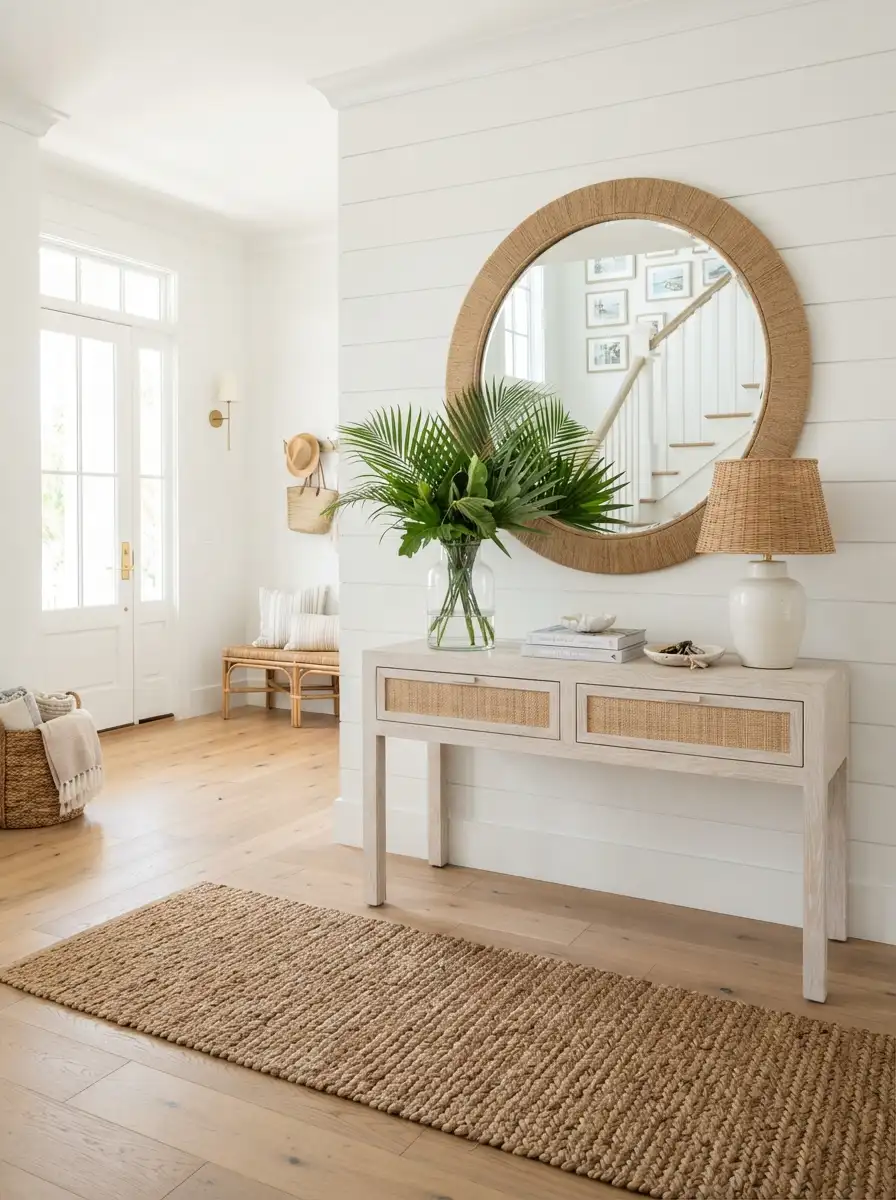
The entryway is the handshake of your home. It is the very first space that greets you after a long, exhausting day, and the defining first impression you offer to every guest who walks through your front door. If you want that introduction to feel like a deep, relaxing breath of fresh ocean air, a coastal-inspired entryway is the ultimate design choice.
However, it is time to redefine what “coastal design” actually means. For years, the beach house aesthetic was dominated by literal, kitschy motifs: signs pointing to the beach, wooden anchors hung on the walls, and jars filled with collected seashells. Today’s modern coastal luxury has evolved far beyond those clichés. Elevated coastal interior design is about capturing the feeling of the coast—the lightness, the breezy airflow, the organic textures, and the serene, sun-drenched color palettes. It relies on sophisticated subtlety rather than obvious themes.
A beautifully designed coastal entryway bridges the gap between relaxed, barefoot living and high-end residential elegance. It utilizes natural materials like weathered woods, woven rattan, and crisp linens to create a space that feels incredibly grounded and endlessly welcoming. Furthermore, a coastal entryway is highly functional, designed to handle the sand, shoes, and sunhats of daily life without ever looking cluttered.
Whether you live steps from the ocean or hundreds of miles landlocked in the suburbs, you can effortlessly bring the tranquility of the shore into your home. Here are 13 modern coastal entryway ideas that will instantly brighten your space and create a stunning, welcoming retreat from the moment you open the door.
1. The Weathered Driftwood Console Table
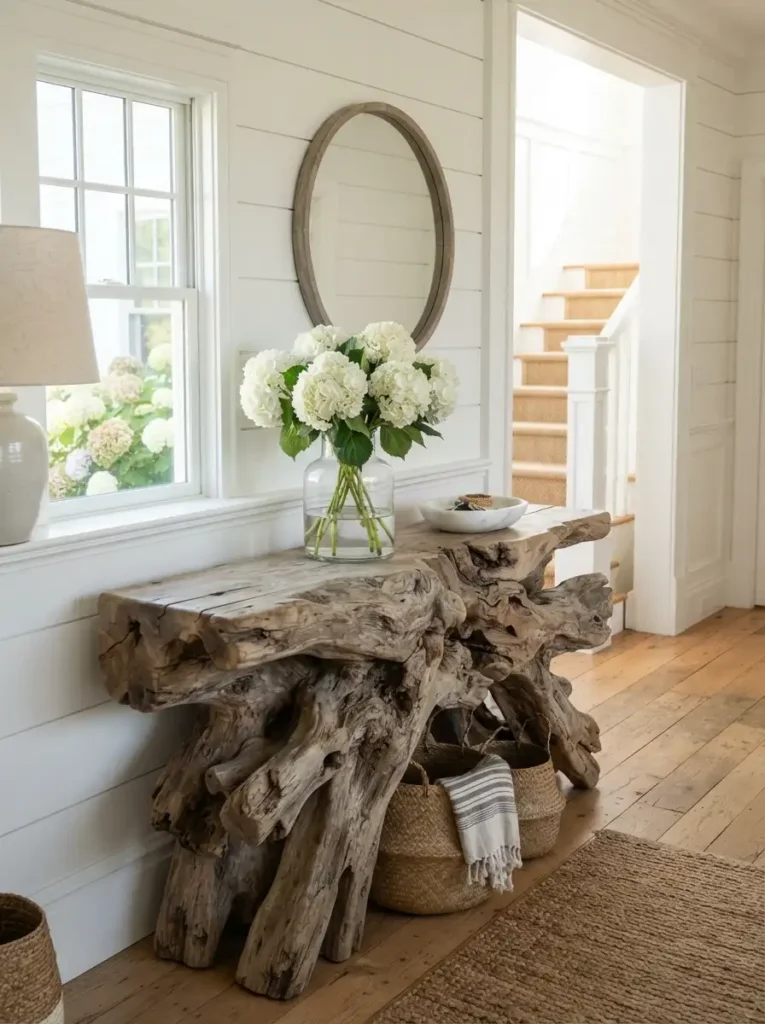
Every functional entryway needs a drop zone for keys and mail, and the console table you choose sets the architectural tone of the space. To instantly establish a coastal aesthetic, opt for a console table made of raw, weathered wood or reclaimed driftwood.
Why it works: Weathered wood introduces an incredible organic texture that mimics the natural erosion caused by salt, wind, and waves. It provides a rugged, earthy foundation that prevents the entryway from feeling too polished or sterile, grounding the bright space in natural beauty. How to style it: Keep the styling highly curated and simple. Place a large, clear glass vase filled with fresh, green palm fronds or simple white hydrangeas on one side. Use a small, smooth marble or ceramic bowl as a catch-all for your keys. The juxtaposition of smooth glass against the rough, textured wood is a hallmark of luxury coastal design.
2. Sea Glass Toned Accents
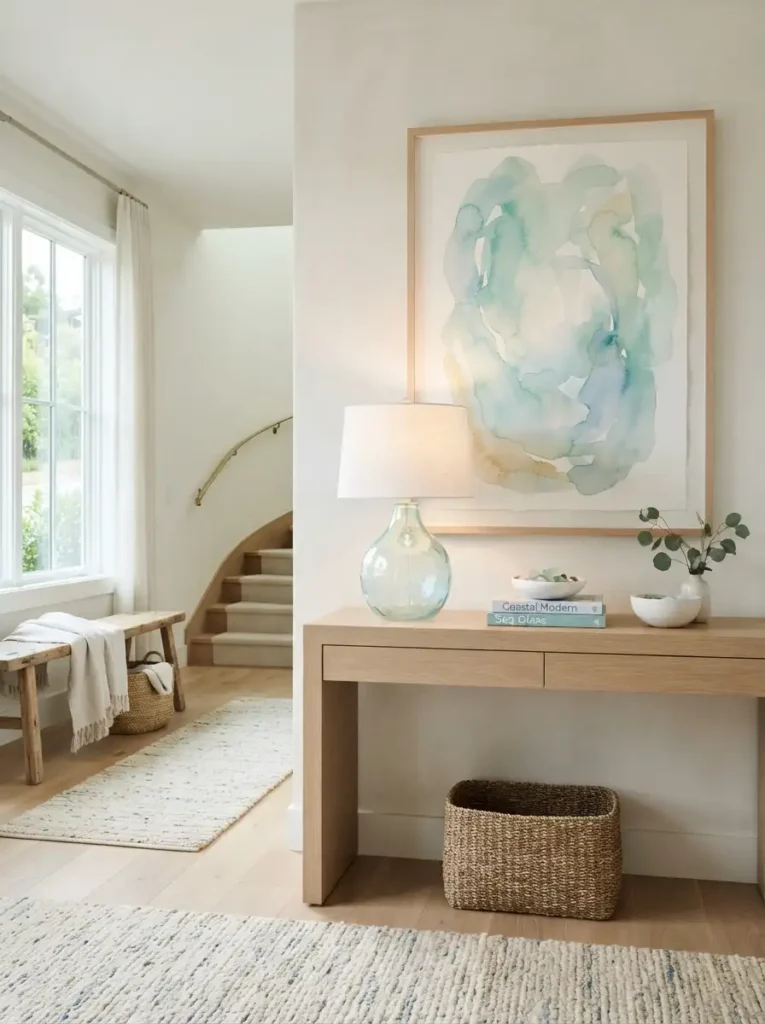
While stark white and navy blue are the traditional colors of the sea, the modern coastal palette embraces the softer, muted tones found in sea glass. Think of dusty aqua, pale mint green, soft seagrad foam, and translucent, watery blues.
Why it works: These colors are inherently soothing. They mimic the shallow, tranquil waters of a tropical cove. Because they are muted, they act almost as neutrals, allowing you to inject beautiful color into your entryway without overwhelming the eye or making the space feel dark. How to style it: Introduce sea glass tones through your accessories. Hang a large, framed abstract painting featuring soft, watery watercolor blues above your console. Add a translucent, pale green glass table lamp, or lay down a faded, vintage-style runner rug featuring soft aqua tones to guide guests down the hallway.
3. Classic Crisp White and Navy Contrast
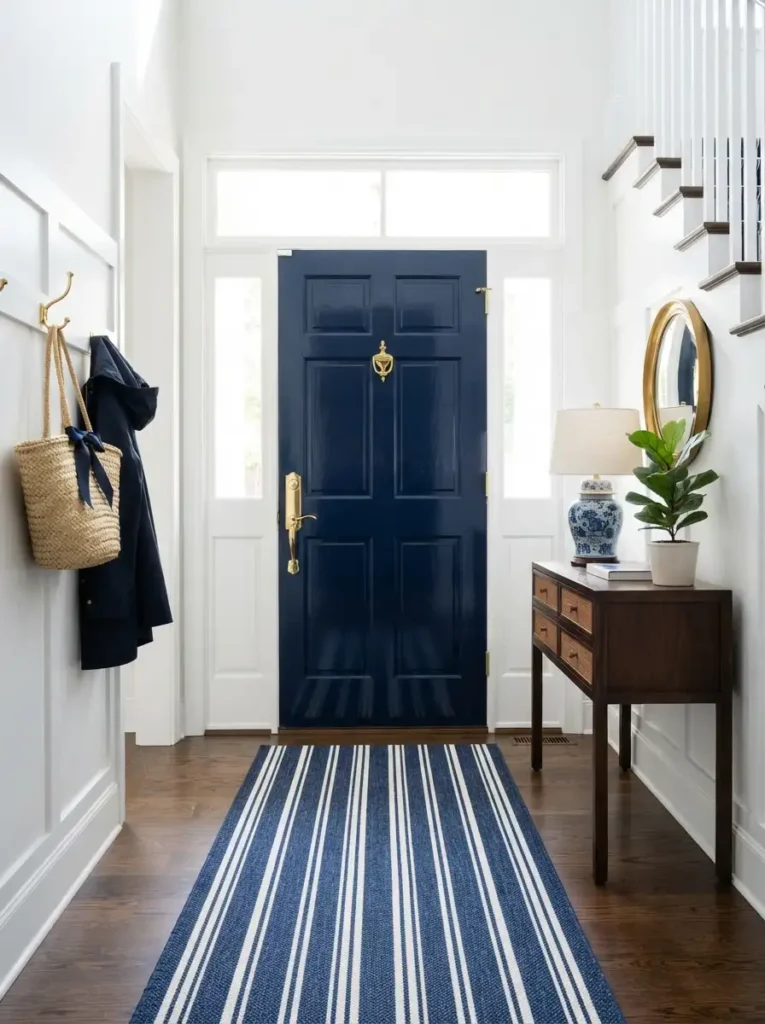
If you prefer a sharper, more tailored aesthetic, the classic contrast of crisp, blinding white and deep navy blue is a nautical tradition that never goes out of style. This high-contrast approach feels incredibly crisp, preppy, and sophisticated.
Why it works: Navy blue provides massive visual depth and weight, which anchors the room, while bright white reflects natural light, making the entryway feel expansive and immaculately clean. It is the color palette of classic sailing yachts and luxury seaside resorts. How to style it: Paint your entryway walls a pristine, stark white. Bring in the navy through structural elements—such as painting the interior of your front door a rich, glossy navy blue. Add a navy blue upholstered bench or a striped navy and white runner rug. Finish with warm brass hardware on the door to add a touch of golden maritime elegance.
4. Heavy Jute and Sisal Runner Rugs
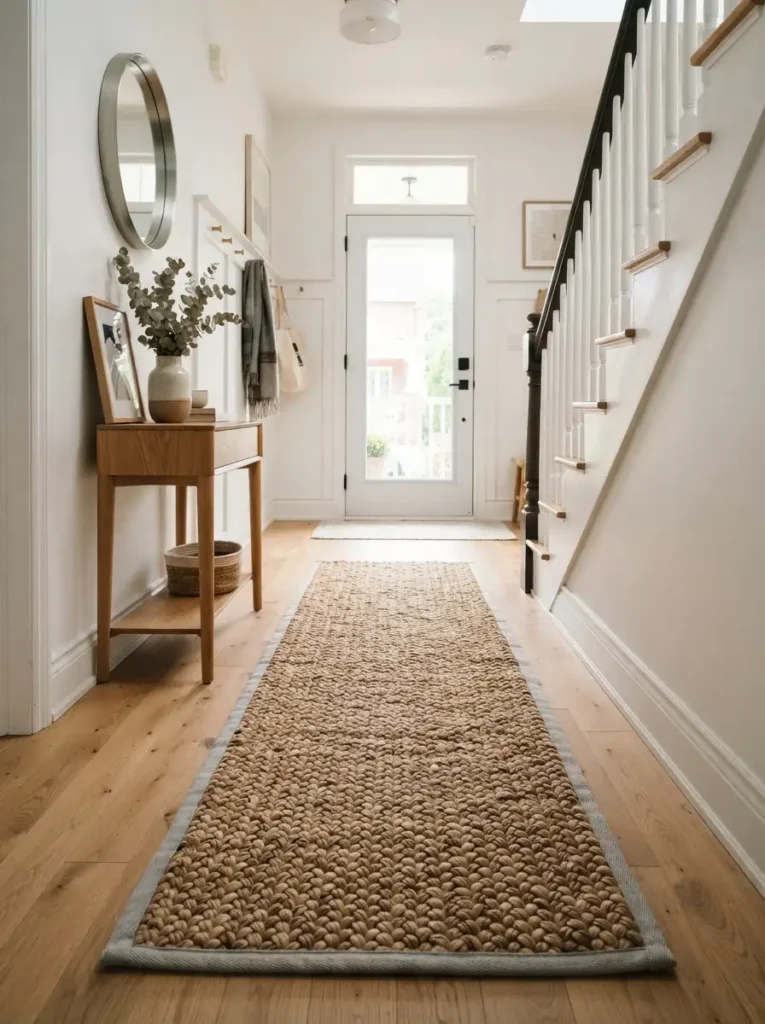
Entryways are high-traffic zones. You need flooring that can withstand dirt, mud, and heavy footsteps. Thick, woven natural fiber rugs made from jute, sisal, or seagrass are the absolute best choice for a coastal home.
Why it works: Natural fiber rugs are incredibly durable and highly effective at trapping dirt before it tracks into the rest of the house. Visually, they introduce the exact color and texture of warm beach sand, bringing an essential, earthy element indoors. How to style it: Choose a long, chunky braided jute runner to stretch down your entryway hallway. To prevent it from looking too rustic, ensure the edges of the rug are bound in a clean cotton twill tape (perhaps in a soft grey or navy). The heavy texture of the rug will instantly warm up cold tile or hardwood floors.
5. The Oversized Round Statement Mirror
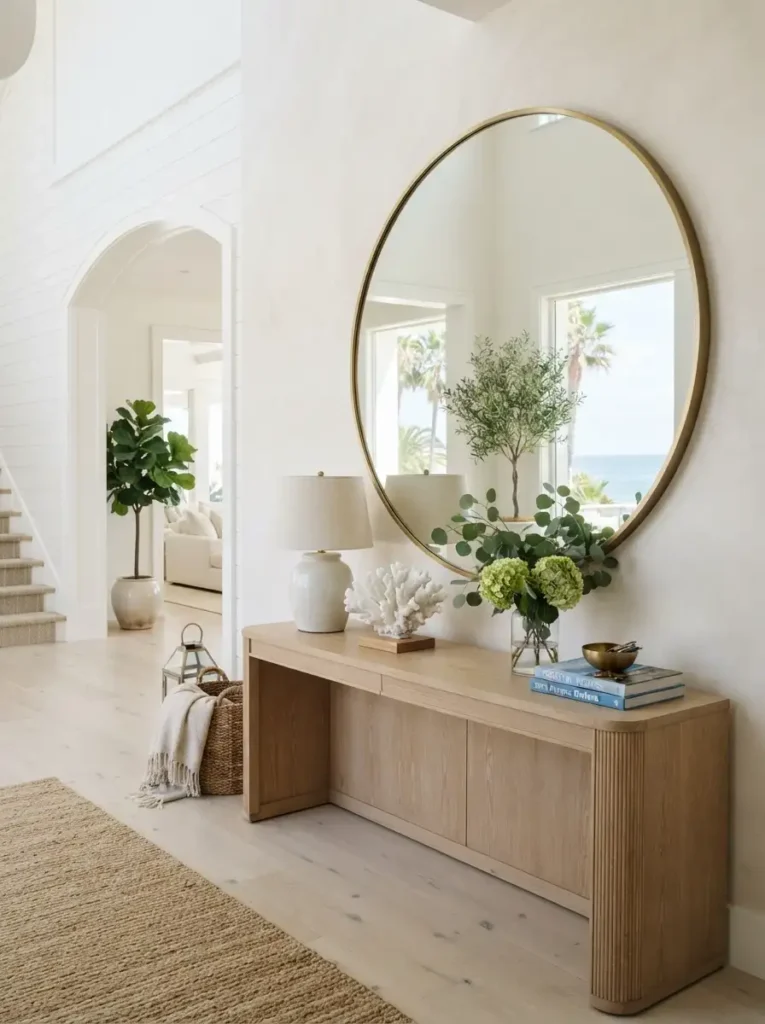
Mirrors are an entryway necessity, providing a place for a quick outfit check before running out the door. For a coastal aesthetic, skip the heavy, square, ornate frames and opt for a massive, perfectly round statement mirror.
Why it works: The circular shape is a subtle, highly sophisticated nod to the portholes of a ship. Practically, a massive mirror acts like a second window, bouncing whatever natural light you have around the room and instantly making a cramped entryway feel vastly larger and brighter. How to style it: Hang a large round mirror (at least 36 inches in diameter) directly above your console table. Choose a frame that fits the coastal narrative—such as a frame made of bent light-oak wood, woven rattan, or a sleek, simple brushed brass rim for a touch of refined luxury.
6. Architectural Shiplap Paneling
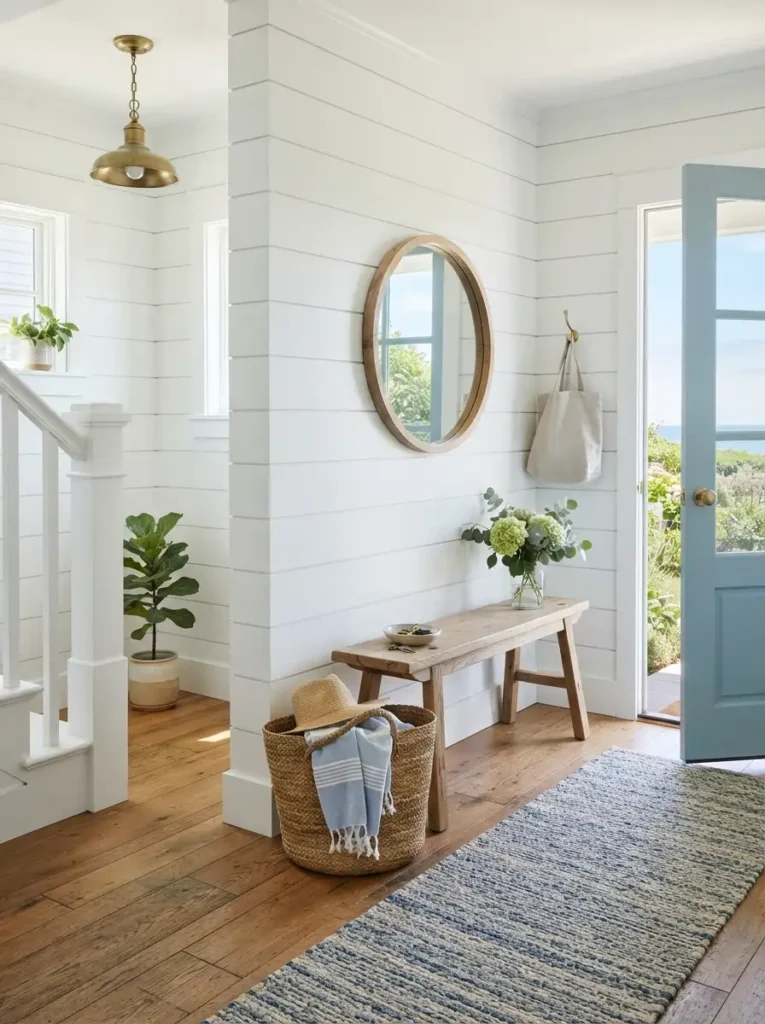
To give your entryway a true, custom beach-cottage feel, architectural wall treatments are essential. Horizontal shiplap—wooden boards installed with a slight gap between them—provides instant historical charm and structural interest.
Why it works: Before drywall was common, coastal cottages were built using shiplap to protect against harsh seaside weather. Installing it in your home provides an immediate, subconscious connection to historic coastal architecture. It adds subtle, linear texture to the walls that makes flat paint look boring in comparison. How to style it: Install horizontal shiplap on the focal wall of your entryway, or wrap the entire space if it is small. Paint it the exact same bright white as your trim and ceiling. This keeps the space feeling highly modern, clean, and airy while providing beautiful, shadow-casting texture.
7. Woven Baskets for Practical Storage
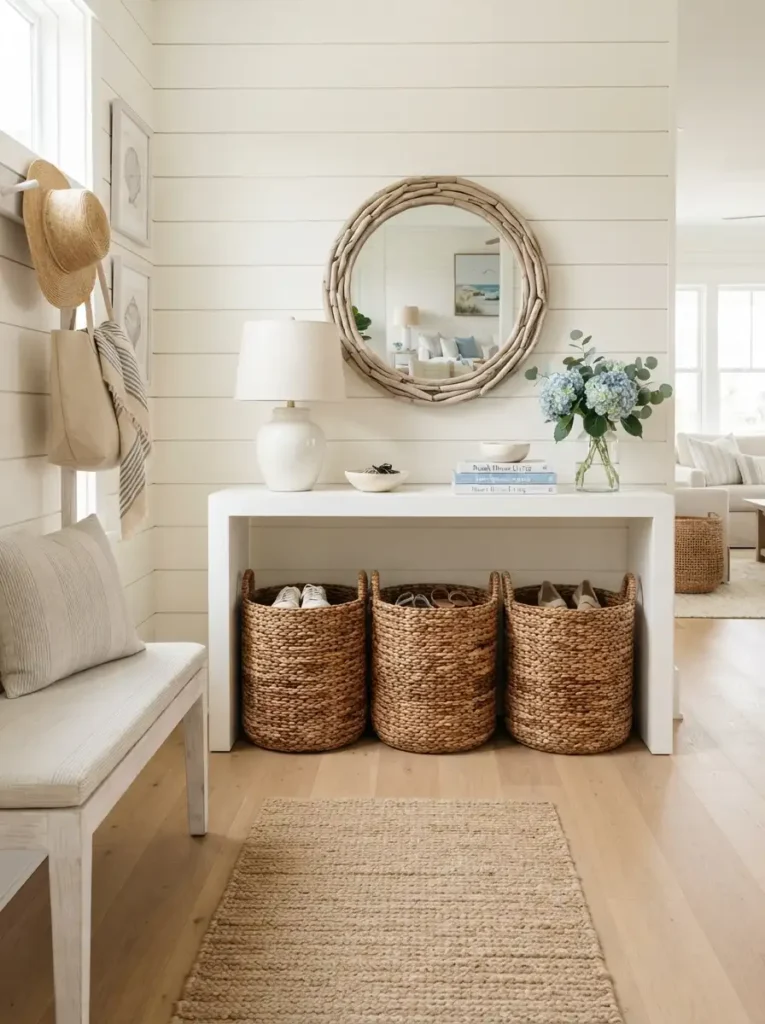
A cluttered entryway creates immediate anxiety. The coastal lifestyle is supposed to be relaxed and breezy, which means you need smart, beautiful storage solutions to hide the chaos of everyday life. Woven baskets are the perfect design hack.
Why it works: Baskets made of rattan, water hyacinth, or seagrass provide massive amounts of concealed storage while reinforcing the organic, textural aesthetic of the coast. They turn functional organization into a deliberate design choice. How to style it: Tuck two or three large, oversized woven baskets directly underneath your open console table. Dedicate one basket for shoes, one for umbrellas, and one for reusable grocery bags. It fills the visual void under the table, grounds the furniture, and keeps your floors impeccably tidy.
8. A Relaxed, Slipcovered Bench
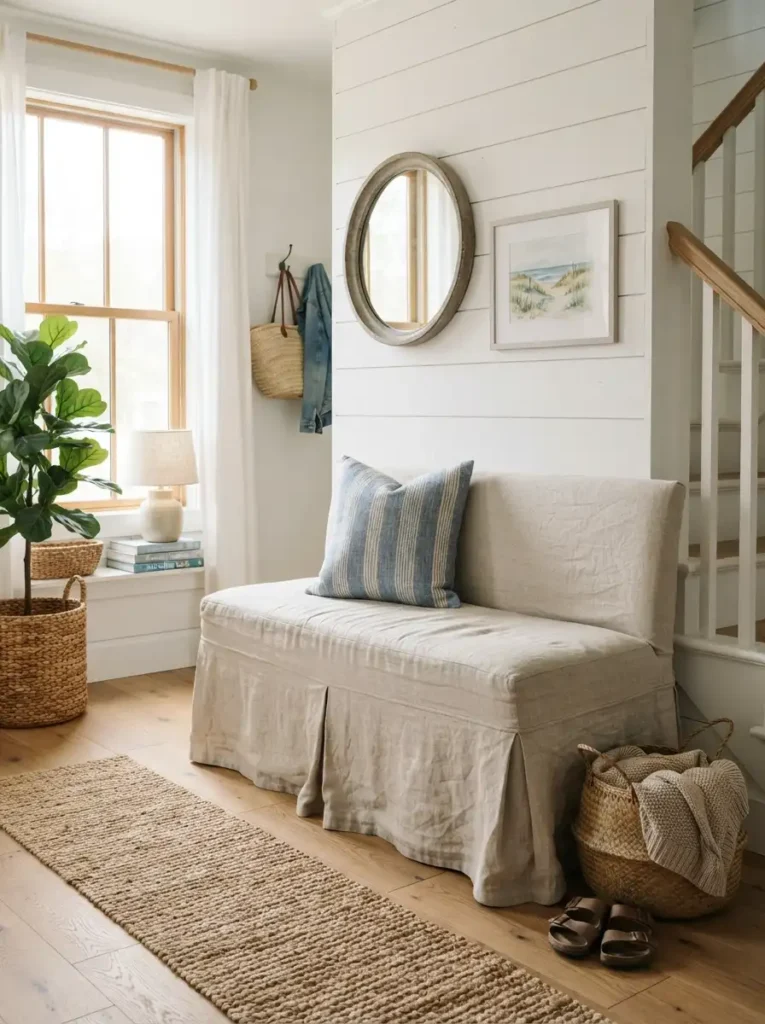
If your entryway is wide enough to accommodate seating, an upholstered bench provides a welcoming spot for guests to sit and take off their shoes. To capture the coastal vibe, look for a bench featuring a casual, tailored slipcover.
Why it works: Slipcovers—especially those made of heavy cotton canvas or pure linen—are a staple of high-end coastal design. They look relaxed, soft, and unpretentious. More importantly, they are highly practical; a slipcover can be easily removed and thrown in the washing machine if it gets dirty from outdoor gear. How to style it: Choose a bench with a crisp white or soft oatmeal-colored linen slipcover featuring a pleated skirt that reaches the floor. Toss a single, beautifully textured throw pillow on top—perhaps in a soft blue-and-white stripe—to make it look incredibly inviting.
9. Glass and Brass Lantern Lighting
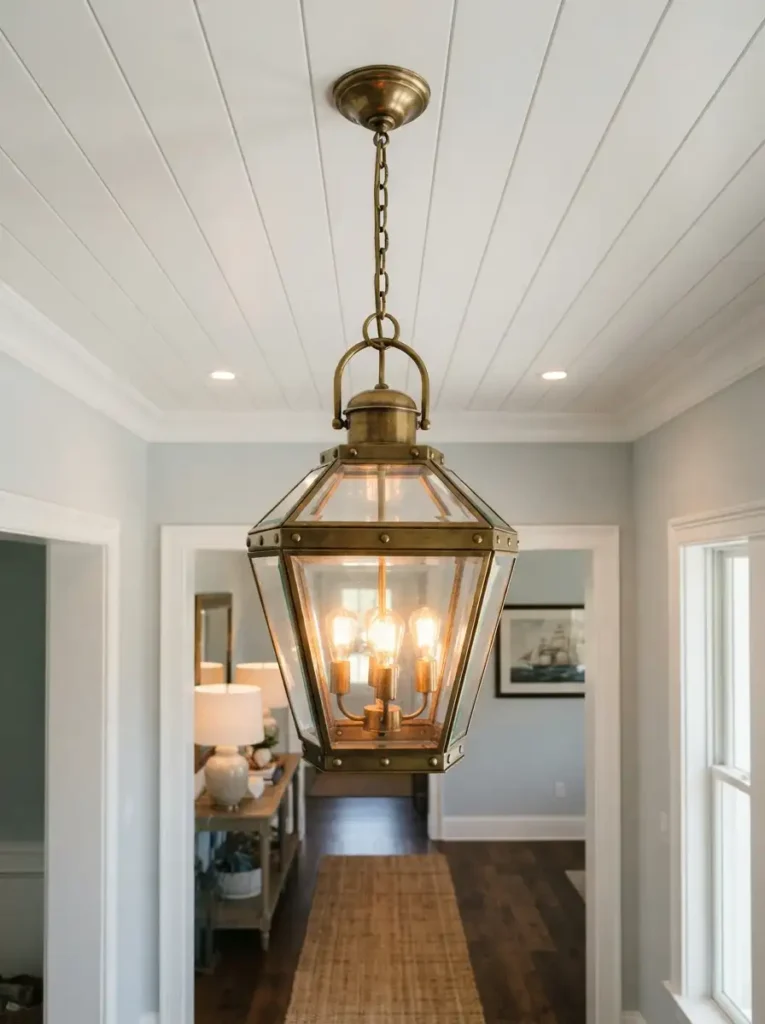
Do not overlook your entryway lighting. The standard flush-mount dome light does nothing for your aesthetic. Instead, swap it out for a hanging pendant light that takes inspiration from classic nautical lanterns.
Why it works: Lantern-style lighting hints at historical lighthouses and maritime navigation without feeling overly themed. Clear glass fixtures ensure your line of sight is not blocked, keeping the entryway feeling tall and open, while the metal frame adds architectural interest. How to style it: Hang a beautiful, oversized square or cylindrical lantern featuring clear glass panels and an unlacquered brass or polished nickel frame. Use clear, vintage-style Edison bulbs inside to cast a warm, welcoming, ambient glow that feels like a glowing beacon welcoming you home.
10. Board and Batten with Functional Hooks
If you have a busy family, your entryway needs to function like a high-efficiency mudroom. To achieve this while maintaining a beautiful coastal style, install three-quarter height board and batten paneling equipped with heavy-duty hooks.
Why it works: Board and batten—a style of wainscoting featuring vertical wooden strips—protects your drywall from scuffs and scrapes while adding massive architectural value. The hooks provide immediate, accessible storage that encourages everyone to hang up their belongings the moment they walk in. How to style it: Paint the board and batten a soft, sandy beige or a pale grey-blue, and paint the wall above it a crisp white for a beautiful two-tone effect. Mount sturdy, matte black or brushed brass hooks along the top rail. Hang a beautiful woven straw sunhat or a classic canvas tote bag on one of the hooks as a permanent, purposeful piece of coastal decor.
11. Subtle Tropical Greenery
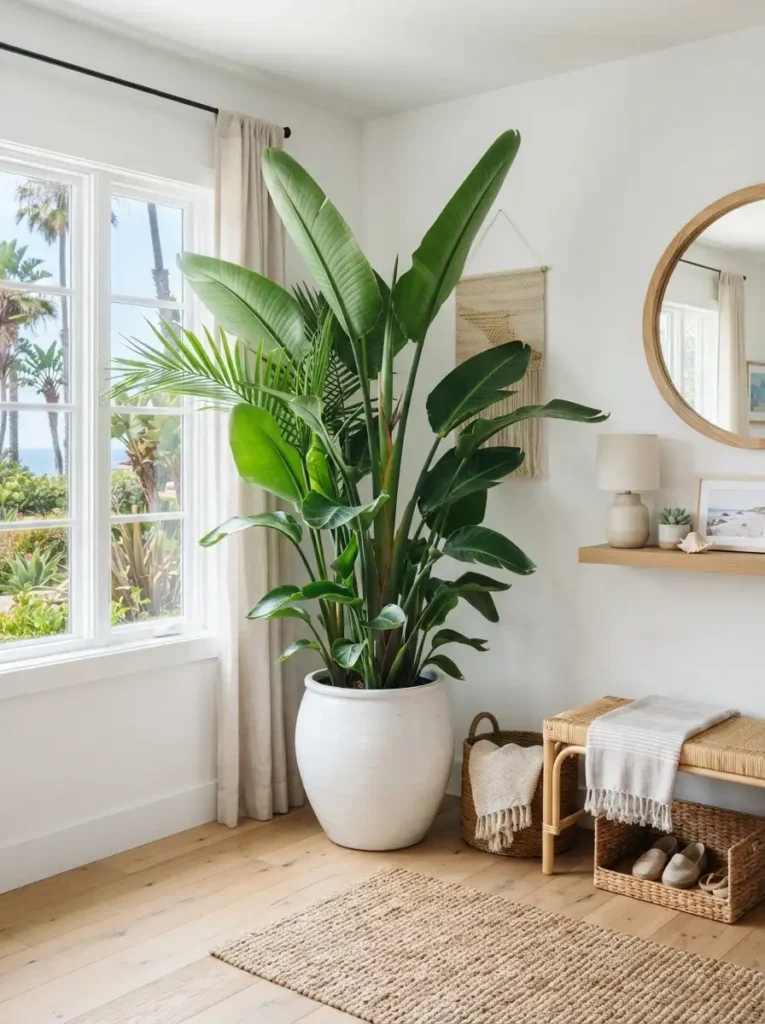
Coastal design is deeply intertwined with nature. A space will never feel truly fresh and vibrant unless you bring living, breathing botanical elements indoors. For a coastal entryway, skip the heavy, dark houseplants and opt for light, structural greenery.
Why it works: Greenery breathes oxygen and life into the space. Structural, tropical-leaning plants provide massive pops of vibrant green that contrast perfectly against white walls and natural wood tones, completing the indoor-outdoor connection. How to style it: If you have high ceilings, place a large, potted Bird of Paradise or a Ficus Audrey in an oversized, white ceramic or woven rattan planter in the corner. If floor space is tight, a simple, clear glass vase holding three massive, freshly cut Monstera or palm leaves on the console table is an incredibly chic, high-end alternative.
12. Sandy Neutral Monochromatic Palette
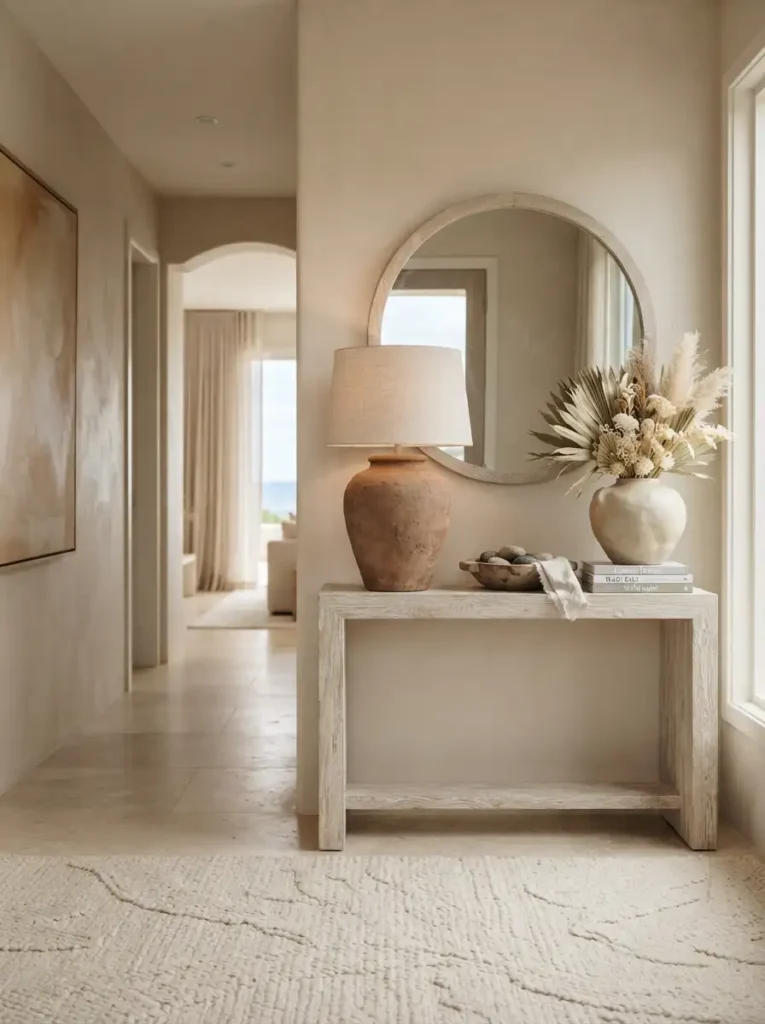
While blue and white are popular, some of the most luxurious coastal homes in the world utilize a strictly monochromatic, sandy neutral color palette. This design focuses entirely on the colors of the dunes: warm beige, soft cream, ivory, and faded taupe.
Why it works: A monochromatic neutral palette relies entirely on texture rather than color. It is incredibly soothing, deeply sophisticated, and creates an environment that feels like a high-end, luxury spa resort on a secluded beach. How to style it: Pair a light blonde oak or whitewashed wood console table with a cream-colored textured rug. Hang artwork that features abstract, neutral textures, and use a lamp with a raw, unglazed terracotta or plaster base. The lack of loud colors allows the mind to instantly relax.
13. Woven Rattan and Cane Detailing
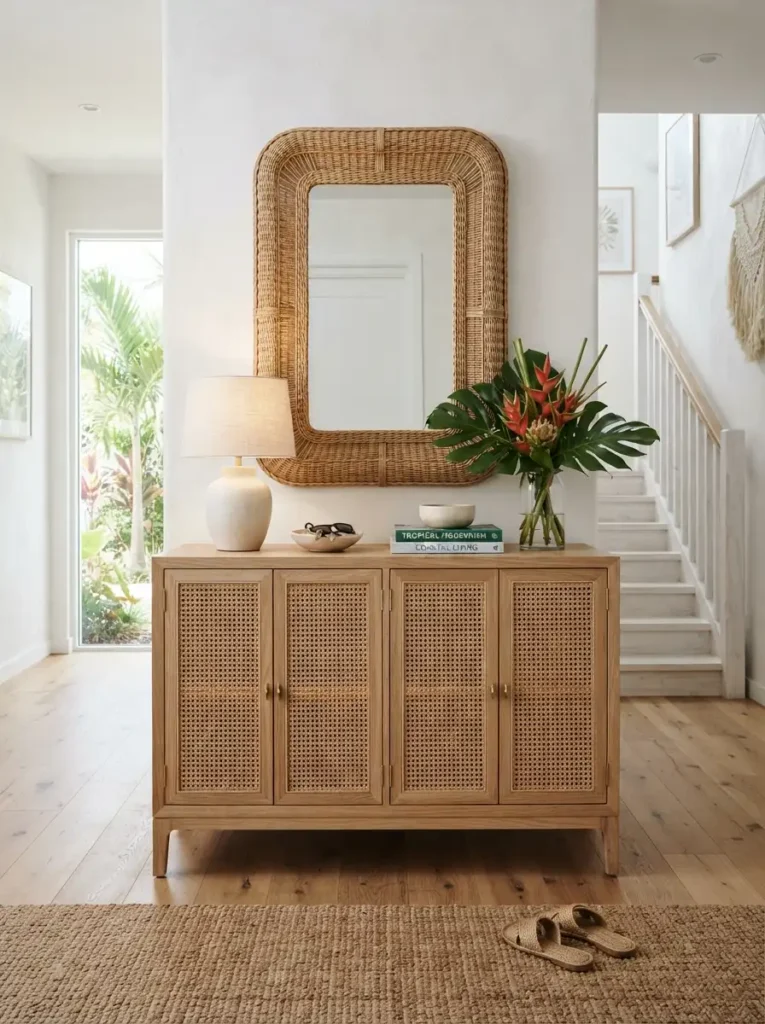
Rattan, wicker, and cane are the undisputed champion materials of tropical and coastal design. Introducing these woven textures into your entryway adds instant warmth, breathability, and an artisanal, handcrafted quality to the space.
Why it works: The open weave of cane and rattan feels incredibly visually light. It provides essential texture without making the furniture look heavy or clunky, which is perfect for keeping an entryway feeling bright and airy. How to style it: Choose a console table or a small entryway cabinet that features woven cane doors. Alternatively, use a rattan pendant light overhead, or hang a beautiful, oversized woven wicker mirror on the wall. These elements add a subtle, sophisticated island-resort vibe to your daily routine.
Setting the Ultimate Coastal Tone
Your entryway sets the standard for the rest of your home. It dictates the energy, the aesthetic, and the level of comfort your guests can expect as they move into your living room and kitchen.
By embracing the foundational elements of modern coastal luxury—maximizing natural light, layering organic, earthy textures, and relying on soothing, watery color palettes—you transform a simple hallway into a breathtaking destination. These 13 coastal entryway ideas prove that you do not need to live on the beach to capture its magic. With thoughtful curation and intentional design, you can create a bright, welcoming sanctuary that allows you to leave the stress of the world at the door