When searching for the best coffee bar ideas, you are looking to do much more than just find a place to plug in your coffee maker. For many of us, the morning cup of coffee is not just a quick caffeine fix; it is a sacred daily ritual. It is the quiet, grounding moment before the chaos of the day begins. Yet, in many homes, the coffee machine is shoved into a dark corner under the kitchen cabinets, surrounded by mail, toaster ovens, and lingering clutter.
In recent years, interior design has shifted to celebrate this morning ritual by dedicating specific architectural zones to the art of brewing. Creating a cozy, custom café corner at home elevates your daily routine from a mundane task to a luxurious, high-end experience. Furthermore, a beautifully designed coffee bar frees up valuable primary counter space in your kitchen, creates an incredibly welcoming atmosphere for guests, and saves you money by making your home brew feel just as special as a trip to the local artisan coffee shop.
Whether you are a pour-over purist, an espresso aficionado, or simply someone who loves a comforting cup of drip coffee, your home café should reflect your personal brewing style and your home’s aesthetic. You do not need a massive kitchen to achieve this; with intentional design, even a tiny sliver of wall space can become a breathtaking focal point.
If you are ready to upgrade your morning routine, these 12 coffee bar ideas will inspire you to carve out the perfect, stylish café corner right in your own home.
1. The Built-In Millwork Nook
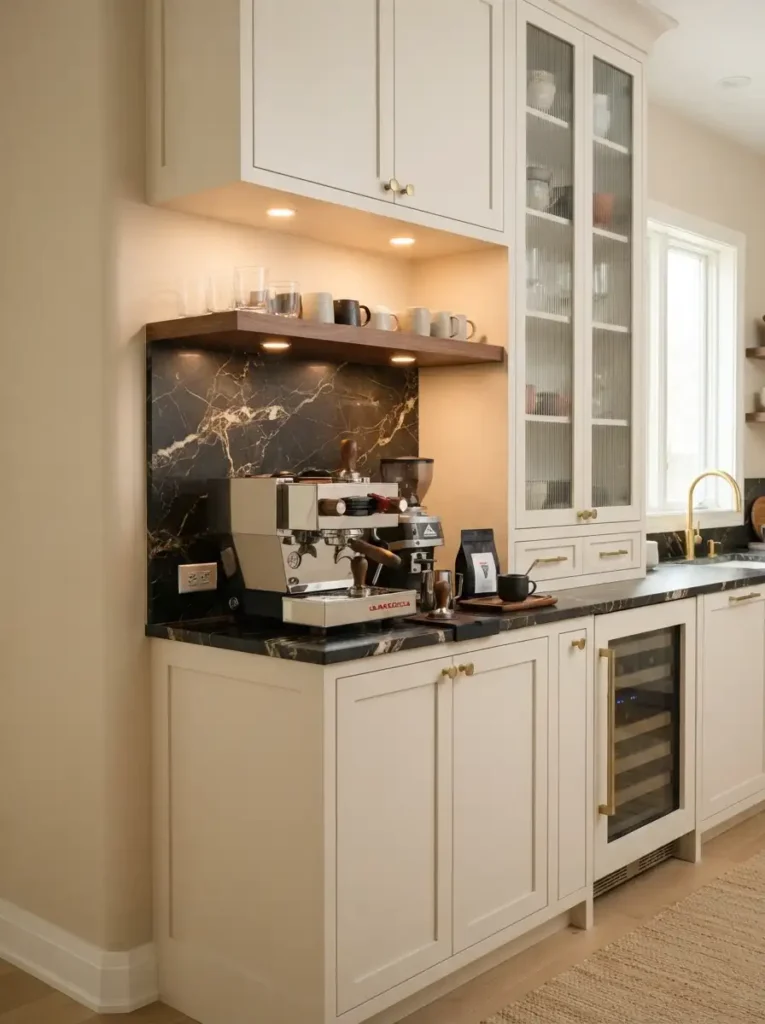
If you are undergoing a kitchen renovation or building a custom home, planning a dedicated, built-in coffee nook is the ultimate luxury. This design involves carving out a specific section of your cabinetry—often situated away from the primary cooking zone—specifically for coffee preparation.
This space typically features a countertop that matches your kitchen island, flanked by tall pantry cabinets or open shelving. By integrating it directly into the kitchen’s architecture, it feels incredibly intentional and high-end.
Why it works: A built-in nook keeps your heavy espresso machines and grinders off the main meal-prep counters. It seamlessly blends with the rest of the kitchen while establishing a distinct, specialized zone. How to style it: Use a contrasting backsplash specifically in the coffee nook—such as a vertical stacked subway tile or a slab of heavily veined marble—to make the area pop against the rest of the cabinetry. Add recessed puck lighting under the upper cabinets to beautifully illuminate your espresso machine early in the morning.
2. Repurposed Vintage Antique Dresser
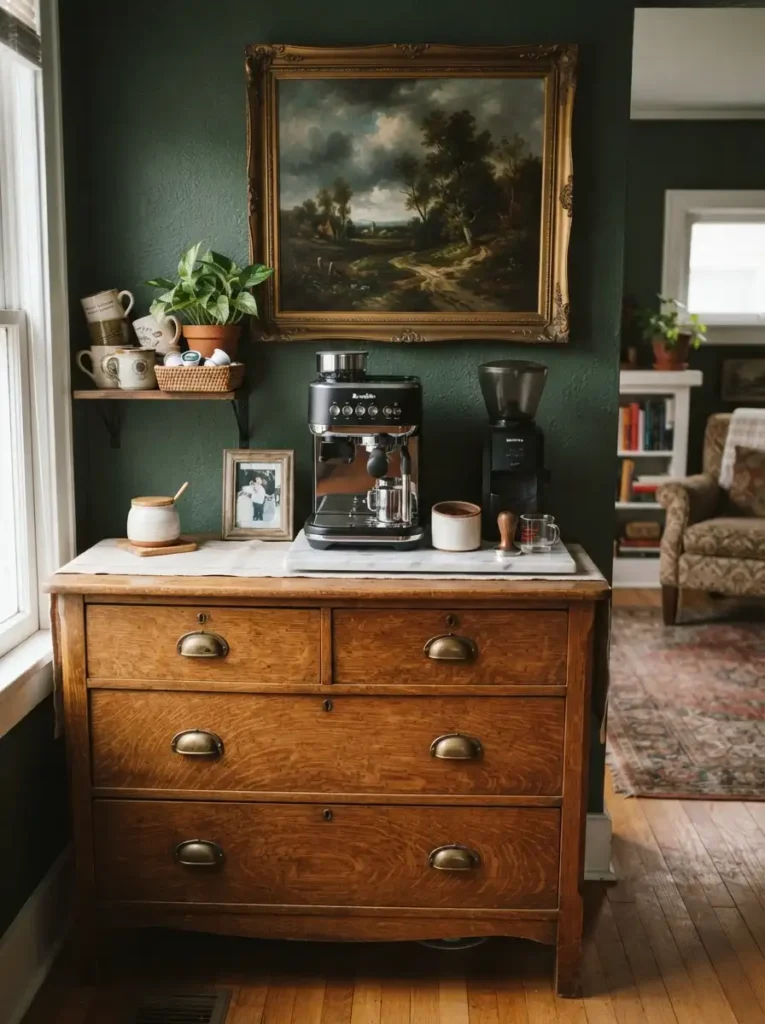
For a look that is packed with character, history, and warmth, ditch the standard kitchen cabinets and repurpose a beautiful antique dresser or vintage sideboard into a freestanding coffee bar.
Whether you choose a mid-century modern credenza, a rustic French provincial chest, or a heavily distressed apothecary cabinet, a standalone piece of furniture instantly turns a blank dining room or hallway wall into a charming café station.
Why it works: It introduces a completely different texture and wood tone to the space, preventing the room from looking too “matchy-matchy.” Dressers also come equipped with deep drawers, which are perfect for hiding away bulky bags of coffee beans, extra filters, and oversized mugs. How to style it: Protect the wooden top by placing a custom-cut piece of glass or a beautiful marble tray underneath your coffee machine. Swap out the original hardware for classic brass cup pulls. Hang a vintage, framed oil painting directly above the dresser to complete the collected, historic aesthetic.
3. The Floating Shelf Display
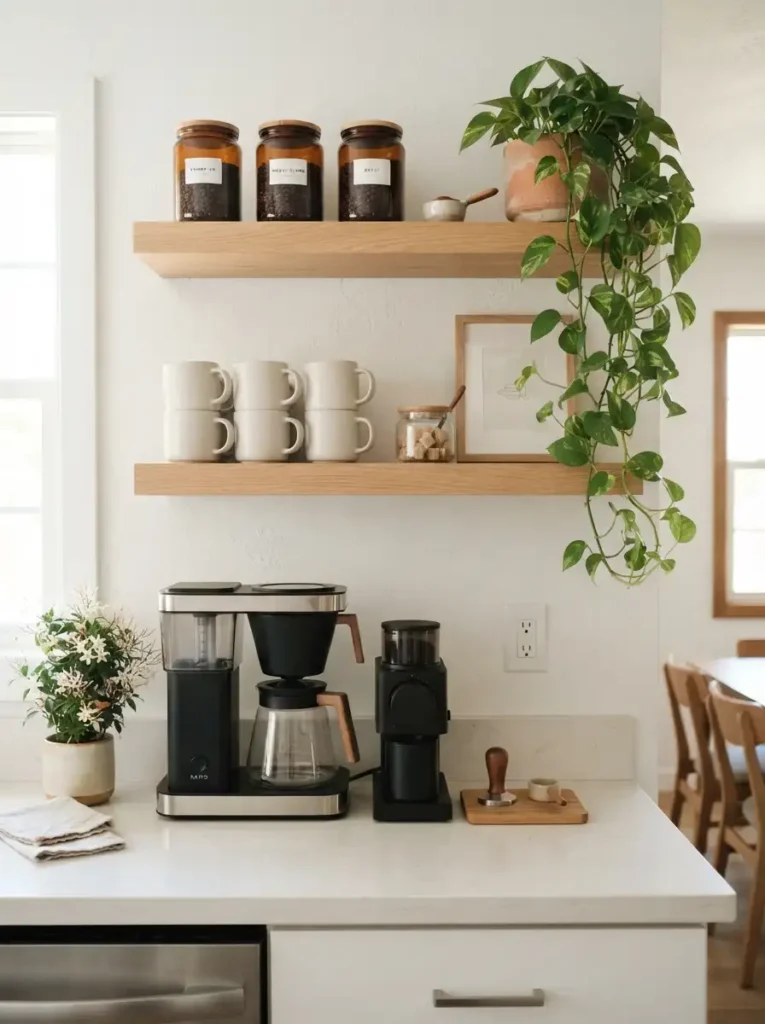
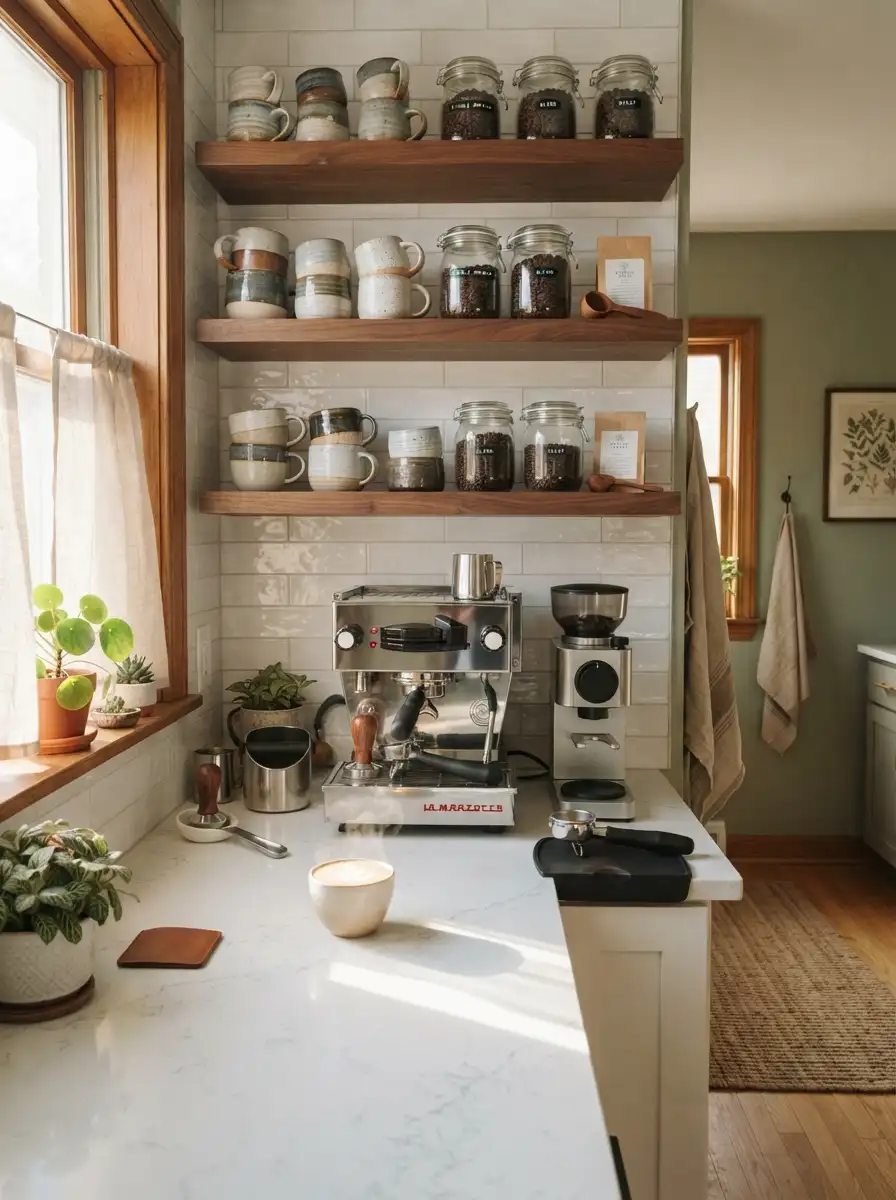
If you are working with limited square footage or simply love a minimalist, airy aesthetic, utilizing vertical space is key. The floating shelf coffee bar relies on a small base counter topped with two or three heavy, thick floating wooden shelves extending up the wall.
This design transforms your coffee supplies from mere kitchen staples into curated pieces of decor.
Why it works: Floating shelves draw the eye upward, making the ceilings feel higher. They provide immense storage without the heavy, boxy visual weight of traditional upper cabinets, keeping the room feeling open and expansive. How to style it: The secret to open shelving is meticulous curation. Transfer your coffee beans, sugar, and stirrers into matching airtight amber glass jars or sleek ceramic canisters. Display a curated collection of beautiful, artisanal ceramic mugs. Add a small trailing plant, like a string of pearls, on the top shelf to bring organic life to the display.
4. The Hidden Pantry “Appliance Garage”
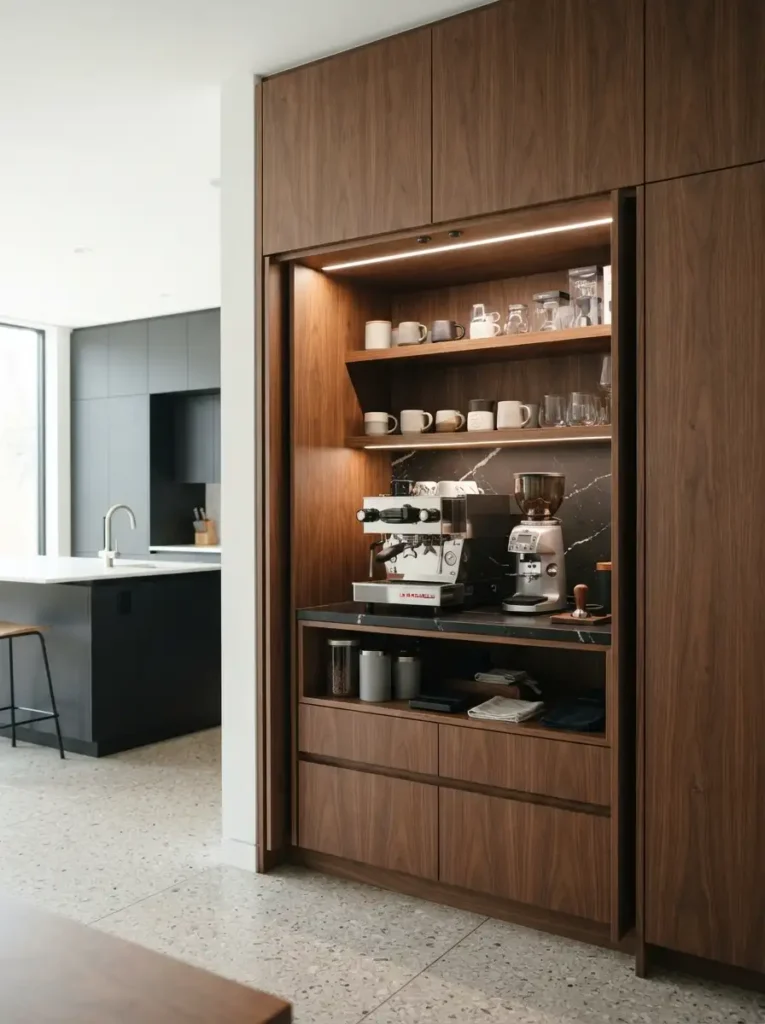
For the ultra-minimalist who hates visual clutter, the hidden coffee bar is a masterclass in clean design. Often referred to as an “appliance garage,” this setup places the entire coffee station inside a pantry or behind a set of sleek, retractable pocket doors sitting flush on the countertop.
When closed, the kitchen looks flawlessly tidy, with unbroken lines of cabinetry. When it is time for coffee, the doors slide smoothly back into the wall cavity, revealing a fully lit, fully equipped secret café.
Why it works: Coffee stations, by nature, involve a lot of tools—grinders, scales, tampers, and cords. The hidden pantry allows you to keep all these items permanently set up and plugged in without ever having to look at them when they are not in use. How to style it: The inside of the cabinet should be just as beautiful as the outside. Line the back of the appliance garage with a warm wood veneer or a bold, patterned wallpaper. Ensure there are built-in electrical outlets inside the cabinet so cords are never stretched across your main kitchen counters.
5. The Rolling Bar Cart Café
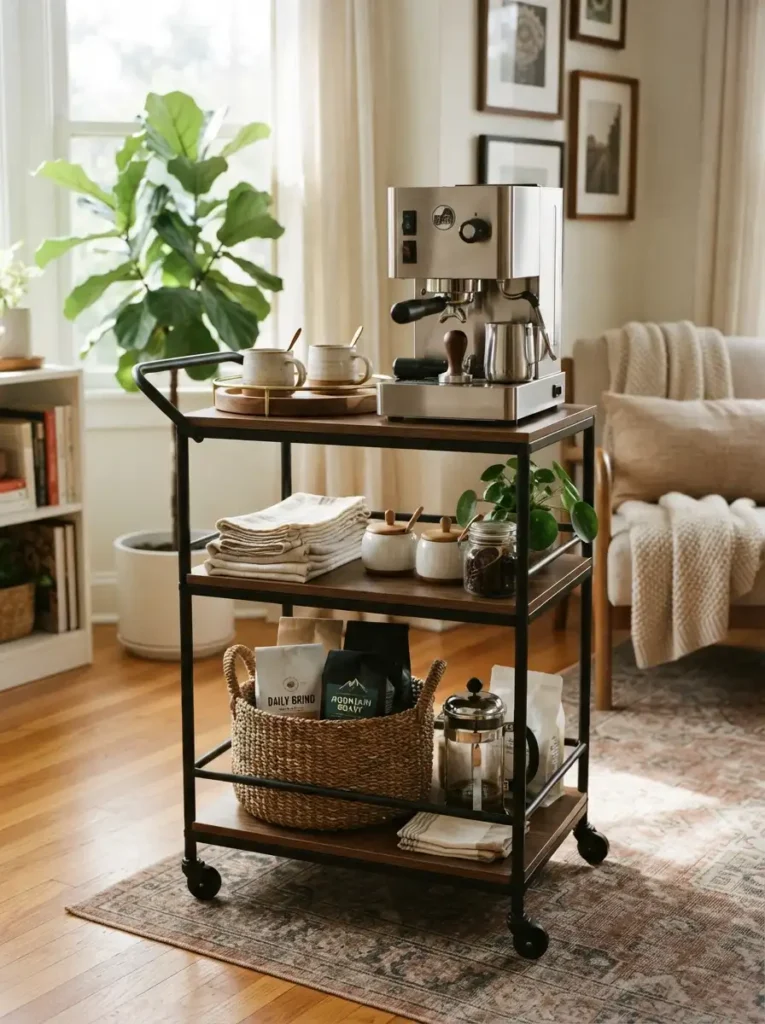
You do not need built-in cabinets to create an incredible coffee station. For apartment renters or those with extremely tight kitchens, a rolling bar cart is the ultimate versatile solution.
A two- or three-tiered metal and wood bar cart can be tucked into a small corner of the living room, dining room, or even a wide hallway.
Why it works: It is highly space-efficient, budget-friendly, and mobile. If you are hosting a brunch or a dinner party, you can literally roll the coffee station into the dining room so guests can serve themselves after the meal. How to style it: Hierarchy is important on a bar cart. Place your heavy coffee maker or espresso machine on the sturdy top tier. Use the middle tier for a beautiful tray holding sugar bowls, syrups, and folded linen napkins. Use the bottom tier to store bulkier items, like a woven basket full of extra coffee beans or a stack of spare mugs.
6. Moody Dark Academia Coffee Bar
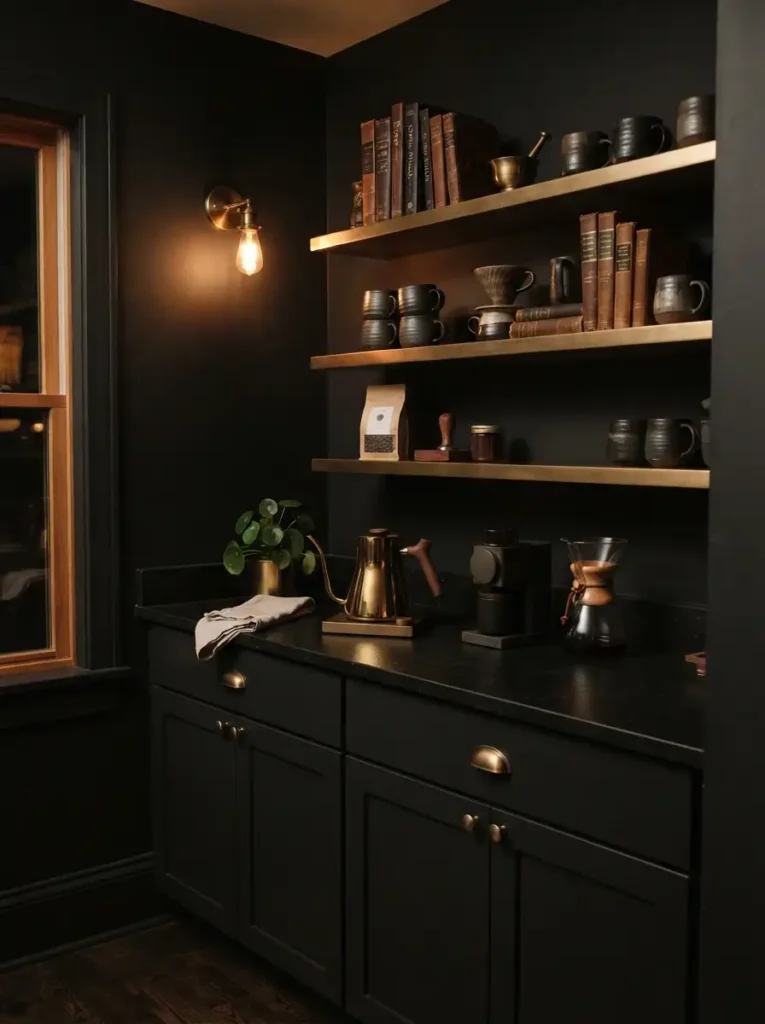
Move away from the all-white modern kitchen and embrace the dramatic, cinematic aesthetic of the “Dark Academia” trend. A moody coffee bar utilizes deep, saturated colors to create an atmosphere that feels like a historic, dimly lit European café.
Paint the wall behind your coffee bar—or the cabinets themselves—in a rich matte black, deep charcoal, espresso brown, or hunter green.
Why it works: Dark colors are incredibly cozy and inherently sophisticated. They provide a stunning, high-contrast backdrop that makes metallic accents and the rich, dark tones of coffee visually pop. How to style it: A moody background demands warm metallic accents. Use unlacquered brass hardware, brass floating shelf brackets, and a gold-toned gooseneck kettle. Display vintage, leather-bound books on the shelves alongside your coffee cups, and use warm, amber-toned lighting to make the space glow.
7. Modern Farmhouse Coffee Corner
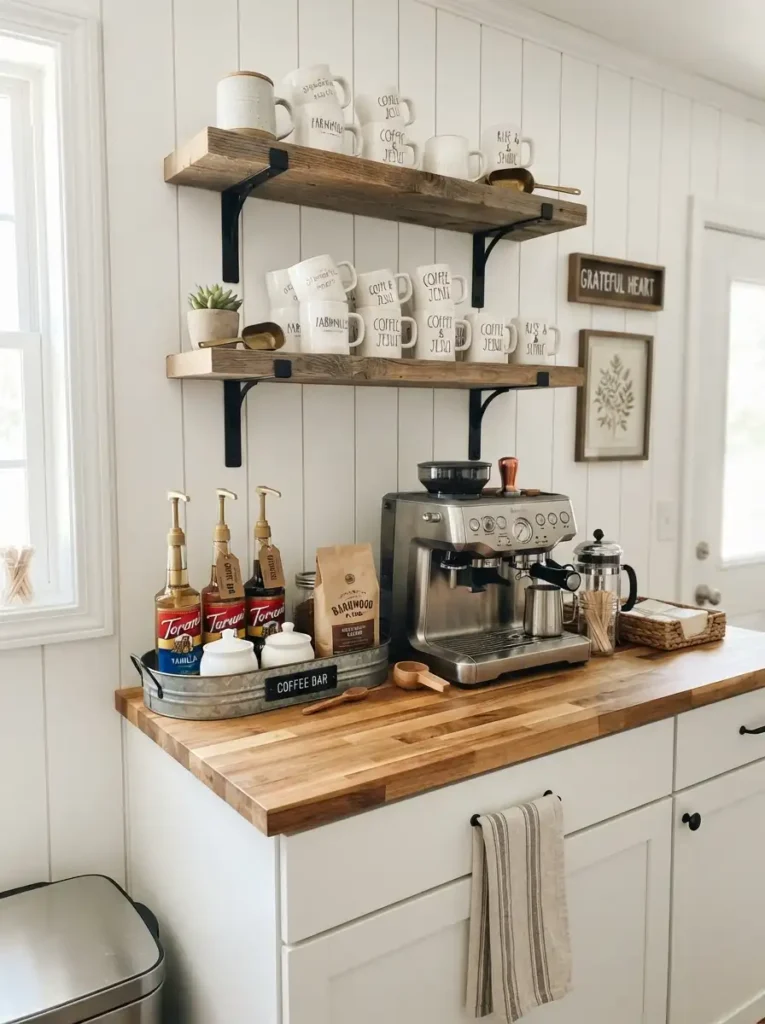
The modern farmhouse aesthetic remains incredibly popular for coffee bars because it radiates warmth, hospitality, and comfort. This design leans heavily on bright whites, warm natural woods, and subtle rustic textures.
The defining architectural feature of this look is often a backdrop of vertical or horizontal white shiplap paneling mounted directly behind the coffee station.
Why it works: The farmhouse style is unpretentious and deeply welcoming. The crisp white shiplap provides a bright, clean backdrop that makes morning coffee feel refreshing and energizing. How to style it: Pair the white shiplap with thick, reclaimed barn wood floating shelves. Use matte black iron brackets to support the shelves. Hang your mugs from a row of iron hooks installed underneath the bottom shelf. Add a rustic galvanized metal tray to hold your coffee syrups and a small vase with fresh eucalyptus.
8. The Under-Stairway Café
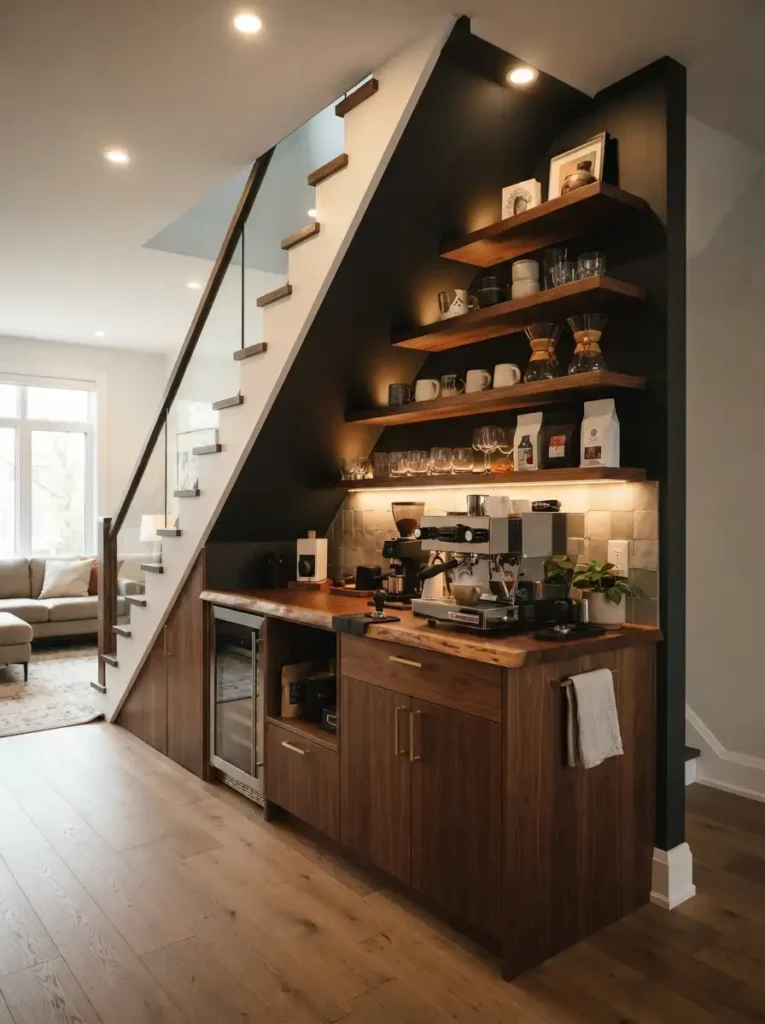
In many homes, the awkward, sloping space underneath the staircase is completely wasted or turned into a dumping ground for coats and shoes. Converting this specific architectural quirk into a bespoke coffee bar is a brilliant use of space.
Because this area is naturally recessed and cozy, it acts as the perfect footprint for custom base cabinets, a small countertop, and tiered shelving that follows the angle of the stairs.
Why it works: It takes square footage that was previously useless and turns it into one of the most highly functional, charming destinations in the home. It physically separates the coffee routine from the primary kitchen. How to style it: The space under the stairs can often be dark, so lighting is crucial. Install a beautiful, dramatic pendant light hanging from the highest point of the ceiling slope, or use bright LED strip lighting underneath the angled shelves. Use a bright, reflective backsplash tile to bounce light around the small alcove.
9. Sleek Minimalist Espresso Bar
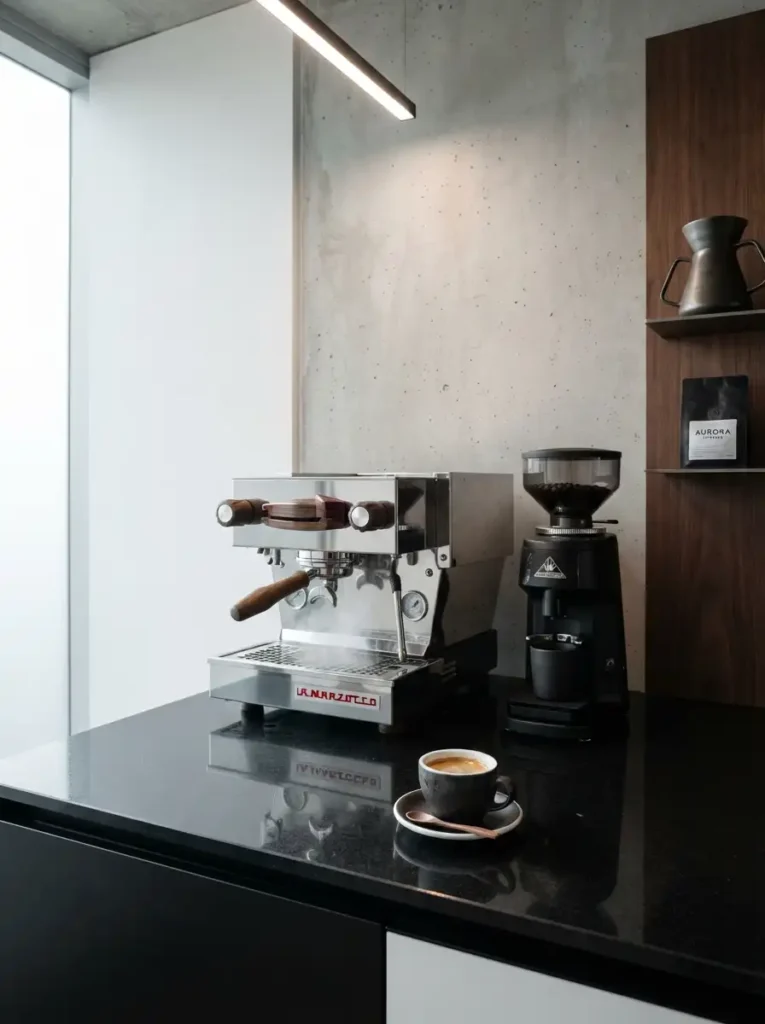
If you are a serious coffee purist who has invested in a prosumer-level espresso machine (like a gleaming stainless steel La Marzocco or Rocket Espresso), your machine is a piece of industrial art. The sleek minimalist espresso bar is designed entirely around showcasing the machine itself.
This idea rejects clutter completely. There are no mugs on display, no bottles of syrup, and no messy coffee grounds. It features a stark, immaculate countertop, the gleaming machine, and a high-end grinder.
Why it works: It feels like a high-end, futuristic commercial café. It is visually soothing, highly precise, and completely focused on the craftsmanship of pulling the perfect shot of espresso. How to style it: Use a solid slab of cold, sleek material for the countertop and the backsplash—like absolute black granite, pure white quartz, or poured concrete. Ensure every single wire and plug is hidden through custom grommets in the counter. Keep tools stored away in a sleek, handleless drawer directly below the machine.
10. The Café-Style Chalkboard Wall
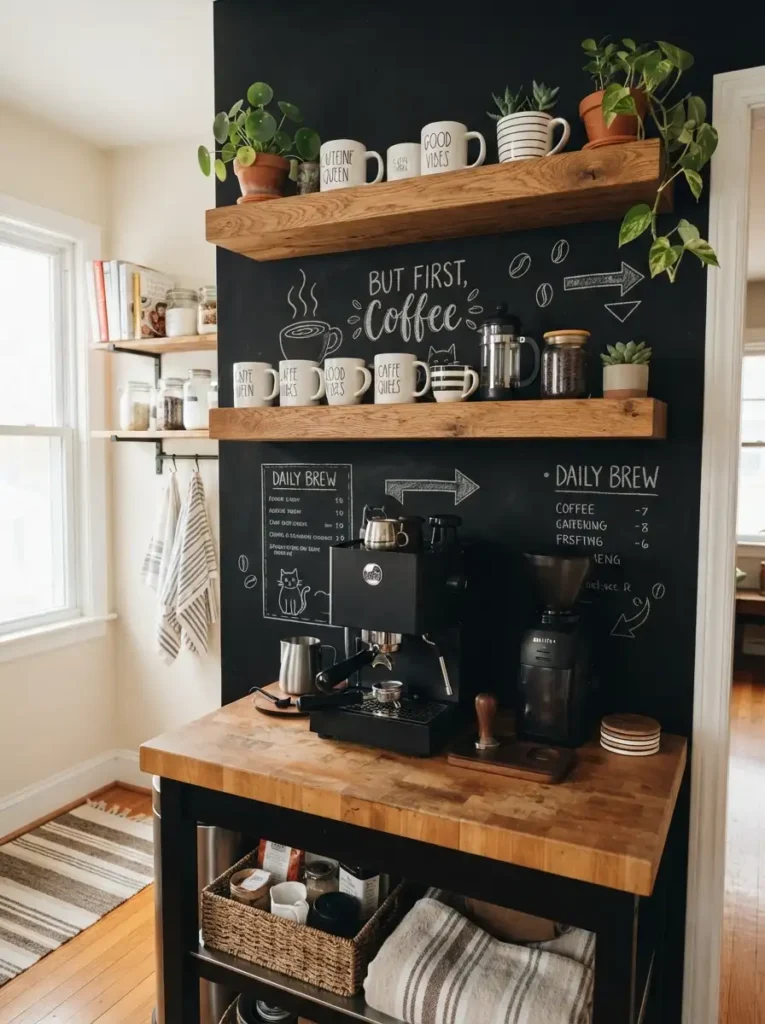
For a playful, authentic coffee shop vibe, turn the entire wall behind your coffee station into a massive chalkboard. By painting the wall with high-quality matte black chalkboard paint, you create a dynamic, customizable piece of art.
Why it works: It is incredibly fun, family-friendly, and highly functional. It gives the space an immediate, authentic bistro aesthetic that feels relaxed and creative. How to style it: Use chalk markers to draw a beautiful “menu” of the drinks you offer, or write down your favorite morning quotes and coffee-brewing ratios. Mount warm wood floating shelves directly over the chalkboard paint to hold your supplies. The stark black backdrop makes white ceramic mugs and bright green plants stand out beautifully.
11. Dedicated Wet Bar with a Mini-Fridge
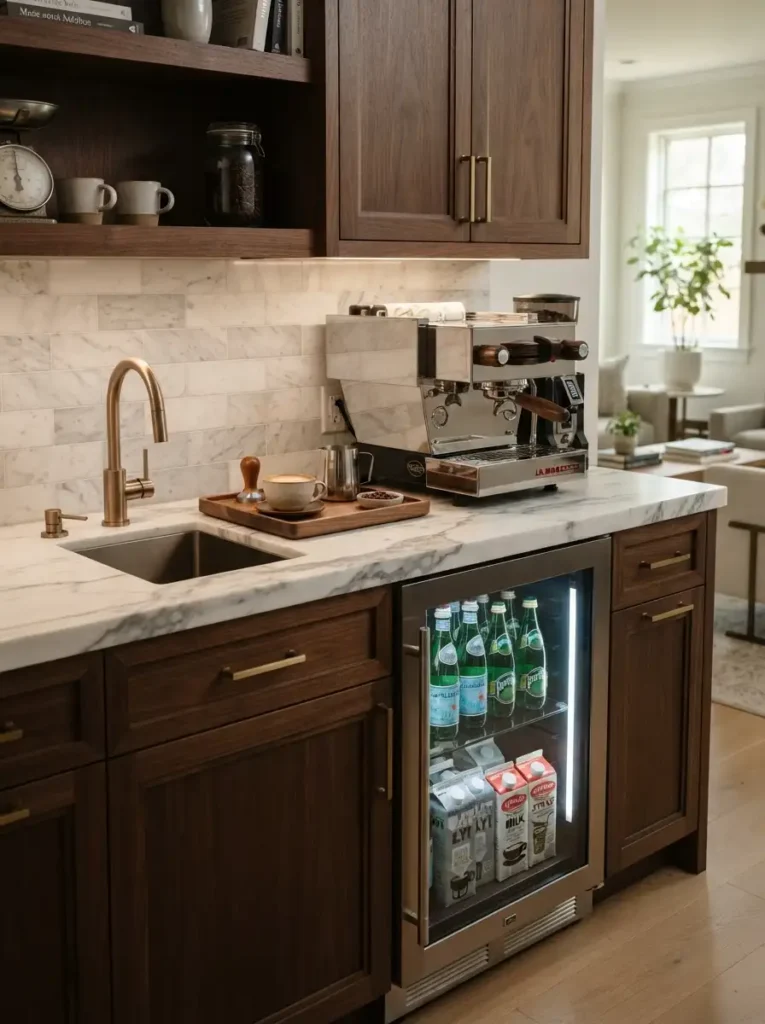
If you have the budget and the plumbing access, upgrading your coffee corner into a fully functioning wet bar is the ultimate home luxury. A wet bar setup includes a small, built-in prep sink directly in the coffee counter, along with a specialized under-counter mini-fridge.
Why it works: It makes the coffee station entirely self-sufficient. You never have to walk across the kitchen to fill your espresso machine’s water reservoir, rinse out your portafilter, or grab the milk and cream. How to style it: Install a sleek, filtered water faucet (perhaps in a stunning champagne bronze or matte black finish) specifically for brewing. Choose an under-counter fridge with a glass door so you can neatly display your milk, cold brew pitchers, and sparkling water.
12. Biophilic Organic Coffee Corner
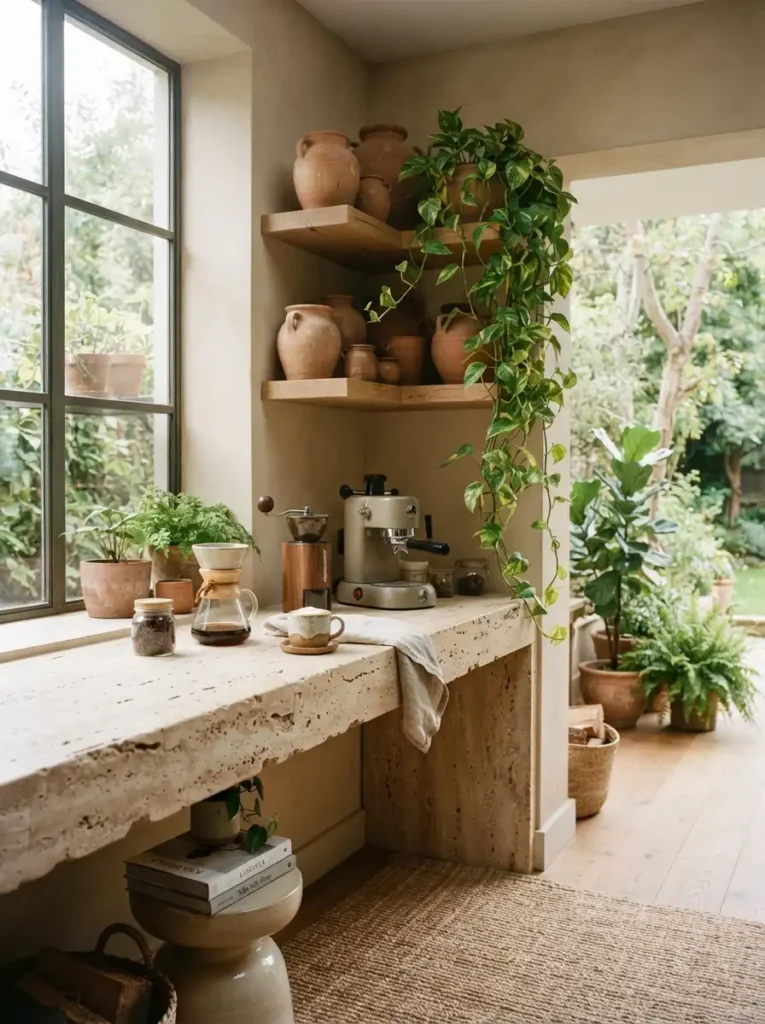
Biophilic design is all about connecting indoor living spaces with the natural world. An organic coffee corner is the perfect place to start your morning if you want to feel grounded, calm, and deeply connected to nature.
This design relies entirely on raw, unpolished materials: textured stone, raw terracotta, light blonde woods, and an abundance of living plants.
Why it works: Plants and natural sunlight naturally boost serotonin levels. Combining the psychological benefits of nature with the comforting ritual of morning coffee creates a deeply restorative, anxiety-reducing environment. How to style it: Place the coffee bar directly next to a large window if possible. Use a natural, honed travertine or soapstone countertop. Hang a trailing pothos plant above the station, and place a small potted fern on the counter. Keep your coffee beans in earthy, unglazed ceramic jars. The vibe should be fresh, sun-drenched, and alive.
Elevating Your Daily Ritual
Creating a dedicated coffee bar in your home is vastly more than an interior design trend; it is a profound commitment to romanticizing your daily routine. By giving your morning brew its own beautiful, organized space, you are signaling to yourself that the start of your day deserves to be celebrated, not rushed.
Whether you carve out a small slice of a wall for a floating shelf display, repurpose a character-filled vintage dresser, or go all out with a plumbed-in, high-end espresso wet bar, the perfect café is within your reach. Focus on beautiful organization, cohesive styling, and great lighting, and you will never feel the need to stand in line at a commercial coffee shop again.