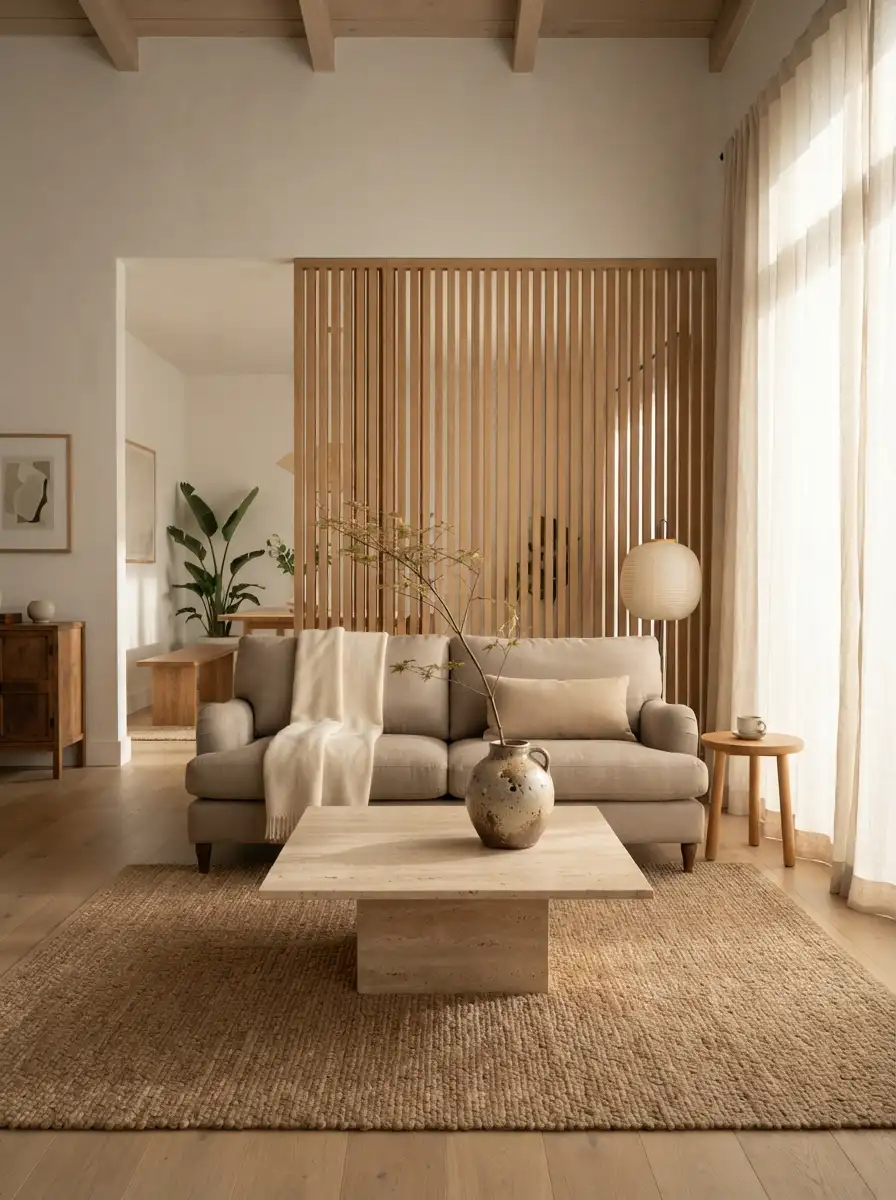
Japandi home ideas are rapidly dominating the contemporary interior design landscape, offering a breathtaking antidote to the hyper-stimulated, chaotic world we live in today. At its core, Japandi is a brilliant architectural and aesthetic marriage between two distinct but highly compatible design philosophies: Japanese minimalism and Scandinavian functionality. While geographically oceans apart, both cultures share a profound, historic reverence for nature, intentional craftsmanship, and the beauty of simplicity. The Japanese bring the ancient philosophy of wabi-sabi—the profound acceptance and celebration of imperfection, impermanence, and the natural life cycle of materials. The Scandinavians introduce the concept of hygge—the pursuit of cozy, intimate comfort and highly functional, warming design that uplifts the human spirit during dark winters.
When you blend these two ideologies, the result is an incredibly sophisticated, curated space that feels simultaneously grounded, airy, luxurious, and deeply lived-in. A Japandi home is never cold or sterile like strict modern minimalism can sometimes be, nor is it overly cluttered like traditional bohemian styles. Instead, it relies on a masterful manipulation of negative space, raw textures, muted earthy color palettes, and unparalleled craftsmanship. Designing a Japandi interior requires intense intentionality. It is about removing the excess so that the few items you do choose to display can be fully appreciated.
If you are looking to transform your house into an authentic, deeply calming zen sanctuary, you must look beyond basic furniture choices and understand the psychology of the space. Here are 17 distinct, highly detailed, and deeply transformative Japandi concepts to elevate your home. Each idea explores practical implementation, advanced styling secrets, and the underlying design psychology that makes this aesthetic so universally comforting.
1. Low-Profile Furniture Architecture
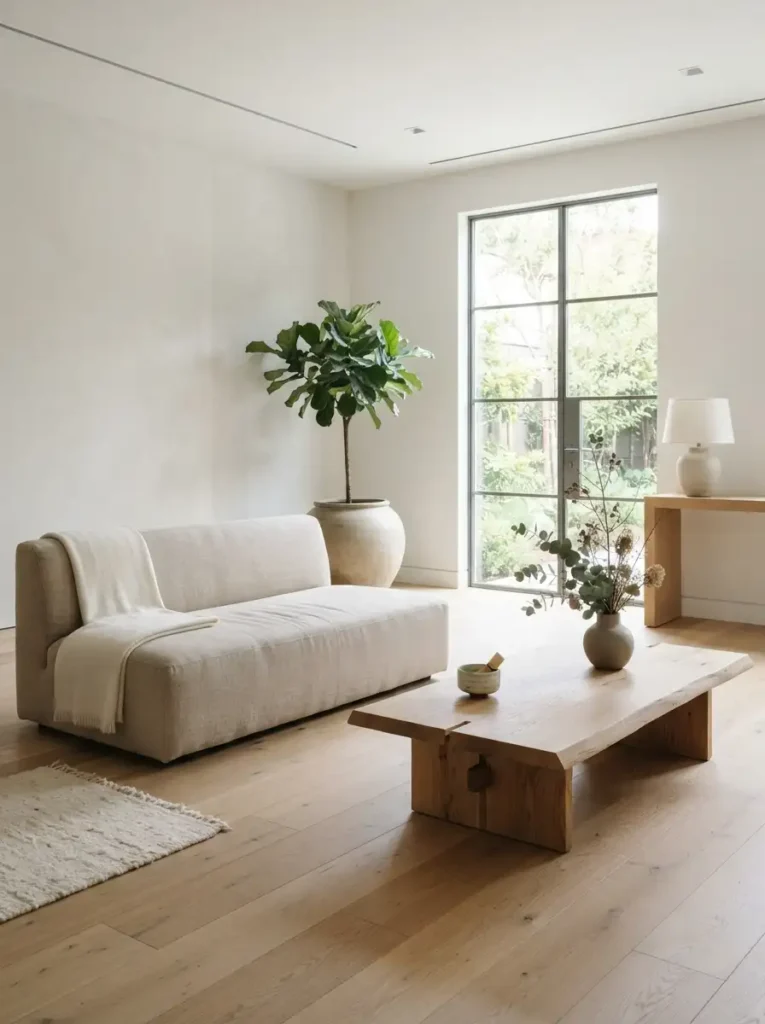
A hallmark of traditional Japanese interiors is living close to the floor. In a Japandi space, this translates to furniture that features a distinctly low-to-the-ground profile, breaking away from the towering, bulky silhouettes of traditional Western furniture.
Implementation: Invest in a low-slung, ultra-minimalist platform bed for the primary suite, completely bypassing the need for a box spring. In the living room, choose sofas and lounge chairs with deep seats, low backs, and minimal-to-no legs, allowing the upholstery to sit just inches above the floor.
Styling Tips: Keep the lines of the furniture incredibly clean and horizontal. Soften these rigid horizontal lines with plush, oversized linen throw pillows. Pair low sofas with a solid, low-profile raw oak or travertine coffee table to maintain visual consistency.
Design Psychology: Lowering the visual weight of a room instantly increases the perceived height of the ceilings, making the space feel expansive and airy. Psychologically, sitting or sleeping closer to the floor triggers a primal sense of grounding and stability, deeply anchoring your nervous system and promoting a profound state of relaxation.
2. Slatted Wood Room Dividers
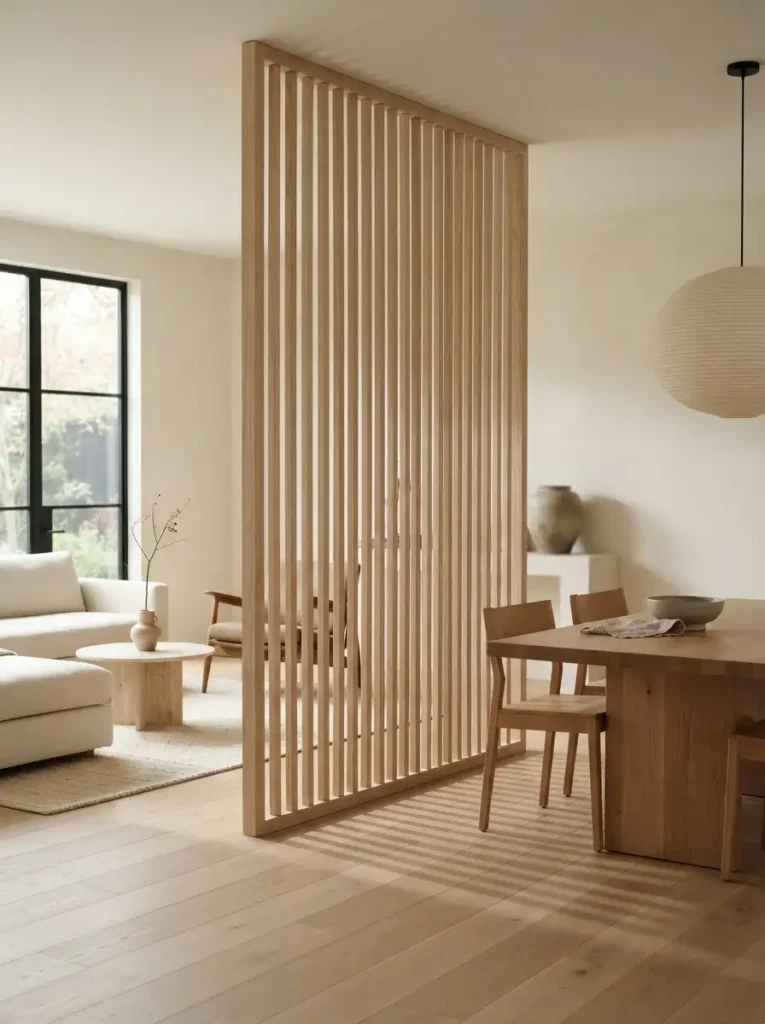
Open-concept homes are beautiful, but they often lack intimacy and defined zones. Japandi design solves this using slatted wood room dividers, drawing direct inspiration from traditional Japanese kumiko woodworking and Scandinavian slat walls.
Implementation: Install vertical wooden slats (ideally in light ash, white oak, or warm walnut) to separate distinct living areas—such as dividing an entryway from a living room, or a dining space from a kitchen.
Styling Tips: Ensure the slats are spaced a few inches apart rather than forming a solid wall. Let them run seamlessly from the floor to the ceiling. You can even run the slats up the wall and continue them across the ceiling to create a stunning, architectural “canopy” effect over a dining table.
Design Psychology: Slatted dividers create “permeable boundaries.” They define the function of a specific zone without completely blocking the flow of natural light or cutting off the line of sight. This provides the psychological comfort of a cozy, enclosed space while maintaining the breathable, expansive feeling of an open floor plan.
3. Authentic Wabi-Sabi Ceramics and Stoneware
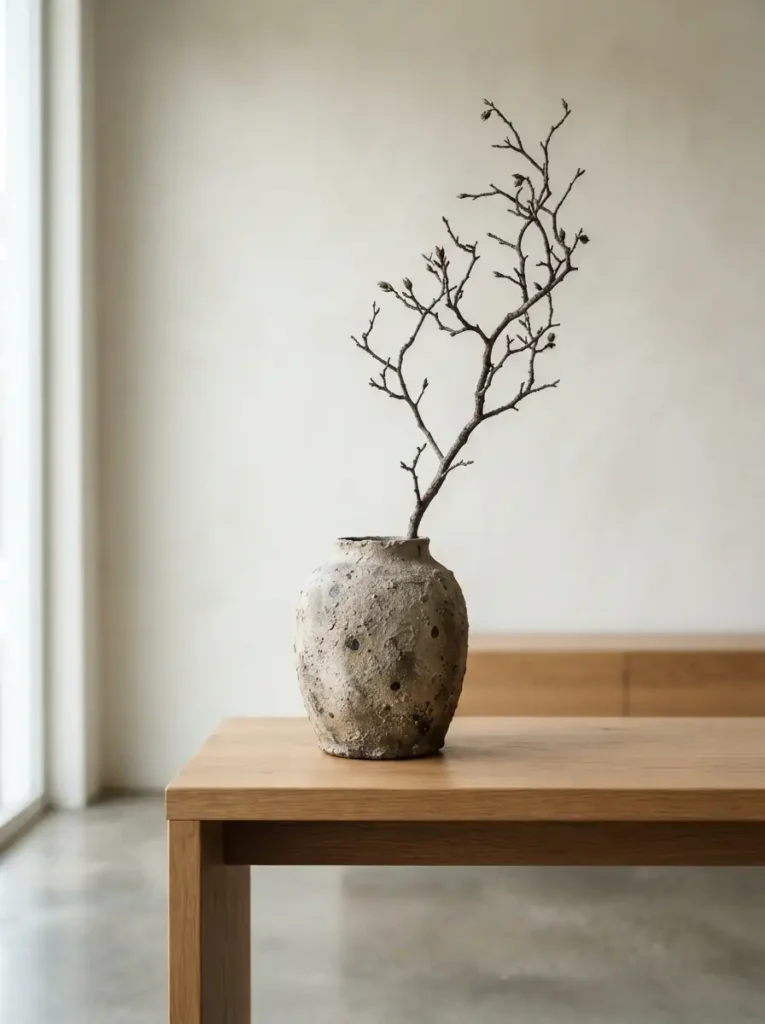
Japandi strictly rejects mass-produced, shiny, flawless decor. Instead, it embraces the raw, the uneven, and the handmade through the philosophy of Wabi-Sabi.
Implementation: Replace glossy, perfect vases and bowls with hand-thrown, highly textured pottery, stoneware, and terracotta. Look for pieces that feature uneven glazes, rough, chalky finishes, or even visible, beautifully repaired cracks (a nod to the art of Kintsugi).
Styling Tips: Treat these ceramics as fine art. Place a single, imperfect clay vase on a minimalist wooden console table. Do not crowd it with other objects. Allow it to sit in solitary beauty, perhaps holding a single, dried architectural branch.
Design Psychology: Flawless, machine-made perfection creates subconscious pressure and feels unapproachable. Imperfect, handmade items remind the human brain of nature and the human touch. They introduce a deep, historical soul to the room, creating an environment that feels accepting, grounded, and authentically real.
4. Warm, Muted Earth-Tone Palettes
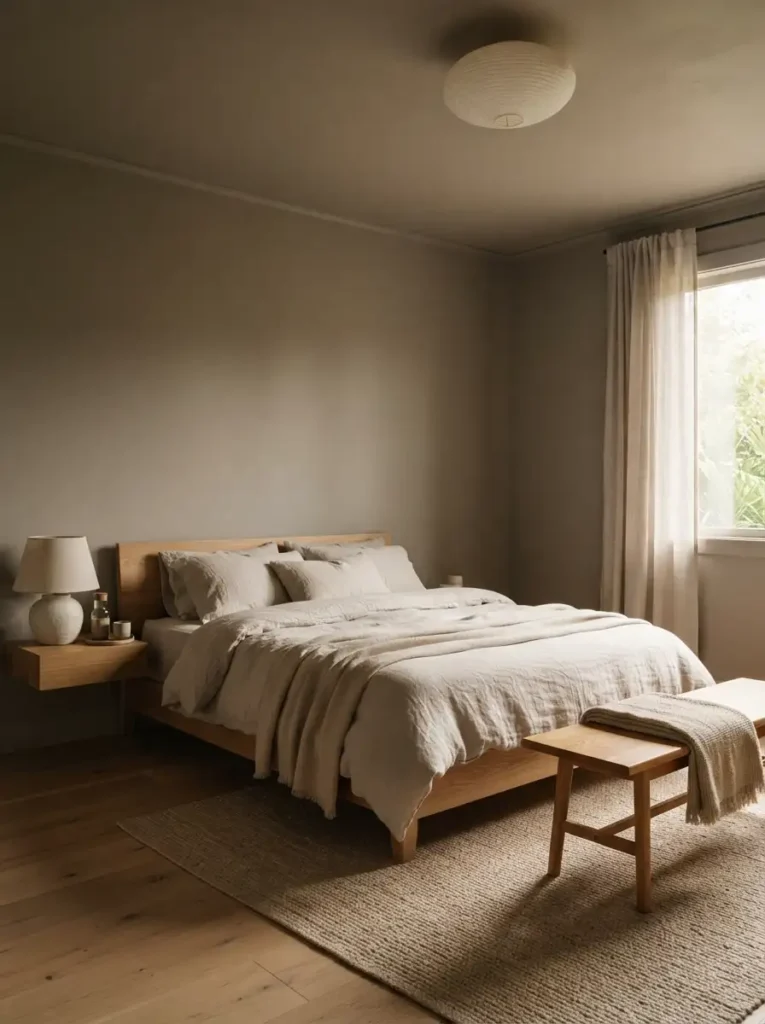
The Japandi color palette is a strict departure from loud, saturated colors and stark, clinical whites. It relies entirely on soft, muted earth tones drawn directly from the natural landscape.
Implementation: Paint your walls and select your major upholstery in shades of warm oatmeal, muted sage green, soft taupe, pale terracotta, and warm stone gray. If you use white, ensure it is a creamy, warm off-white rather than a stark, blue-toned gallery white.
Styling Tips: Utilize the technique of “color drenching” by painting your walls, baseboards, and ceiling in the same soft, earthy hue. This removes the harsh visual break of contrasting trim, enveloping the room in a seamless cocoon of calming color.
Design Psychology: Highly saturated colors stimulate the brain and can increase heart rates. Muted, desaturated earth tones do the exact opposite. They mimic the peaceful, neutral backdrop of a dense forest or a quiet beach, heavily reducing visual noise and creating an atmosphere that instantly lowers cortisol levels upon entering the room.
5. Noguchi-Inspired Paper Lantern Illumination
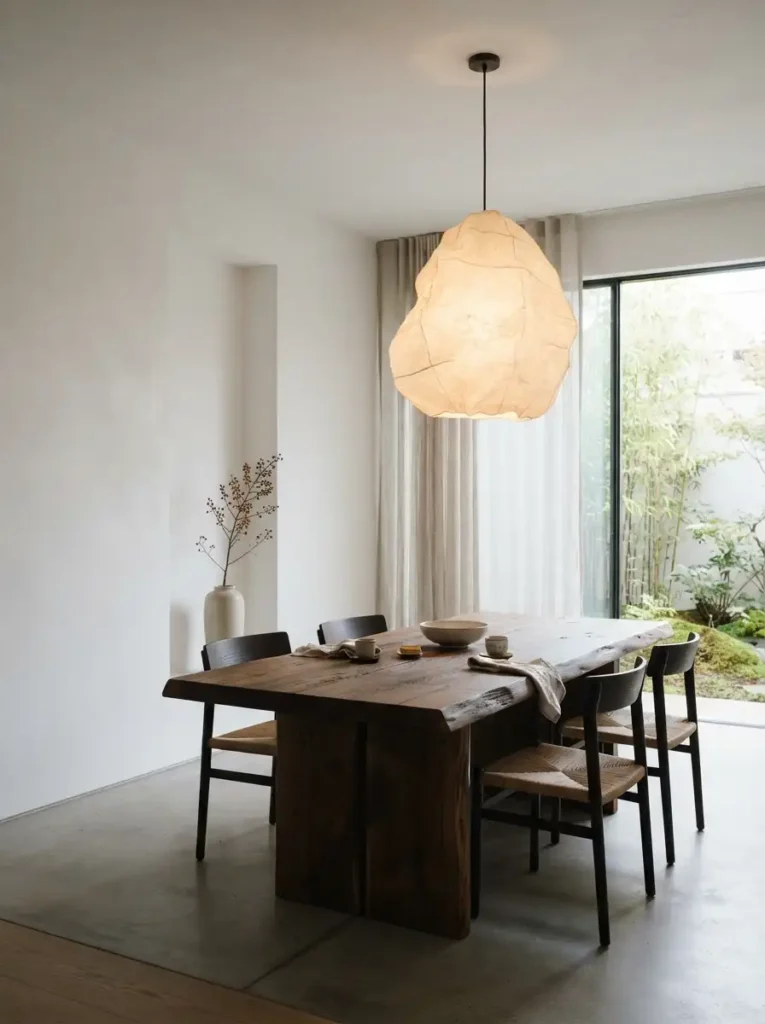
Lighting is critical in bridging the gap between Japanese and Scandinavian design. Both cultures utilize soft, diffused light to create atmosphere, famously popularized by Isamu Noguchi’s washi paper light sculptures.
Implementation: Swap out heavy metal chandeliers and harsh exposed bulbs for oversized paper lantern pendants, ribbed rice-paper floor lamps, and soft, glowing fabric light fixtures.
Styling Tips: Hang a massive, asymmetrical paper lantern directly above your dining table or in the center of your living room. Use only warm white LED bulbs (around 2700K). The delicate, crinkled texture of the paper looks just as beautiful when turned off during the day as it does when illuminated at night.
Design Psychology: A bare bulb casts harsh, aggressive directional shadows that cause visual fatigue. Washi paper acts as the ultimate architectural diffuser. It filters the light perfectly, casting a soft, omnidirectional, moon-like glow that mimics the highly relaxing effect of twilight, signaling to the brain that it is time to unwind.
6. Shoji-Style Translucent Window Treatments
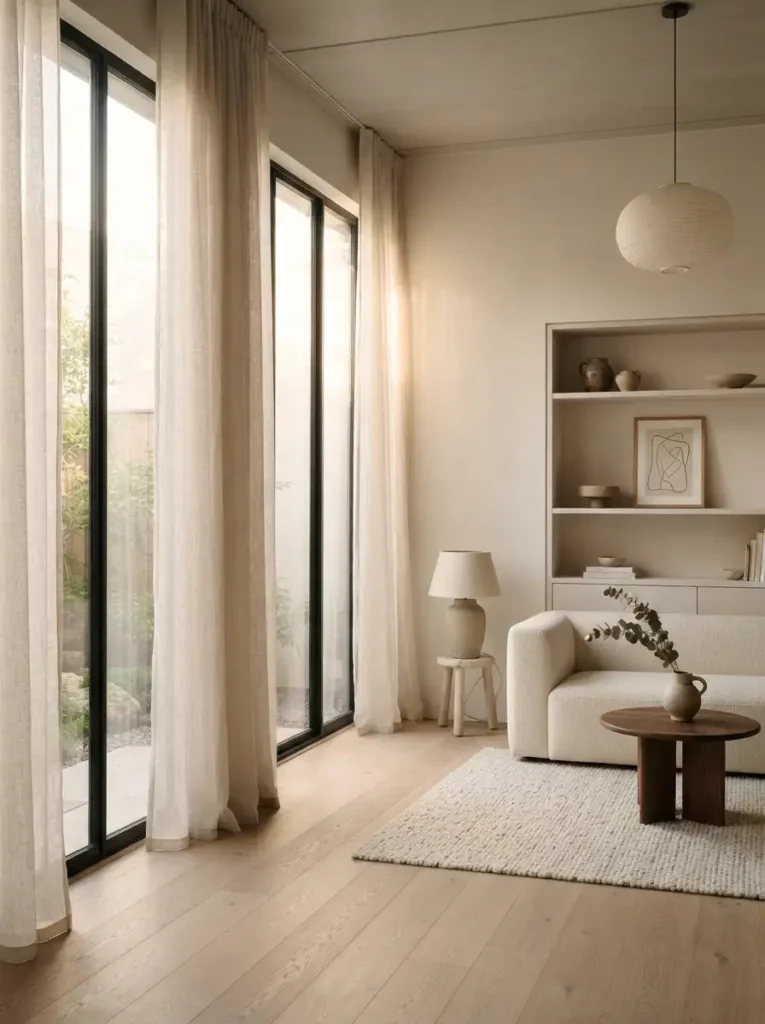
Heavy, blackout drapery and bulky wooden blinds have no place in a Japandi home. The goal is to maximize natural light while maintaining soft privacy, drawing inspiration from Japanese shoji screens.
Implementation: Dress your windows in ultra-sheer, translucent linen panels, unbleached cotton curtains, or modern sliding panels that mimic the look of rice paper.
Styling Tips: Let the translucent linen curtains puddle slightly on the floor for a touch of relaxed Scandi hygge. Ensure the curtain tracks are hidden or incredibly minimalist. The goal is to allow natural sunlight to continuously filter into the room, creating a glowing, diffused wash of light throughout the day.
Design Psychology: The human circadian rhythm requires natural light to regulate mood and energy. Translucent window treatments allow you to stay deeply connected to the sun’s natural daily cycle while softening the harsh glare. It blurs the chaotic outside world into a gentle, abstract glow, protecting the peace of the interior sanctuary.
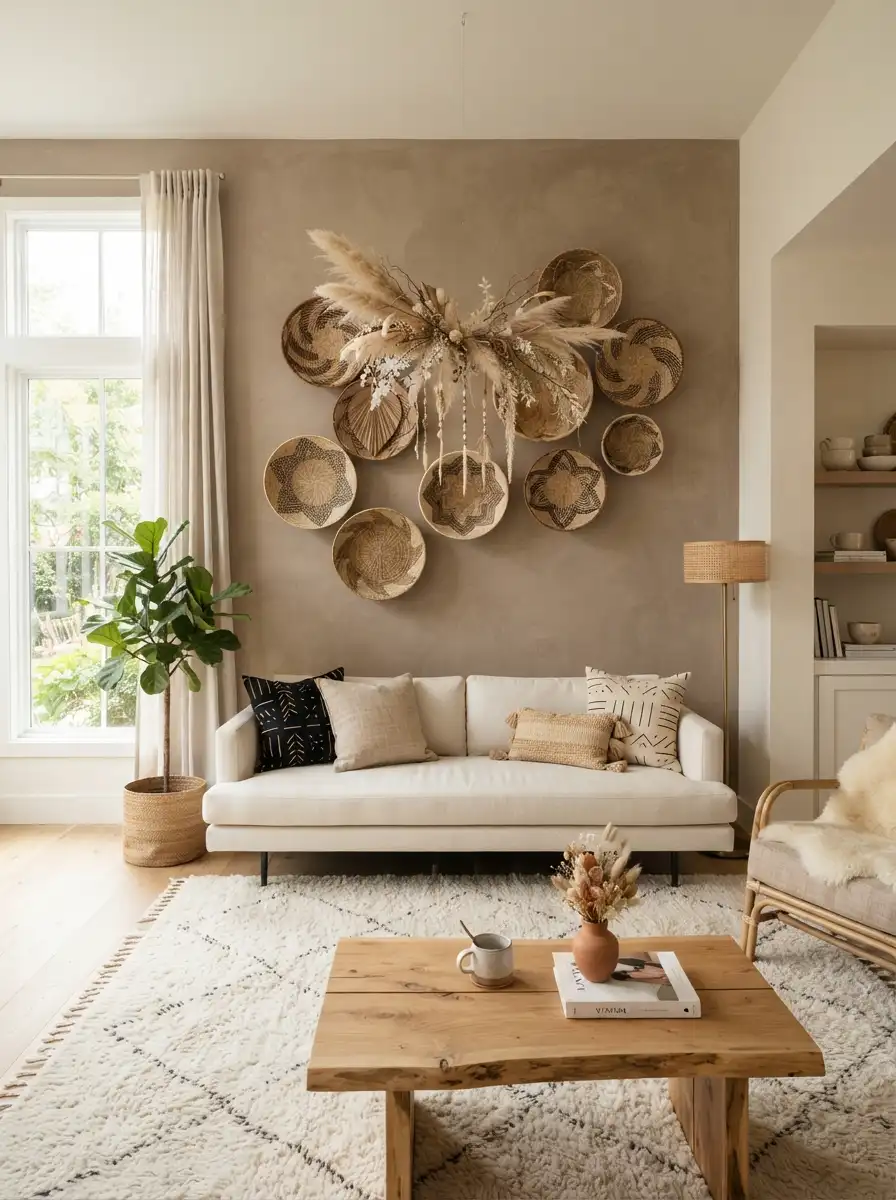
7. Roman Clay and Limewash Wall Textures
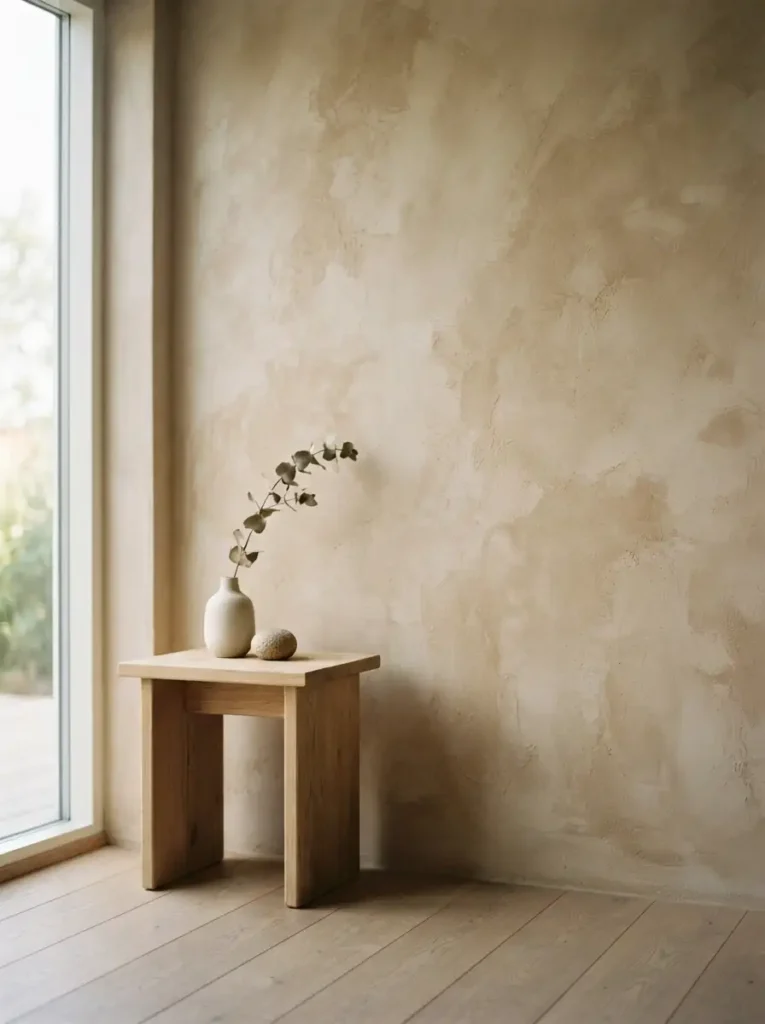
In a Japandi space, flat, perfectly smooth drywall can feel too sterile. To inject warmth and organic movement into the architecture itself, designers are turning to ancient wall treatments.
Implementation: Apply Roman clay, Venetian plaster, or limewash paint to your primary walls. These materials are applied by hand with a trowel or a wide brush, resulting in a suede-like, highly mottled, and textured finish.
Styling Tips: Choose a warm beige or soft greige limewash for your living room or primary bedroom. When the natural light from your window hits the wall, it will highlight the subtle, sweeping brushstrokes and earthy variations in the plaster, turning the wall itself into a piece of art.
Design Psychology: Humans are tactile creatures. Flat paint offers nothing for the eye to explore. Textured plaster walls provide incredible visual depth and a sense of ancient permanence. It makes a newly built drywall home feel like an established, historic sanctuary built from the earth itself.
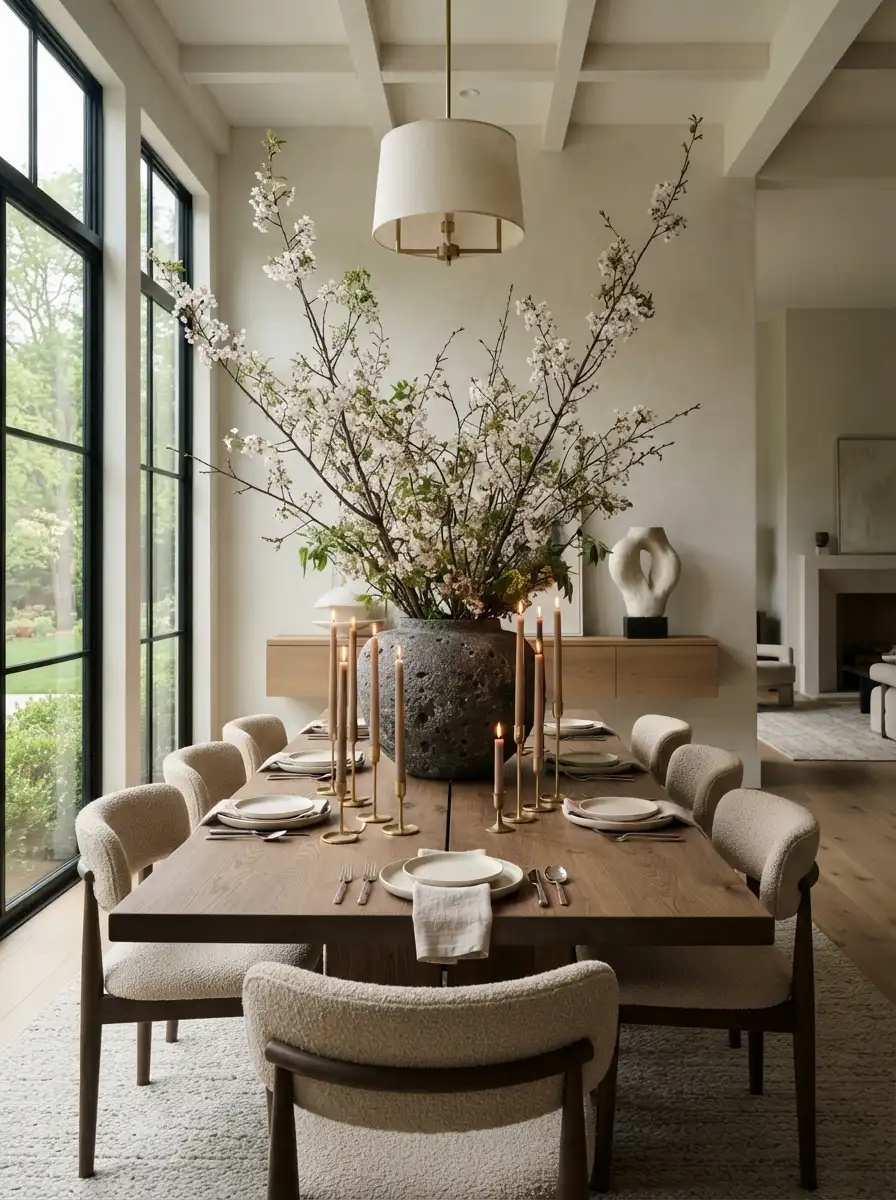
8. Minimalist Ikebana Floral Arrangements
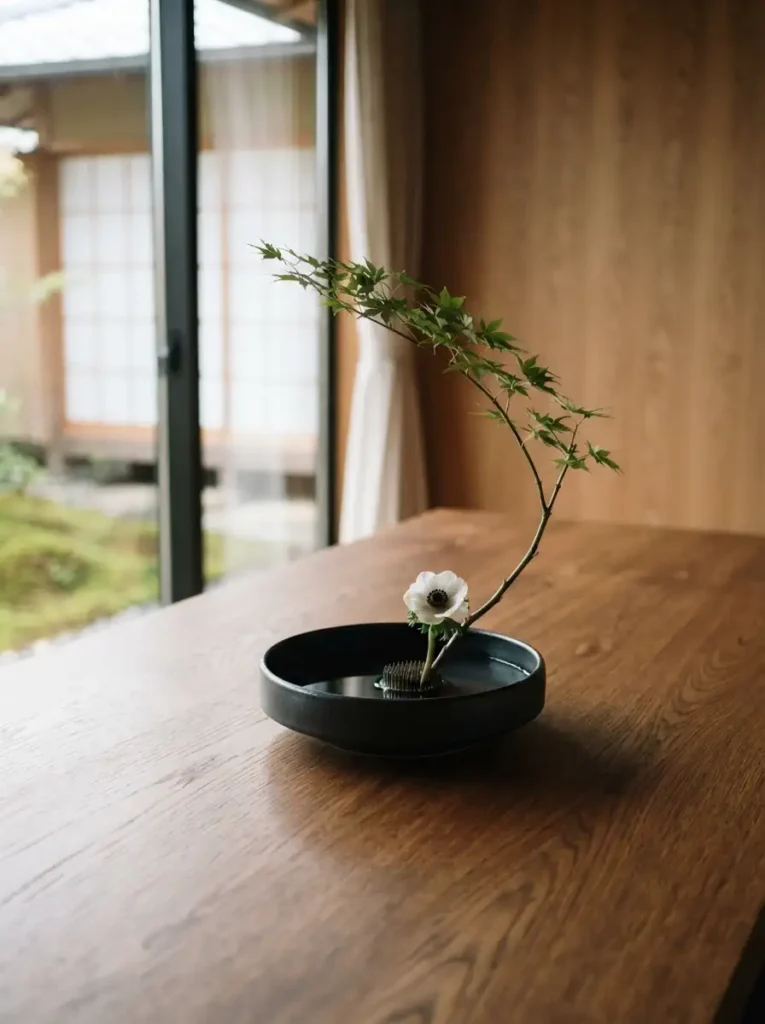
Western floral design typically focuses on massive, dense, symmetrical bouquets of bright flowers. Japandi leans into Ikebana, the disciplined Japanese art of flower arrangement that emphasizes shape, line, and form over abundance.
Implementation: Discard the massive bouquets. Purchase a shallow ceramic bowl and a kenzan (a heavy metal floral frog with spikes). Pin just two or three carefully selected elements onto the kenzan—such as a single bare branch, one elegant long-stemmed flower, and a piece of moss.
Styling Tips: Embrace extreme asymmetry. Let a long branch sweep dramatically to one side, completely unbalanced by anything on the other. Place this arrangement in the absolute center of a dining table or entryway console.
Design Psychology: Ikebana is a meditation on the beauty of nature’s individual elements. By stripping away the excess flowers, you force the eye to appreciate the unique curve of a single stem. It introduces a highly intentional, sculptural, and disciplined form of life into the room that feels poetic and deeply calming.
9. Contrast Through Ebonized Wood
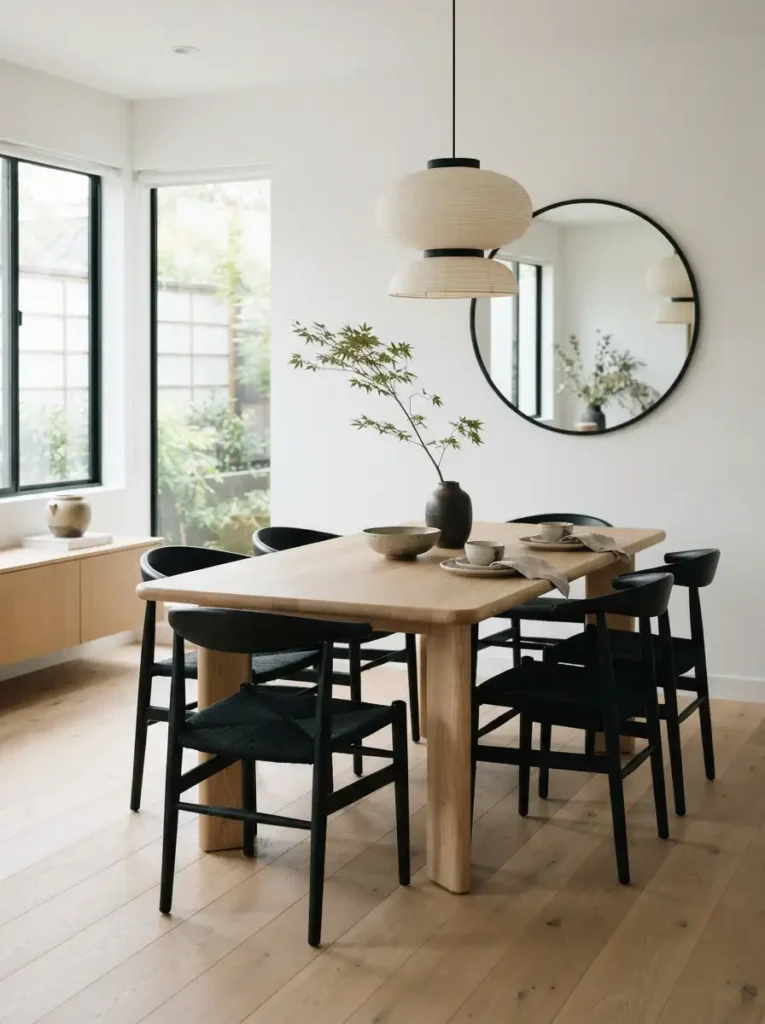
While blonde woods (like ash and birch) represent the Scandi side of Japandi, relying on them entirely can make a room look washed out. The Japanese technique of Shou Sugi Ban (charred wood) introduces necessary, striking contrast.
Implementation: Introduce strategic pops of matte black, ebonized, or dark-stained wood into your light-toned rooms. This could be a black wooden dining chair mixed with oak chairs, an ebonized wood side table, or a matte black architectural light fixture.
Styling Tips: Keep the dark elements minimal—about 10% to 15% of the room’s color palette. Place a stark black wooden stool next to a plush, light oatmeal-colored sofa. The sharp contrast creates a stunning visual anchor.
Design Psychology: A room composed entirely of light, floaty colors lacks gravity. Dark, ebonized elements introduce the concept of Yin and Yang—the ultimate balance of opposing forces. The black wood grounds the space, providing visual punctuation marks that give the eye a place to rest amid the airy, light tones.
10. The Genkan-Inspired Entryway
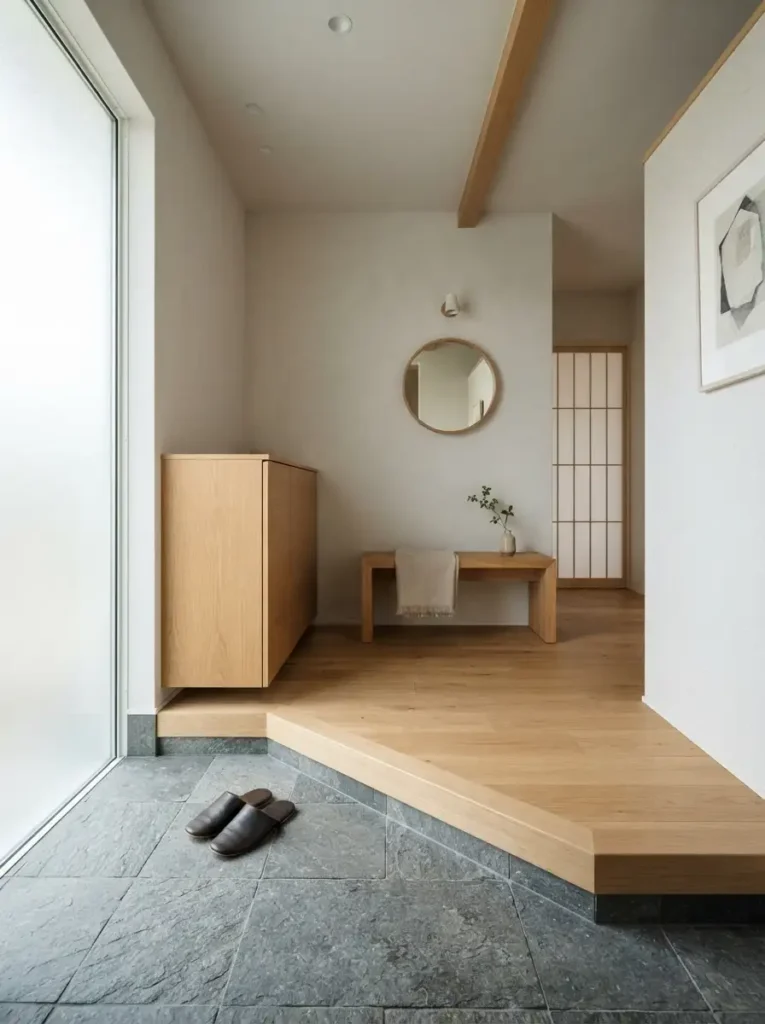
In Japanese architecture, the genkan is a traditional entryway area where shoes are removed before stepping up into the main living space. It is a highly respected transition zone that keeps the home physically and spiritually clean.
Implementation: Even if you don’t have a sunken floor, you can create a genkan-inspired entryway. Define the space with a deeply textured, natural stone or slate floor tile right at the door. Add a minimalist wooden bench and a sleek, closed cabinet specifically designed to completely hide all shoes.
Styling Tips: Make the “no shoes” policy feel like a luxury spa experience. Keep a woven basket filled with soft, matching linen house slippers next to the bench for guests to wear once they remove their outdoor shoes. Keep the surfaces entirely clear of clutter.
Design Psychology: The entryway is the threshold between the stressful, chaotic outside world and the peaceful inner sanctuary. By creating a beautiful, highly structured ritual of removing shoes and hiding them away, you are signaling to your brain that it is time to leave the day’s stress at the door and enter a state of rest.
11. Bouclé, Wool, and Raw Linen Layering
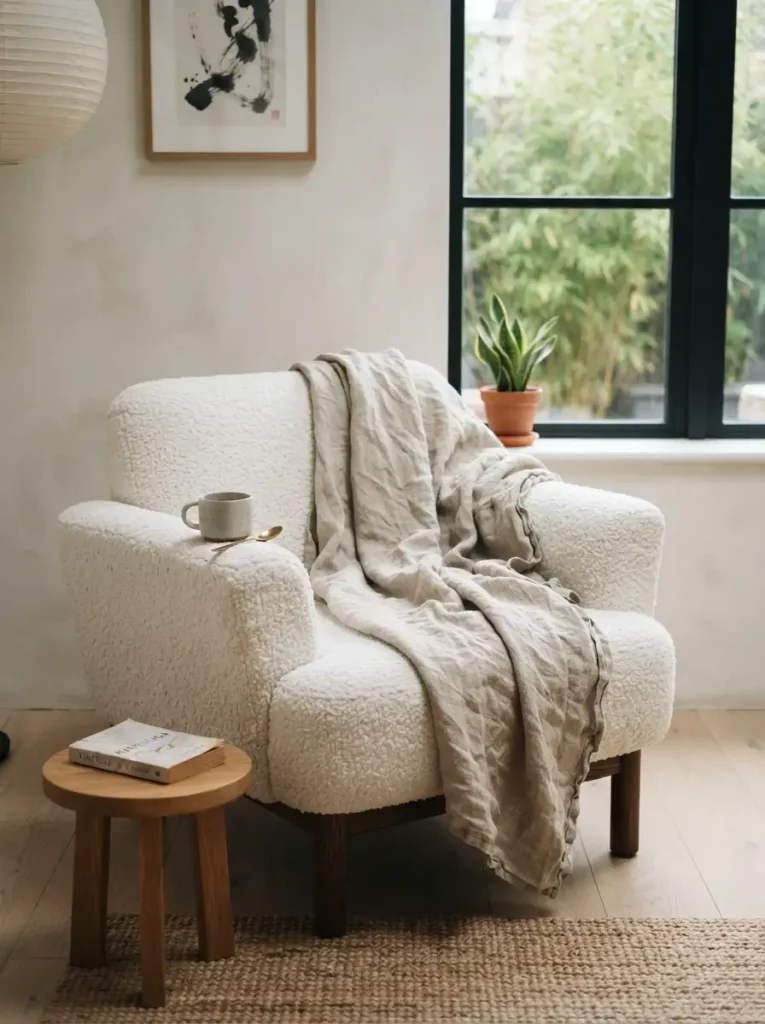
While Japandi architecture leans towards strict minimalism, it heavily relies on Scandinavian textiles to ensure the space remains warm, inviting, and rich in comfort (hygge).
Implementation: Layer your furniture with high-quality, natural textiles. Upholster an accent chair in thick, nubby bouclé fabric. Drape a heavy, chunky-knit wool blanket over the foot of the bed. Dress your windows and dining tables in wrinkled, raw, unironed French linen.
Styling Tips: Stick to the earthy color palette, but mix the textures wildly. Place a smooth, cool linen pillow directly next to a fuzzy, warm sheepskin throw. The beauty comes from the tactile contrast, not from loud patterns or prints.
Design Psychology: Clean architectural lines can sometimes feel unapproachable. Heavy, natural textiles communicate safety, warmth, and physical comfort. The tactile diversity engages the senses, making a strictly curated, minimalist space feel like a cozy, protective nest that you want to curl up in for hours.
12. Integrated, Concealed Storage Solutions
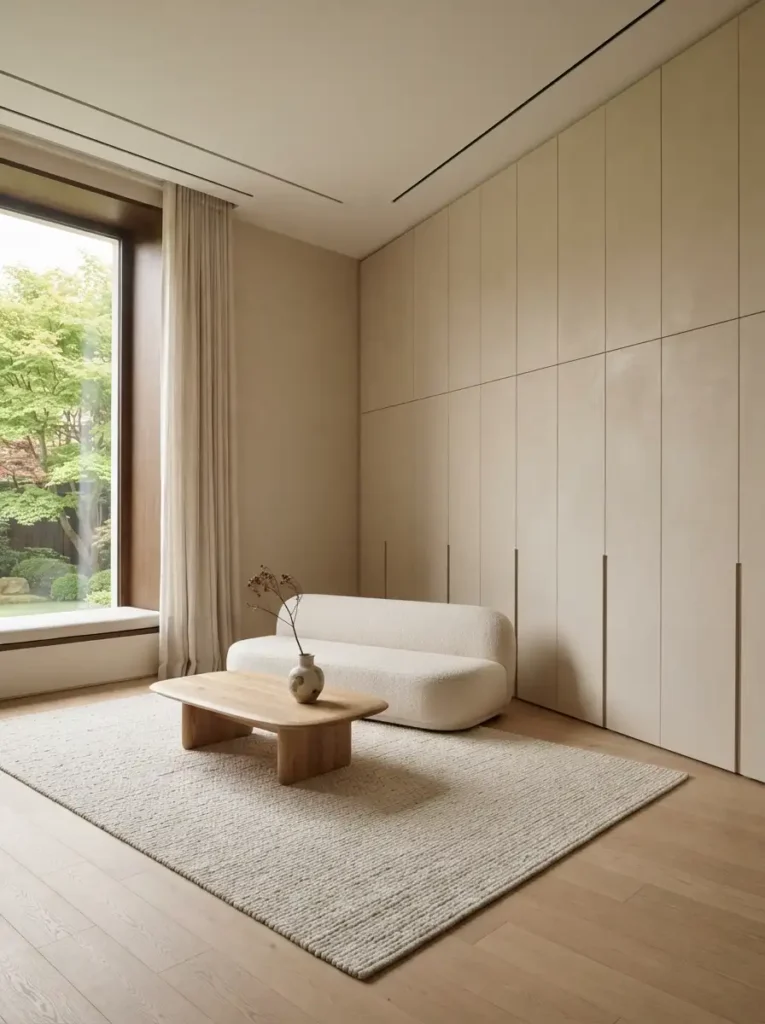
Visual clutter is the absolute nemesis of Japandi design. To maintain the breathtaking negative space required for this aesthetic, every functional item you own must be completely hidden behind seamless architecture.
Implementation: Invest in floor-to-ceiling built-in cabinetry that matches your wall color perfectly. Ditch traditional knobs and handles; use push-to-open hardware or seamlessly routed finger pulls to make the cabinets look like flat, architectural wall panels.
Styling Tips: Use these massive hidden storage banks to hide your television, media cables, children’s toys, and bulky books. When the cabinet doors are closed, the room should look completely empty and pristine, with only one or two curated decorative items on display.
Design Psychology: Visual clutter acts as a constant, subconscious to-do list for the brain, increasing stress and anxiety. Seamless, concealed storage essentially “deletes” this visual noise from your environment. It creates an atmosphere of ultimate control, pristine cleanliness, and profound mental clarity.
13. Statement Travertine and Natural Stone
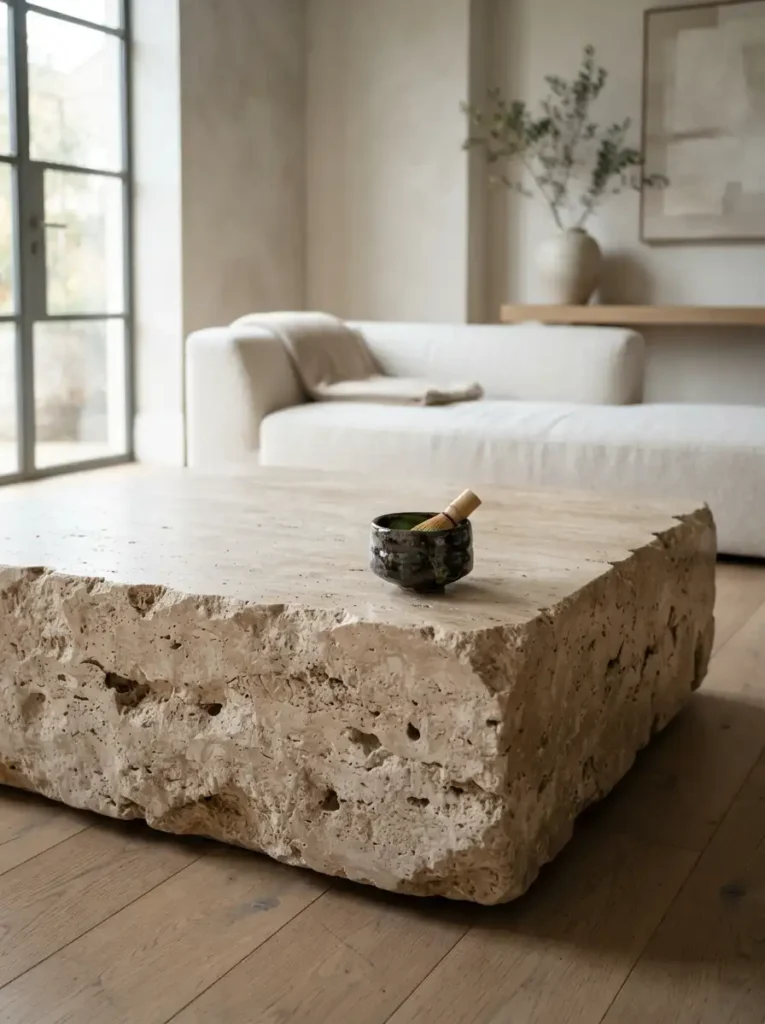
While wood is the primary material in Japandi design, introducing raw, porous natural stone adds a vital element of earthy weight and timelessness to the space.
Implementation: Incorporate solid chunks of travertine, limestone, or soapstone into your furniture plan. A large, unpolished travertine block coffee table or a raw stone plinth used as a side table makes a massive architectural statement.
Styling Tips: Allow the stone to be the star. Do not cover a beautiful travertine table with a dozen books and coasters. Leave the surface almost entirely bare, save for perhaps a single brass candle holder or a ceramic matcha bowl.
Design Psychology: Stone communicates permanence, strength, and an ancient connection to the earth. In a room filled with light wood and soft fabrics, a heavy piece of raw stone acts as a visual and psychological anchor, bringing a deep, resonant gravity to the room that feels incredibly luxurious and grounding.
14. Floor Cushions and Zabuton Seating
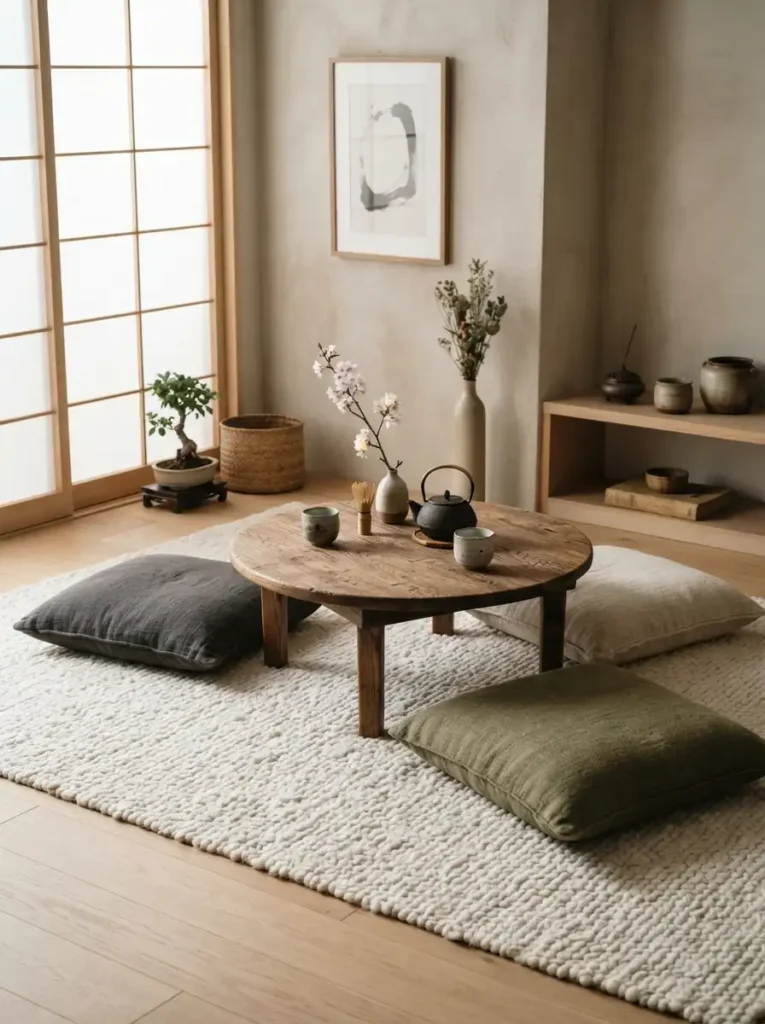
Challenging the Western norm of formal, rigid seating arrangements, Japandi embraces casual, flexible floor seating, drawing directly from the Japanese use of zabuton cushions on tatami mats.
Implementation: Surround a low-profile coffee table or a dedicated tea-tasting corner with high-quality, thick floor cushions covered in linen, leather, or woven natural fibers.
Styling Tips: Keep a stack of beautifully textured floor cushions tucked away in a corner or under a low console. When guests arrive, pull them out to create a deeply intimate, casual circle on a plush, textured wool rug.
Design Psychology: Floor seating breaks down formal social hierarchies and encourages a more relaxed, authentic form of communication. Physically sitting on the floor encourages better posture and deeply grounds your energy, fostering an environment of mindfulness, casual intimacy, and unpretentious hospitality.
15. Celebrating Negative Space (The Concept of “Ma”)
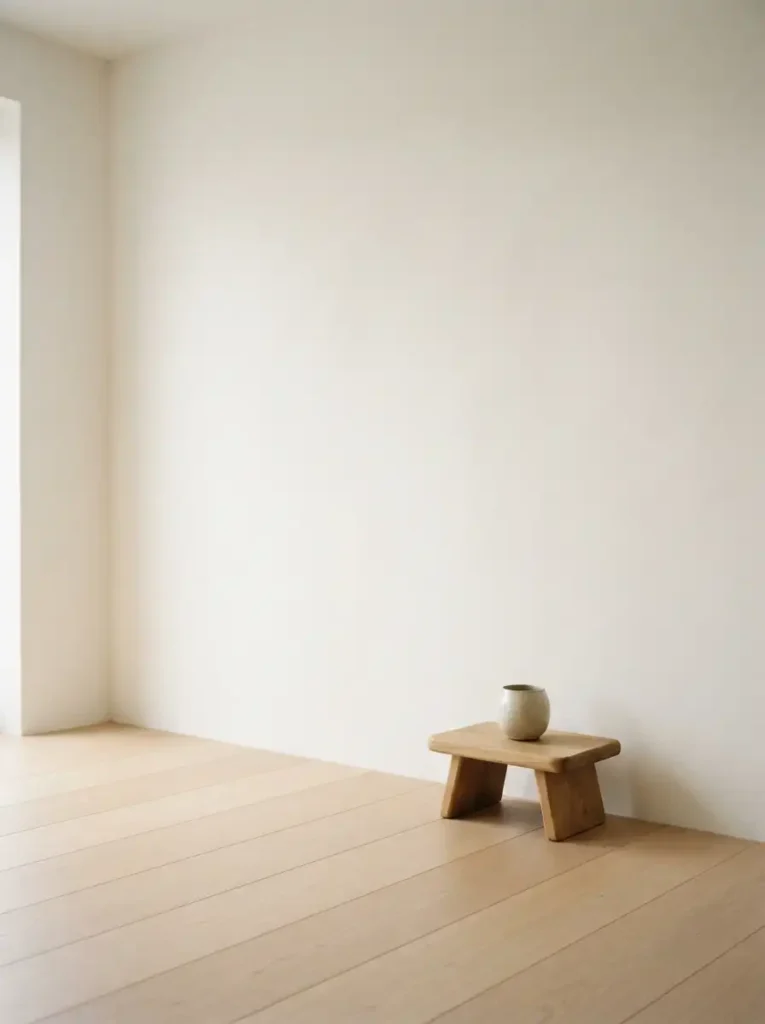
In Japanese culture, the concept of Ma refers to the profound beauty and vital importance of empty space. It is the silence between musical notes, the blank space on a canvas, and in Japandi design, the empty space in a room.
Implementation: You do not need to fill every corner, hang a picture on every wall, or put a rug on every inch of the floor. Intentionally leave large portions of your walls completely blank. Leave generous physical space between each piece of furniture.
Styling Tips: When styling a bookshelf, leave more than half of the shelf completely empty. Let a single, beautiful object sit alone, surrounded by a halo of pure, undisturbed space. Resist the urge to “finish” a room by cramming more decor into it.
Design Psychology: The modern brain is constantly bombarded with stimuli. Empty space provides visual silence. It gives the eye a place to rest, allowing the brain to process the environment without fatigue. Ma elevates the items you do have, turning ordinary furniture into profound, heroic focal points.
16. Indoor Bamboo and Statement Bonsai
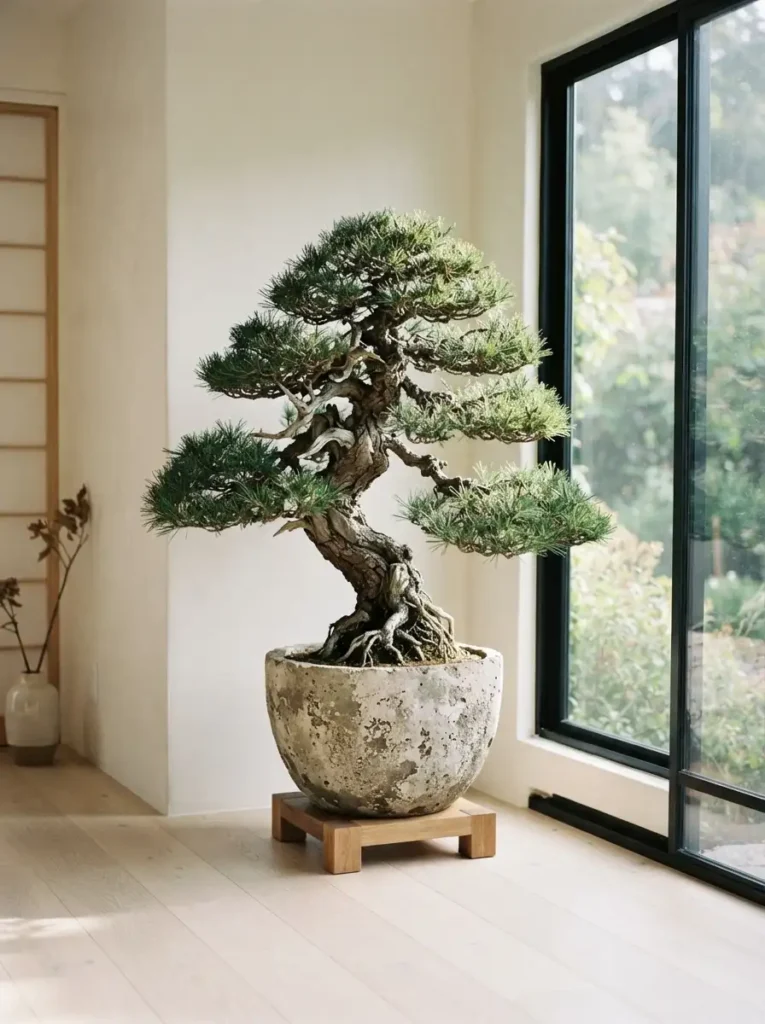
Biophilia—the human need to connect with nature—is heavily present in Japandi design. However, instead of creating a chaotic, overgrown “indoor jungle,” the approach to greenery is highly curated, sculptural, and disciplined.
Implementation: Select one or two highly sculptural, statement indoor trees. The Ficus Audrey, a Black Olive tree, or a large, beautifully aged indoor Bonsai tree are perfect choices.
Styling Tips: House your statement tree in a heavily textured, wabi-sabi concrete or stone pot. Place it in a prominent corner where it receives beautiful, diffused natural light. Do not clutter the space around it with dozens of smaller, mismatched plants. Let it stand as a solitary piece of living art.
Design Psychology: A single, beautifully manicured tree represents patience, slow growth, and intentional care. It brings the vitality of the outdoors inside without overwhelming the space. The organic, unpredictable curves of the branches provide a soothing, biological contrast to the straight, rigid lines of minimalist architecture.
17. Seamless Indoor-Outdoor Architectural Flow
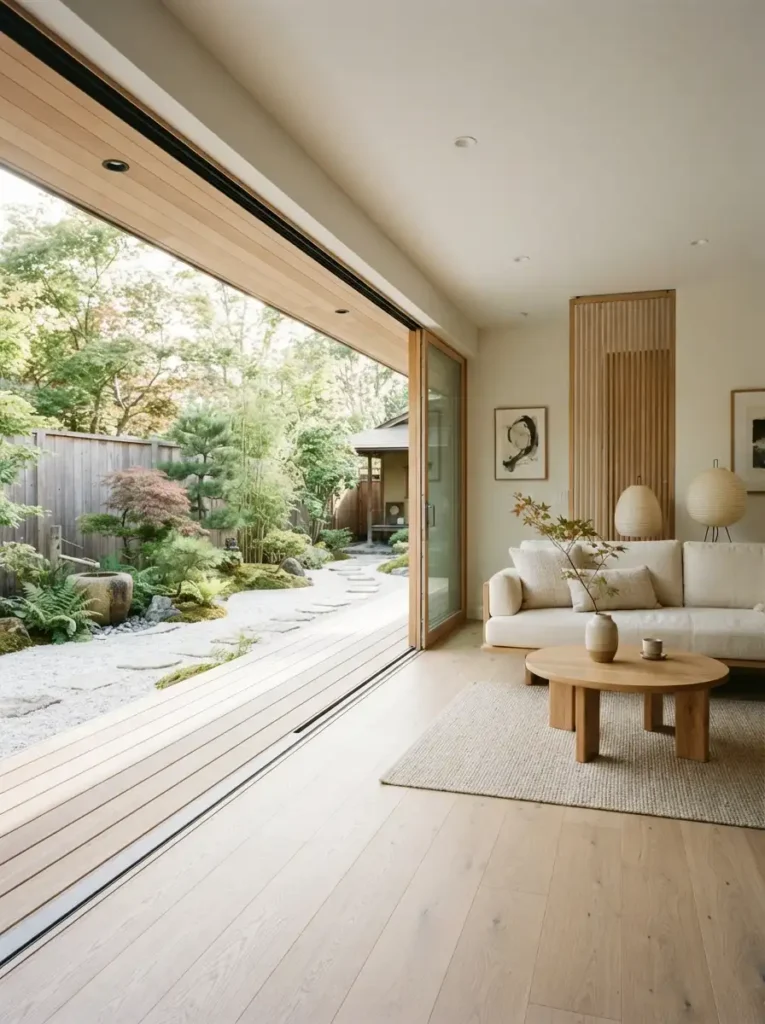
Japandi design treats the exterior environment as a direct, inseparable extension of the interior living space. Blurring the physical boundary between the two is the ultimate expression of this aesthetic.
Implementation: If renovating, install large, sliding glass doors (like shoji screens) that open completely to a patio or garden. Ensure the floor level of the interior matches the exterior patio perfectly, with no bulky threshold to step over.
Styling Tips: Carry the exact same design language outside. If you use white oak floors inside, use a similarly toned weather-treated decking outside. Place a minimalist, low-profile wooden bench just outside the glass doors, seamlessly continuing the visual line from the living room.
Design Psychology: When the barrier between the inside and the outside disappears, your home instantly feels twice as large. It fundamentally shifts your perspective, reminding you that you are part of a larger, natural ecosystem. This profound connection to the outdoors dramatically reduces feelings of claustrophobia and infuses the home with an expansive, deeply freeing energy.
Cultivating Your Zen Sanctuary
Transforming your home into a Japandi sanctuary is not about following a rigid set of rules or simply purchasing Scandinavian furniture and placing it next to Japanese ceramics. It is a profound shift in how you interact with your physical environment. It requires you to adopt the mindfulness of wabi-sabi—finding immense joy in the imperfect, the handmade, and the naturally aged—while simultaneously embracing the comforting, highly functional warmth of hygge.
By implementing these 17 concepts, from the grounding psychology of low-profile furniture to the breathtaking beauty of intentional negative space and diffused paper lighting, you are doing much more than redecorating. You are actively designing an architectural retreat. A true Japandi home serves as a protective buffer against the noise of the modern world, offering a deeply curated, meticulously balanced sanctuary where your nervous system can finally rest, your mind can find clarity, and your soul can truly breathe.