For decades, the laundry room was the forgotten stepchild of residential architecture. Relegated to the darkest, most unfinished corner of the basement, it was a purely utilitarian space. It was a place of bare concrete floors, exposed plumbing, flickering fluorescent lightbulbs, and the relentless hum of machines. You went in to do a chore, and you got out as quickly as possible.
Today, however, the narrative surrounding the laundry room has completely shifted. As our homes evolve into comprehensive sanctuaries, designers and homeowners alike have realized a profound truth: the environment in which we do our chores directly impacts how we feel about doing them.
If you have to spend several hours a week sorting, washing, drying, and folding clothes, why shouldn’t you do it in a room that is as beautifully designed, functional, and inviting as your kitchen or master bathroom?
The modern laundry room has moved out from the underground shadows and onto the main floor—or even the second floor near the bedrooms. It has become a space to showcase bold design choices, experiment with color, and invest in high-end cabinetry. From custom pet-washing stations to integrated drying cabinets, today’s utility rooms are marvels of organization and aesthetics.
Whether you are planning a complete home renovation, building from scratch, or simply looking to upgrade your current setup, this guide will provide you with all the inspiration you need. Here are 15 brilliant, luxurious, and highly functional laundry room design ideas that will actually make you look forward to laundry day.
1. The Mudroom-Laundry Hybrid Space
The Concept:
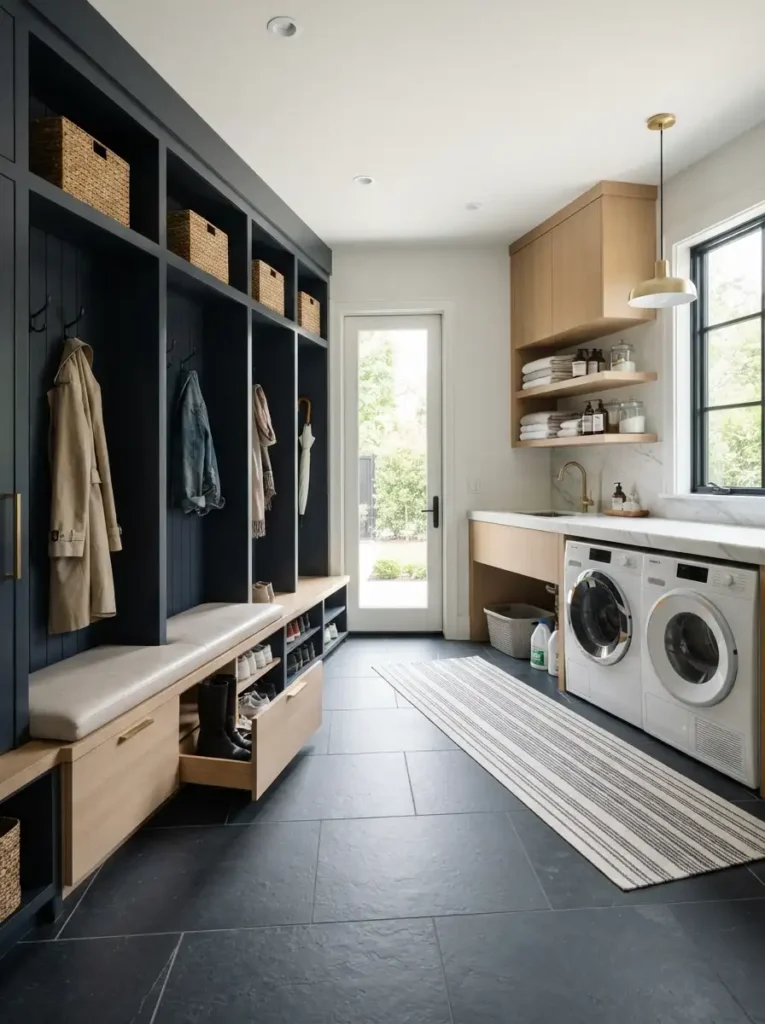
In many modern homes, square footage is at a premium. Rather than dividing your space into two cramped rooms, designers are increasingly combining the mudroom and the laundry room into one highly functional, expansive “mega-utility” space. This hybrid room is usually located right off the garage or the back entrance of the house.
Why It Works:
This layout creates the ultimate transition zone between the outside world and the pristine interior of your home. Dirty sports uniforms, muddy socks, and wet winter coats can be stripped off and tossed directly into the washing machine before they ever cross the threshold into your living room or kitchen.
Pro Design Tips:
To make this hybrid space work, zoning is critical. Designate one wall for the “drop zone,” featuring custom locker-style cubbies, coat hooks, and a built-in bench with shoe storage underneath. Dedicate the opposite wall to the laundry appliances and folding counters. Use a highly durable, water-resistant flooring material, such as large-format porcelain tile or natural slate, which can withstand both wet boots and occasional washing machine leaks.
2. The High-End Pet Washing Station
The Concept:
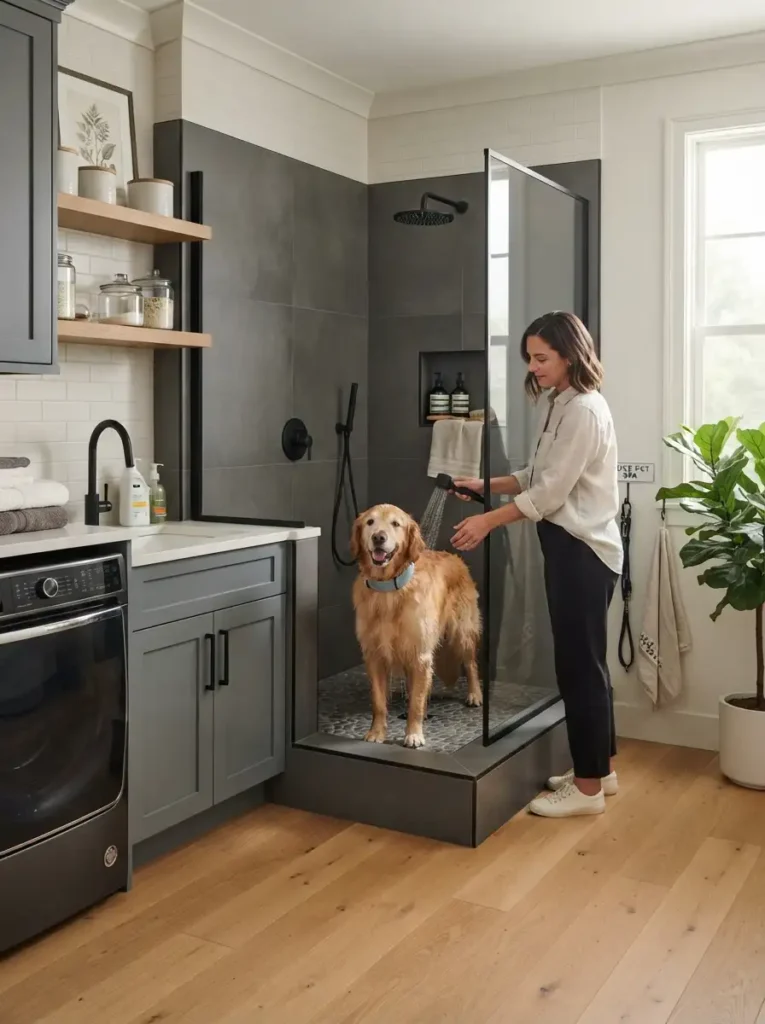
For dog owners, keeping the house clean often starts with keeping the dog clean. The latest luxury trend in utility room design is the inclusion of a dedicated, built-in pet washing station. Instead of wrestling your golden retriever into your primary bathtub or freezing them with a hose in the backyard, you can handle bath time in a purpose-built space.
Why It Works:
A dedicated pet shower confines the mess to a room that is already designed to handle water and dirt. It saves your back from bending over a low tub and keeps your main bathrooms free of wet-dog smell and clogged drains.
Pro Design Tips:
Elevate the base of the pet shower by 18 to 24 inches off the floor to make washing ergonomic. Build a half-wall around the shower to contain splashes. Line the interior with a non-slip textured tile or pebble floor to give your dog grip. Most importantly, install a high-quality, handheld showerhead on a slide bar, and build a small recessed niche in the wall to hold dog shampoo and brushes.
3. Bold, Immersive Wallpaper (The “Jewel Box” Effect)
The Concept:
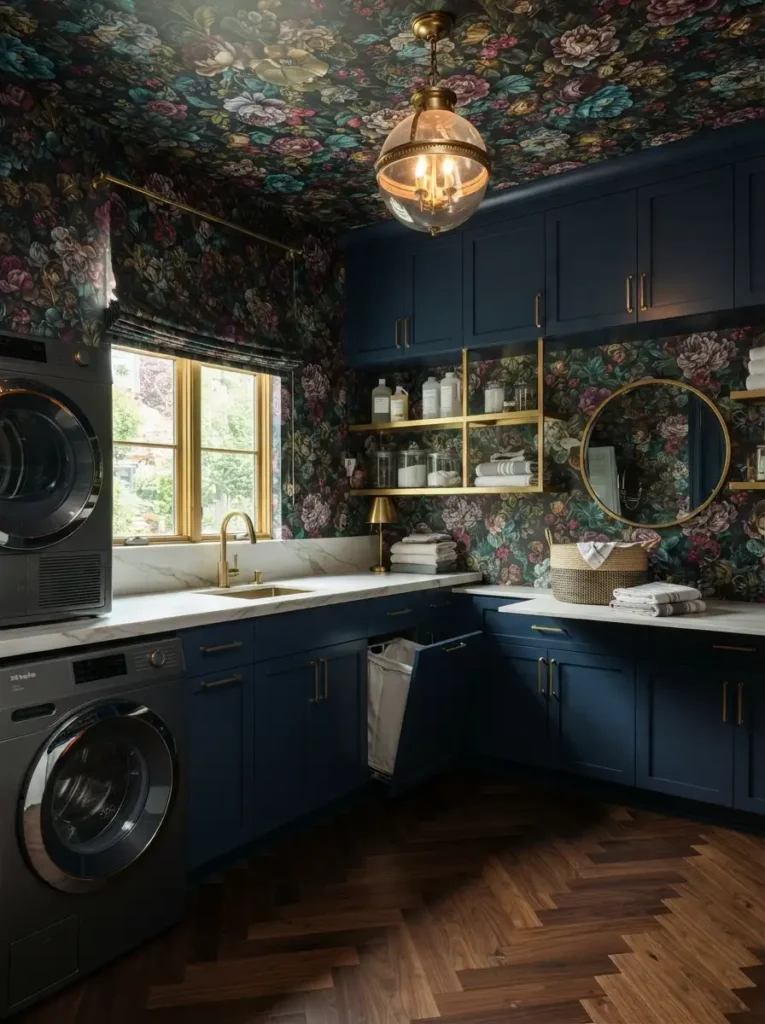
Because a laundry room is usually a distinct, enclosed space that you don’t spend all day sitting in, it is the absolute perfect canvas for taking massive design risks. Enter the “Jewel Box” effect: covering the walls—and sometimes even the ceiling—in bold, vibrant, immersive wallpaper.
Why It Works:
Laundry is an inherently mundane task. Injecting an element of surprise, whimsy, and visual joy into the room fundamentally changes the psychological experience of being in there. Heavy floral prints, dramatic geometric patterns, or whimsical toile completely distract from the utilitarian nature of the room.
Pro Design Tips:
Make sure you select a wallpaper that can handle the environment. Laundry rooms generate humidity and heat. Opt for high-quality vinyl or heavily coated wallpapers that are moisture-resistant and wipeable. Pair the busy wallpaper with solid-colored cabinetry—perhaps pulling one of the deeper tones from the paper’s pattern—to ground the space and keep it from looking chaotic.
4. Custom Drying Cabinets and Pull-Out Racks
The Concept:
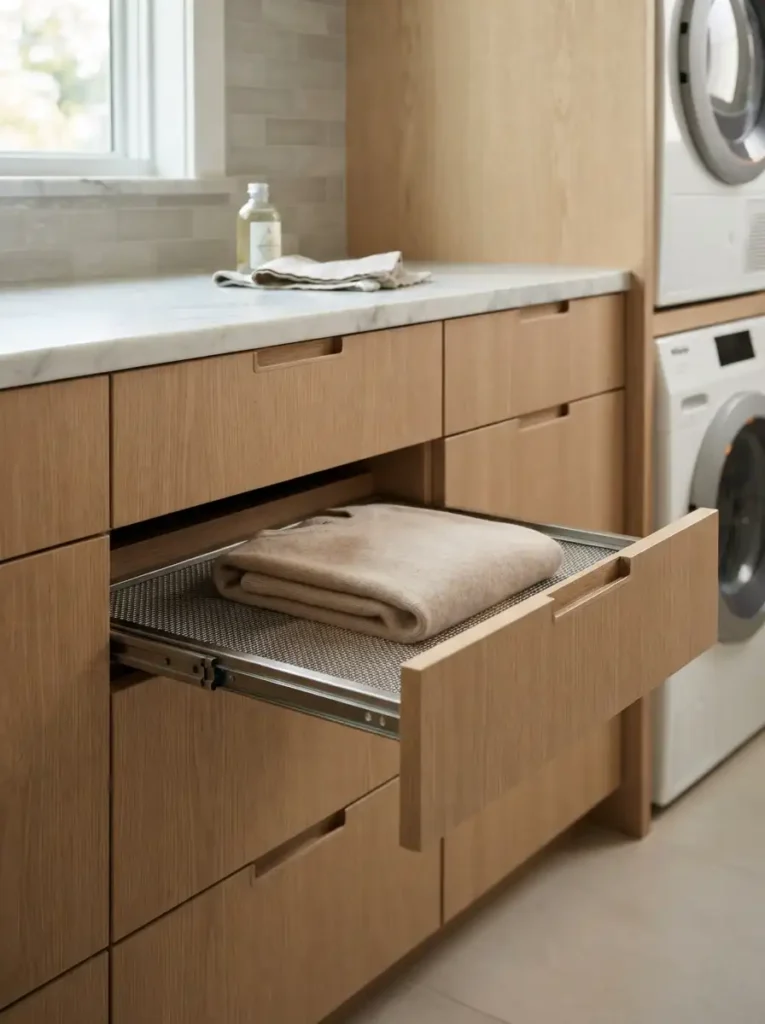
We all have delicate items—cashmere sweaters, silk blouses, activewear, and lingerie—that simply cannot be thrown into a hot tumble dryer. In the past, this meant draping wet clothes over shower rods, doorknobs, or bringing out a clunky, ugly wire drying rack that blocks the hallway. The modern solution is integrated, built-in drying hardware.
Why It Works:
Built-in drying solutions keep your delicates safe without sacrificing the aesthetic or flow of your home. They hide the visual clutter of hanging laundry and utilize space efficiently.
Pro Design Tips:
There are several ways to execute this. You can install pull-out drawers equipped with mesh bases that allow sweaters to dry flat. You can install a hanging rod directly over a sink for drip-drying. For the ultimate luxury upgrade, look into purchasing an electric drying cabinet (brands like ASKO make beautiful ones). These tall, slender appliances look like normal cabinets but use a gentle breeze of warm air to dry hanging clothes safely and efficiently.
5. Premium Stone Countertops Over Appliances
The Concept:
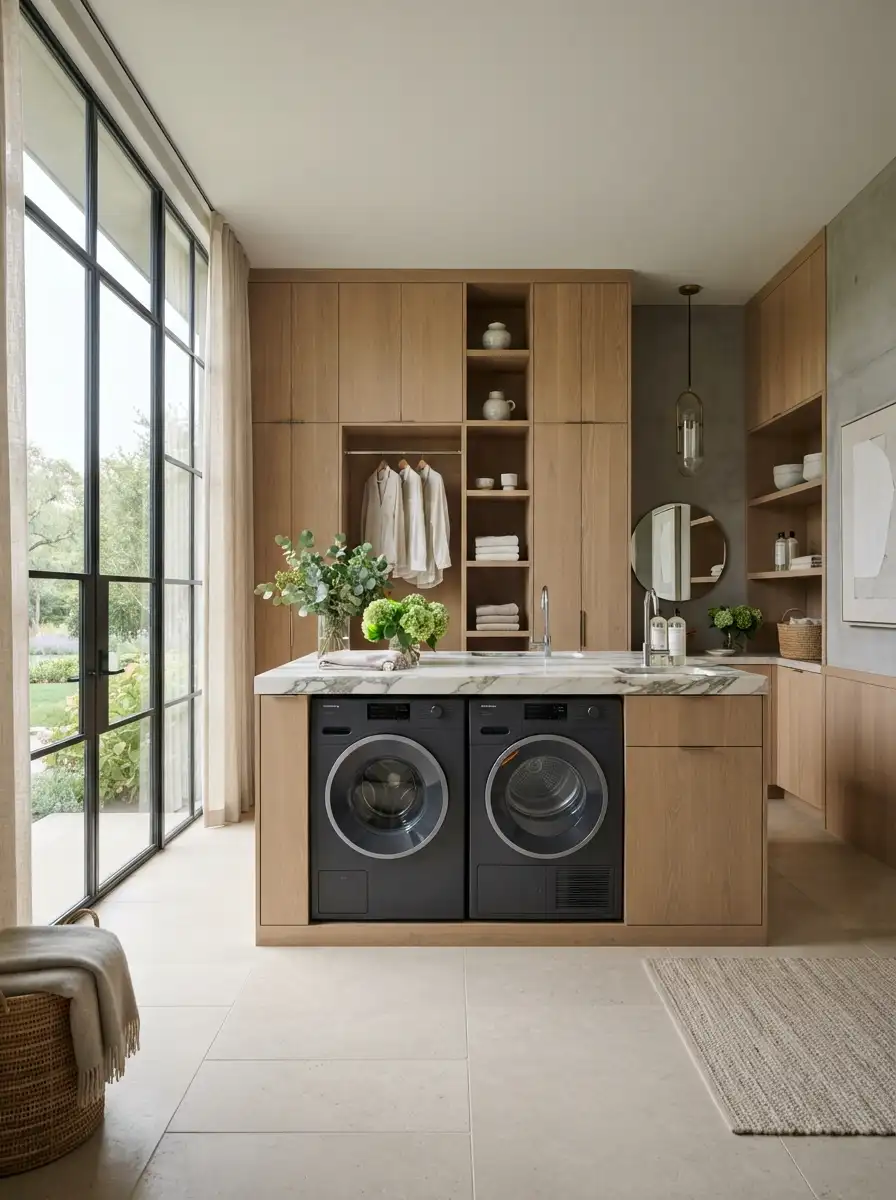
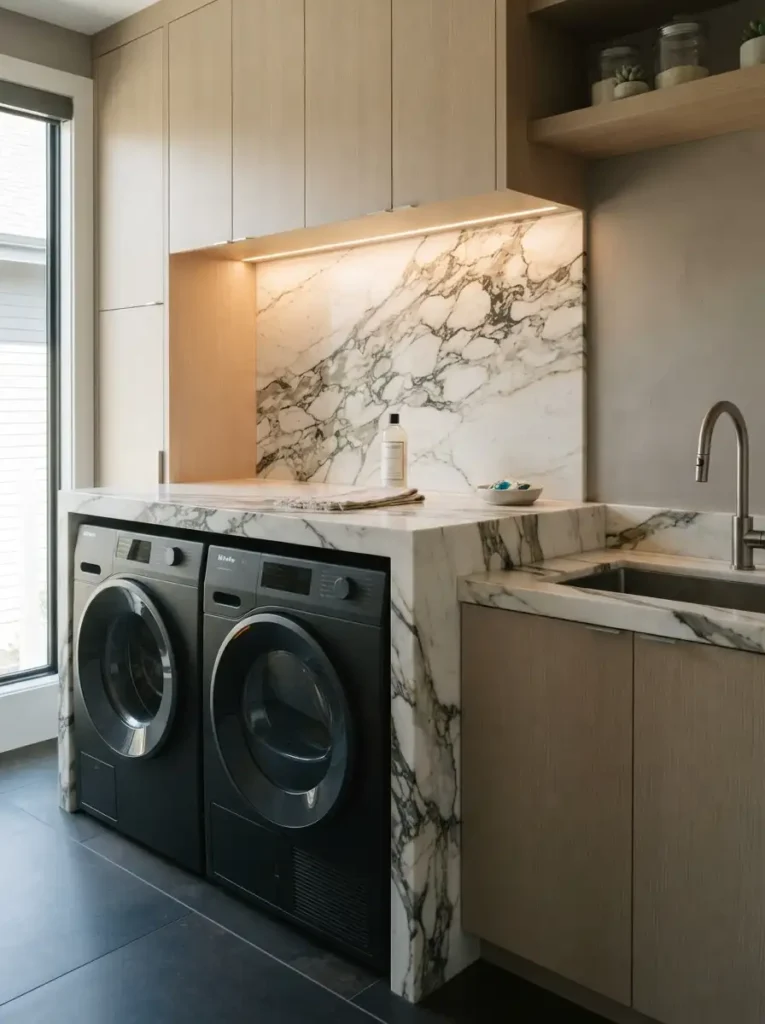
Front-loading washing machines and dryers are the standard in modern laundry room design, but simply pushing them against a wall looks unfinished. By building a custom countertop that sits directly over the top of the side-by-side machines, you create a seamless, integrated, custom-built look.
Why It Works:
Not only does this look incredibly high-end, but it also creates a massive, uninterrupted surface area. This vast countertop becomes the perfect dedicated space for sorting darks and lights, pre-treating stains, and folding large items like king-sized bed sheets.
Pro Design Tips:
Treat this countertop exactly as you would a luxury kitchen island. Use high-end materials like heavily veined quartz, durable quartzite, or classic soapstone. Crucial architectural note: Make sure the countertop is installed on structural cleats attached to the side walls or cabinetry, rather than resting the heavy stone directly on top of the appliances. This allows you to easily slide the machines out for maintenance or replacement without disturbing the stone.
6. Dual Washer and Dryer Setups for Large Families
The Concept:
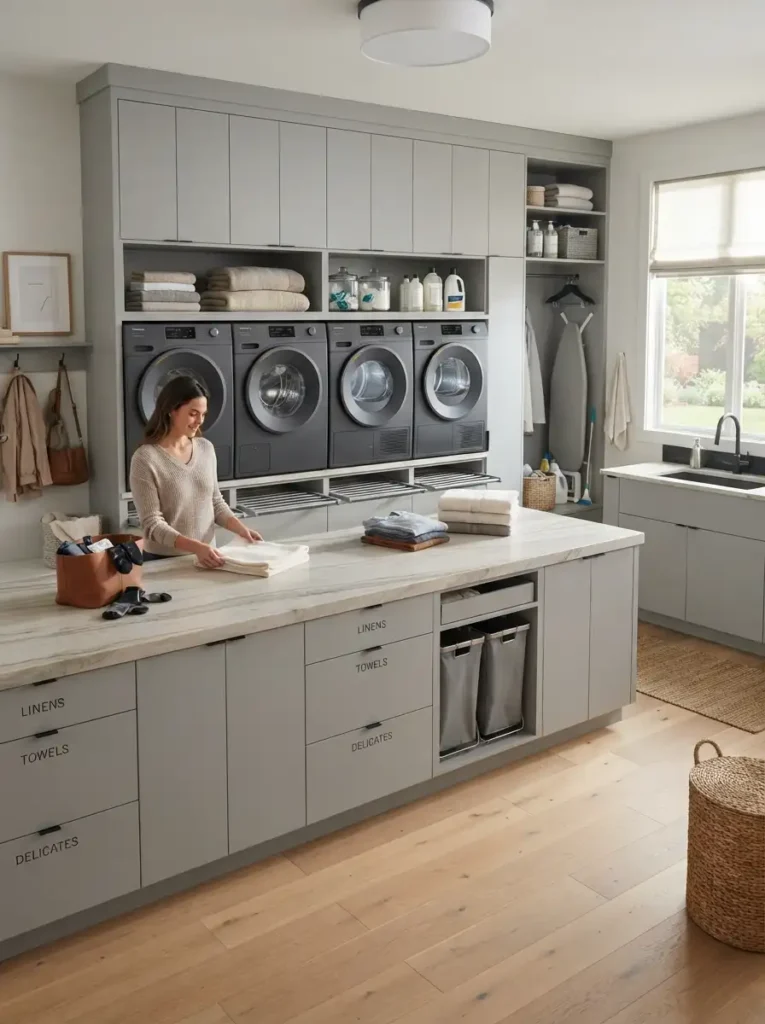
For large families, multi-generational households, or people who host guests frequently, a single washer and dryer simply cannot keep up with the weekly demand. The luxury solution is the installation of dual washers and dual dryers.
Why It Works:
It quite literally cuts laundry time in half. You can wash a load of heavy, bleach-required whites in one machine while simultaneously running a gentle cold cycle for dark delicates in the other. It brings commercial-level efficiency into the residential home.
Pro Design Tips:
Visually, a wall of four large appliances can look incredibly heavy and industrial. To soften the look, opt for appliances in sleek finishes like matte graphite or navy blue rather than stark white. Ensure you have the electrical capacity to support two 240-volt dryer outlets, and upgrade your water heater and plumbing lines to handle the simultaneous demand of two washing machines.
7. The Integrated Steaming and Ironing Center
The Concept:
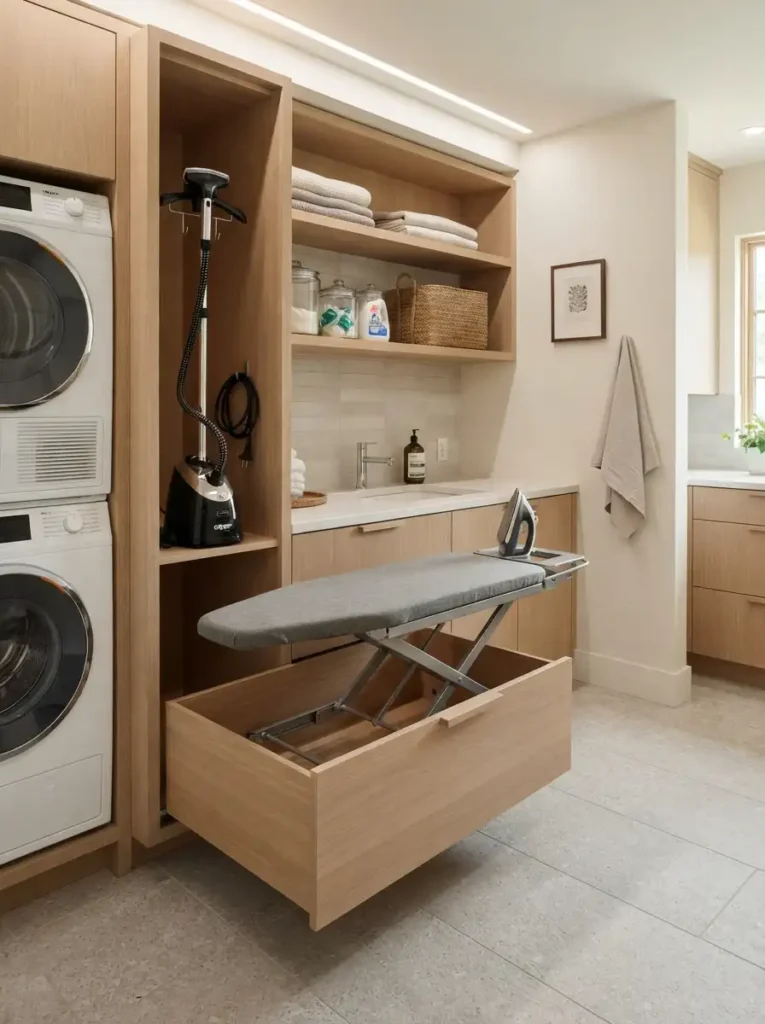
A true luxury laundry room is a complete garment care center, not just a washing station. This means incorporating dedicated zones for pressing, ironing, and steaming clothes to keep your wardrobe looking professionally tailored.
Why It Works:
No one likes dragging a squeaky, wobbly ironing board out of a closet and setting it up in the middle of the living room. Having these tools permanently accessible and ready to use encourages better clothing maintenance and saves time.
Pro Design Tips:
Install a custom pull-out ironing board hidden inside a drawer face. When needed, you simply pull the drawer open, and the board folds out seamlessly. Alternatively, create a “steaming station”—a tall, narrow cabinet specifically designed to hold a commercial-grade standing steamer, complete with an integrated electrical outlet inside the cabinet and a hook above it to hang garments while you steam them.
8. Statement Patterned Floor Tiles
The Concept:
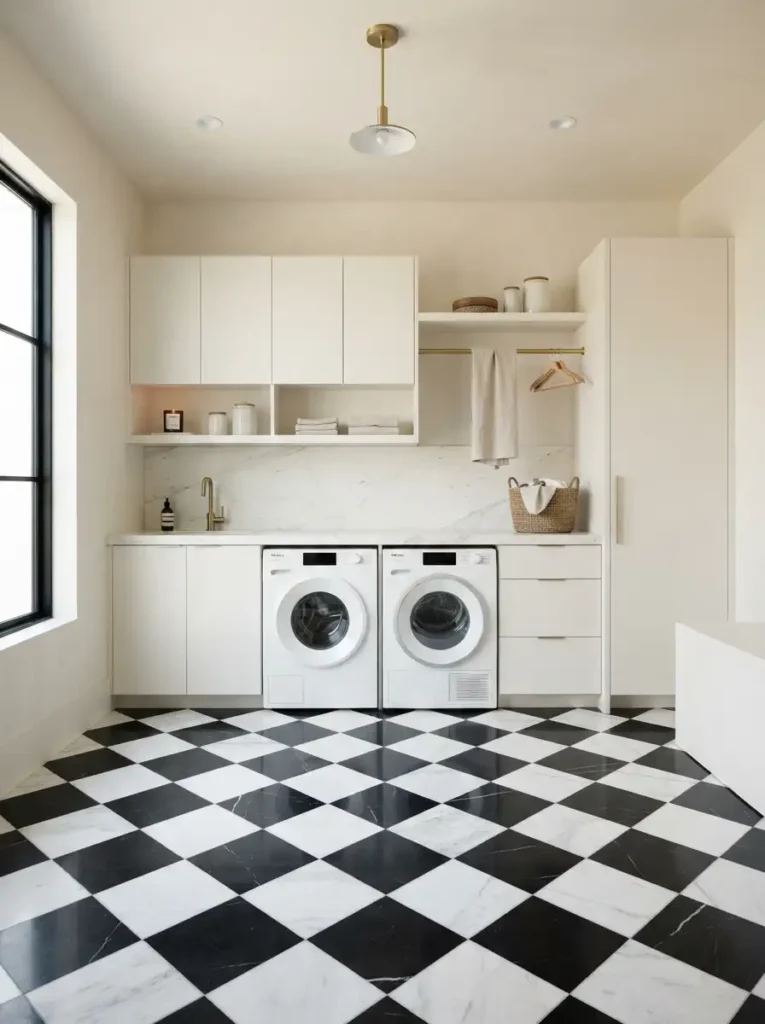
If bold wallpaper feels a bit too overwhelming for your tastes, shift the visual drama down to the floor. The laundry room is the ideal location to experiment with heavily patterned statement flooring that might be too busy for a large kitchen or open-concept living area.
Why It Works:
A bold floor anchors the room and adds immense character, allowing you to keep the cabinetry and walls crisp, clean, and minimal while still possessing a strong design point of view.
Pro Design Tips:
Classic black-and-white marble checkerboard floors bring a timeless, elegant, almost Parisian feel to the space. For a more rustic or bohemian look, opt for intricately patterned encaustic cement tiles. If you love the look of cement but want something easier to maintain, look for high-quality porcelain tiles that mimic the exact look of cement but require absolutely no sealing and are entirely impervious to water and bleach spills.
9. Floor-to-Ceiling Custom Storage Millwork
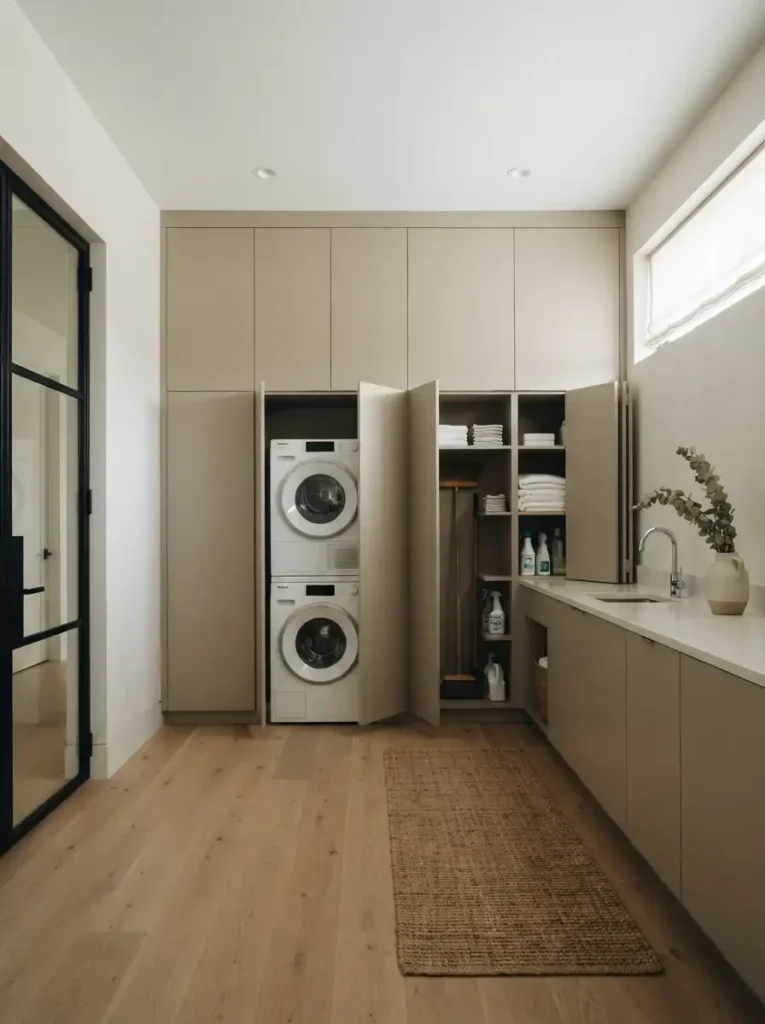
The Concept:
A laundry room quickly loses its charm if it is cluttered with massive plastic jugs of detergent, stray dryer sheets, ironing boards, mops, and vacuums. The solution is investing heavily in custom, floor-to-ceiling millwork that conceals everything behind beautifully crafted doors.
Why It Works:
Maximized storage turns the laundry room into the home’s primary utility hub, keeping the rest of your house uncluttered. When everything has a dedicated, closed-door space, the room remains visually serene.
Pro Design Tips:
Work with a cabinet maker to design “utility closets” within the laundry room. Include a tall, narrow cabinet with no shelves specifically for storing the ironing board, vacuum cleaner, and long-handled brooms. Install outlets inside these cabinets so cordless vacuums can charge while hidden from view. Add deep lower drawers for sorting dirty laundry directly inside the cabinetry.
10. The Hidden “Invisible” Laundry Closet
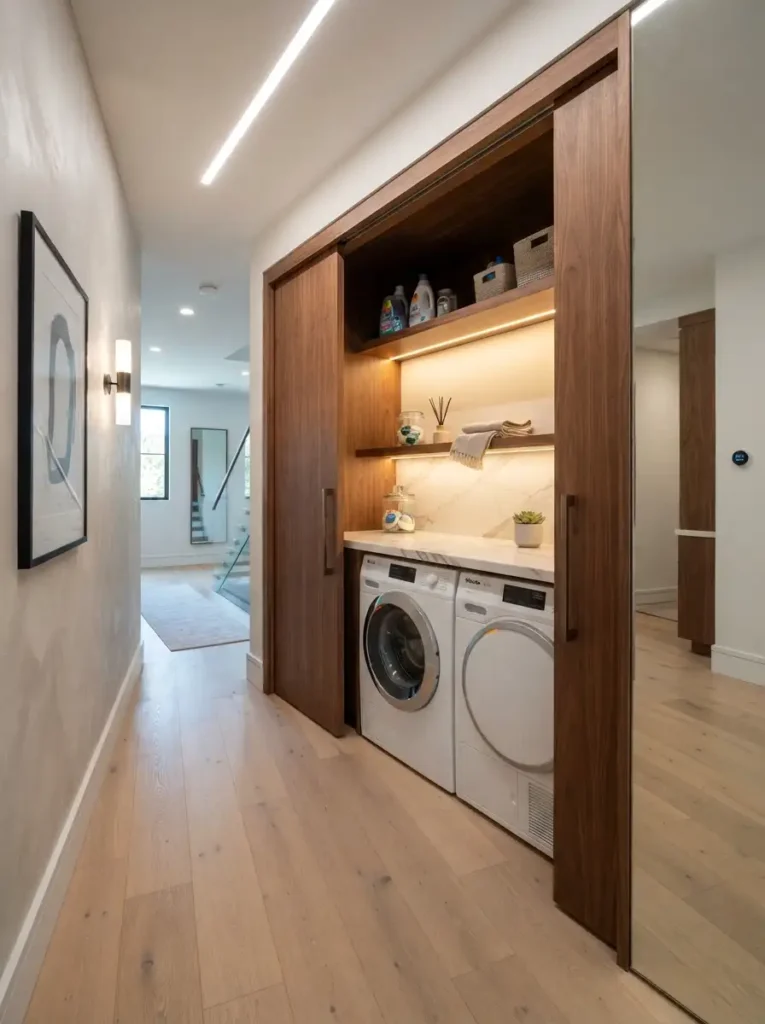
The Concept:
Not every home has the square footage for a massive, dedicated laundry room. For high-end apartments, condos, or homes adding a secondary laundry zone near the master suite, the “invisible” laundry closet is a brilliant architectural solution.
Why It Works:
It allows you to place laundry facilities in high-traffic or highly visible areas (like a primary hallway or master bathroom) without ever having to look at the machines when they aren’t in use.
Pro Design Tips:
The secret to a luxury hidden laundry is the hardware. Do not use cheap bifold doors that pop off their tracks. Instead, install high-end, solid-core pocket doors that slide entirely back into the walls, or specialized “flipper doors” that open and slide into the sides of the cabinetry. Ensure the interior of the closet is painted a beautiful color, features a chic tile backsplash, and has automatic motion-sensor lighting that turns on the moment the doors open. Furthermore, invest in heavy acoustic insulation around the closet to completely deaden the sound of the spin cycle.
11. Farmhouse Sinks and Antique Brass Hardware
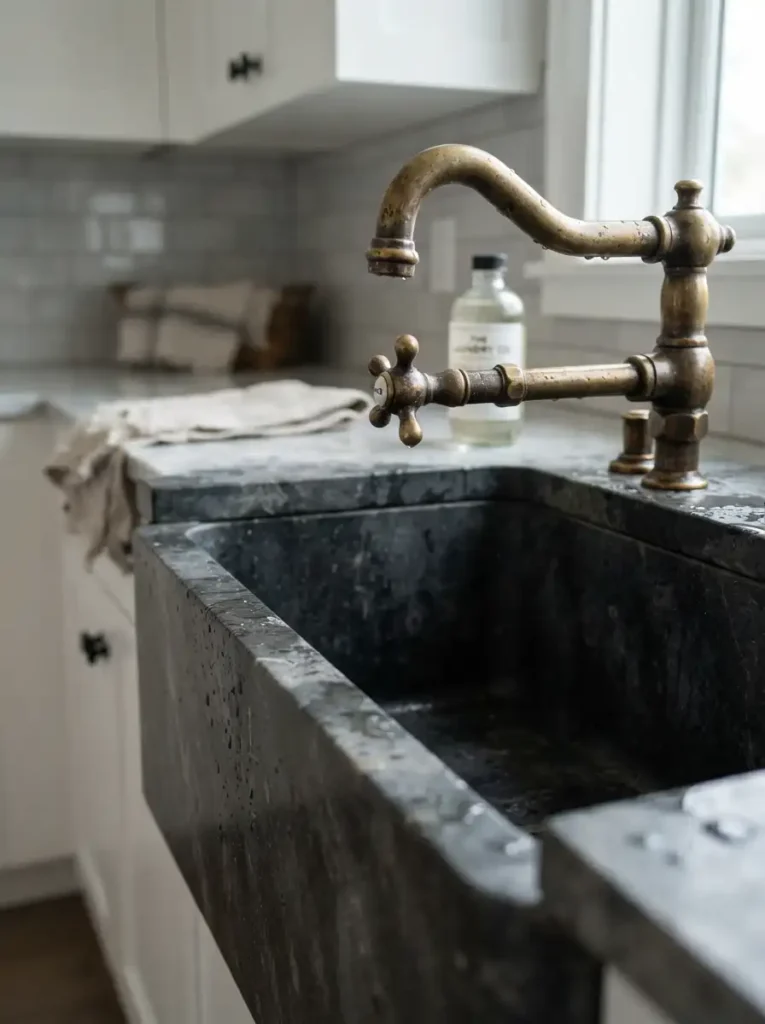
The Concept:
Bring the warmth, charm, and high-end detailing of a bespoke English country kitchen directly into your laundry room. Move away from cheap plastic utility tubs and upgrade to a massive, fireclay farmhouse sink paired with elevated plumbing fixtures.
Why It Works:
A deep sink is highly practical for a laundry room—you need it for hand-washing delicates, soaking heavily stained clothes, or even washing paintbrushes. Upgrading the sink and faucet turns a purely functional necessity into a stunning design focal point.
Pro Design Tips:
An apron-front fireclay or soapstone sink adds immediate luxury. Pair it with a bridge-style faucet in a living finish, such as unlacquered brass or oil-rubbed bronze. These metals will naturally patina and age over time, adding incredible warmth and character to the space. Ensure the faucet has a pull-down sprayer function, which is essential for rinsing out the corners of a large utility sink.
12. Elevated Lighting Design (Beyond the Flush Mount)
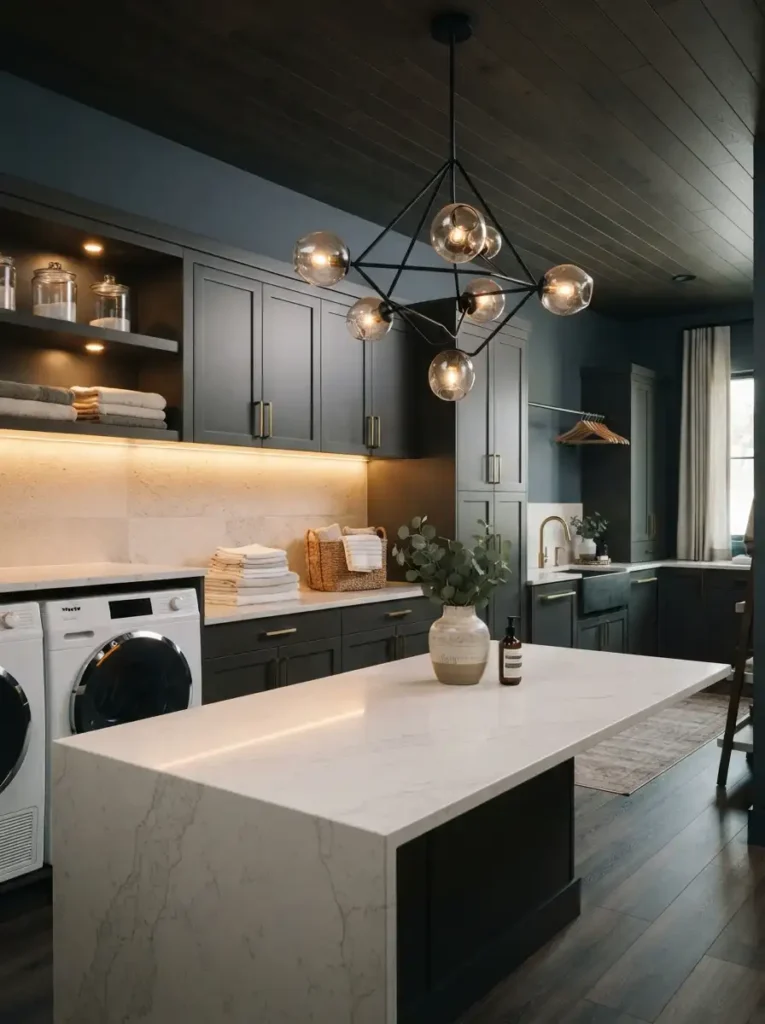
The Concept:
Builders typically treat laundry room lighting as an afterthought, slapping a cheap, harsh LED flush-mount fixture in the center of the ceiling. To elevate the space, you must completely rethink the lighting plan and treat the laundry room with the same layered lighting approach you would use in a dining room.
Why It Works:
Layered lighting provides both the bright task lighting you need to check garments for stains, and the soft ambient lighting that makes a room feel cozy, welcoming, and high-end.
Pro Design Tips:
First, replace the central ceiling light with a beautiful, statement fixture—a woven rattan pendant, a sleek modern chandelier, or a pair of vintage glass globes. Next, add under-cabinet LED strip lighting to illuminate the countertops brightly while you fold clothes. Finally, consider adding decorative wall sconces on either side of the sink or over open shelving to provide a soft, warm glow during the evening hours.
13. The Freestanding Folding Island
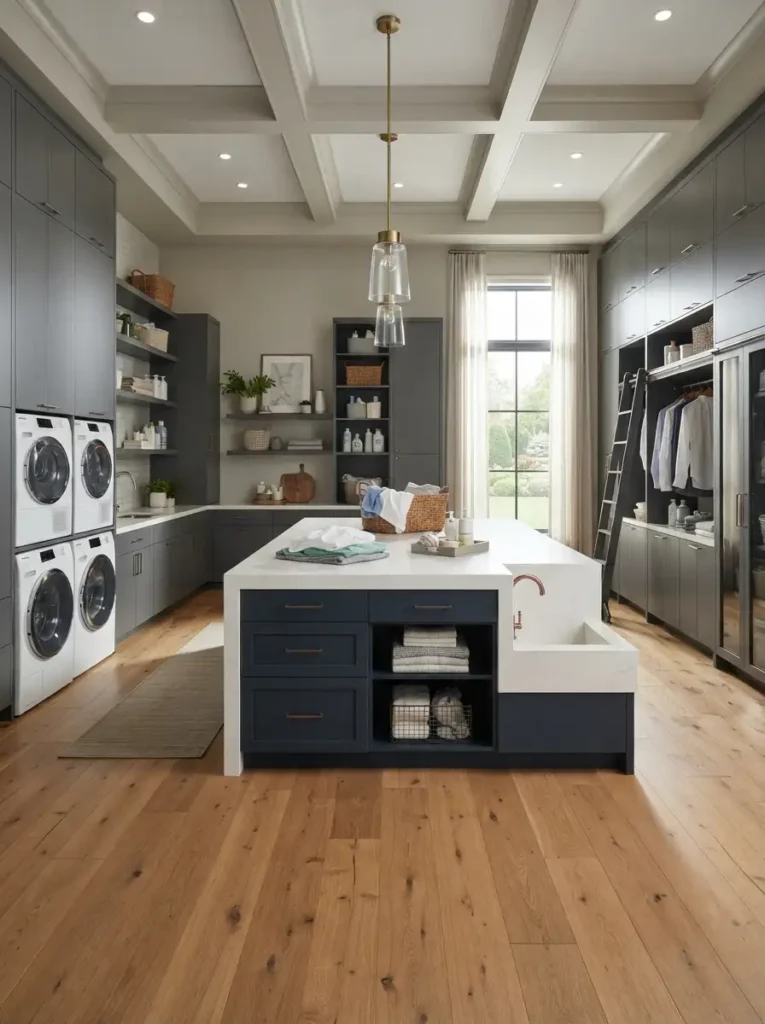
The Concept:
If you are lucky enough to have a massive laundry room with excess floor space, leaving the center of the room empty is a missed opportunity. Just as the island is the heart of a kitchen, a freestanding folding island can become the functional hub of a large laundry room.
Why It Works:
An island provides 360-degree access for folding large items, wrapping presents, or organizing family gear. It also provides a massive amount of additional lower-cabinet storage for baskets and bins.
Pro Design Tips:
If you are building a custom island, ensure it is slightly higher than a standard kitchen counter (aim for around 38 to 40 inches high). This bar-height is much more ergonomic for standing and folding clothes, preventing lower back pain. If you don’t want a permanent built-in island, look for a high-end, heavy-duty rolling industrial cart with a butcher-block top. You can wheel it out to the center of the room when folding, and push it against a wall when you need floor space.
14. Biophilic Design: Greenery and Natural Light
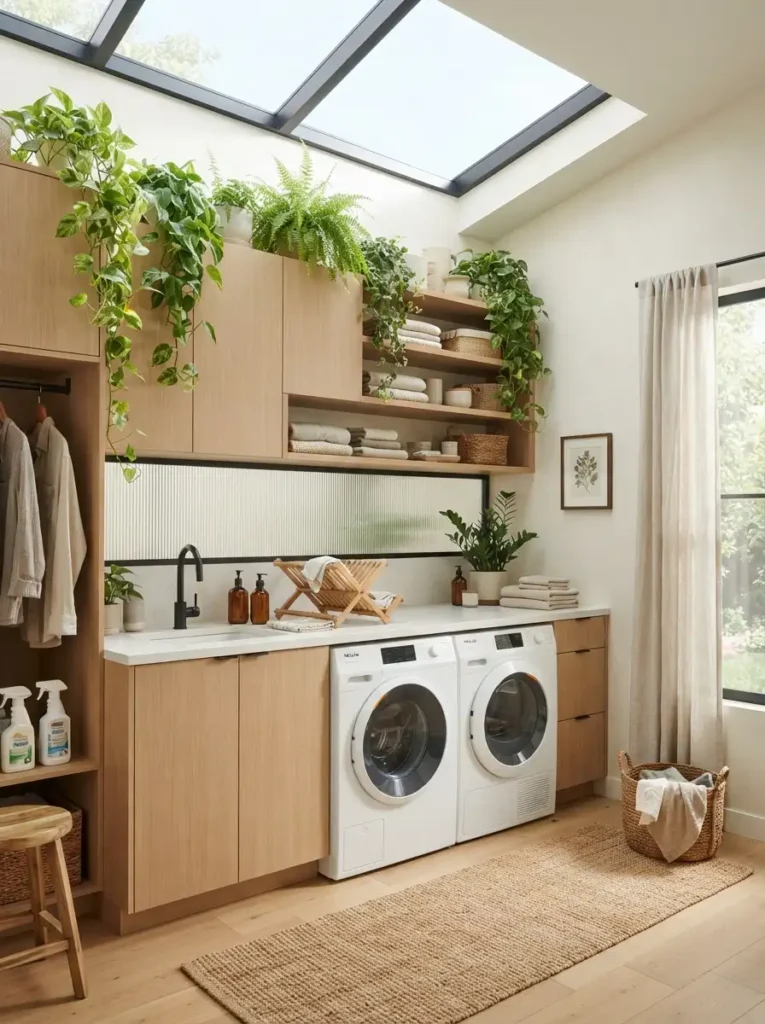
The Concept:
Biophilic design is the practice of connecting interior spaces with the natural world. Because laundry rooms can often feel sterile, cramped, and chemically heavy, introducing elements of nature can radically transform the energy of the room.
Why It Works:
Natural light is a well-documented mood booster. Furthermore, it provides the most accurate color rendering, which is essential when you are trying to determine if a dark sock is navy blue or black. Indoor plants help purify the air and bring organic softness to a room full of hard, boxy appliances.
Pro Design Tips:
If your laundry room is on an exterior wall, do whatever it takes to add a large window or expand an existing one. If it is an interior room on the top floor, explore adding a solar tube or a skylight. Decorate the space with plants that thrive in high-humidity environments, such as ferns, pothos, or snake plants. Hang trailing plants from the tops of upper cabinets or install a small floating shelf specifically dedicated to greenery.
15. Open Shelving with Curated Decanting
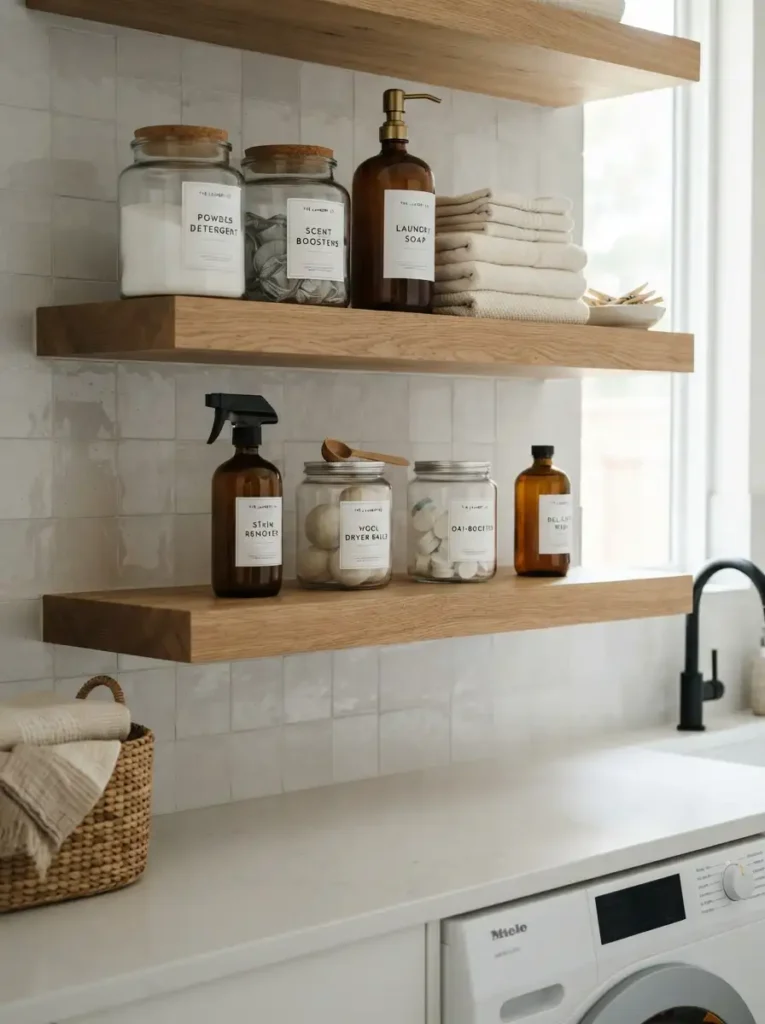
The Concept:
While closed cabinetry is essential for hiding ugly items, integrating a section of “floating” open shelving provides an opportunity to display beautiful items and bring personality into the room. This concept relies heavily on the art of “decanting”—removing products from their ugly, brightly colored plastic store packaging and placing them into aesthetically pleasing containers.
Why It Works:
Open shelving breaks up the heavy, monolithic look of wall-to-wall upper cabinets, making the room feel larger and airier. Decanting turns everyday utility items into beautiful decor, bringing a sense of Zen-like organization to the space.
Pro Design Tips:
Install thick, floating shelves made of reclaimed wood or sleek white oak. Transfer your laundry pods or powdered detergent into large, heavy glass apothecary jars with tight-sealing lids. Pour liquid detergents and fabric softeners into minimalist glass or acrylic beverage dispensers with polished spigots, or matching amber glass bottles with custom waterproof labels. Add a beautifully woven seagrass basket to hold fresh white towels, and display a few pieces of curated art or a small potted plant to complete the vignette.
The Unseen Luxury: Acoustic and Technological Considerations
While the 15 design ideas above focus heavily on aesthetics, layout, and visual functionality, an important factor in high-end laundry room design happens entirely behind the walls. A truly luxurious space is defined just as much by what you don’t experience as by what you do.
Mastering Sound Control
Washing machines, especially those spinning at high RPMs to extract water, generate significant vibration and noise. If your laundry room is located on the second floor near bedrooms, or adjacent to a home office, sound mitigation is absolutely critical.
During the renovation phase, ask your contractor to install specialized acoustic insulation (like Rockwool) within the interior walls surrounding the laundry room. Furthermore, replacing a hollow-core interior door with a solid-core wood door will dramatically reduce the amount of sound that leaks out into the hallway. Finally, always place heavy-duty anti-vibration rubber pads underneath the feet of your washer and dryer. This simple addition prevents the machines from shaking the floor joists, eliminating the low-frequency rumble that can travel throughout the entire house.
Smart Home Integration
The laundry room is also an excellent place to integrate smart home technology. Modern smart washers and dryers can be connected directly to your home’s Wi-Fi network. This allows you to receive push notifications on your smartphone the exact second a cycle finishes, preventing wet clothes from sitting in the drum for hours and developing a musty smell.
Additionally, consider installing a smart leak detector on the floor behind the washing machine. Washing machine hoses are one of the leading causes of catastrophic indoor water damage. A smart leak detector will instantly alert your phone the moment it senses moisture on the floor, and if connected to a smart shut-off valve on your main water line, it can automatically cut the water supply to the house, potentially saving you tens of thousands of dollars in water damage.
Conclusion: Rethinking the Chore
The days of dreading a trip to a damp, creepy basement to do laundry are officially behind us. By applying the same level of architectural forethought, design creativity, and financial investment to the laundry room as we do to our kitchens and bathrooms, we fundamentally change how we interact with our homes.
A beautifully designed laundry room does more than just organize your clothing. It streamlines your weekly routines. It saves you time through better layouts and modern technology. It provides a dedicated space for the messy realities of life—like muddy dogs and dirty sports gear—keeping the rest of your sanctuary spotless.
Whether you are leaning toward the bold, dramatic aesthetic of jewel-box wallpaper and encaustic floor tiles, or you prefer the calming, quiet luxury of seamless hidden cabinets and organic stone countertops, the ultimate goal remains the same: creating a space that works incredibly hard for you.
When your laundry room is equipped with custom drying racks, ample natural light, brilliant task lighting, and beautiful, tactile materials, a remarkable psychological shift occurs. Sorting, washing, and folding no longer feel like a punishing chore to be rushed through. Instead, it becomes a peaceful, satisfying ritual. By elevating the design of your utility spaces, you elevate the everyday experience of living in your home.