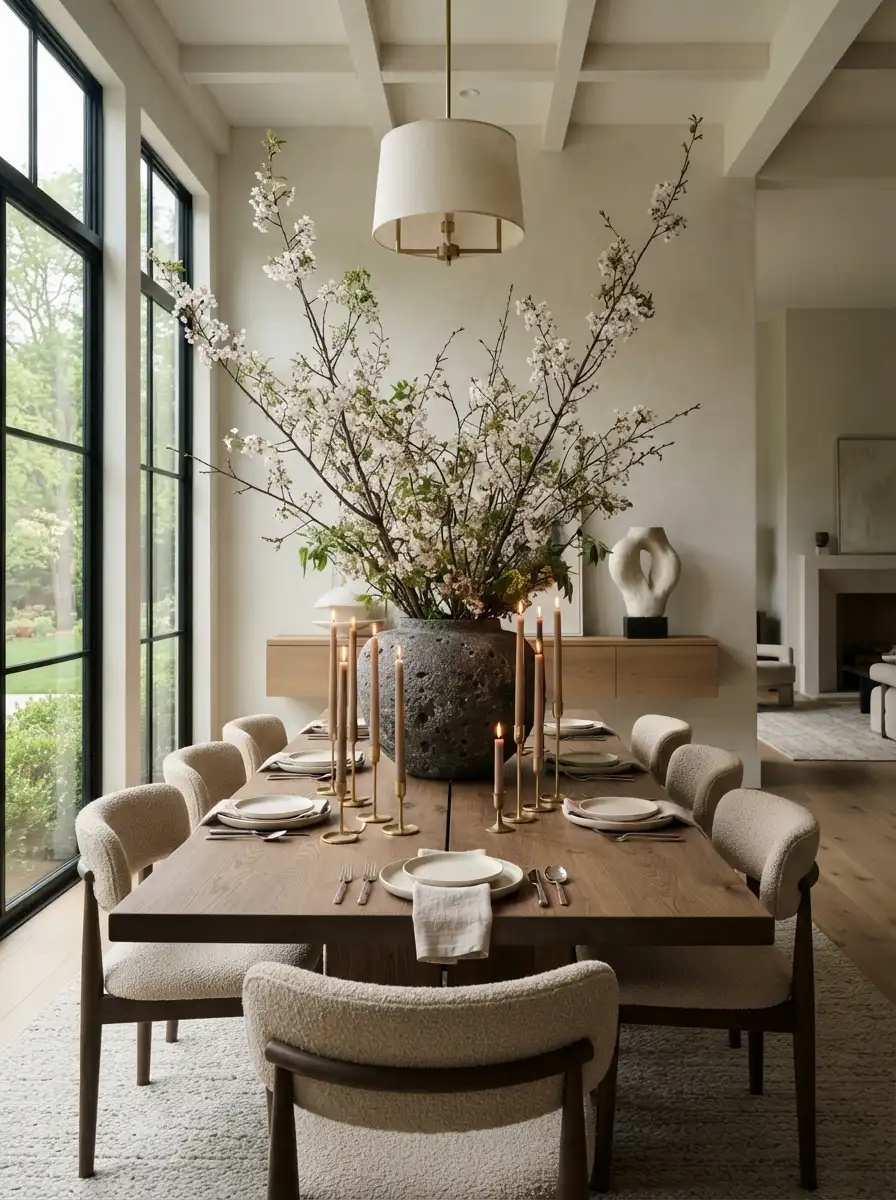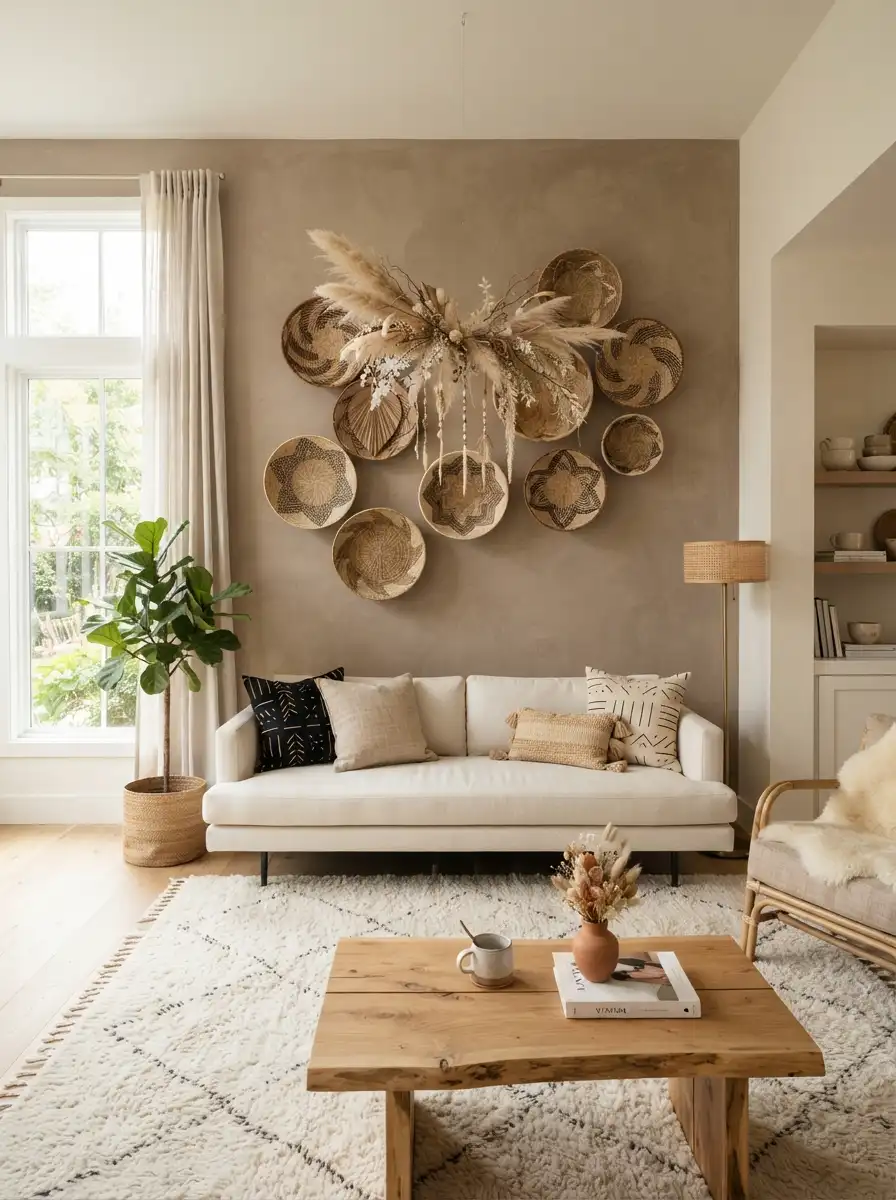
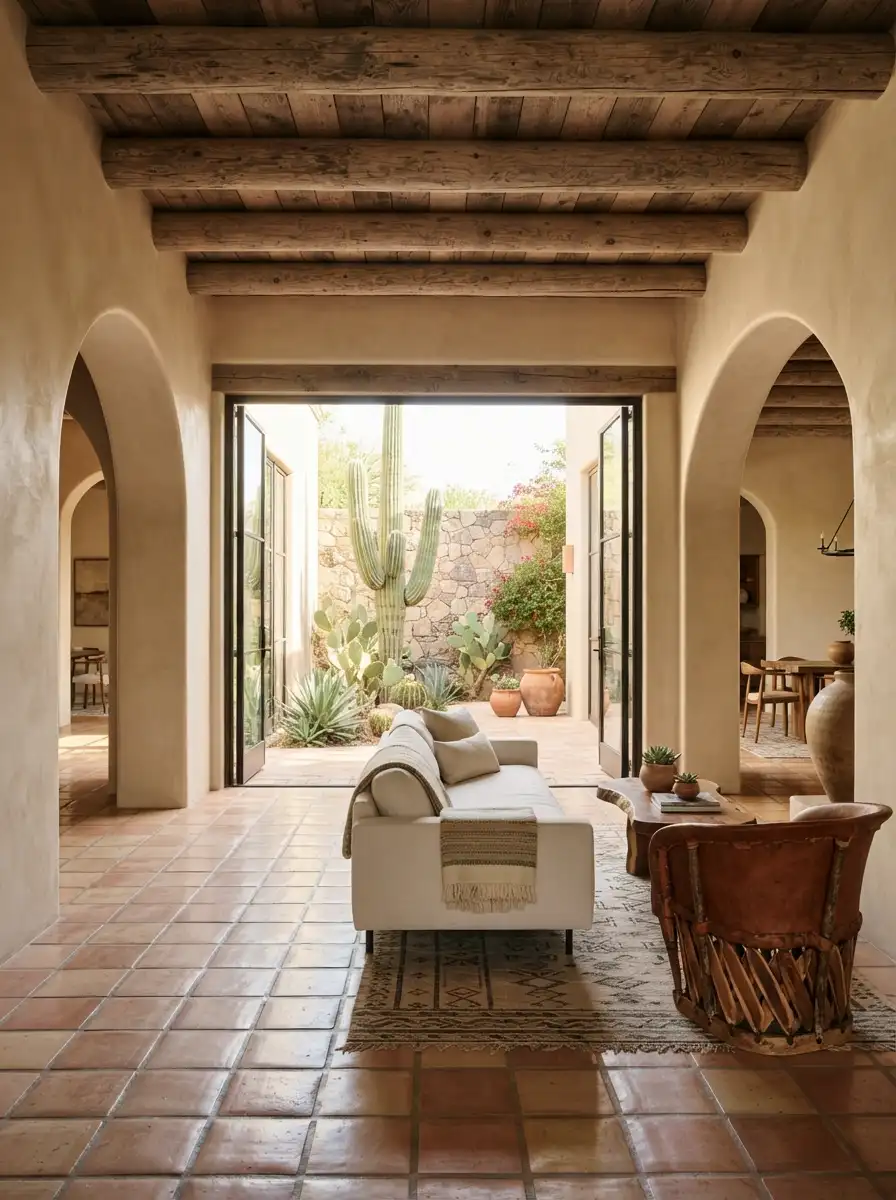
Mexican house styles represent one of the most vibrant, emotionally resonant, and historically rich architectural categories in the world of interior and exterior design. Born from a profound collision of indigenous Mesoamerican ingenuity, Spanish Colonial romanticism, and mid-century modernist innovation, the Mexican aesthetic is far more than a passing trend. Today, modern US design is heavily borrowing from this rich heritage, translating traditional Mexican elements into highly curated, sophisticated, and deeply organic contemporary spaces. Moving entirely away from the cluttered, kitschy resort stereotypes of the past, the modern interpretation of Mexican architecture focuses on raw, earthy textures, masterful masonry, seamless indoor-outdoor living, and the unapologetic celebration of artisanal craftsmanship.
What makes this design philosophy so universally appealing is its intrinsic warmth. A beautifully designed Mexican-style home does not feel like a sterile museum; it feels like a living, breathing entity that actively embraces you. It relies heavily on natural materials derived directly from the earth—baked terracotta clay, carved cantera stone, raw wooden beams, and textured stucco. Furthermore, Mexican residential architecture is fundamentally designed around the concept of family, hospitality, and communal gathering, heavily prioritizing intimate courtyards and open-air corridors over rigidly walled-off rooms.
Whether you are renovating a Spanish Revival home in Southern California, building a modern desert retreat in the Southwest, or simply wanting to inject the soulful warmth of Oaxaca or San Miguel de Allende into a standard suburban build, understanding the foundational pillars of this aesthetic is key. Here are 15 highly detailed, transformative concepts to help you master modern Mexican house styles. Each idea explores practical implementation, sophisticated styling secrets, and the underlying design psychology that makes this architecture so profoundly comforting.
1. The Hacienda-Style Central Courtyard
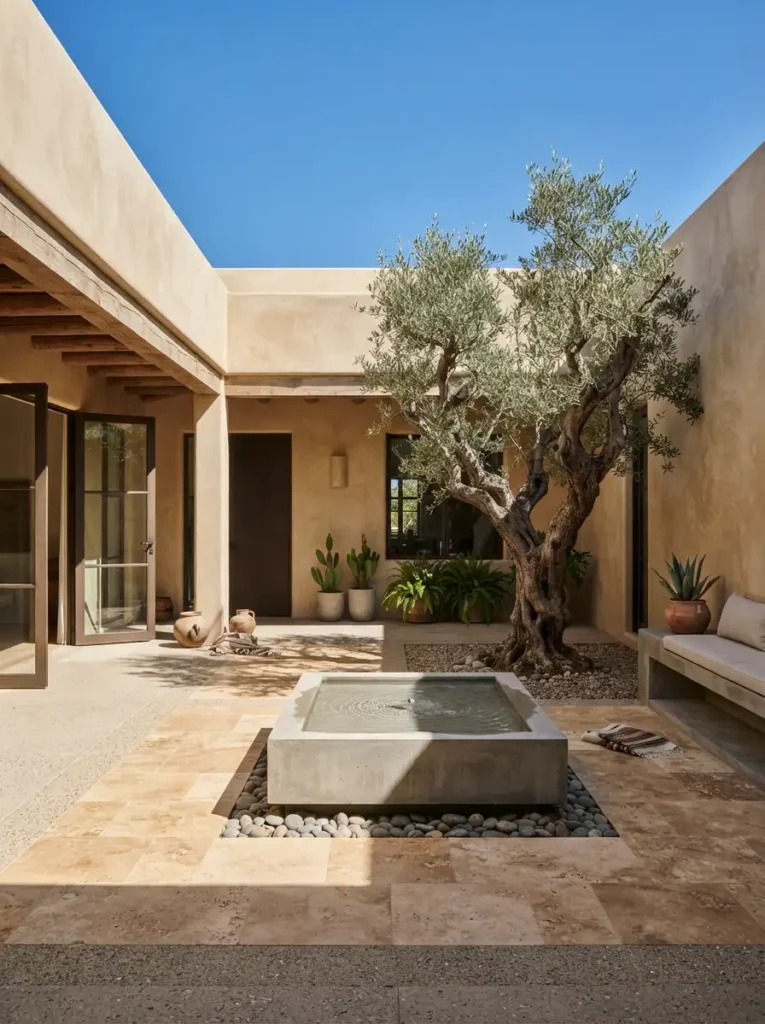
At the absolute core of traditional Mexican residential architecture is the central courtyard (el patio). Instead of building a house that looks entirely outward toward the street, the home is built wrapping around a private, open-air inner sanctum.
Implementation: If you are building from scratch, design a U-shaped or O-shaped floor plan centered around a core outdoor space. For existing homes, you can mimic this by enclosing a backyard or side yard with high, textured stucco walls to create a completely private, inward-facing oasis.
Styling Tips: The courtyard should serve as the lungs of the home. Keep the center relatively open, featuring a sleek, minimalist fountain or a single, large statement tree (like a mature Olive or Palo Verde tree). Surround the perimeter with comfortable, low-profile outdoor lounge seating.
Design Psychology: A central courtyard completely flips the psychological dynamic of a home. It creates an ultra-private, highly protected microclimate that shields inhabitants from the chaos of the public world. It draws fresh air and abundant natural light deeply into the interior rooms, fostering a profound sense of safety, serenity, and family intimacy.
2. Barragán-Inspired Modernist Color Blocking
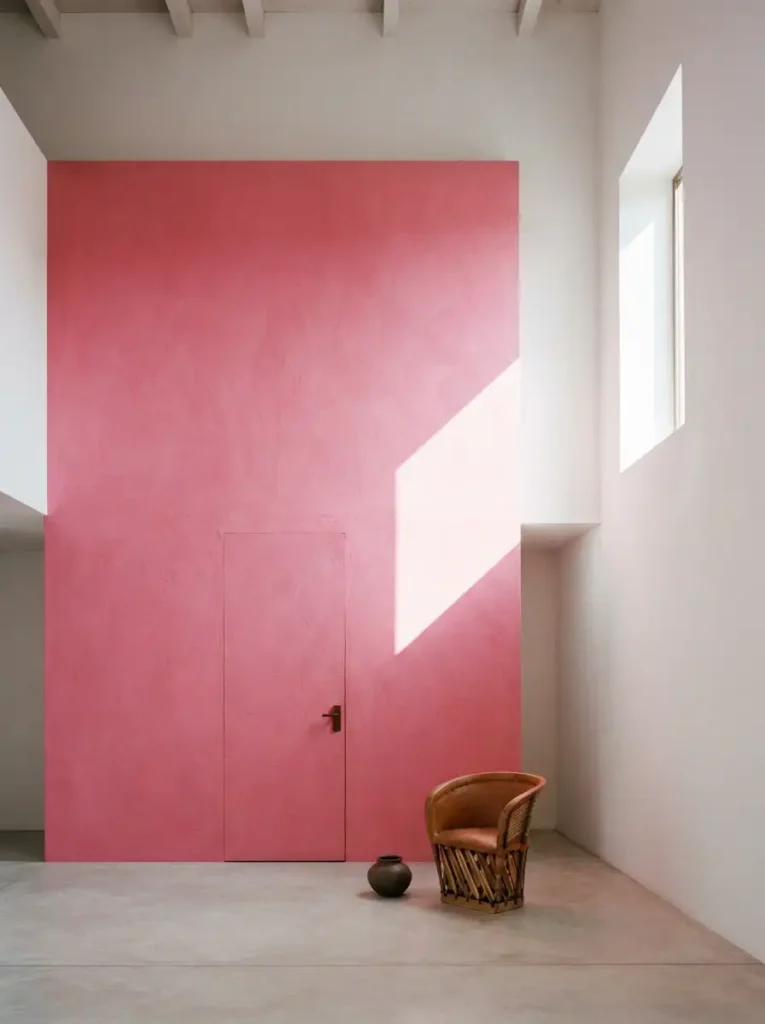
While traditional Mexican homes often utilize white or earthy stucco, modern Mexican architecture was forever changed by the legendary architect Luis Barragán, who introduced monumental, vibrant color-blocking paired with strict minimalist geometry.
Implementation: Choose one massive exterior or interior architectural feature—such as a large garden boundary wall, a towering entryway structure, or an interior stairwell—and paint it in a single, hyper-saturated, deeply emotional color.
Styling Tips: Barragán favored vibrant bougainvillea pink, bright marigold yellow, and deep cobalt blue. To adapt this for a modern, high-end US home, keep the rest of the house incredibly neutral and stark (using crisp whites or raw concrete) so the single colored wall acts as a monumental, standalone piece of abstract art.
Design Psychology: In minimalist architecture, stark white spaces can sometimes feel cold or institutional. Introducing a massive block of saturated color interacts dynamically with the shifting path of the sun. It invokes intense emotional joy and spiritual uplift, proving that minimalism does not have to be devoid of vibrancy and passion.
3. Authentic Saltillo Terracotta Flooring
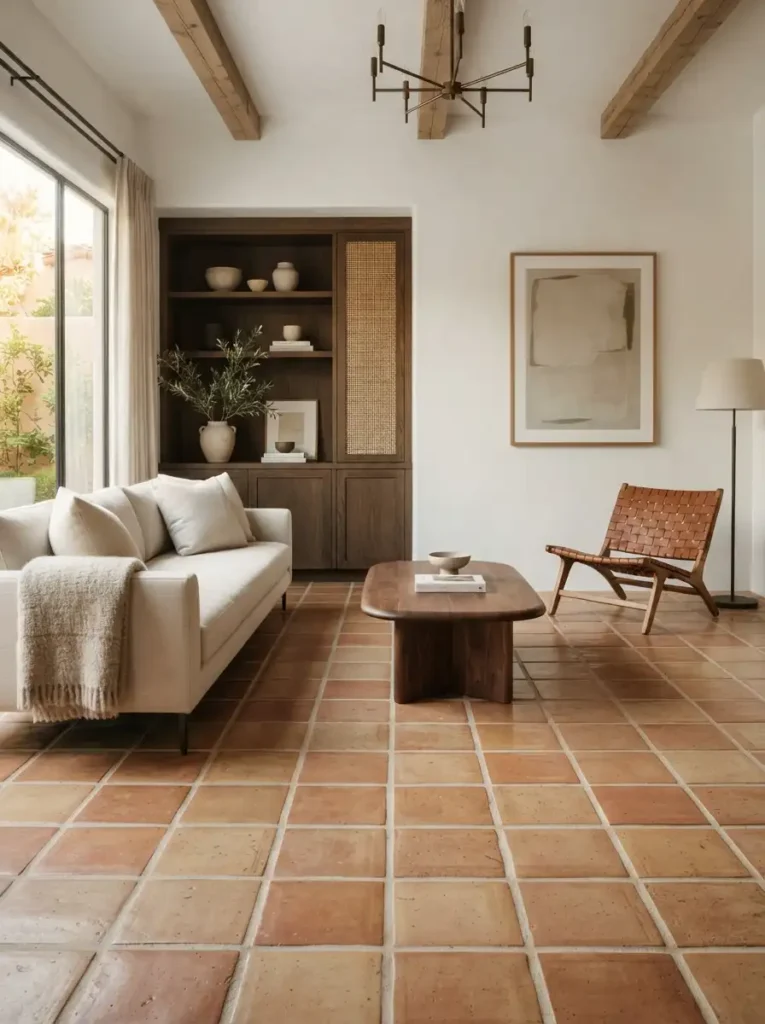
Nothing grounds a room quite like authentic Mexican Saltillo tile. Made from raw, sun-dried clay sourced from Saltillo, Coahuila, these tiles introduce incredible warmth, beautiful imperfections, and historic texture to a modern home.
Implementation: Replace cold, manufactured porcelain tiles with large-format (12×12 or 16×16 inch) authentic Saltillo tiles. Ensure they are sealed properly with a high-quality matte or satin finish to protect them from stains while retaining their rustic charm.
Styling Tips: Move away from the traditional, heavily patterned layouts. Lay the Saltillo tiles in a clean, modern grid or a simple staggered brick pattern. Use a thick, light-colored grout line (around 1/2 to 3/4 inch) to emphasize the grid. Pair this warm flooring with crisp white walls and sleek, modern furniture for a breathtaking contrast.
Design Psychology: Saltillo tiles represent the raw earth. Because they are handmade, no two tiles are exactly the same color or shape. This subtle, organic variation provides a deeply grounding, tactile experience for the human nervous system, bringing the grounding frequency of nature directly into the interior living space.
4. Hand-Painted Talavera Tile Accents
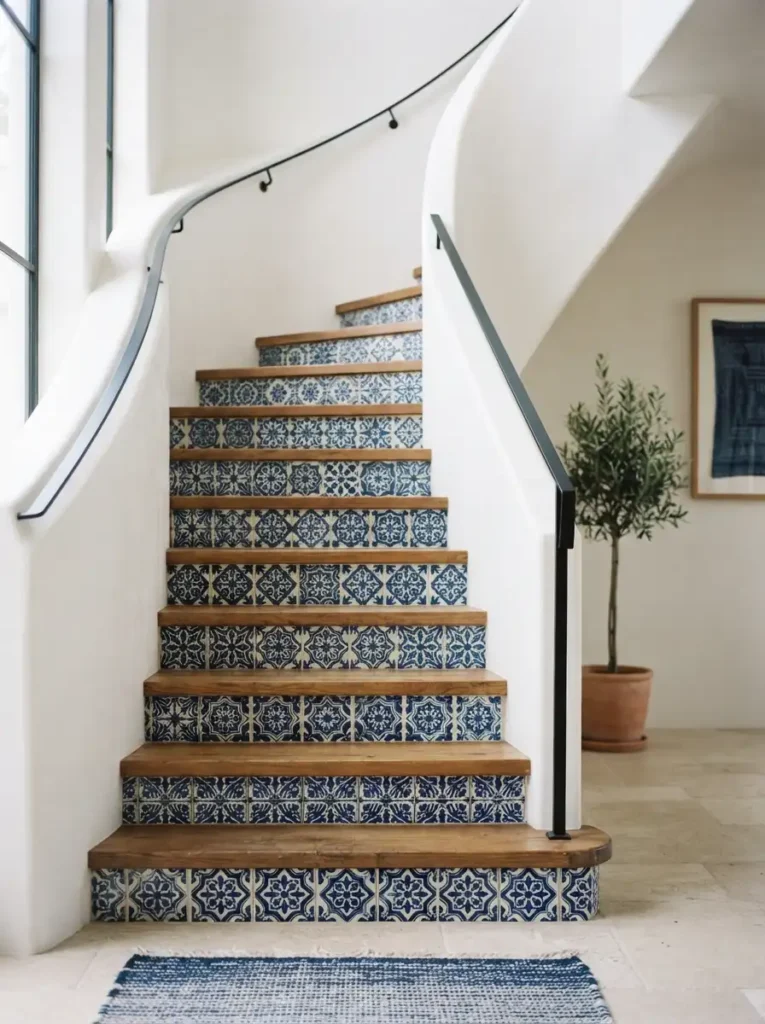
Talavera pottery and tile work, primarily hailing from Puebla, is a staple of Mexican design. However, covering entire kitchens in busy patterns can look dated. The modern approach is to use these beautiful tiles as hyper-curated architectural jewelry.
Implementation: Incorporate authentic, hand-painted Talavera tiles in highly specific, restricted zones. Excellent placements include the risers of a staircase, the interior niche of a shower, or as a slim, single-row border framing a doorway or a fireplace.
Styling Tips: Instead of wildly mixing multiple colors, curate a strict palette. Choose a two-tone Talavera tile, such as classic indigo blue and white, or deep sage green and cream. This restraint allows the intricate artistry of the tiles to be fully appreciated without visually overwhelming the room.
Design Psychology: Talavera tiles introduce a vital element of human artisanship into the home. When used sparingly, they draw the eye instantly and serve as delightful moments of visual discovery. They pay homage to centuries-old colonial craftsmanship while beautifully breaking up the monotony of flat, modern surfaces.
5. Roman Clay and Textured Adobe Plaster
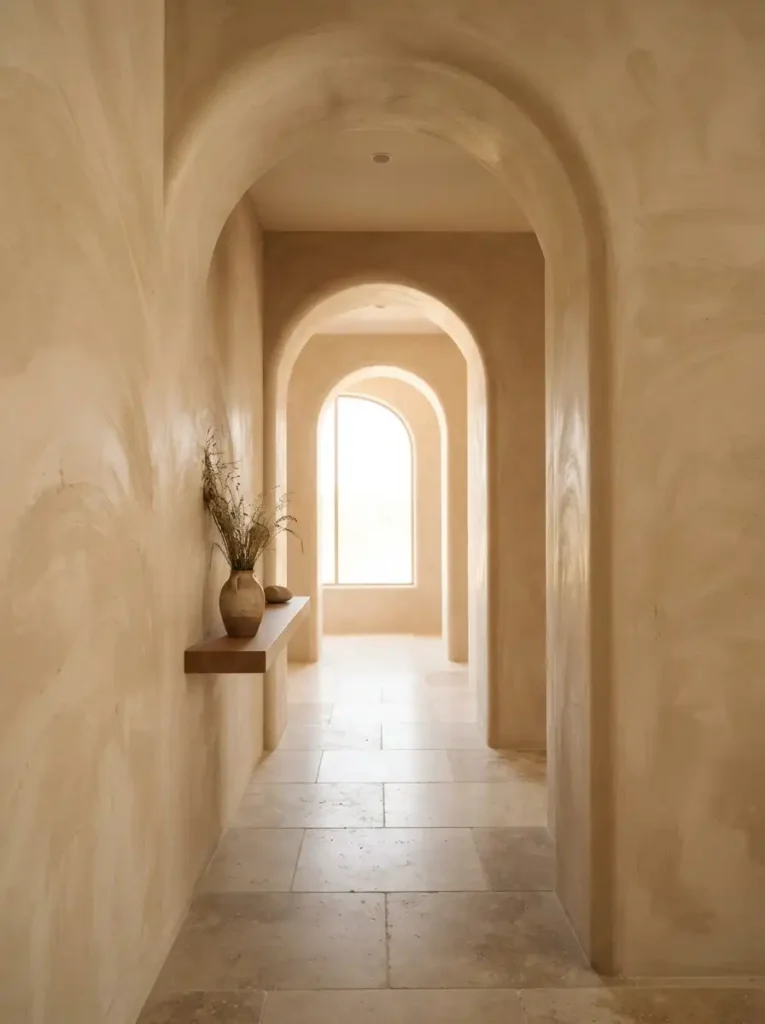
Standard, flat drywall is the antithesis of Mexican architecture. To capture the authentic soul of this style, walls must possess tactile depth, mimicking the historical use of sun-baked adobe bricks and lime plaster.
Implementation: Apply Roman clay, Venetian plaster, or textured limewash to your interior walls. For exteriors, utilize a heavy, hand-troweled stucco finish. The edges of the walls and archways should never be sharp 90-degree angles; they should be softly rounded (bullnosed).
Styling Tips: Stick to a warm, earthy color palette for your plaster—think soft off-whites, warm sandy beiges, pale terracottas, and muted blush tones. When the natural light sweeps across the wall, it will highlight the subtle, sweeping trowel marks, turning the architecture itself into art.
Design Psychology: Soft, rounded corners and textured plaster actively absorb and diffuse sound, creating a quiet, enveloping, cave-like atmosphere. Visually, the mottled, imperfect texture of plaster feels ancient and permanent, providing a subconscious sense of immense structural shelter and timeless security.
6. Bóveda and Wooden Beam Ceilings
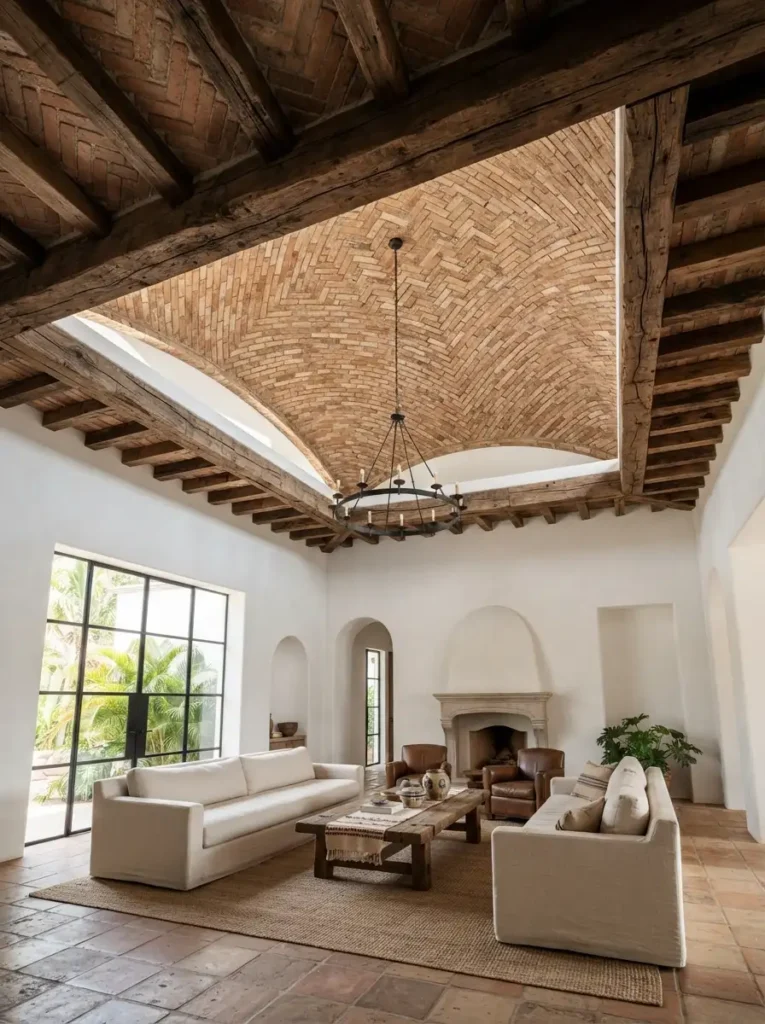
In Mexican house styles, the ceiling is never ignored. Traditional homes feature breathtaking overhead architecture that dramatically expands the visual volume of the room while introducing heavy, rustic materials.
Implementation: If structurally possible, incorporate a bóveda—a traditional Mexican shallow vaulted brick ceiling constructed without forms. Alternatively, install heavy, rough-hewn wooden beams (vigas) across flat ceilings, often paired with smaller perpendicular wooden slats (latillas).
Styling Tips: Keep the walls incredibly clean and minimal to allow the ceiling to be the undeniable focal point. If you use heavy wooden beams, leave them in a raw, matte, deeply textured finish rather than staining them with a dark, glossy, artificial color.
Design Psychology: Elevating the ceiling architectural detail draws the human eye upward, making the room feel majestic and expansive. Heavy wooden beams overhead provide a comforting psychological weight—a reminder of the sturdy, protective canopy above that shelters the family from the elements.
7. Heavy Carved Wooden Doors
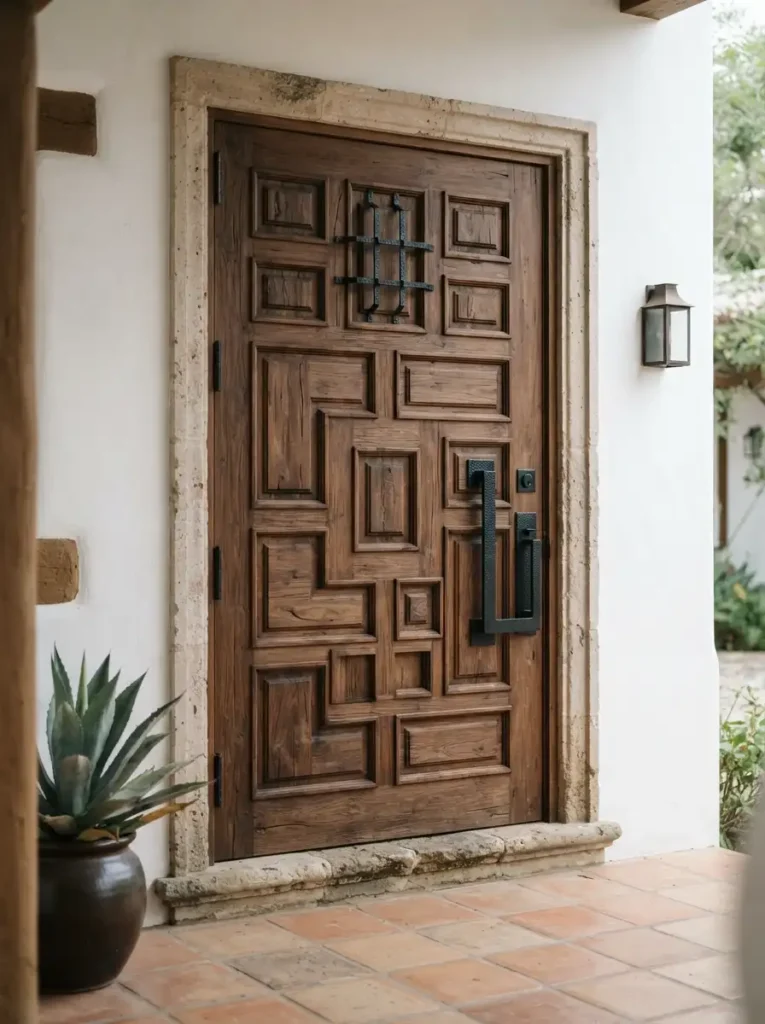
The front door of a Mexican-style home is a monumental statement piece. It is heavy, imposing, and intricately crafted, serving as a powerful threshold between the public street and the private sanctuary.
Implementation: Replace standard fiberglass doors with massive, custom-built solid wood doors. Look for heavy woods like mesquite, alder, or mahogany. Incorporate traditional Mexican elements like deep, geometric paneling, forged iron clavos (decorative nail heads), and a functional speakeasy grill.
Styling Tips: For a modern adaptation, strip the wood of any glossy varnish and leave it in a natural, matte, bleached, or lightly oiled state. Pair the highly textured, rustic wooden door with sleek, oversized matte black hardware for a chic, contemporary contrast.
Design Psychology: A massive, heavy door communicates fortress-like security. The physical effort required to push open a heavy wooden door forces a moment of mindfulness and physical transition. It commands respect and sets an immediate expectation of quality, warmth, and sanctuary for anyone entering the home.
8. Minimalist Wrought Iron Detailing
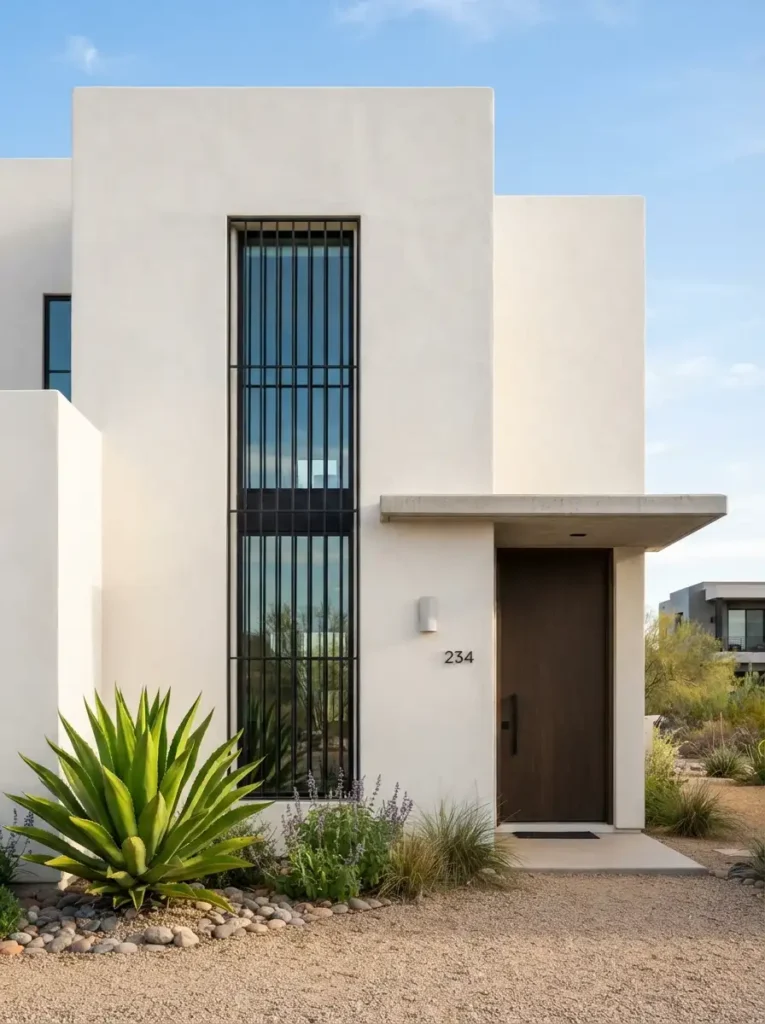
Wrought iron (hierro forjado) is a classic Spanish Colonial and Mexican architectural material. To adapt it for contemporary design, it must be stripped of its overly fussy, gothic scrolls and reimagined with modern restraint.
Implementation: Use wrought iron for exterior window grilles, Juliet balconies, and interior staircase railings.
Styling Tips: Instruct your fabricator to avoid floral patterns, heavy scrollwork, and spear finials. Instead, opt for clean, vertical or horizontal linear bars. Finish the iron in a flat, matte charcoal or black. This provides the historical material of iron but with the sleek, clean lines demanded by modern US design trends.
Design Psychology: Iron introduces necessary visual weight and undeniable strength into the architecture. By simplifying the lines to strict geometry, you create a sophisticated tension between the soft, organic curves of the plaster walls and the rigid, unyielding structure of the metal, resulting in a perfectly balanced, high-end aesthetic.
9. Equipale and Rustic Leather Furniture
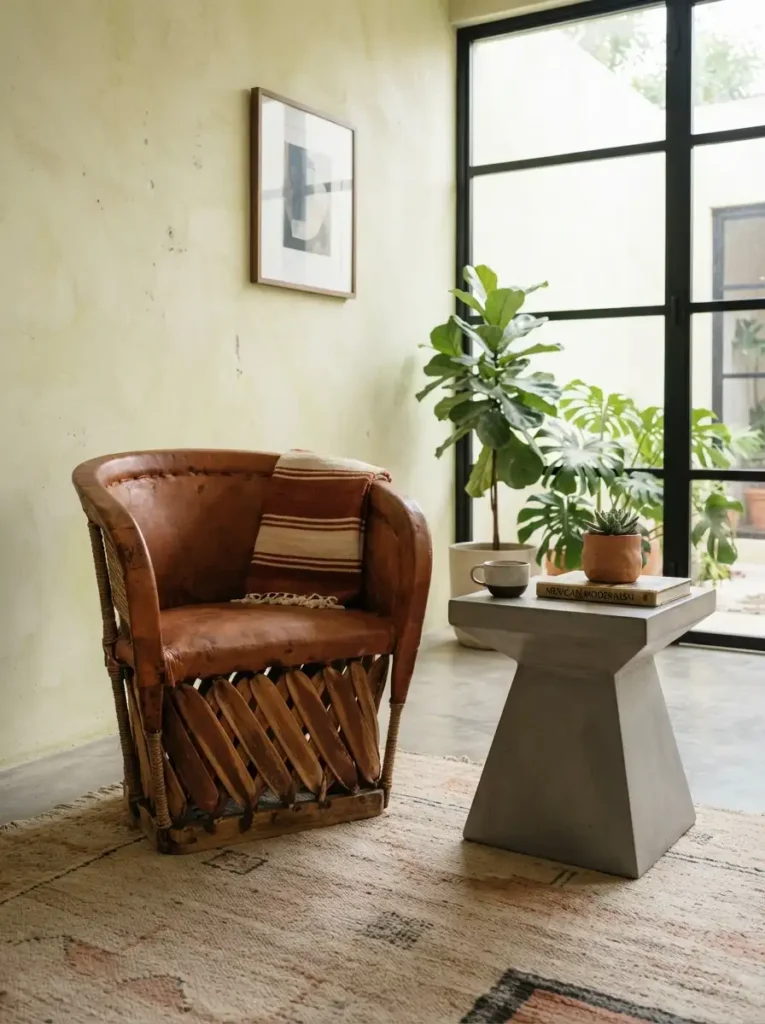
To truly capture the essence of a Mexican interior, you must incorporate traditional, indigenous craftsmanship into your furniture selection. The equipale chair is the most iconic example of this.
Implementation: Equipale furniture is handmade from tanned pigskin or cowhide leather, stretched tightly over a frame of interwoven Mexican cedar and sweetwater bark.
Styling Tips: You do not need an entire living room suite of equipale furniture. Instead, use two traditional equipale barrel chairs as accent seating in a highly modern, minimalist living room. Their warm, rich tobacco-colored leather and rustic stitching will pop beautifully against a sleek, neutral linen sofa.
Design Psychology: Equipale chairs are not just furniture; they are historical artifacts born from pre-Columbian design. Incorporating them into a modern home bridges the gap between ancient tradition and contemporary living. The warm, aging patina of the leather introduces a lived-in, soulful energy that mass-produced modern furniture simply cannot replicate.
10. Architectural Nichos (Wall Niches)
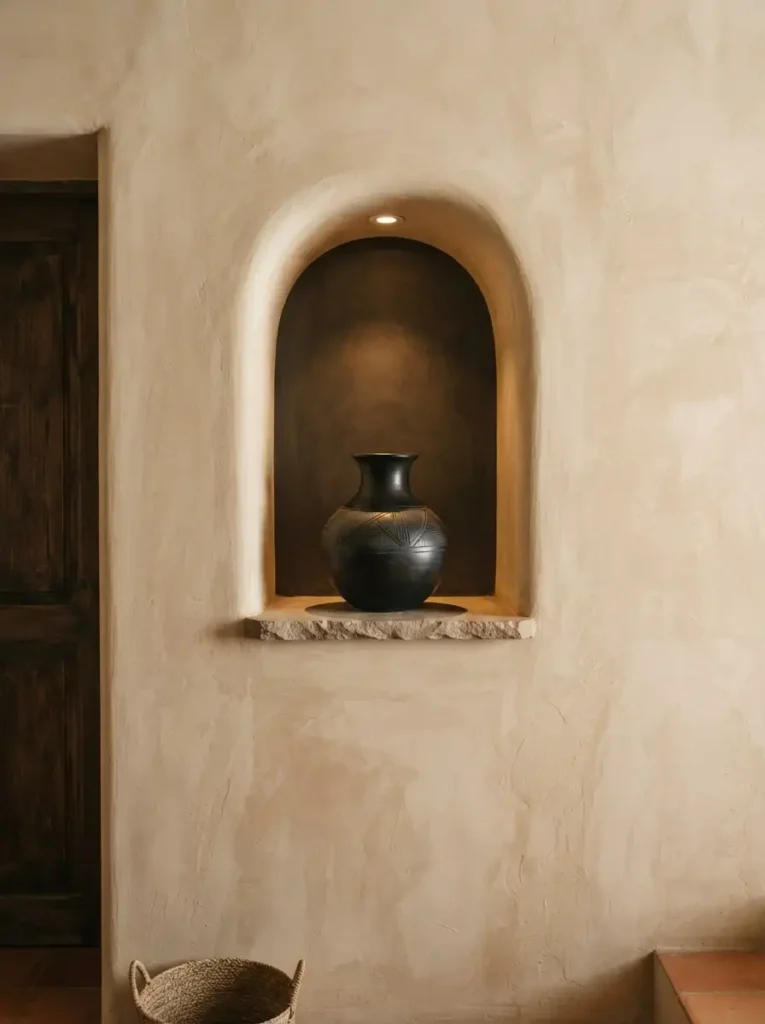
Traditional Mexican homes rarely rely entirely on flat walls and traditional bookshelves for display. Instead, they build display spaces directly into the physical architecture of the home through nichos.
Implementation: During the framing or drywall phase, create recessed niches directly into the walls of your living room, hallways, or bathrooms. Ensure the interior edges are softly bullnosed to match the plaster walls.
Styling Tips: Nichos should not be cluttered. Treat them like museum pedestals. Place a single, beautiful artifact inside—such as a hand-carved wooden bowl, a tall wrought-iron candle holder, or an iconic piece of black pottery (Barro Negro) from Oaxaca. Install a hidden LED puck light at the top of the niche to illuminate the object at night.
Design Psychology: Embedding a display space into the wall itself implies that the object it holds is deeply important to the family. It creates an aura of reverence and permanence. The illuminated niche provides soft, ambient light that draws the eye and creates moments of profound visual interest in otherwise empty hallways.
11. Zaguán (Breezeway) Transitional Entrances
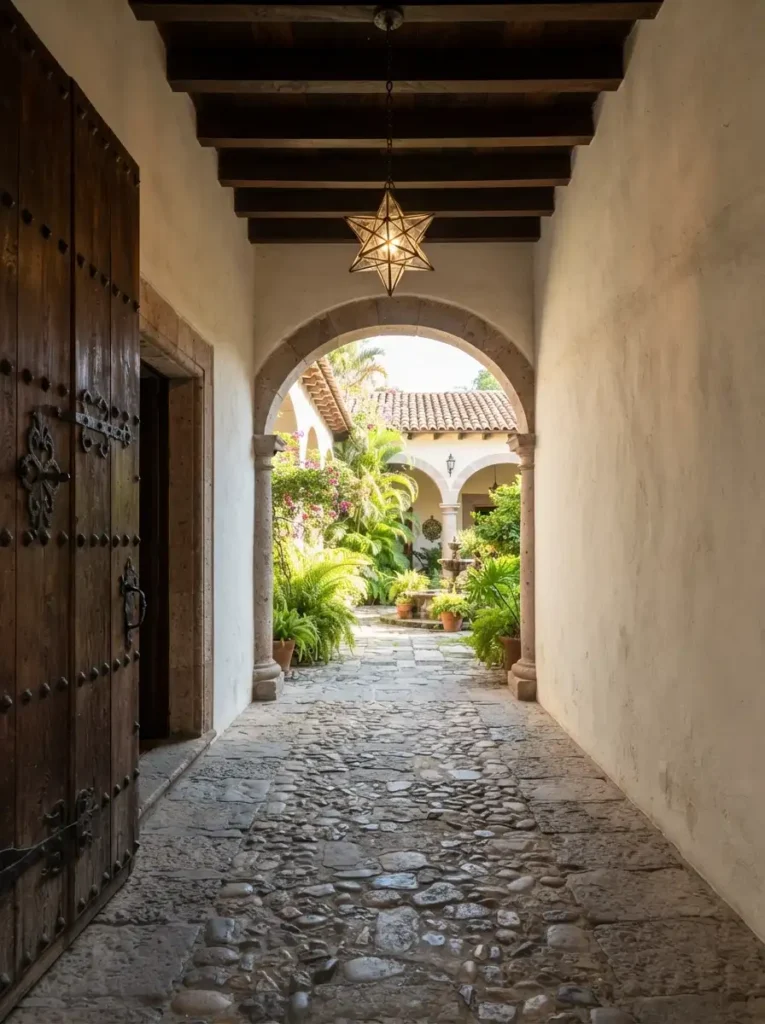
The zaguán is a traditional architectural element in Mexican haciendas. It is a covered, open-air breezeway or corridor that connects the main street entrance directly to the central courtyard.
Implementation: Design a wide, covered entryway that acts as a tunnel leading into the property. Pave this breezeway in cobblestone or durable Saltillo tile.
Styling Tips: Do not clutter the zaguán. Hang a beautiful, oversized star-shaped tin or glass pendant light (a classic Moravian star) from the ceiling to illuminate the tunnel. Place two oversized, simple terracotta planters with tall cacti at the very end of the breezeway to draw the eye toward the courtyard.
Design Psychology: A zaguán acts as a psychological decompression chamber. As you walk through the shadowed, cooler tunnel, you physically leave the noise of the street behind. The gradual transition builds intense anticipation before the space suddenly bursts open into the bright, lush, sunlit sanctuary of the central courtyard.
12. Cantera Stone Carvings and Fireplaces
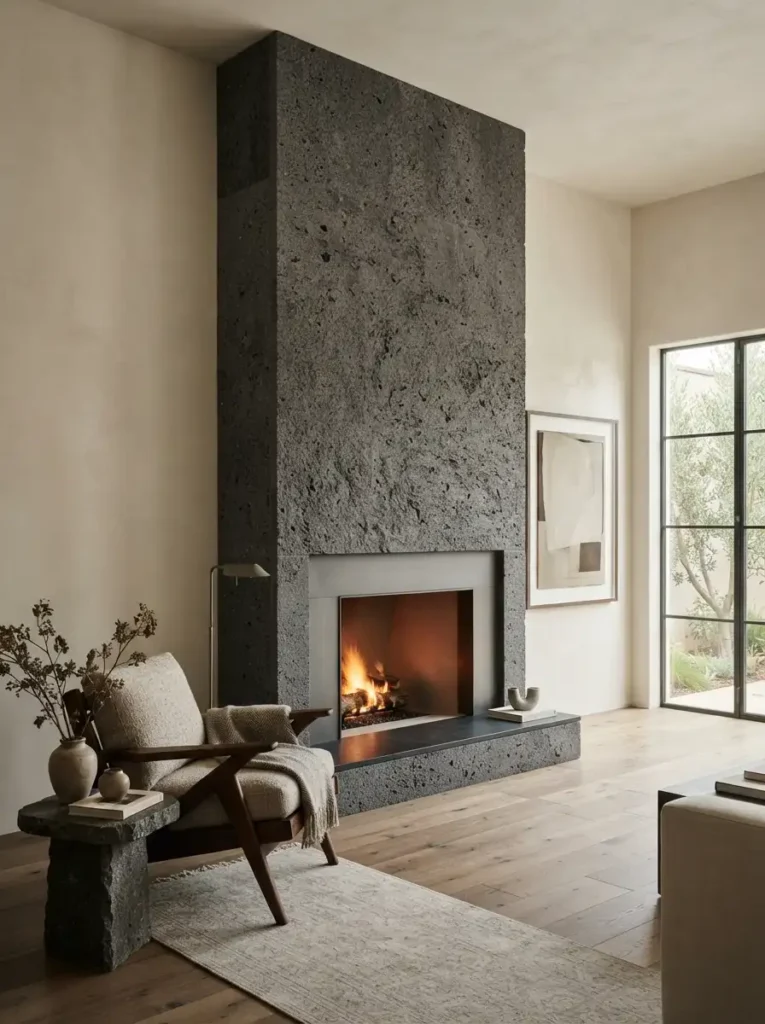
Cantera is a volcanic rock quarried exclusively in various regions of Mexico. It is highly porous, beautifully textured, and has been used for centuries to carve intricate architectural details.
Implementation: Incorporate authentic cantera stone for monumental architectural features. Use it to carve a massive, floor-to-ceiling fireplace surround in the living room, or as the structural basin for a courtyard water fountain.
Styling Tips: Cantera comes in beautiful, muted natural colors ranging from soft café au lait to charcoal gray and even pale pink. Choose a sleek, minimalist carving profile rather than overly ornate baroque designs. Let the raw, pitted, organic texture of the stone speak for itself against smooth plaster walls.
Design Psychology: Using regional, volcanic stone connects the home directly to the geological history of the earth. The sheer weight and structural integrity of a cantera stone fireplace act as the unshakable, grounding anchor of the living room, gathering the family around a material that is literally born from fire and earth.
13. The Covered Loggia (Corredor)
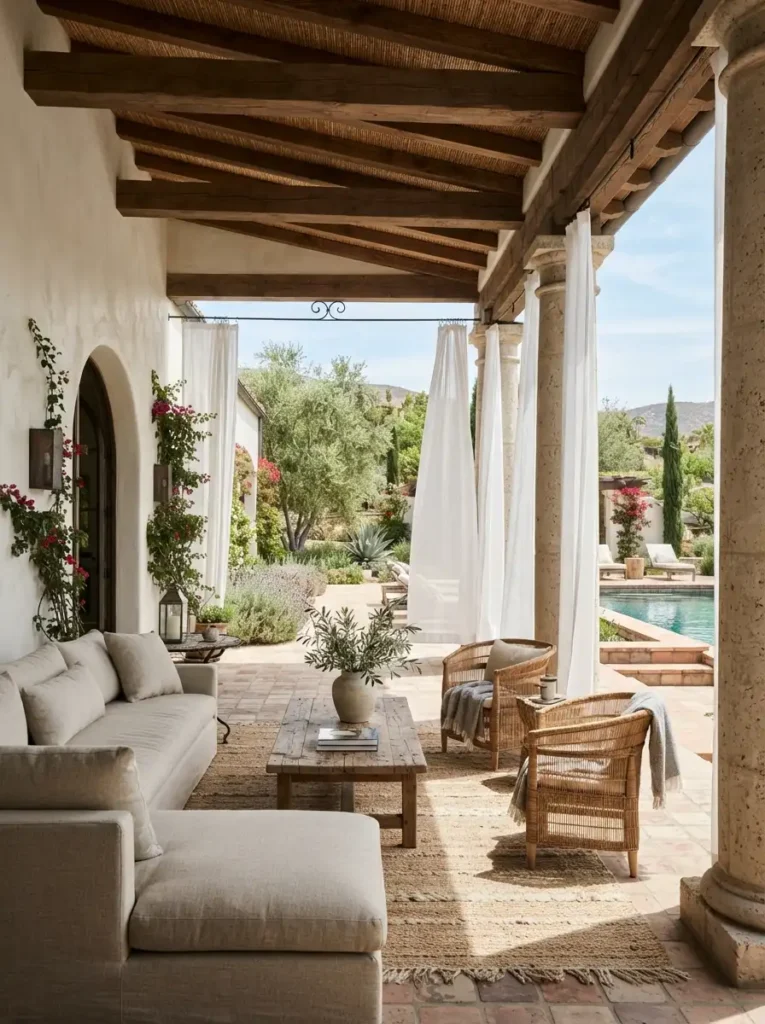
In Mexican architecture, the concept of a porch is taken to a monumental scale. The corredor or loggia is a deep, covered exterior walkway that lines the perimeter of the courtyard or the back of the house.
Implementation: Build a deep overhang extending from the main roofline, supported by heavy wooden posts or thick, plastered masonry columns. The loggia should be deep enough to comfortably hold a full outdoor dining table and an exterior living room.
Styling Tips: Treat the loggia exactly like an interior room. Hang luxurious outdoor drapery between the columns to provide shade from the harsh afternoon sun. Install ceiling fans to keep the air moving, and style the space with plush, comfortable seating and heavily textured outdoor rugs.
Design Psychology: The loggia provides the ultimate expression of indoor-outdoor living. It offers the expansive freedom, fresh air, and sounds of the outdoors, while simultaneously providing the protective, shaded comfort of a roof overhead. It creates a space where a family can comfortably spend the entire day outside, regardless of intense sun or light rain.
14. Structural Cacti and Agave Landscaping
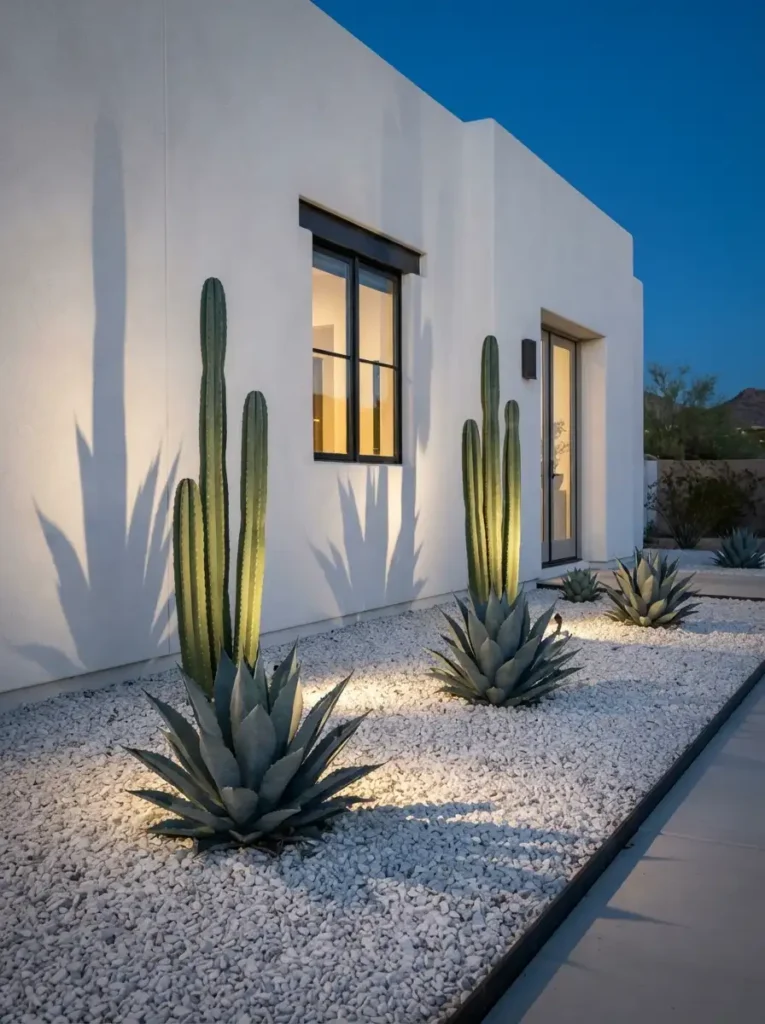
Mexican house styles demand landscaping that is native, drought-tolerant, and highly architectural. Manicured English lawns and soft, thirsty flowerbeds look entirely out of place here.
Implementation: Replace water-heavy grass with crushed gravel or decomposed granite. Focus heavily on structural, sculptural desert plants—towering San Pedro cacti, massive Blue Agaves, Yuccas, and Prickly Pears.
Styling Tips: Treat these plants like outdoor sculptures. Plant them in deliberate, minimalist clusters rather than chaotic, overgrown beds. Use hidden, low-voltage outdoor uplighting positioned directly beneath massive cacti so their dramatic, spiky silhouettes cast breathtaking shadows against the stucco walls at night.
Design Psychology: Desert landscaping is incredibly commanding and resilient. The rigid, architectural geometry of an agave plant or a towering cactus provides a stunning visual contrast to the soft, rounded edges of adobe architecture. It grounds the home firmly in its regional climate, honoring the fierce, untamed beauty of the natural desert environment.
15. Modern Mexican Minimalism
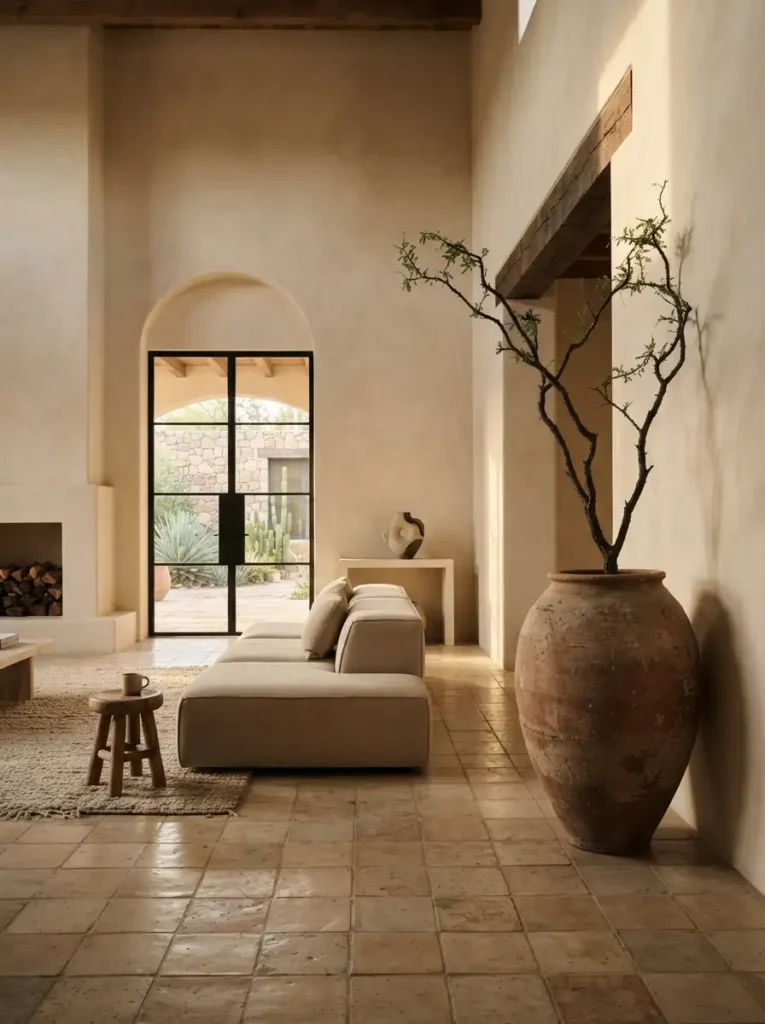
The ultimate evolution of Mexican house styles in contemporary US design is the fusion of traditional regional materials with strict, highly disciplined minimalism. It is the art of removing everything until only the soul of the architecture remains.
Implementation: Strip away all chaotic patterns, brightly colored textiles, and excessive decor. Focus purely on massive scale, generous negative space, and the highest quality raw materials—concrete, plaster, raw wood, and glass.
Styling Tips: In a minimalist Mexican home, a room might only contain three items: a low-profile linen sofa, a massive raw wood coffee table, and one towering, imperfect terracotta vase holding a single branch. The beauty is found in the interplay of light and shadow across the empty, textured walls.
Design Psychology: Modern Mexican minimalism is an architectural response to a hyper-stimulated world. By combining the ancient, grounding textures of Mexican craftsmanship with the profound silence of minimalist negative space, you create a space that is almost monastic in its peace. It offers the ultimate luxury: mental clarity, spiritual rest, and deeply authentic beauty.
Weaving the Fabric of Your Hacienda Retreat
Adopting Mexican house styles is not merely an aesthetic choice; it is a profound commitment to a warmer, more connected way of living. It is a rebellion against the cold, sterile, mass-produced materials that dominate so much of modern construction. By embracing the raw, tactile imperfections of handmade Saltillo tiles, the ancient history of carved cantera stone, and the joyful, spiritual uplift of Barragán-inspired color, you are infusing your home with an undeniable, beating heart.
Designing a successful Mexican-inspired interior in the modern era requires a delicate balance of deep respect for traditional artisanship and a disciplined, curatorial eye. You do not need to cover every wall in brightly colored tiles or fill every corner with rustic artifacts. The true magic lies in restraint. By implementing these 15 architectural and design concepts, you allow the raw, natural materials and the masterful manipulation of light and shadow to take center stage. The result is a breathtaking, highly sophisticated sanctuary that honors the rich architectural legacy of Mexico while providing an unparalleled, deeply grounding environment for your modern daily life.