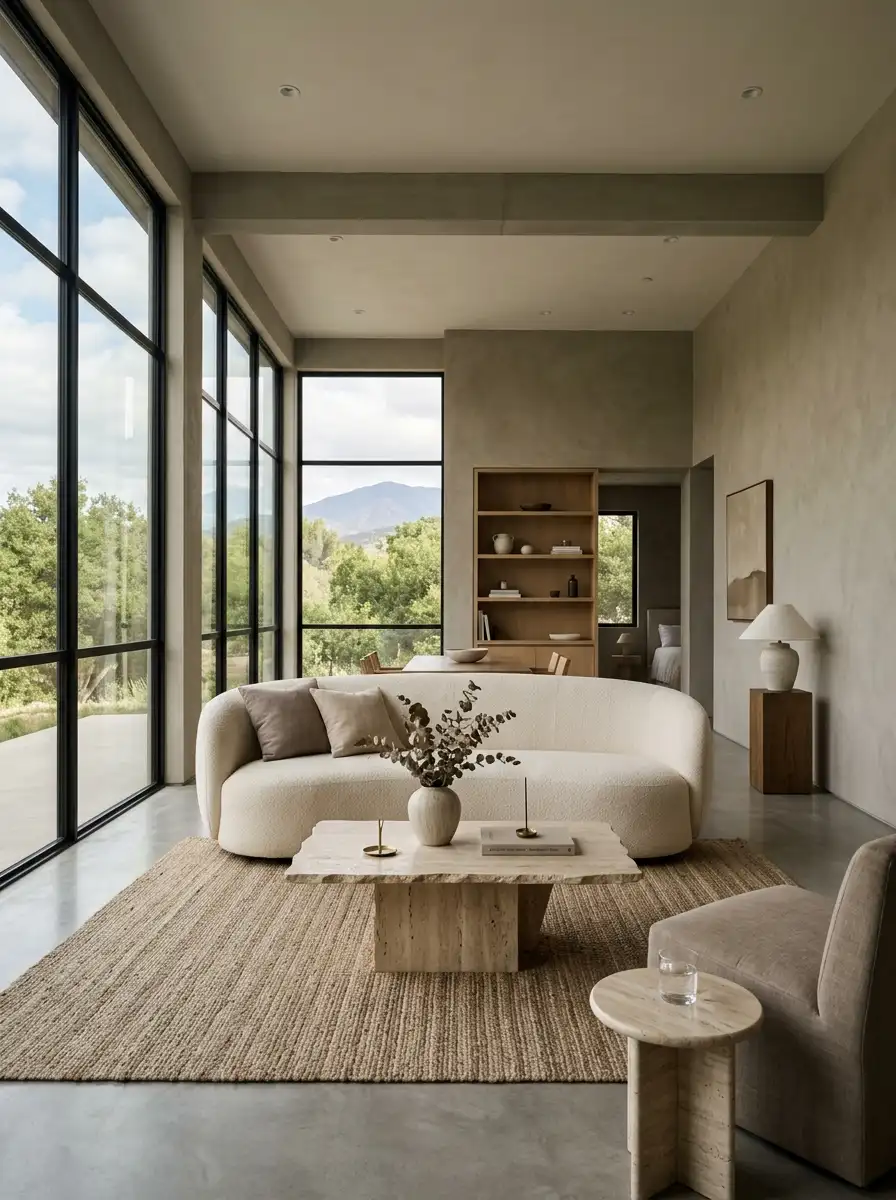
When we hear the word “minimalism,” the mind often wanders to stark white rooms, empty walls, and a cold, sterile atmosphere. But in the world of high-end interior design, minimalism has evolved into something entirely different: Minimalist Luxury.
Minimalist luxury is the ultimate expression of sophistication. It is not about living with nothing; it is about living with only the best. It shifts the focus from accumulating mass quantities of decor to curating highly intentional, premium pieces. In a world full of noise, a minimalist luxury living space acts as a serene, breathable sanctuary where the architecture, materials, and light are allowed to speak for themselves.
If you are looking to transform your living room into an elevated, calm, and deeply luxurious retreat, you need to focus on quality, texture, and space. Here are 14 ideas to help you achieve the perfect minimalist luxury living space.
1. Master the Art of Negative Space
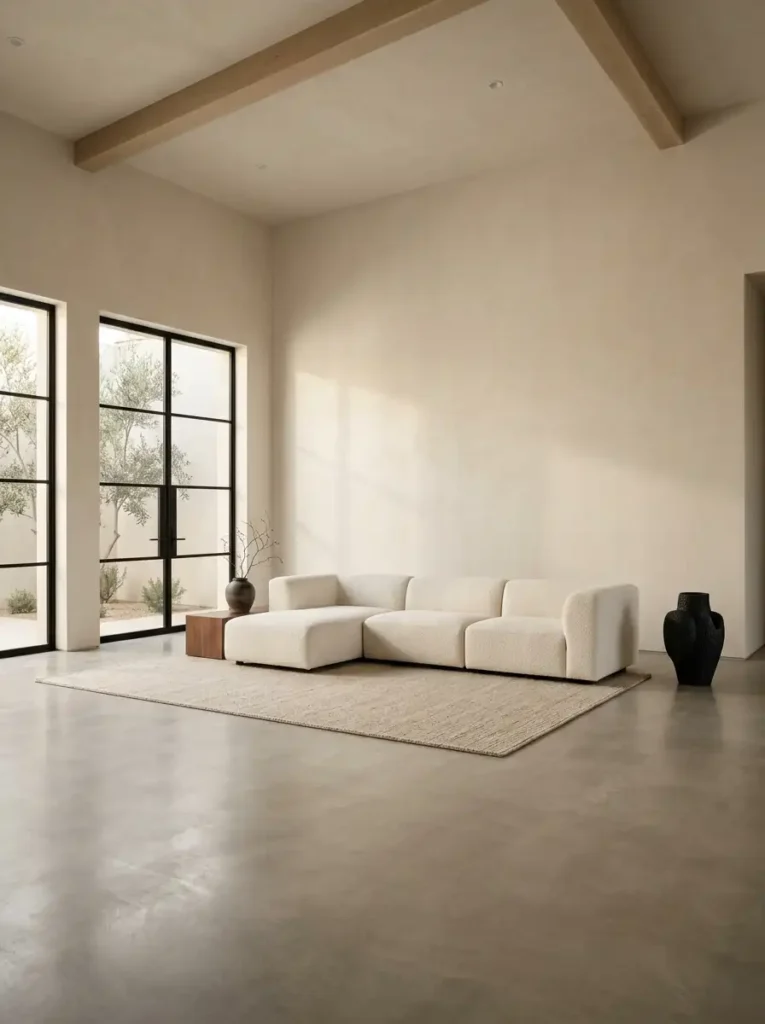
In luxury minimalism, empty space is not a void waiting to be filled—it is an active design element. Negative space allows the eye to rest and highlights the furniture and art you do choose to include. High-end art galleries use this concept to make individual pieces feel monumental, and the same applies to your living room.
How to Implement It: Resist the urge to fill every corner with a plant, an accent table, or a basket. Pull your furniture slightly away from the walls to create a sense of floating and airflow. By giving your luxury items breathing room, you instantly elevate their visual value and create a profound sense of psychological peace in the room.
2. Invest in High-End, Tactile Natural Materials
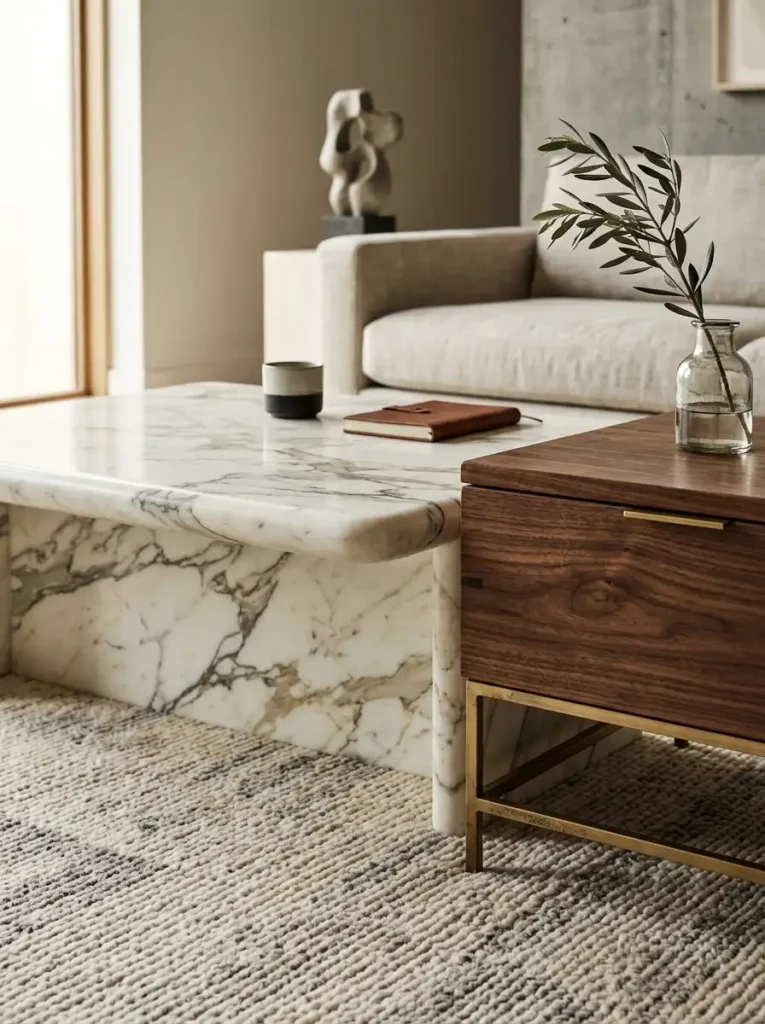
When a room lacks excessive decor, the materials you use must step up to become the star of the show. Minimalist luxury relies heavily on the earth’s most beautiful, raw elements. Think richly veined marbles, solid walnut, unlacquered brass, and natural limestone. These materials bring an inherent warmth and history that synthetic materials simply cannot replicate.
How to Implement It: Introduce a solid Calacatta marble or travertine coffee table as the centerpiece of your living space. Opt for side tables made from beautifully grained, dark-stained oak. The goal is to use materials that possess natural imperfections and textures, providing visual interest without introducing physical clutter.
3. Layer a Monochromatic, Tone-on-Tone Palette
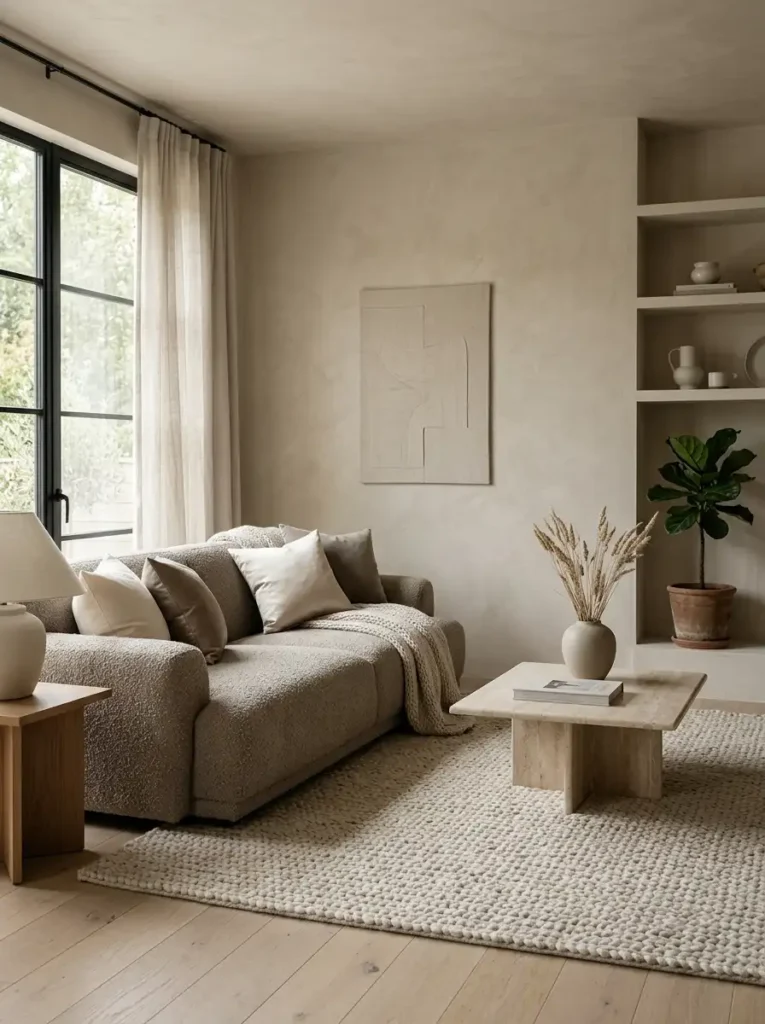
Stark, hospital-white is out. Today’s luxury minimalism is all about “warm minimalism.” By sticking to a monochromatic color palette, you create a seamless, uninterrupted visual flow that feels incredibly expensive. However, to prevent a single-color room from feeling flat, you must rely on a variety of deep, engaging textures.
How to Implement It: Choose a foundational color like warm greige, soft taupe, or creamy off-white. Then, layer different shades of that color through various textiles. Pair a matte plaster wall with a soft boucle sofa, smooth silk pillows, and a chunky wool rug. The variation in texture will catch the light differently, creating depth within a singular color scheme.
4. Use Sculptural Lighting as Functional Art
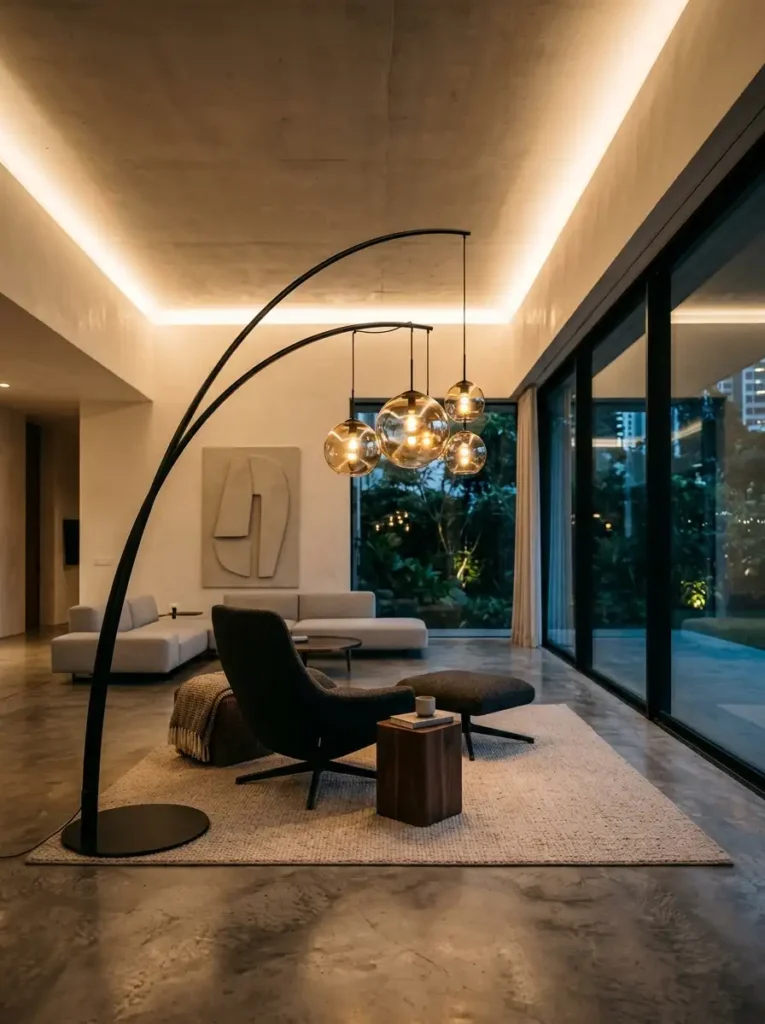
In a minimalist living space, lighting does much more than illuminate the room—it acts as the primary jewelry of the space. Because you are omitting excessive artwork and knick-knacks, a stunning, sculptural lighting fixture can become the room’s focal point, offering both function and high-end design.
How to Implement It: Invest in an oversized, architectural pendant light or a sweeping floor lamp (such as the iconic Flos Arco lamp). Look for fixtures made from matte black metal, aged brass, or hand-blown glass. Furthermore, incorporate hidden LED strips in ceiling coves or behind media consoles to provide a soft, ambient glow that mimics the lighting of a luxury hotel lounge.
5. Install Seamless, Invisible Storage Solutions
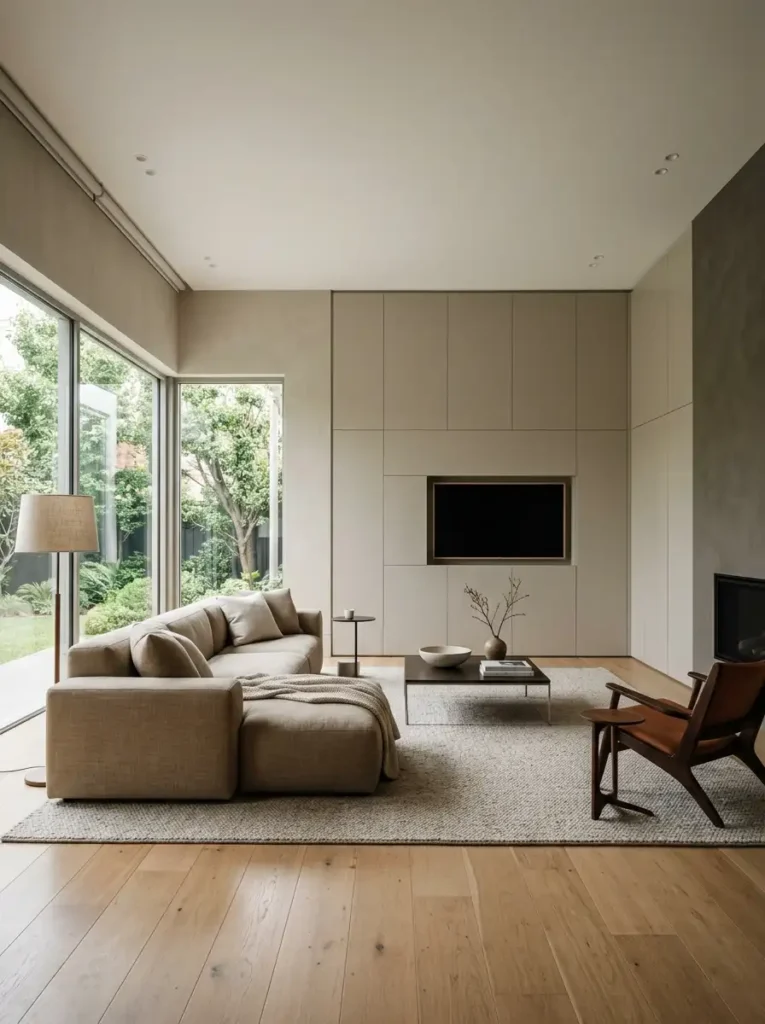
The absolute enemy of minimalism is visual clutter. Remote controls, magazines, charging cables, and children’s toys can instantly degrade the luxurious feel of a space. To maintain the illusion of effortless perfection, you need brilliant, invisible storage solutions.
How to Implement It: Install floor-to-ceiling custom millwork and paint it the exact same color as your walls so it blends in entirely. Forego traditional handles and knobs in favor of push-to-open hardware or hidden recessed pulls. This creates a monolithic, paneled look that hides all your daily necessities while looking like a deliberate architectural feature.
6. Curate Singular, Large-Scale Statement Art
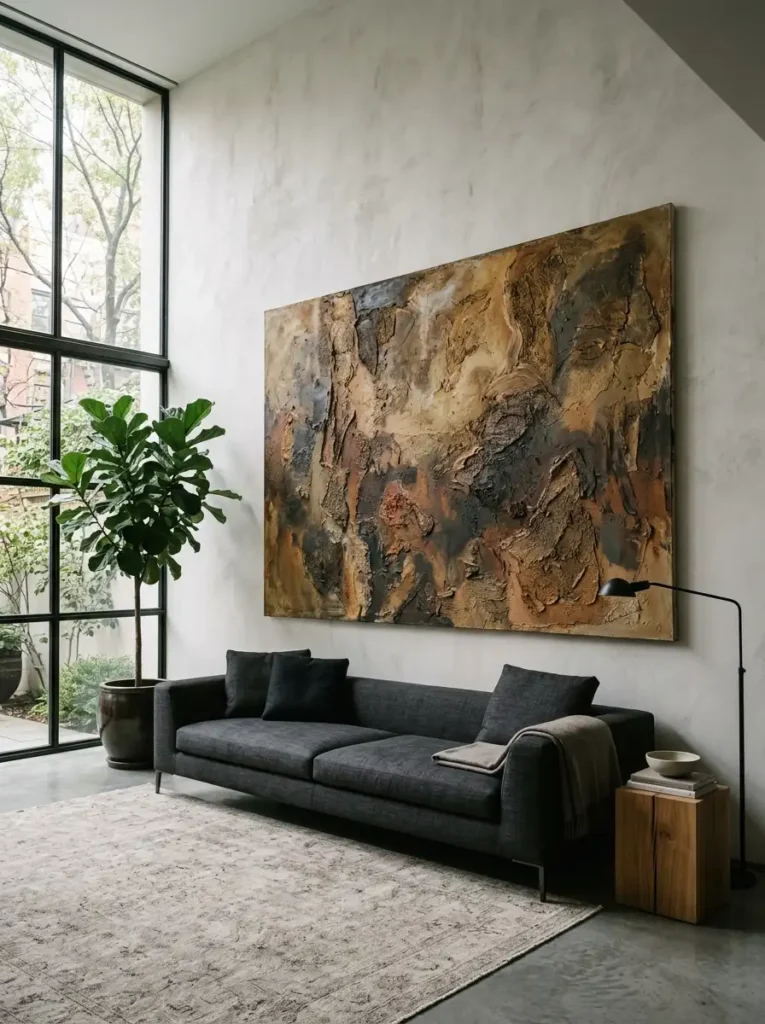
A common mistake in living room design is cluttering the walls with dozens of small frames in a busy gallery wall. While beautiful in eclectic homes, minimalist luxury demands a more curated, confident approach to art. A single, large-scale piece commands attention and projects confidence.
How to Implement It: Commission or purchase one massive, oversized piece of art for the primary wall. This could be a deeply textured monochromatic canvas, a large-scale modern photograph, or an abstract painting with subdued colors. Alternatively, leave the walls completely bare and place a stunning, standalone stone or bronze sculpture on a minimalist plinth in the corner of the room.
7. Maximize Natural Light with Floor-to-Ceiling Windows
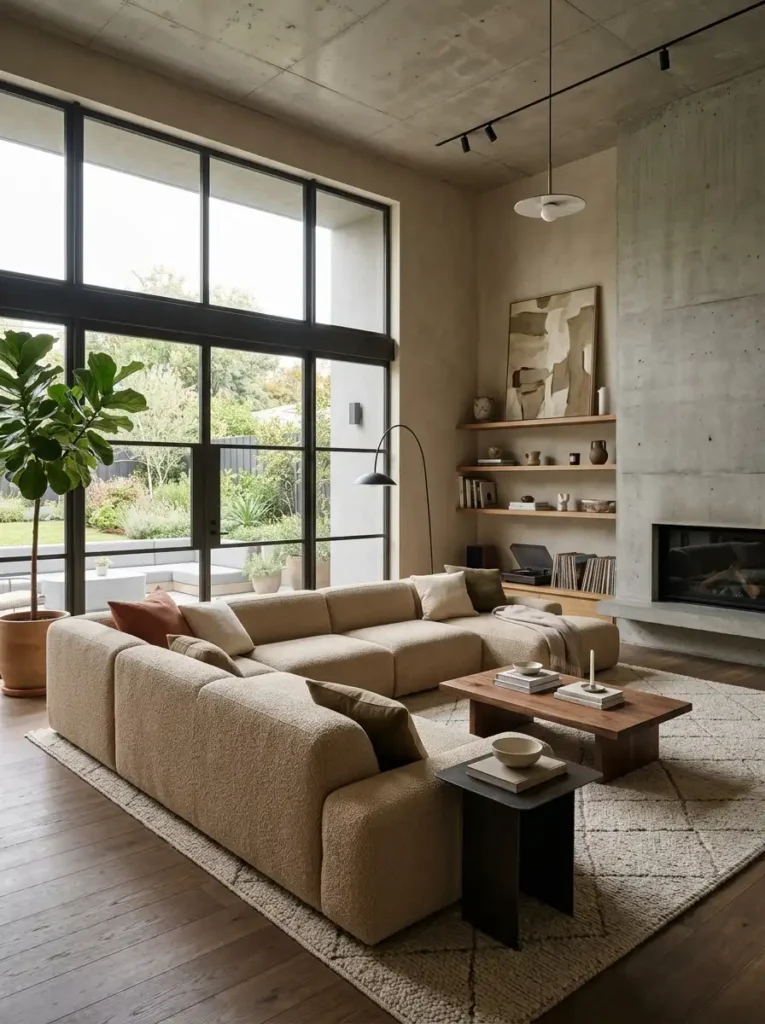
Natural light is arguably the most luxurious element you can have in a home. It brings energy into the space, highlights the textures of your furnishings, and connects the indoors with the outside world. Minimalist luxury relies heavily on vast expanses of glass and unhindered sunlight.
How to Implement It: If you are building or renovating, prioritize floor-to-ceiling windows with ultra-thin frames. If you are working with existing windows, enhance them by keeping window treatments incredibly simple. Opt for motorized, sheer linen drapes that run continuously from the very top of the ceiling down to the floor. This draws the eye upward, making the ceilings feel higher and the room more expansive.
8. Ground the Space with Low-Profile, Oversized Seating
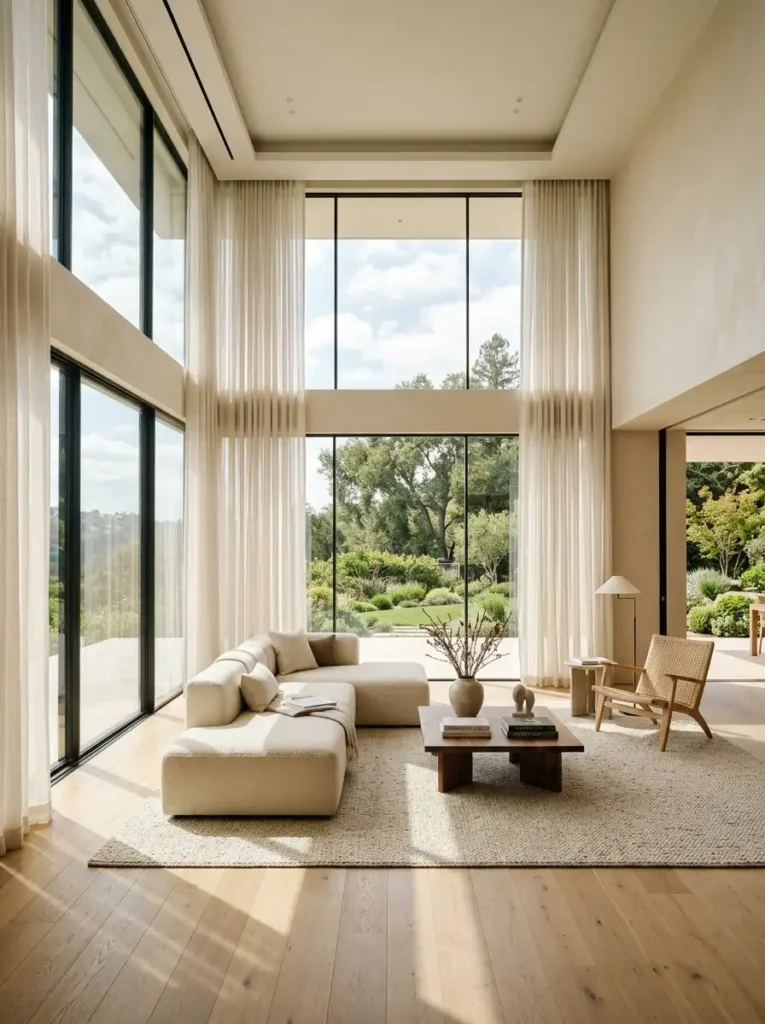
High-end European design—particularly Italian modernism—has perfected the art of the low-profile sofa. Furniture that sits lower to the ground makes the ceilings feel taller and gives the room a relaxed, lounge-like, and highly sophisticated vibe.
How to Implement It: Skip the stiff, formal seating and instead opt for a deep, oversized, modular sofa. Look for designs that have hidden legs (so the sofa appears to float or sit directly on the floor) and wide, expansive cushions. Pieces reminiscent of the Ligne Roset Togo or Minotti modular sofas invite deep relaxation while maintaining a fiercely contemporary, minimalist silhouette.
9. Focus on Bespoke Architectural Details
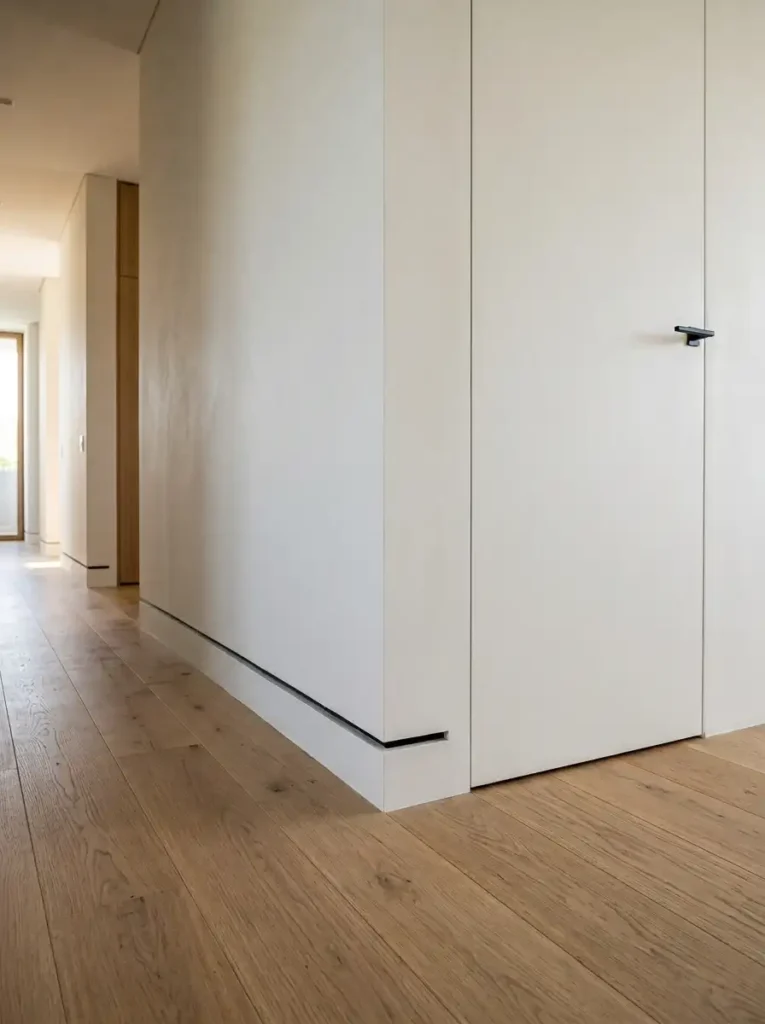
In luxury minimalism, the beauty is often in what you don’t see. When you strip away heavy crown molding and ornate trim, the underlying architecture must be flawless. High-end minimalist spaces rely on subtle, bespoke architectural details that are incredibly difficult (and expensive) to execute perfectly.
How to Implement It: Look into “shadow gaps” or reveal baseboards. Instead of a wooden baseboard sitting on top of the wall, the drywall ends half an inch above the floor, creating a shadow line that makes the walls look like they are floating. Consider flush, frameless doors that blend perfectly into the walls, and replace standard air vents with seamless, plastered-in linear diffusers.
10. Integrate Invisible Smart Home Technology
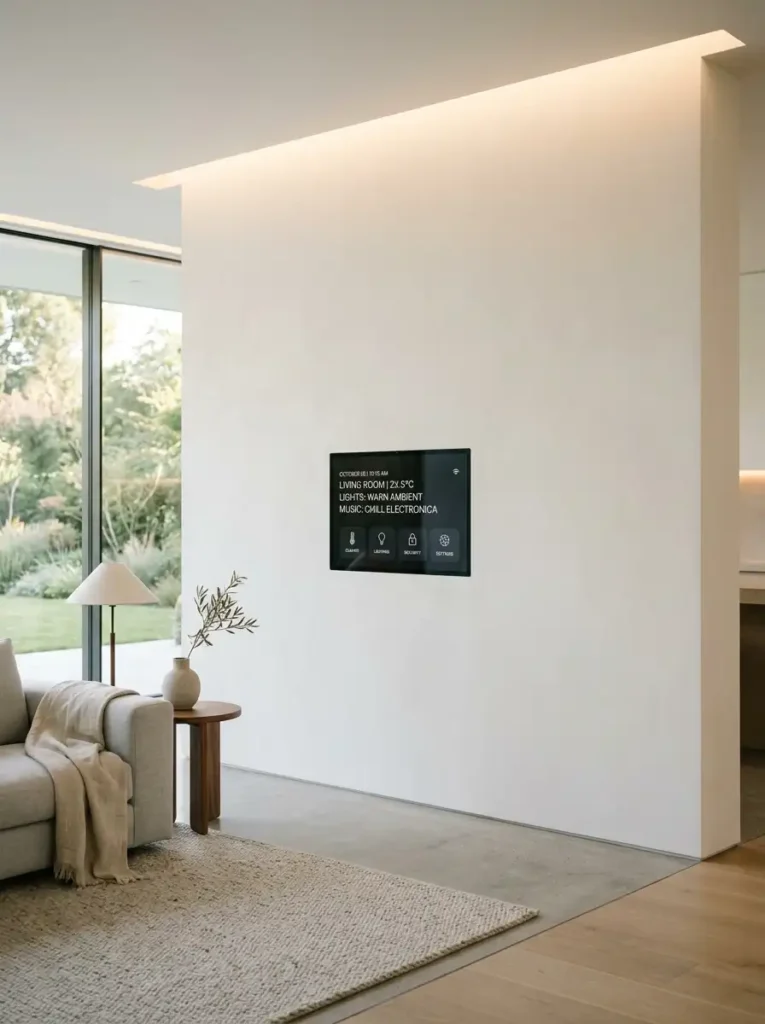
True luxury is the ultimate convenience of living effortlessly. However, visible wires, bulky speakers, and walls cluttered with plastic light switches ruin the minimalist aesthetic. The solution is invisible, deeply integrated smart home technology that works like magic in the background.
How to Implement It: Install speakers that are literally plastered into the drywall and painted over, rendering them completely invisible while providing audiophile-quality sound. Centralize your home’s controls on a single, sleek wall-mounted tablet rather than a dozen switches. Use automated smart blinds and climate control that adjust themselves based on the time of day, ensuring your space is always at the perfect temperature and lighting level.
11. Bring in a Singular, Majestic Piece of Greenery
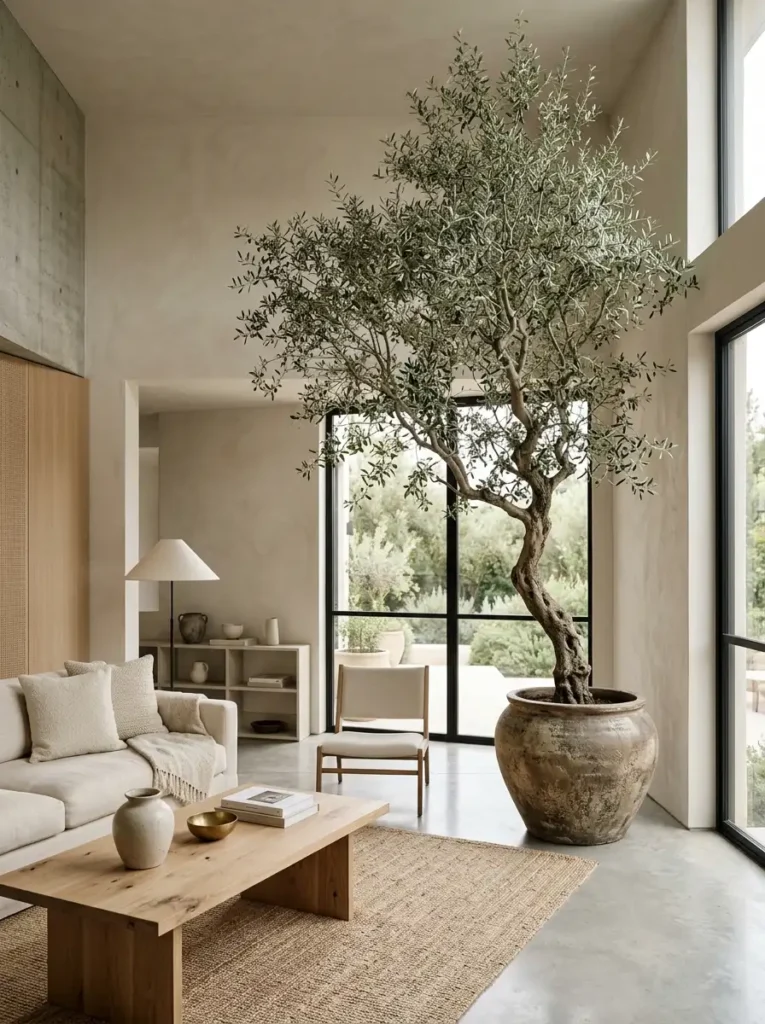
Houseplants bring life and vitality to a space, but an overabundance of small, mismatched pots can quickly make a room feel chaotic. To achieve a high-end minimalist look, you must approach indoor plants with the same curation you apply to your furniture and art.
How to Implement It: Instead of a dozen small plants, invest in one large, majestic, architectural tree. A mature indoor Olive tree, a towering Ficus Audrey, or a carefully pruned large-scale Bonsai acts as a living sculpture. Place it in a high-quality, handcrafted ceramic or stone planter. This single touch of organic life will soften the clean lines of the room without adding clutter.
12. Engage the Senses with Tactile Soft Furnishings
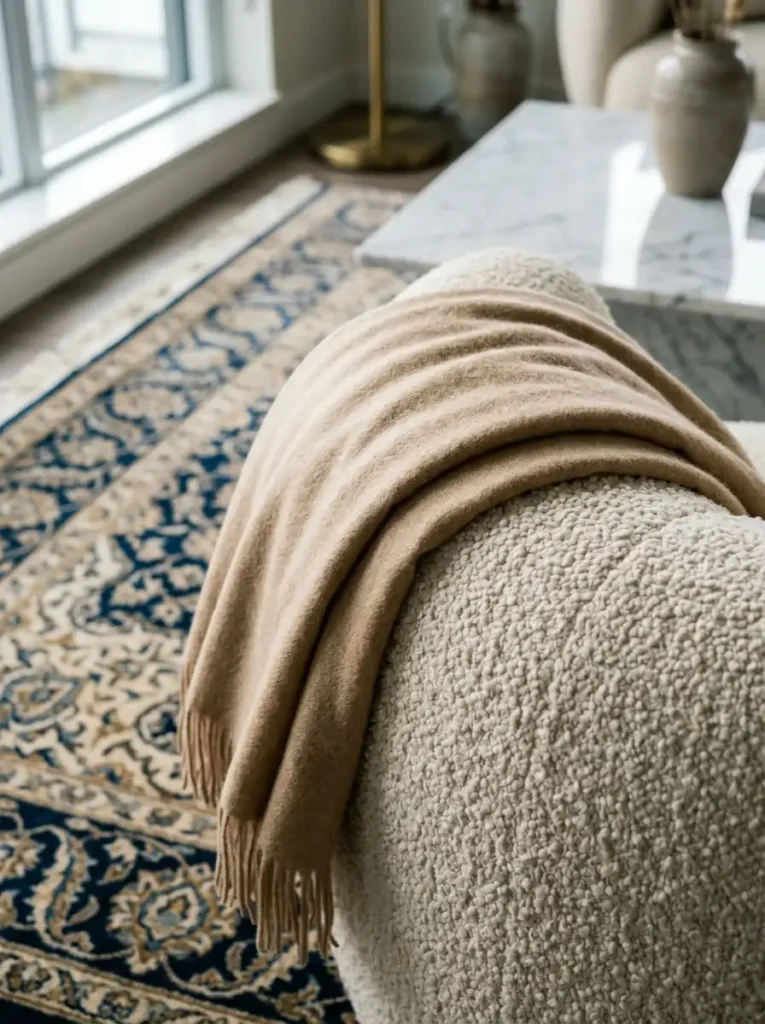
Because there is less visual stimulation in a minimalist room, the tactile experience of the space becomes incredibly important. Luxury is something you should be able to feel with your eyes closed. The way a fabric feels against your skin or the way a rug feels under bare feet can elevate a room from basic to bespoke.
How to Implement It: Invest in a hand-knotted, pure silk or high-quality wool rug that offers a plush, luxurious feeling underfoot. Drape a pure cashmere or alpaca wool throw blanket over the arm of your sofa. Ensure your throw pillows are stuffed with high-quality down inserts so they look full and feel incredibly soft. The juxtaposition of a soft cashmere throw against a cold marble coffee table is the epitome of sensory luxury.
13. Create a Seamless Indoor-Outdoor Flow
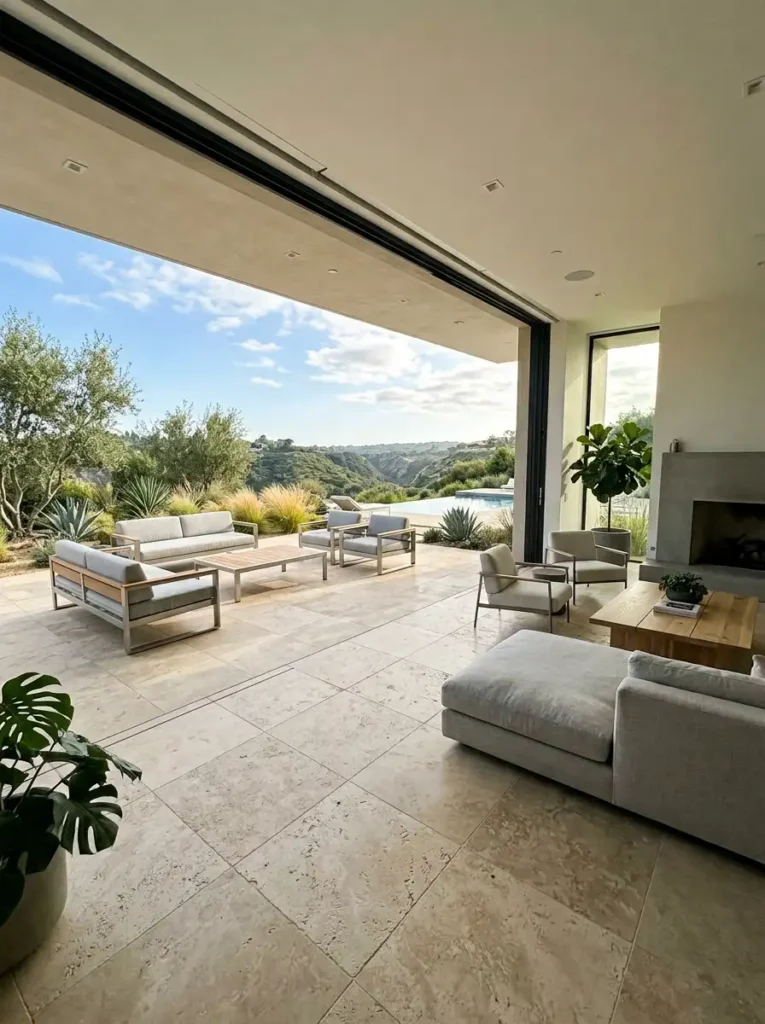
Luxury living spaces rarely feel confined by their four walls. Expanding the visual footprint of your living room to the outdoors is a hallmark of high-end design. By creating a seamless transition between your indoor living space and an outdoor terrace or patio, you make the room feel infinitely larger.
How to Implement It: If possible, use pocketing glass doors that completely disappear into the walls, removing the barrier between inside and out. To make the transition truly seamless, run the exact same flooring (such as a large-format limestone tile or continuous oak planks) from the living room directly out onto the patio. Keep the outdoor furniture in the same minimalist style and color palette as the interior.
14. Curate Intentional Coffee Table Vignettes
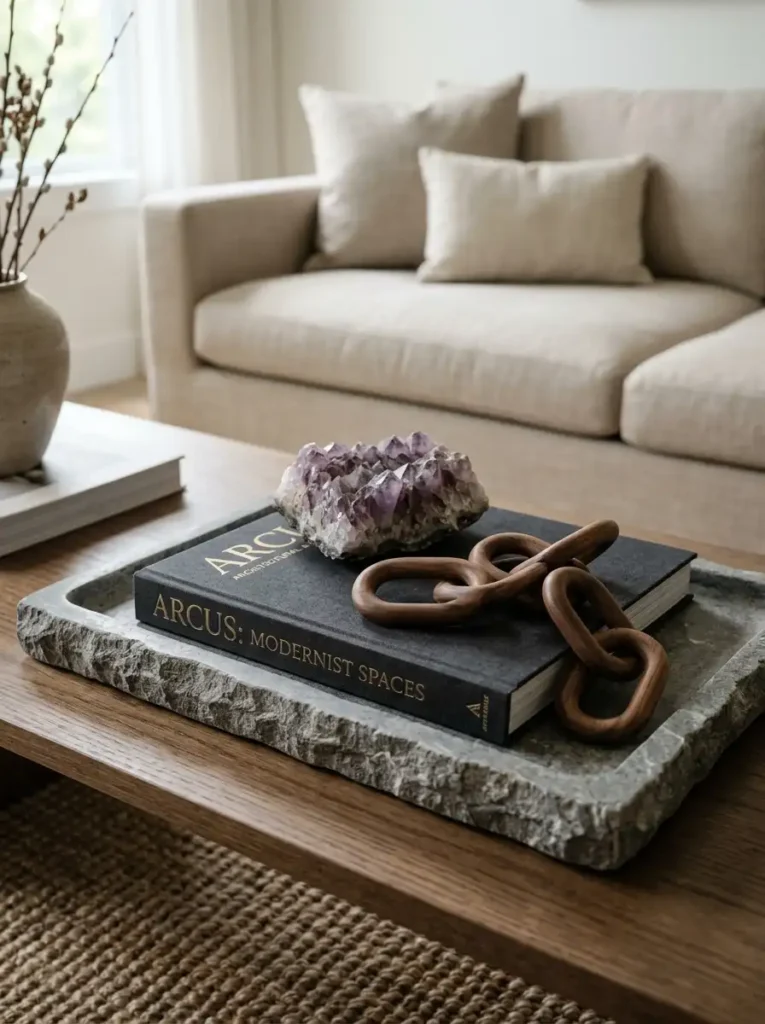
In a minimalist home, horizontal surfaces like coffee tables and consoles are often left mostly bare. However, leaving them completely empty can make a room feel unlived-in or stark. The secret is the “curated vignette”—a small, highly intentional grouping of objects that adds personality.
How to Implement It: Adopt the “rule of three” but elevate it. Start with a monolithic base, such as a heavy, carved stone tray. Add a large, beautifully bound architectural or fashion design book. Top it off with one unique, sculptural object—like an antique bronze bowl, a piece of raw crystal, or a hand-carved wooden link chain. This ensures the table looks styled and sophisticated without feeling cluttered.
Conclusion: The Philosophy of Less, But Better
Creating a minimalist luxury living space requires a fundamental shift in how you view your home. It requires immense restraint, a critical eye, and an uncompromising dedication to quality. By paring down your possessions, you are not stripping your home of its personality; rather, you are making room for the architecture, the light, and your most treasured pieces to shine.
Minimalist luxury is about finding peace in an overwhelming world. By mastering negative space, prioritizing tactile natural materials, and hiding the mechanics of daily life through invisible tech and seamless storage, you can create a living room that feels like an exclusive retreat.
Remember, in the realm of high-end design, true luxury doesn’t shout for attention. It whispers. Embrace the quiet elegance of “less, but better,” and watch as your living space transforms into a breathtaking, calming sanctuary.