When designing a boy’s bedroom, the default approach for decades has been remarkably predictable: paint the walls a standard shade of blue, green, or grey, and then rely on posters, bedding, and toys to inject personality into the space. The paint was simply treated as a passive, boring backdrop.
But in the realm of modern, high-end interior design, paint is no longer just a background color. It is an architectural tool. Paint can alter the perceived geometry of a room, create optical illusions, define spatial zones, and inject a profound sense of kinetic energy.
For a modern boy’s room—whether he is a toddler, a tween, or a teenager—you want a space that feels dynamic, sophisticated, and capable of growing with him. Moving away from juvenile themes requires us to think about paint in terms of shape, texture, finish, and boundary-pushing placement.
If you are ready to abandon the standard four-wall paint job, here are 13 entirely unique, architectural paint ideas that will transform a boy’s bedroom into a masterclass in modern design.
1. The Asymmetrical Corner Wrap (The “Zone” Effect)
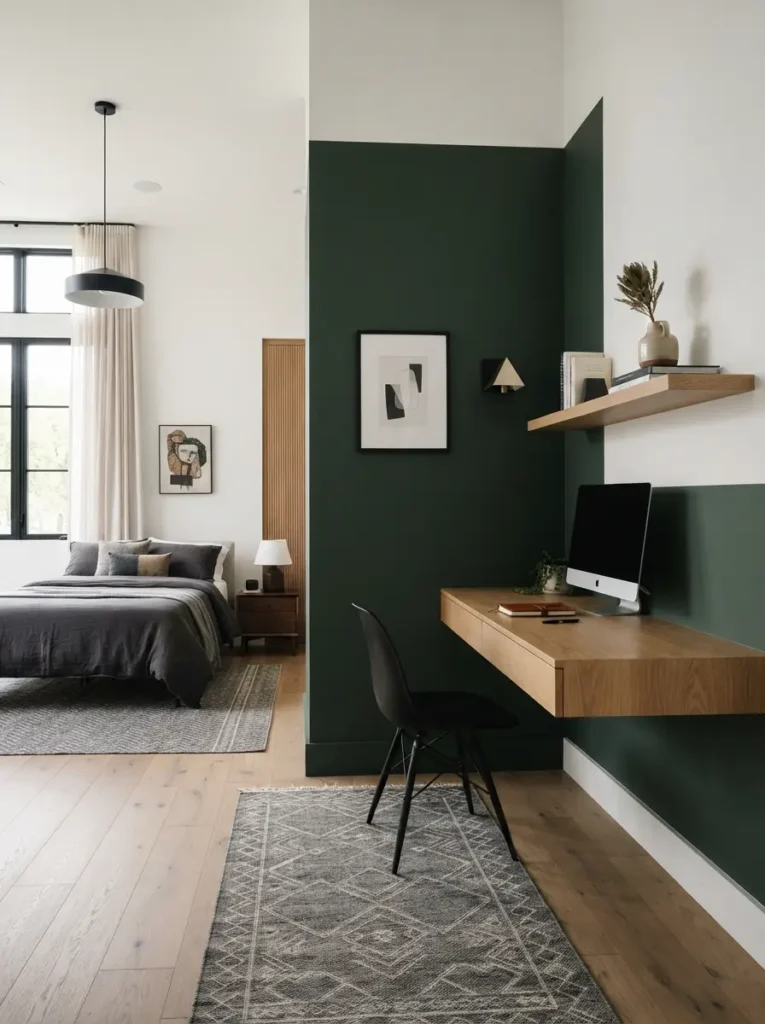
Instead of the outdated “feature wall” where one entire flat wall is painted a different color, the asymmetrical corner wrap ignores traditional room boundaries. To achieve this, you paint a solid, bold block of color (like deep charcoal or hunter green) that covers half of one wall, wraps directly through the 90-degree corner, and continues halfway down the adjacent wall.
The Visual Effect: This technique completely breaks the expected geometry of the room. It visually creates a “room within a room.” It is the perfect paint application to define a specific functional zone, such as anchoring a study desk, creating a dedicated reading nook, or wrapping around the head of the bed to create a cocooning, sheltered feeling.
2. The Fifth Wall “Color Drop”
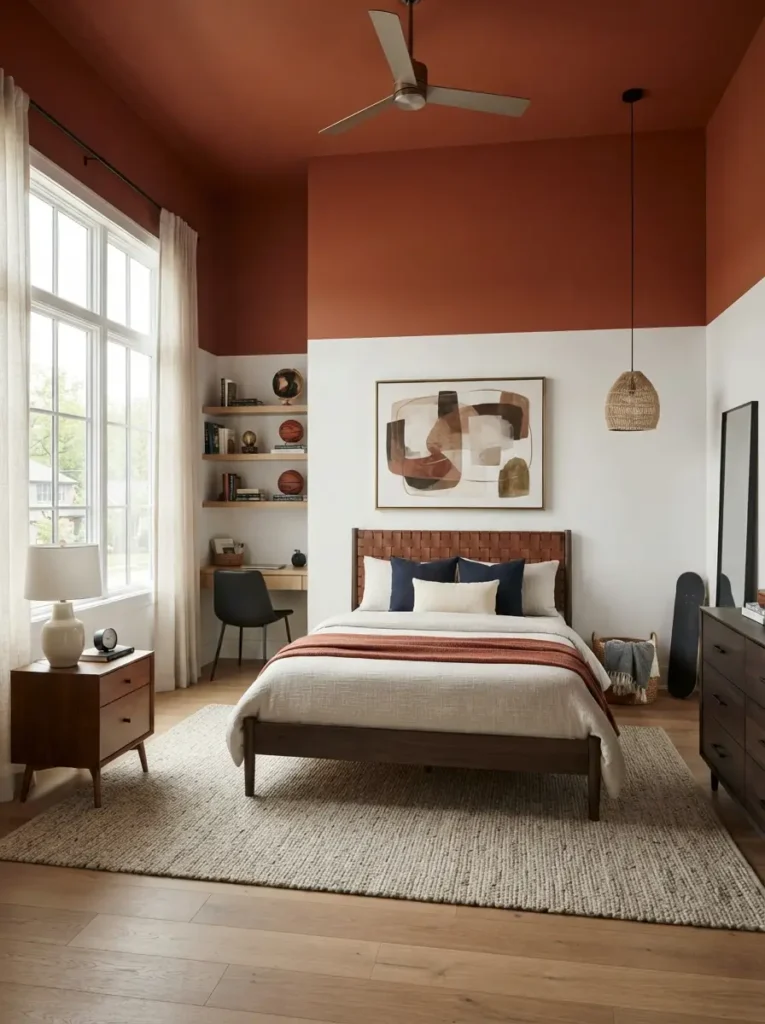
Painting the ceiling (the “fifth wall”) is not a new concept, but the “color drop” takes it a step further. In this application, you paint the ceiling a deep, dramatic hue—like midnight navy, rich terracotta, or forest green—but instead of stopping at the ceiling line, you continue painting that exact same color 12 to 18 inches down all four walls. The lower portion of the walls remains a crisp white or soft neutral.
The Visual Effect: By pulling the ceiling color down onto the walls, you visually lower the ceiling height, which makes a large or echoey room feel instantly cozy, grounded, and enveloping like a canopy. It also creates a brilliant, sharp architectural horizon line that wraps the entire perimeter of the room.
3. Tone-on-Tone Matte vs. Gloss Camouflage
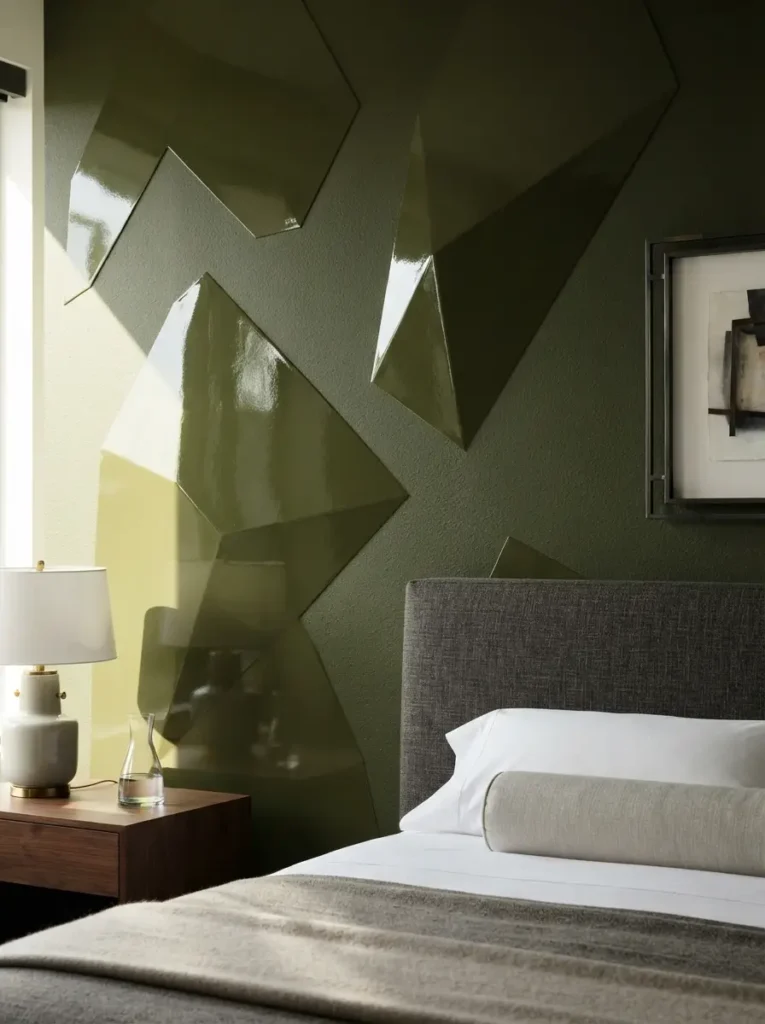
Camouflage is a classic motif for a boy’s room, but traditional multi-colored camo can look incredibly busy, chaotic, and juvenile. The modern luxury alternative is “tonal camouflage.” You select one single, sophisticated paint color—for example, a rich olive green or a deep slate grey. You paint the entire wall using a flat matte finish. Then, using the exact same paint color but in a high-gloss enamel finish, you paint massive, abstract camouflage shapes (or geometric triangles) over the matte base.
The Visual Effect: Because the color is identical, the pattern is invisible head-on in low light. But as the sun moves across the room, or as he walks past the wall, the high-gloss shapes catch the light and reveal the hidden pattern. It is a highly tactile, sleek, and high-end secret detail.
4. The Continuous “Racing Stripe” Horizon
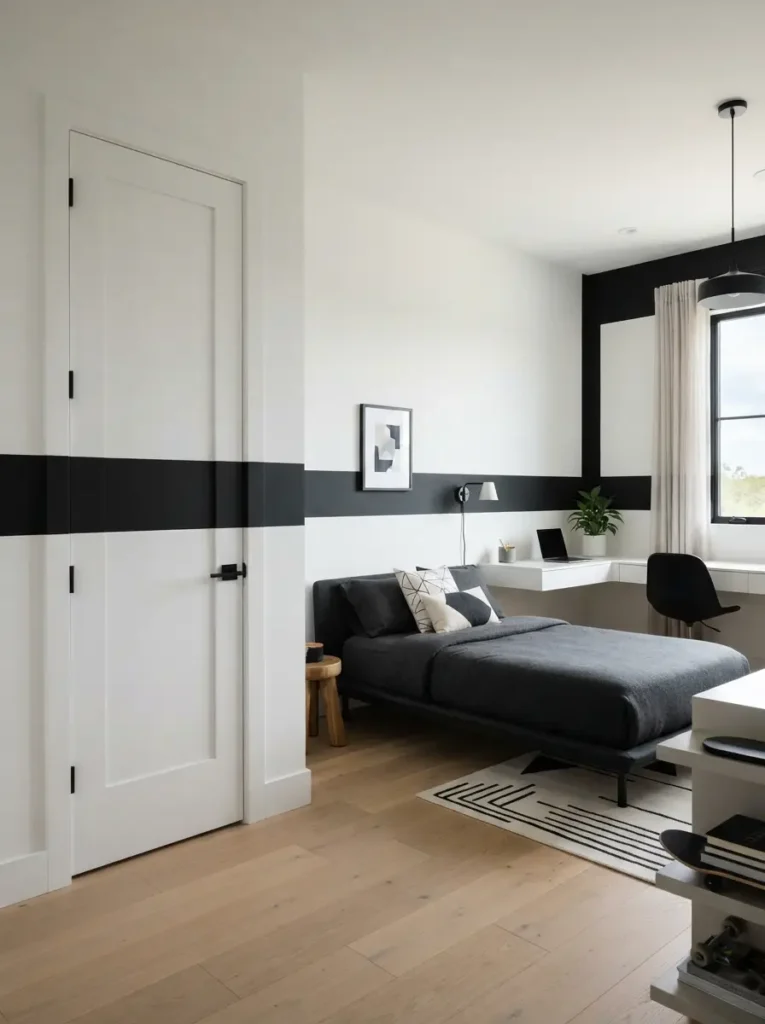
This is a lesson in kinetic energy. Instead of painting the whole wall, you paint a single, thick, high-contrast horizontal stripe (about 10 to 12 inches wide) that travels continuously around the entire perimeter of the room. The architectural twist? The stripe does not stop for anything. It is painted precisely over the door frames, directly across the face of the wooden doors, over the window trims, and across the closet panels.
The Visual Effect: By refusing to break the line for architectural obstacles, the paint creates a powerful optical illusion of continuous motion. It stretches the room, making a small, boxy bedroom feel wider and infinitely more dynamic.
5. Brutalist Texture with Roman Clay or Limewash
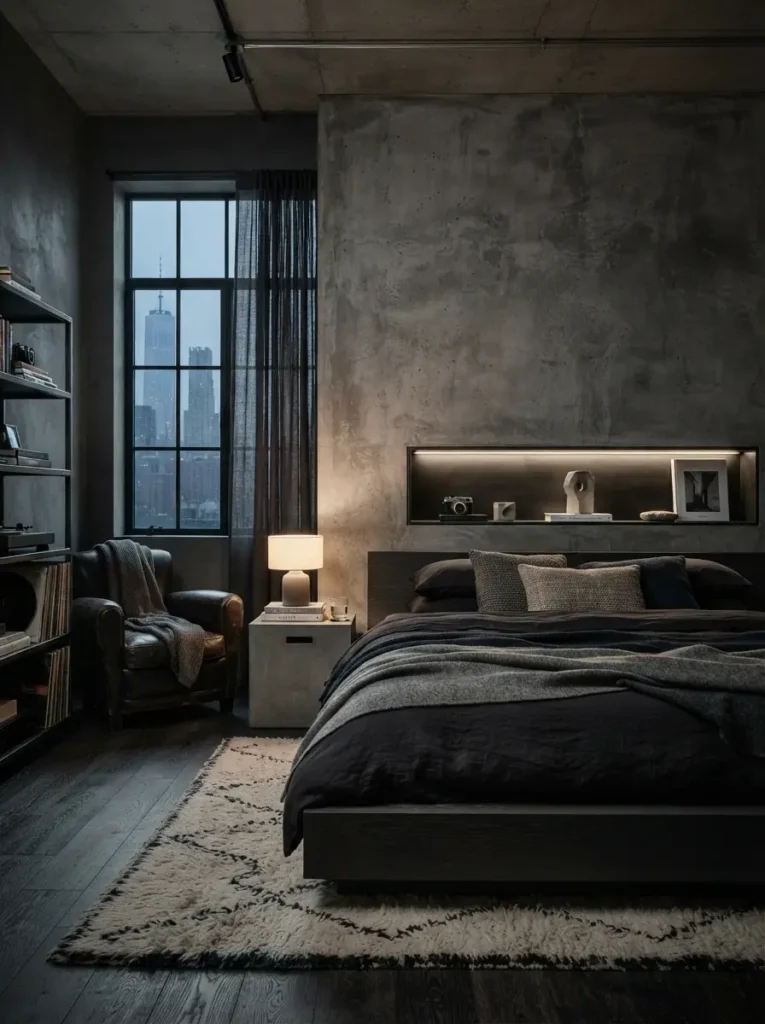
A major trend in modern luxury interiors is moving away from flat, plasticky latex paints and embracing natural, mineral-based paints. Applying limewash or Roman clay in shades of concrete, deep slate, or storm-cloud grey gives the walls a mottled, cloudy, suede-like texture.
The Visual Effect: This technique brings an urban, “brutalist” architectural vibe to the bedroom. It mimics the look of raw concrete or aged plaster. It is incredibly sophisticated, slightly moody, and provides a highly tactile, industrial backdrop that feels distinctly masculine and ages beautifully as a boy transitions into his teenage years.
6. The “Hidden” Neon Edge
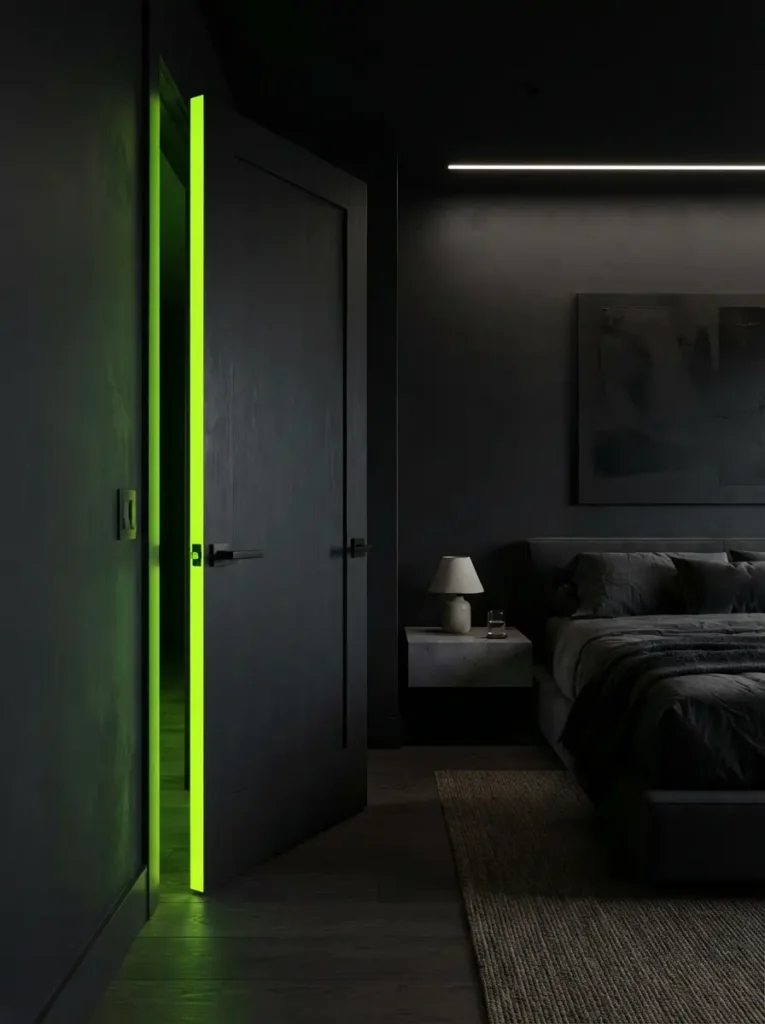
This is a micro-paint application that packs a massive punch. The walls, trim, and doors of the bedroom are painted in a very moody, sophisticated, and serious palette—perhaps entirely drenched in dark charcoal or matte black. However, you paint the inside interior edge of the bedroom door (the thin strip that contains the latch) in a shocking, hyper-vibrant neon color, like electric lime green, cyber yellow, or hazard orange.
The Visual Effect: When the door is closed, the room looks completely serious and monolithic. But the moment the door is cracked open, a razor-sharp sliver of electric, glowing color is revealed. It feels like a hidden technological Easter egg or a subtle nod to cyberpunk aesthetics.
7. Color-Drenched Millwork (The Reverse Paint Job)
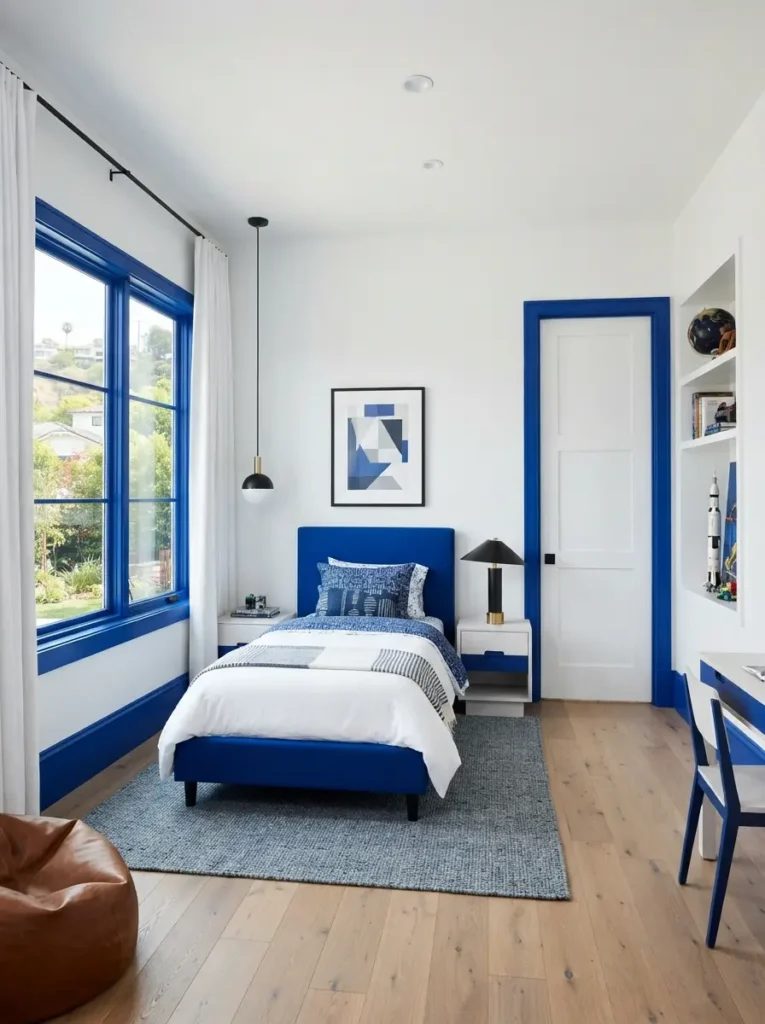
Normally, we paint walls a color and leave the baseboards, window casings, door frames, and crown molding white. The “reverse paint job” flips this standard on its head. The walls are kept a stark, gallery white, while all the structural millwork and trims are painted a bold, saturated color—like a deep rust red, cobalt blue, or emerald green.
The Visual Effect: This treatment turns the architecture of the room into an outline. It feels like stepping into a 3D architectural blueprint or a stark graphic novel. It highlights the structural bones of the room in a way that feels incredibly crisp, modern, and unexpected.
8. The Blueprint Grid Effect
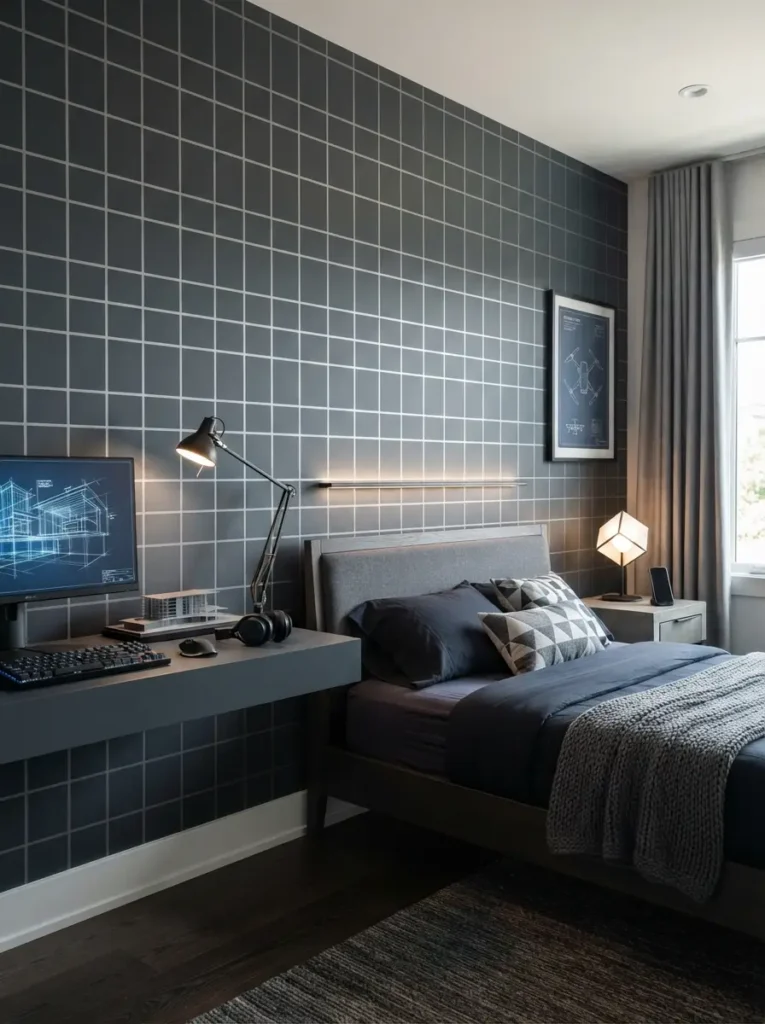
Taking inspiration from graph paper and architectural drafting, this technique involves painting a wall in a dark, matte base color (like navy or slate). Then, using a specialized thin paint pen or a highly precise taping method, a perfectly measured, tight grid of thin white or silver lines is painted over the dark background.
The Visual Effect: The result is an ultra-modern, highly technical “blueprint” wall. It satisfies a love for math, architecture, and structural design without resorting to juvenile wall decals. It provides a precise, geometric background that looks like the inside of a high-tech engineering lab.
9. Abstract Geometric Supergraphics
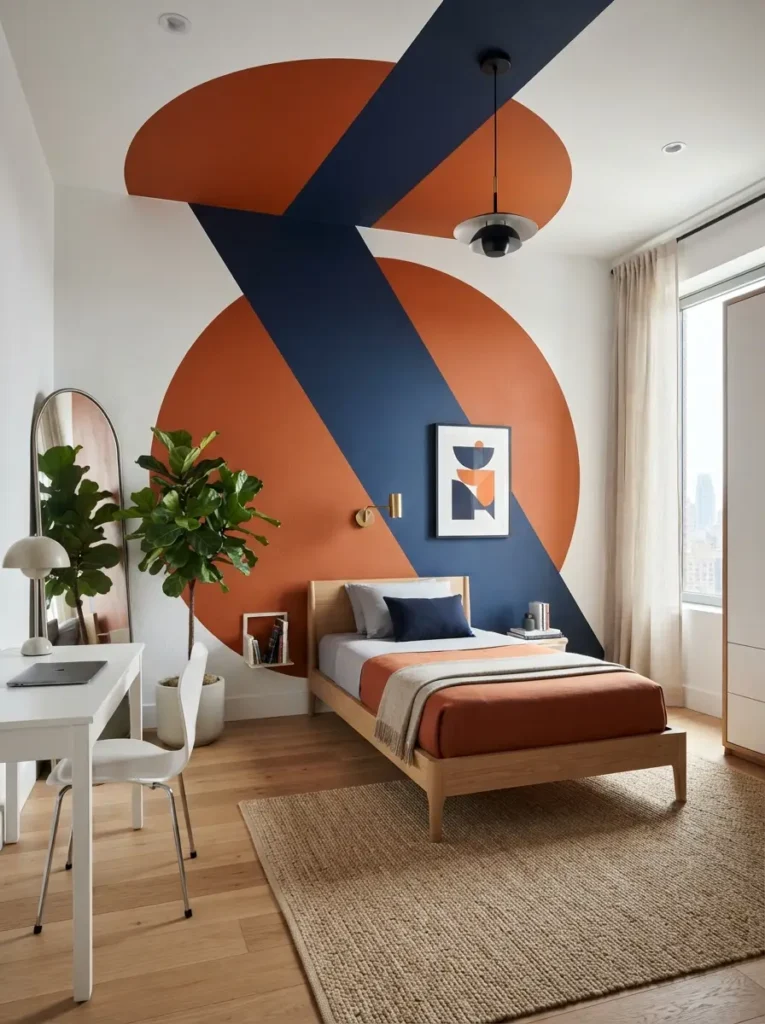
Forget highly detailed, hand-painted murals of jungles, race cars, or sports stadiums—those age out within a few years. Instead, utilize “supergraphics.” This involves painting massive, oversized, abstract geometric shapes (giant semi-circles, intersecting diagonals, or colossal color blocks) that span from floor to ceiling, often wrapping onto the ceiling or spilling onto the floor.
The Visual Effect: Supergraphics scale up the visual weight of the room. By using massive shapes in bold colors (like a giant burnt-orange circle intersecting with a navy-blue triangle), you create a space that feels like a modern art museum. It is bold, energetic, and completely abstract, meaning it will never feel “too babyish” as he grows.
10. The Floor-to-Ceiling Vertical Ombré Fade
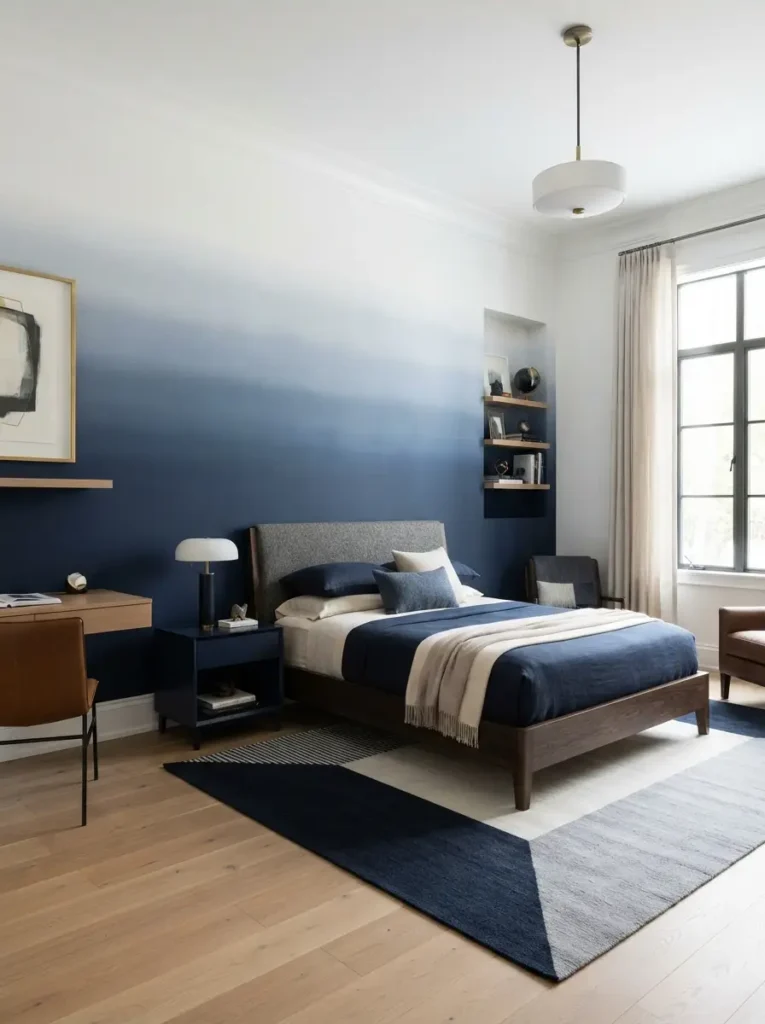
Ombré isn’t just for fashion; it is a stunning architectural paint technique when executed correctly. For a boy’s room, choose a deep, grounding color—like a profound midnight blue or a dark forest green. Start with the darkest, most saturated version of the color at the baseboards. As you paint upward toward the ceiling, use a sprayer or blending technique to gradually fade the color into a soft, hazy grey, ending in pure white at the ceiling line.
The Visual Effect: This technique mimics the atmosphere of the natural world, like the deep ocean fading into light water, or a dark forest floor looking up into a foggy sky. Architecturally, it makes the ceilings feel infinitely higher because the hard boundary line between the wall and the ceiling is completely blurred into a soft gradient.
11. The Painted “Headboard” Arch
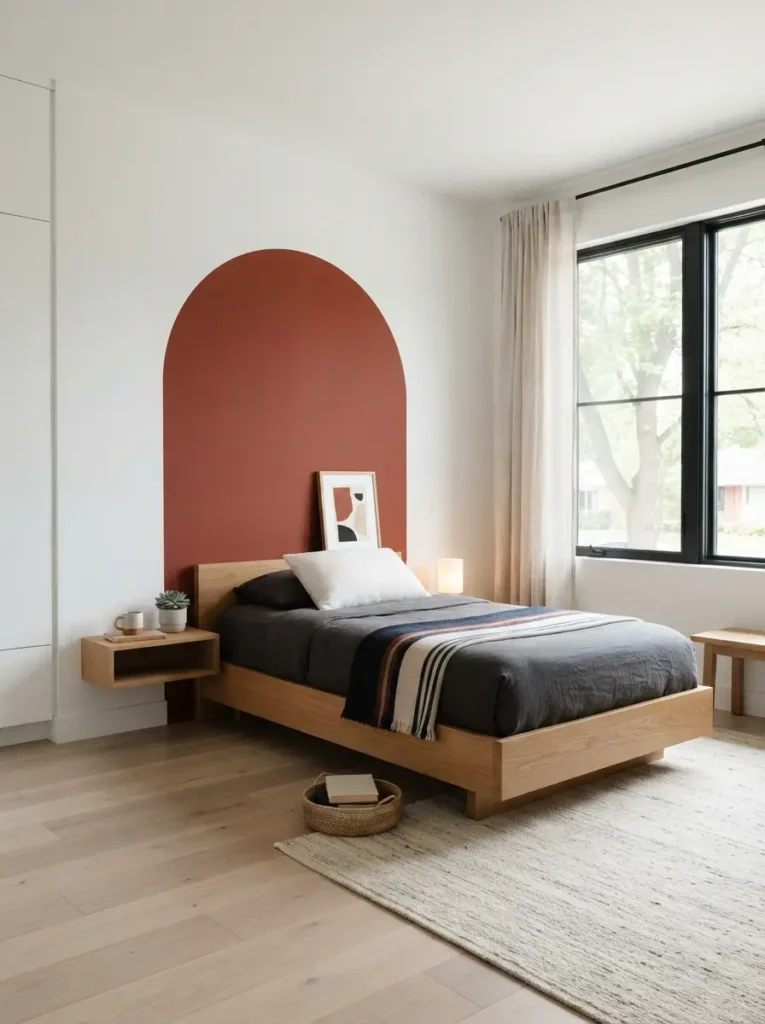
Furniture can be expensive, and bulky headboards can take up precious square footage in a smaller boy’s bedroom. Instead, use paint to create the illusion of furniture. By painting a perfect, solid-colored arch or a stepped geometric shape directly onto the wall right behind the bed, you create a visual anchor for the mattress.
The Visual Effect: This trompe l’oeil (trick of the eye) technique grounds the bed without taking up an inch of physical space. It acts as a dedicated architectural halo that frames the bed. To make it even more modern, you can paint the arch slightly off-center to create intentional, edgy asymmetry.
12. Monochromatic Mountain Ridges (The Sharp Line Technique)
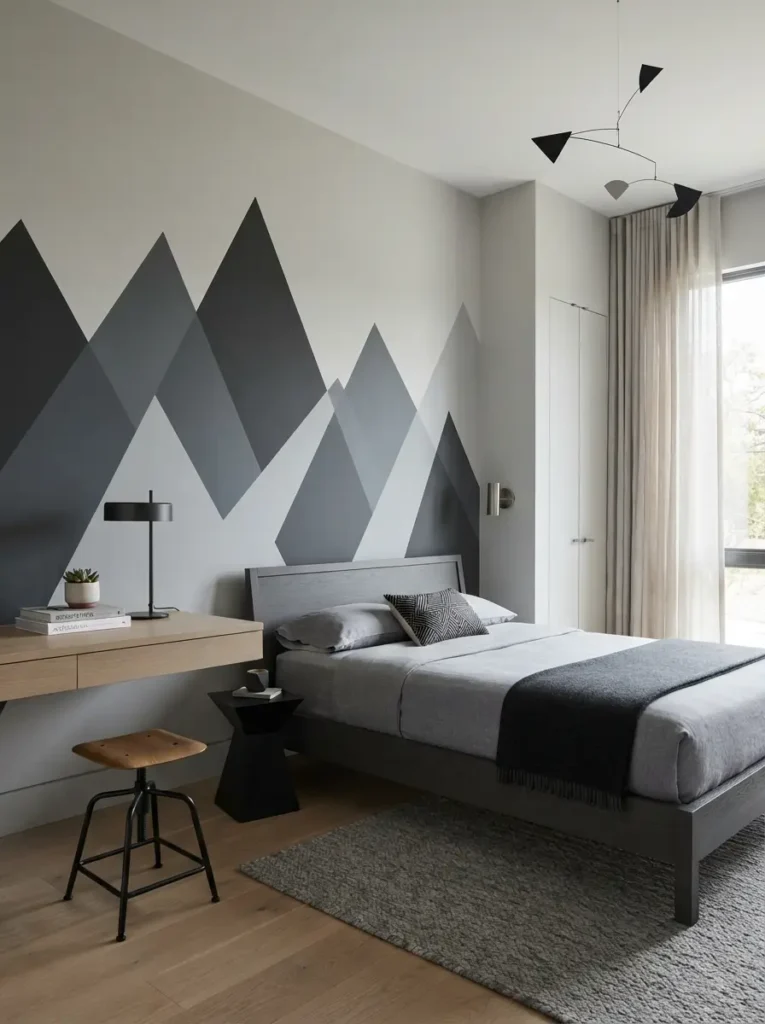
Mountain murals are popular, but they often lean toward a soft, cartoonish, nursery aesthetic. To make this concept work for an older boy, it must be reimagined through a strict, sharp, minimalist lens. Choose a monochromatic palette—three distinct shades of grey, ranging from charcoal to light ash. Using laser levels and painter’s tape, create intersecting, razor-sharp triangles that overlap across the wall. Do not add snow-caps, trees, or details. Keep it purely geometric.
The Visual Effect: This minimalist approach turns a nature motif into a piece of sharp, modern geometry. The rigid, intersecting lines feel technical and sophisticated. Because it is monochromatic, it acts as a subtle structural element rather than an overwhelming, colorful mural.
13. The Full “Color Drench” (The Blackout Box)
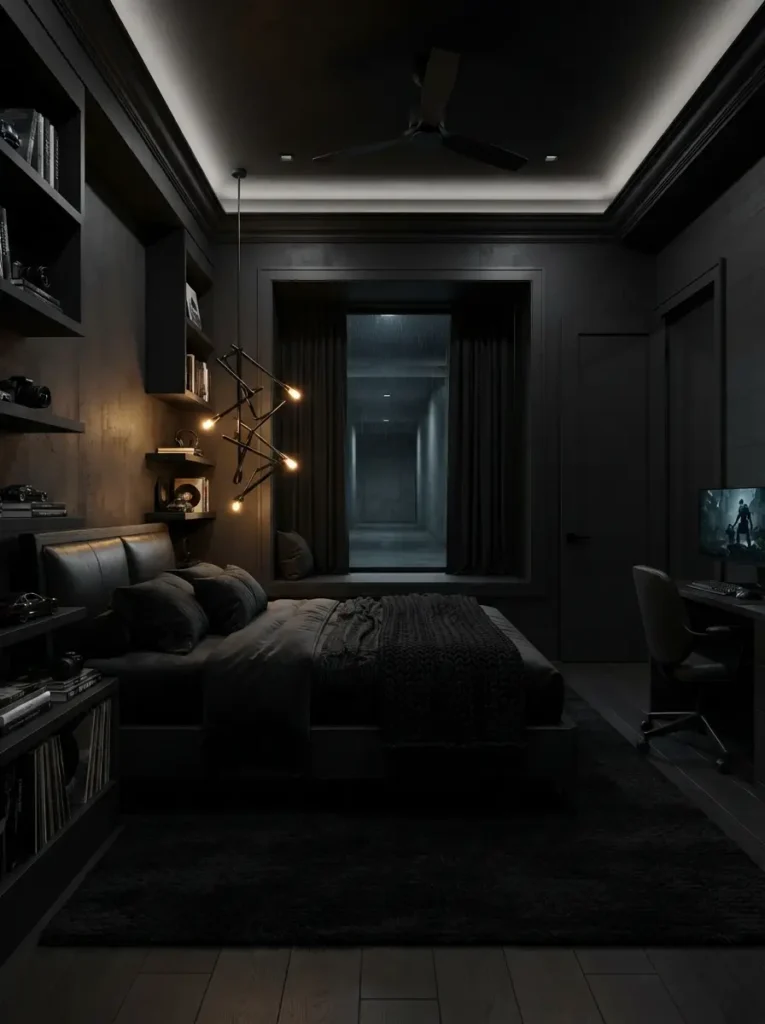
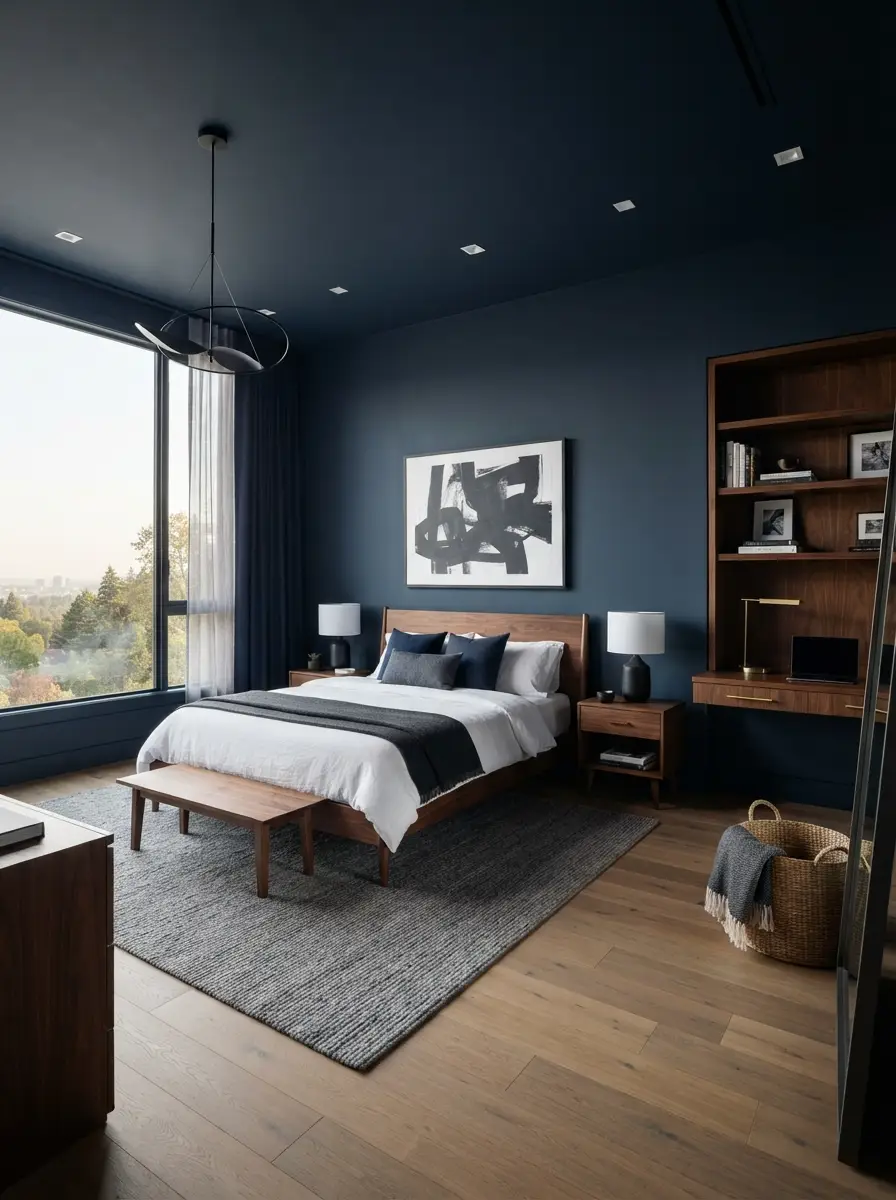
For decades, we have been terrified of painting small rooms dark colors, believing it will make them feel like caves. However, modern design embraces the cave. “Color drenching” is the act of painting everything in the room the exact same dark, moody color. You paint the walls, the baseboards, the doors, the window trims, the ceiling, and even the radiator covers in a deep, matte charcoal, deep plum, or pitch black.
The Visual Effect: When you paint every single surface the same dark color, the corners and boundaries of the room visually disappear. The room loses its rigid edges. Instead of feeling small, the room feels infinitely deep, incredibly cozy, and profoundly calming. It creates the ultimate “dark academia” or cinematic bunker vibe—a perfect, high-end sanctuary for a teenage boy.
Conclusion: Paint as the Ultimate Spatial Tool
Designing a modern boy’s bedroom requires a complete shift in how we view paint. It is time to stop thinking of paint simply as a color you roll onto drywall before you start the “real” decorating. Paint is, in fact, the most powerful and transformative architectural tool at your disposal.
By employing techniques like asymmetrical corner wraps, kinetic racing stripes, or the brutalist texture of limewash, you are manipulating the spatial reality of the room. You can make low ceilings feel infinitely high. You can widen narrow walls, create hidden corners of glowing energy, and build structure where none physically exists.
The true brilliance of these 13 architectural paint ideas is their inherent maturity. Unlike themed wallpapers or hyper-specific decor, these geometric, structural, and textural paint applications do not carry an expiration date. They do not belong exclusively to a toddler or a teenager. Instead, they offer a sophisticated, highly stylized environment that adapts, evolves, and matures right alongside him. By daring to push the boundaries of how and where paint is applied, you elevate his bedroom from a standard sleeping quarter into a masterfully designed, modern sanctuary.