Bedroom plants decor ideas are transforming the way we think about our most intimate personal spaces, evolving far beyond a simple potted fern in the corner of a room. Today, integrating nature into our sleeping sanctuaries is a cornerstone of modern interior design, driven by the biophilia hypothesis—the idea that humans possess an innate tendency to seek connections with nature and other forms of life. Bringing the outdoors inside does more than just elevate the aesthetic appeal of your room; it fundamentally alters the psychological and atmospheric quality of the space. Plants actively purify the air by absorbing toxins, release fresh oxygen to improve sleep quality, and introduce organic textures that soften the harsh lines of traditional furniture.
Whether you are working with a sprawling master suite bathed in natural sunlight or a cozy, low-light studio apartment, there is a botanical solution waiting to breathe new life into your room. Designing with plants requires a thoughtful approach to scale, color, lighting, and placement. It is about creating a living, breathing ecosystem that aligns with your interior style—be it bohemian, minimalist, mid-century modern, or industrial.
To help you cultivate the ultimate green sanctuary, here are 17 distinct, high-value concepts for integrating botanical life into your personal space. Each concept dives deep into the styling nuances, the psychological benefits, and the practical implementation required to make your vision thrive.
1. The Minimalist Floating Shelf Garden
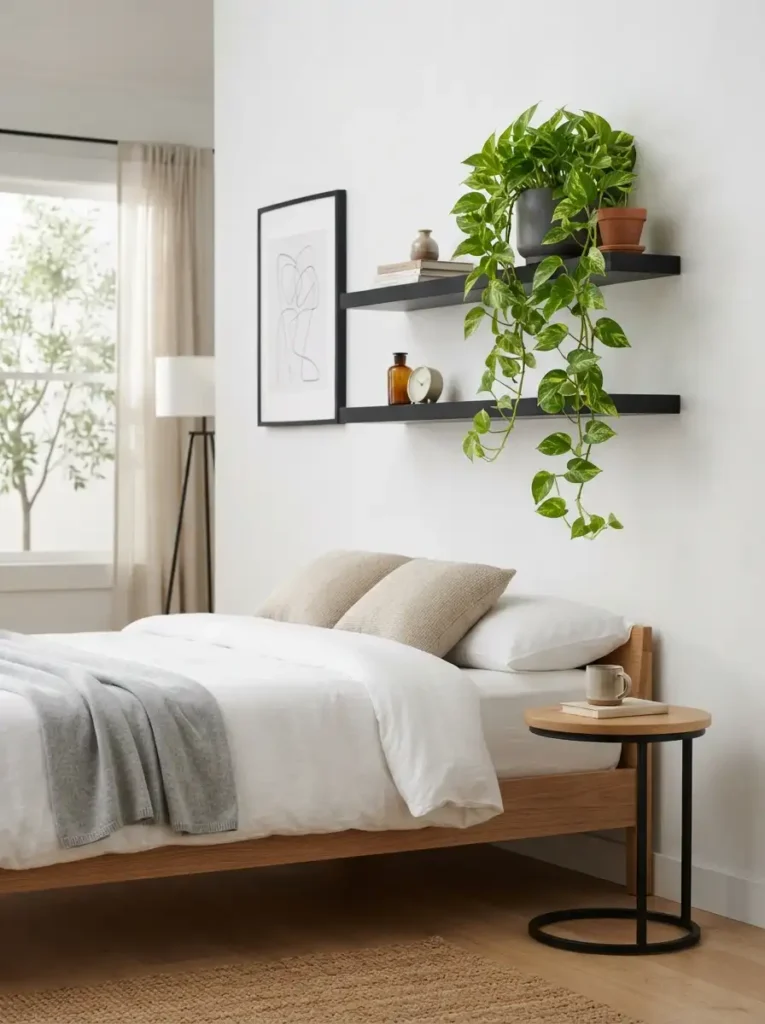
When dealing with limited floor space or a desire for a clean, uncluttered aesthetic, the minimalist floating shelf garden is a perfect solution. By installing sleek wooden or matte-metal floating shelves on a blank wall, you create a dedicated stage for your greenery.
Implementation: Stagger two or three shelves horizontally across a wall that receives indirect sunlight.
Styling Tips: Stick to trailing plants like the Golden Pothos or the Heartleaf Philodendron. Allow the vines to cascade off the edges of the shelves, creating a waterfall effect of greenery. Pair the plants with minimalist ceramics in monochromatic tones like stark white, charcoal, or terracotta to maintain a cohesive look.
Design Psychology: This design draws the eye upward, elongating the visual height of the room. It appeals to the minimalist mindset by keeping surfaces like dressers and nightstands clear of clutter, reducing visual noise, and promoting a calmer, more focused state of mind before sleep.
2. The Overhead Jungle Canopy
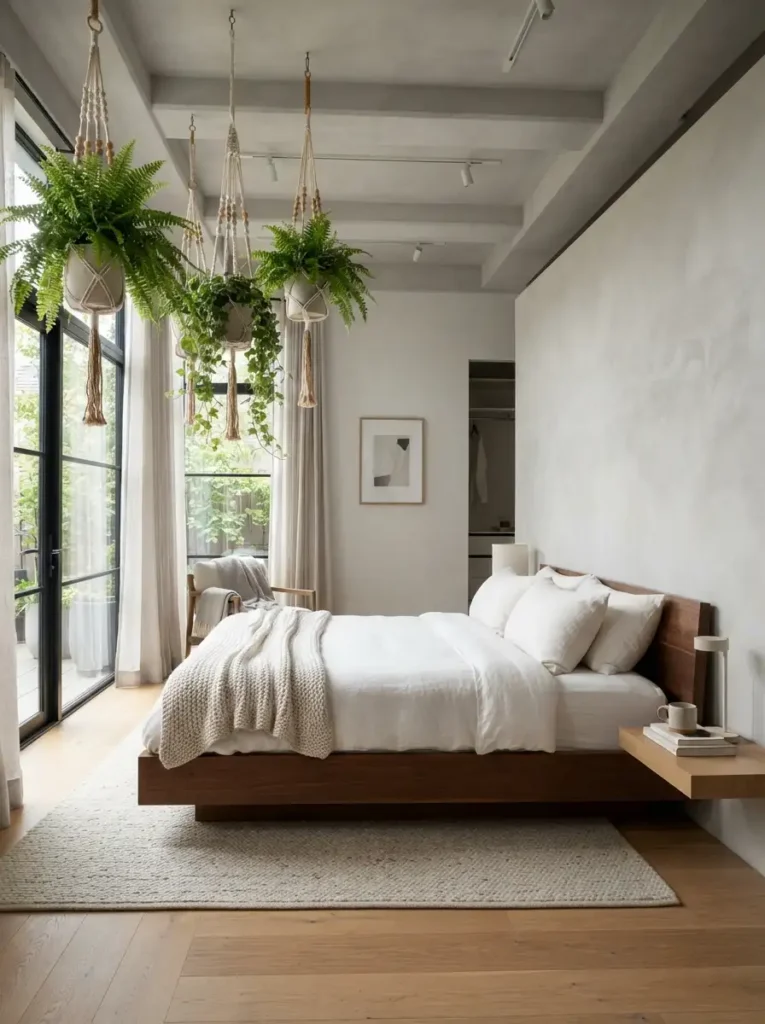
For those who want to feel completely immersed in nature, simulating a forest canopy above or near the bed provides an unparalleled sense of comfort. Hanging plants add dynamic verticality and transform the ceiling from a forgotten space into a living art installation.
Implementation: Use heavy-duty ceiling hooks and visually appealing hangers, such as intricately woven macrame or sleek metallic chains.
Styling Tips: Boston Ferns, Spider Plants, and English Ivy are excellent choices here. Hang them at varying lengths in a cluster near the corner of the room or slightly offset from the foot of the bed. Ensure they are positioned away from direct air conditioning vents, as these plants prefer stable temperatures.
Design Psychology: Sleeping under a canopy taps into deep, primal instincts. It simulates the protective feeling of resting beneath the shelter of trees, triggering a subconscious sense of safety and relaxation that can actively lower your heart rate and improve sleep latency.
3. The Oversized Statement Corner
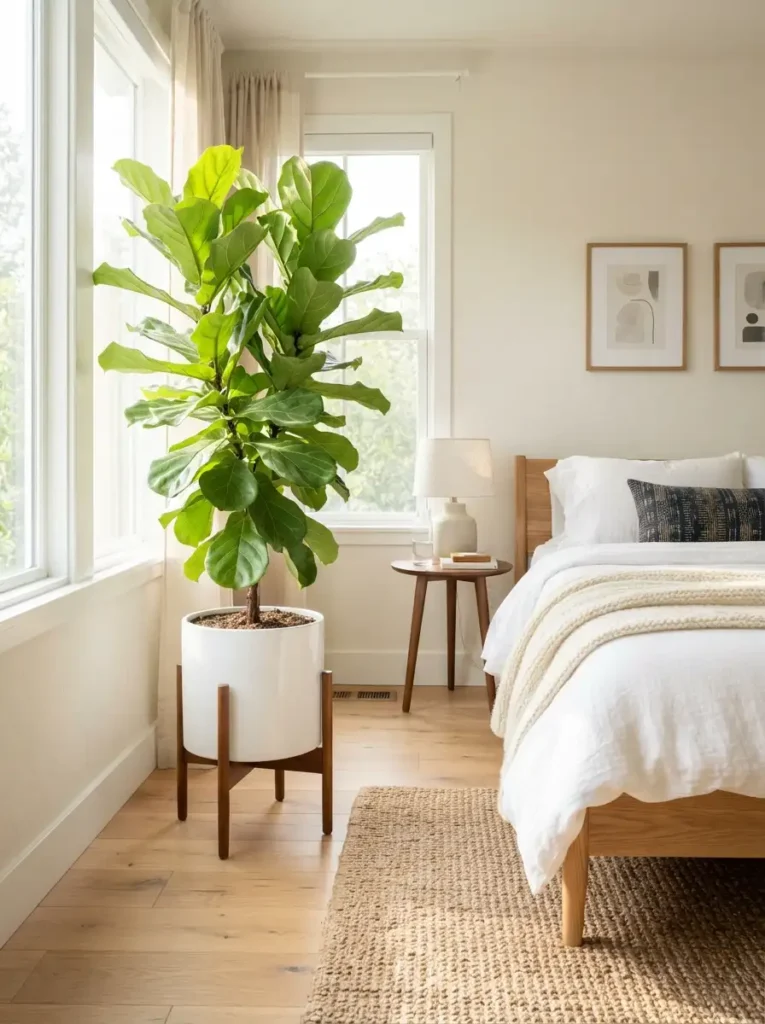
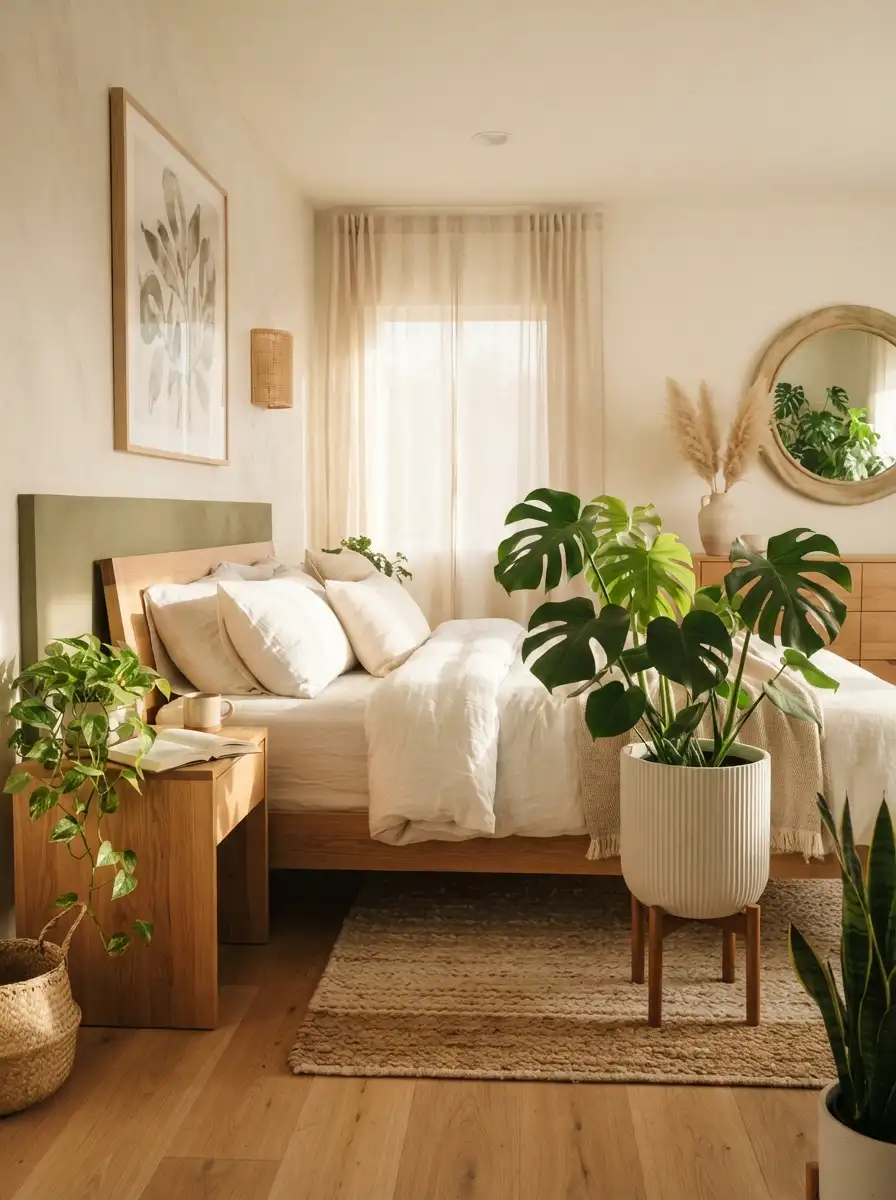
Sometimes, more is not better; bigger is better. A single, monumental plant can serve as the architectural anchor of your bedroom, taking the place of traditional floor decor like standing lamps or armchairs.
Implementation: Choose a large, sculptural plant such as a Fiddle Leaf Fig, a Monstera Deliciosa, or a towering White Bird of Paradise. Place it in a brightly lit corner, preferably near a south or west-facing window.
Styling Tips: The pot is just as important as the plant. House your statement greenery in a large, woven seagrass basket for a bohemian touch, or a mid-century modern wooden plant stand with a sleek ceramic cylinder for a retro-chic vibe.
Design Psychology: A massive plant creates a powerful focal point. It commands attention and grounds the room’s energy. The large, broad leaves introduce bold organic geometry, making the space feel luxurious, established, and vibrant without the need for excessive decor.
4. The Window Sill Succulent Oasis
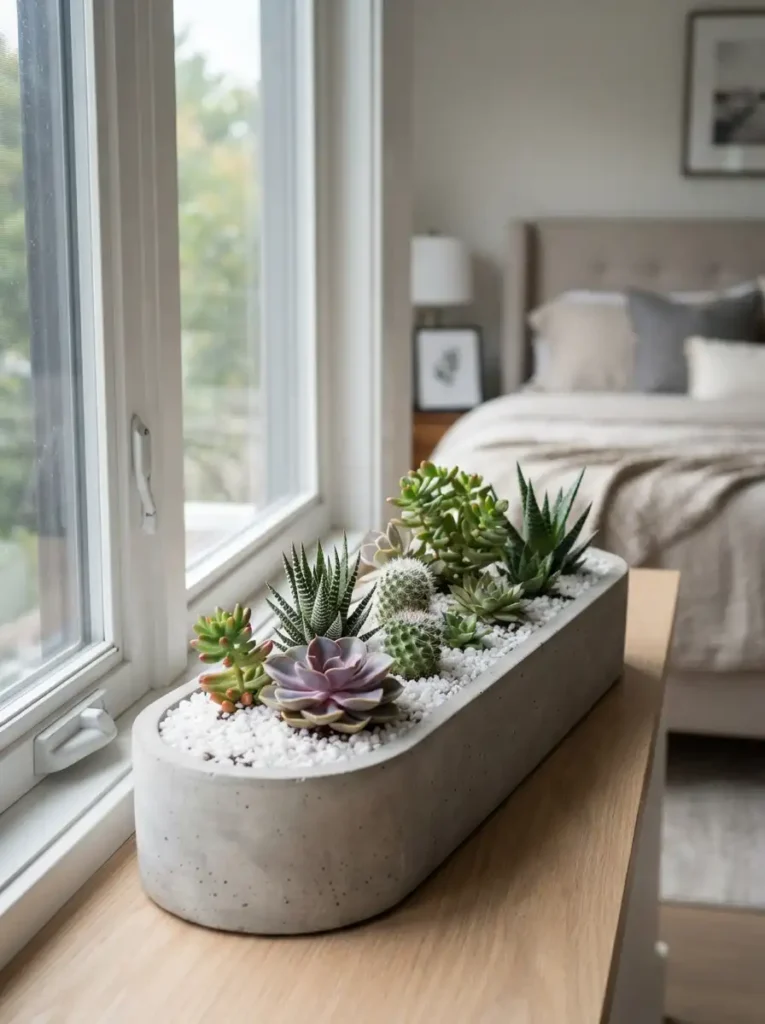
Your bedroom window sill is prime real estate for sun-loving plants. Instead of leaving it bare, transform it into a meticulously curated oasis of low-maintenance desert flora.
Implementation: Gather a collection of succulents and cacti—think Echeveria, Haworthia, Jade Plants, and small Aloe Vera.
Styling Tips: Play with scale and texture. Mix spiky cacti with fleshy, rosette-shaped succulents. Use shallow, rectangular concrete troughs for a modern industrial look, or a mismatched collection of colorful glazed vintage pots for an eclectic feel. Top the soil with decorative white gravel to give it a finished, professional terrarium look.
Design Psychology: Placing plants directly in your line of sight to the outside world bridges the gap between the interior and the exterior. It naturally draws your gaze toward the natural light, making the bedroom feel more expansive and connected to the rhythms of the sun.
5. Bedside Table Air Purifiers
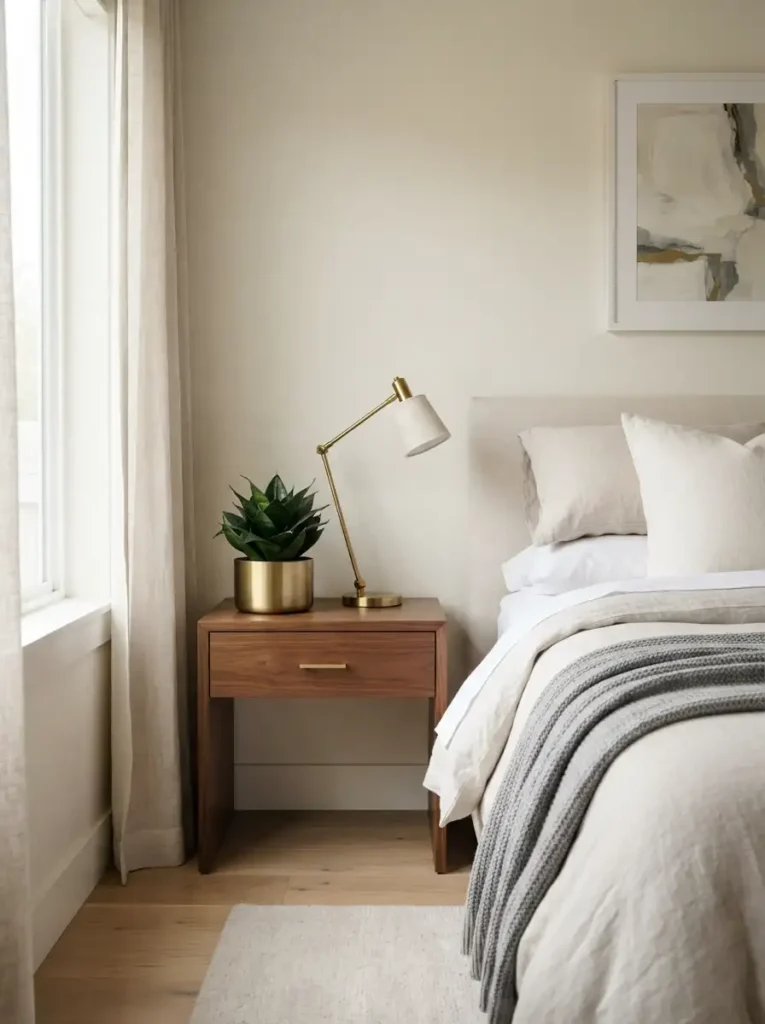
Your nightstand is the closest piece of furniture to your head while you sleep, making it the most strategic location for plants that actively improve air quality.
Implementation: Focus on plants that perform Crassulacean Acid Metabolism (CAM) photosynthesis. Unlike most plants, CAM plants absorb carbon dioxide and release fresh oxygen at night.
Styling Tips: The Snake Plant (Sansevieria) and Aloe Vera are the ultimate champions of nighttime oxygen production. Choose a compact variety like the ‘Bird’s Nest’ Snake Plant so it doesn’t overwhelm your reading lamp and alarm clock. Place it in a heavyweight, low-profile metallic pot to add a touch of sophistication.
Design Psychology: Knowing that you have a natural air purifier inches away from you provides a subconscious reassurance of cleanliness and vitality. It fosters a feeling of wellness and respiratory health, which is incredibly comforting as you drift off to sleep.
6. The Biophilic Headboard Integration
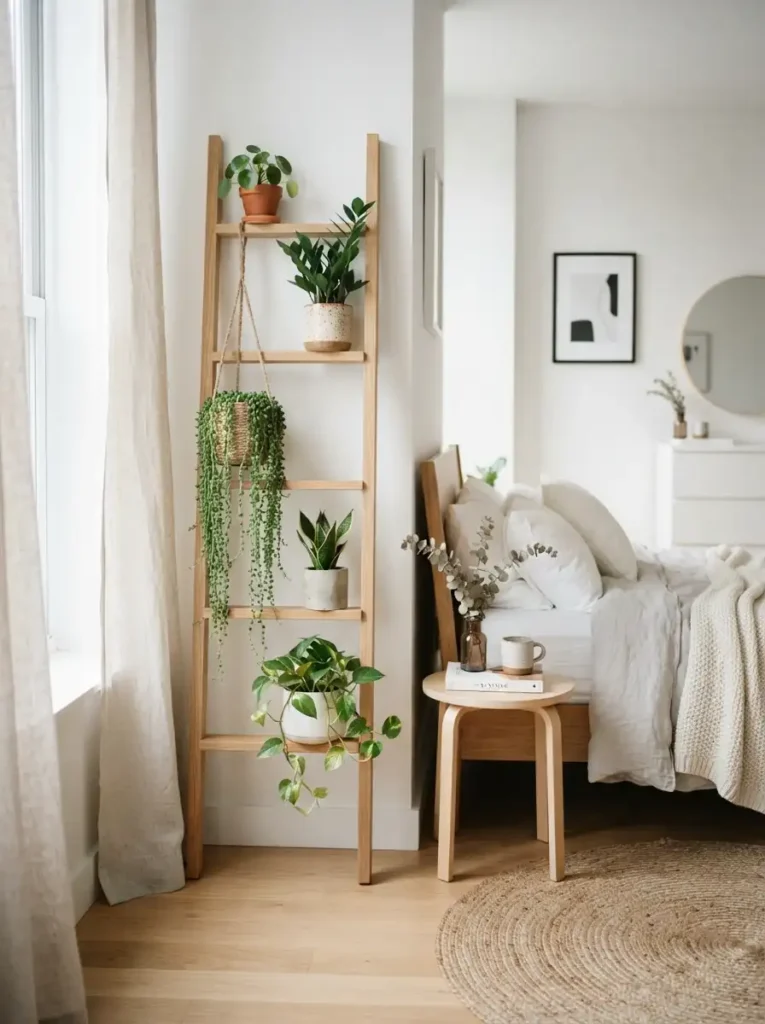
Blur the lines between furniture and foliage by integrating plants directly into, or immediately above, your bed’s headboard. This creates an immersive, wrap-around botanical experience.
Implementation: If you have a ledge headboard, simply arrange small potted plants across the top. Alternatively, install a slim, wall-mounted trough planter directly above a standard headboard.
Styling Tips: Use lush, trailing plants like the Silver Satin Pothos or String of Hearts. Let the vines drape down gently over the edges of the headboard. Ensure the pots are securely fastened and use self-watering stakes to prevent any accidental water drips on your pillows.
Design Psychology: The headboard is the anchor of the bedroom. By infusing it with living elements, you establish the bed as the ultimate sanctuary of life and restoration. The gentle draping of vines softens the hard edges of the bed frame, making the sleeping area feel like a protective, natural cocoon.
7. Floor-to-Ceiling Plant Ladders
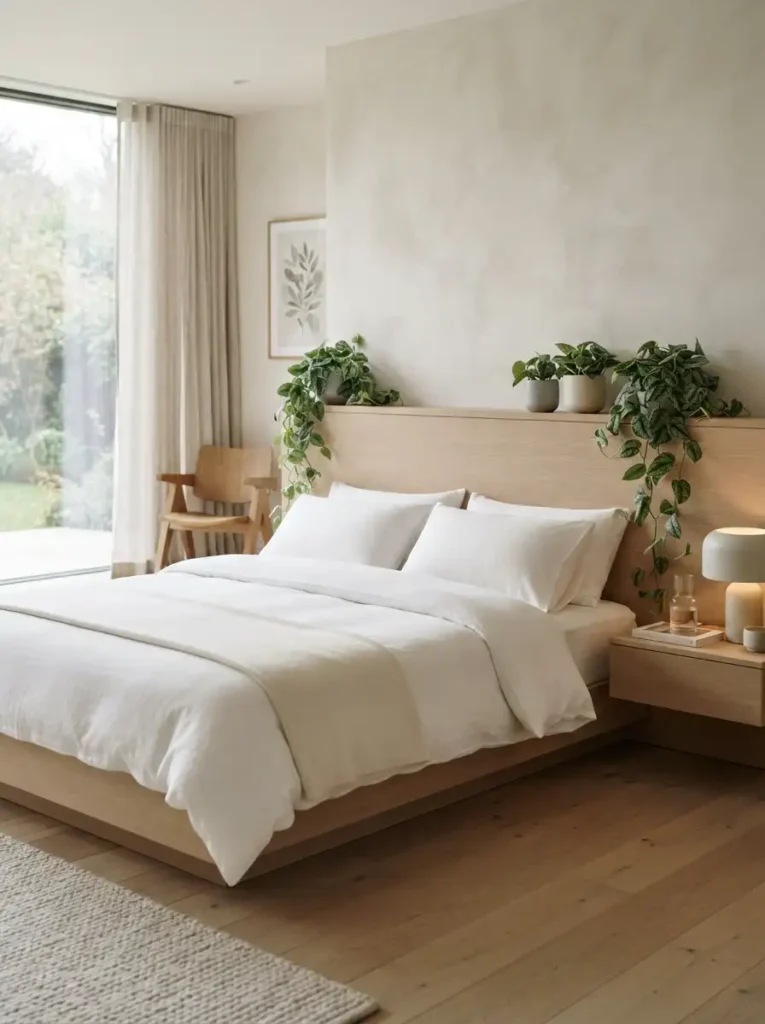
When you want to display multiple plants but lack the square footage for wide shelving units, a vertical plant ladder offers a brilliant, space-saving architectural feature.
Implementation: Lean a wooden or bamboo decorative ladder against a wall. Use S-hooks to hang small pots from the rungs, or if the ladder has wide steps, arrange the pots directly on them.
Styling Tips: Create a gradient of foliage. Place heavier, upright plants (like ZZ plants or small Calatheas) on the bottom rungs to anchor the ladder, and place lightweight, cascading plants (like Burro’s Tail or String of Pearls) on the top rungs so they can spill downward.
Design Psychology: Vertical gardening tricks the brain into perceiving the ceiling as higher than it actually is. The ladder structure adds a rustic or Scandinavian architectural element, bringing a sense of organized, purposeful growth into the room.
8. Propagation Station Wall Art
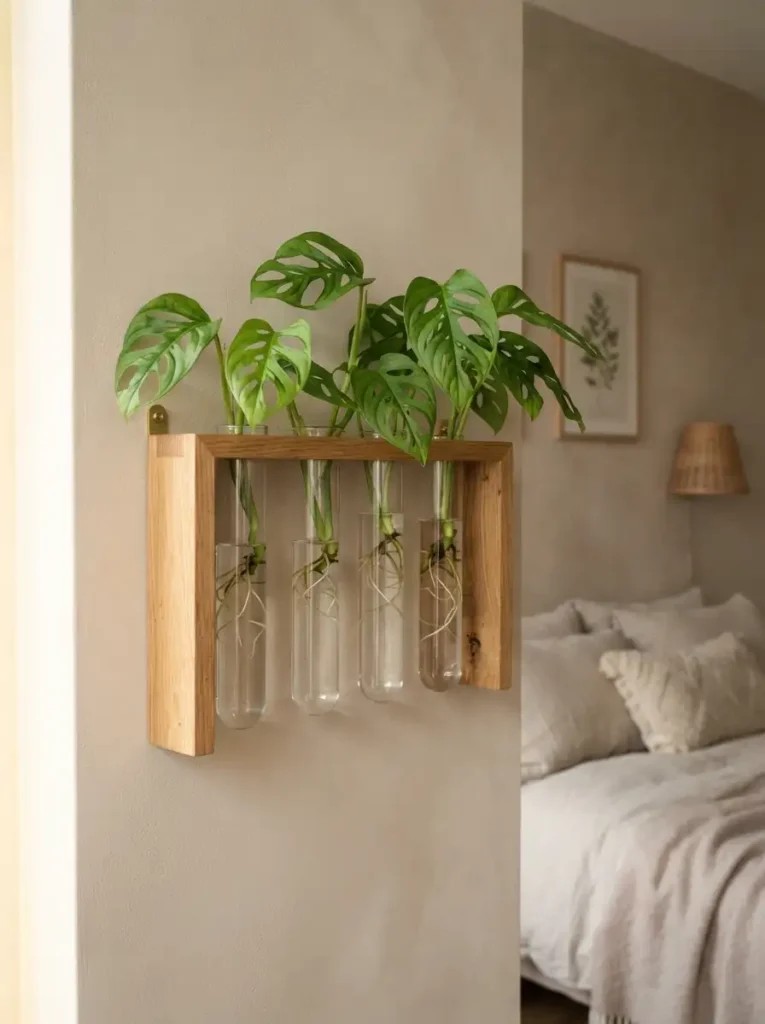
Turn the scientific process of growing new plants into a dynamic, ever-changing piece of living wall art. This is perfect for plant enthusiasts who love to multiply their collection.
Implementation: Mount a wooden propagation station—typically featuring a row of clear glass test tubes or spherical glass vases—on a prominent wall.
Styling Tips: Fill the glass vessels with water and insert cuttings from your favorite plants, such as Monstera nodes, Pothos stems, or Begonia leaves. The exposed roots growing in the clear water create a fascinating visual texture. Change the water weekly to keep it crystal clear and visually appealing.
Design Psychology: A propagation wall represents rebirth, patience, and nurturing. Watching roots slowly develop over weeks instills a sense of mindfulness and rewarding progression, adding a deeply interactive and therapeutic element to your daily bedroom routine.
9. Bohemian Layered Rattan Stands
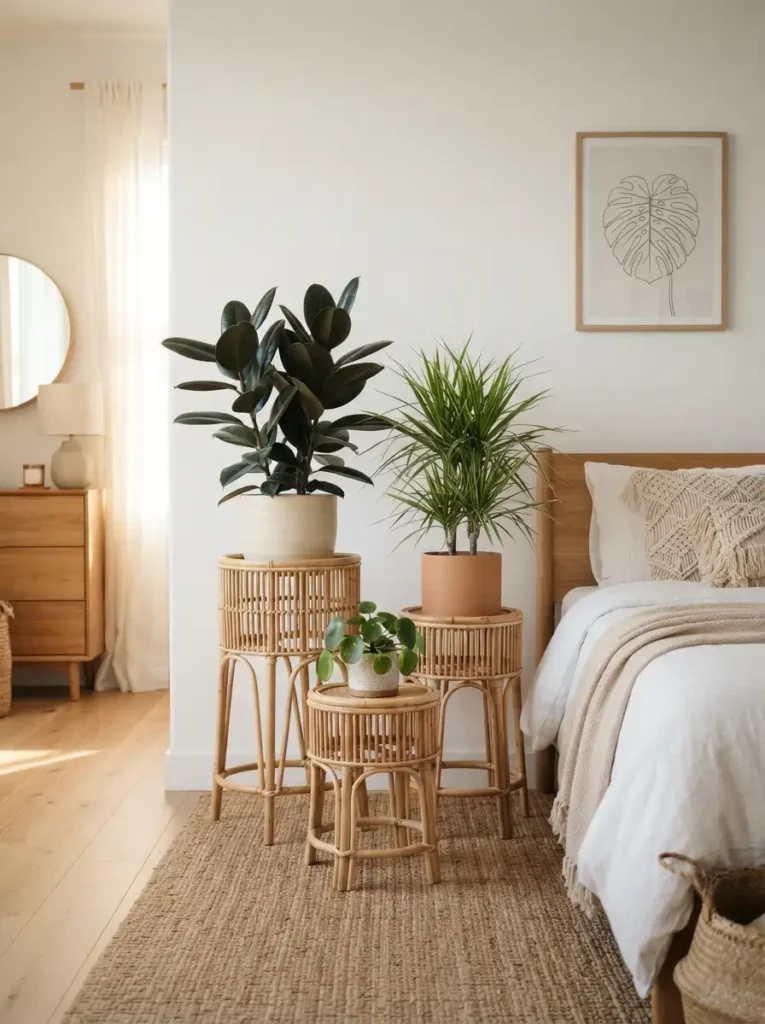
To achieve a relaxed, effortless bohemian aesthetic, focus on layering plants at multiple heights using organic materials.
Implementation: Source a set of plant stands made from rattan, wicker, or bamboo in varying heights (e.g., one tall, one medium, one short). Group them together in a corner or beside a floor mirror.
Styling Tips: Mix different leaf textures and colors. Pair a dark, moody Rubber Tree (Ficus elastica) on the lowest stand with a vibrant, neon-green Lemon Lime Dracaena on the highest. The woven texture of the rattan complements the organic shapes of the leaves perfectly.
Design Psychology: The bohemian design philosophy thrives on “controlled chaos.” By clustering plants at different elevations, you mimic the naturally occurring understory of a jungle. This layered approach feels abundant, free-spirited, and deeply comforting to the eye.
10. Trailing Wardrobe Greens
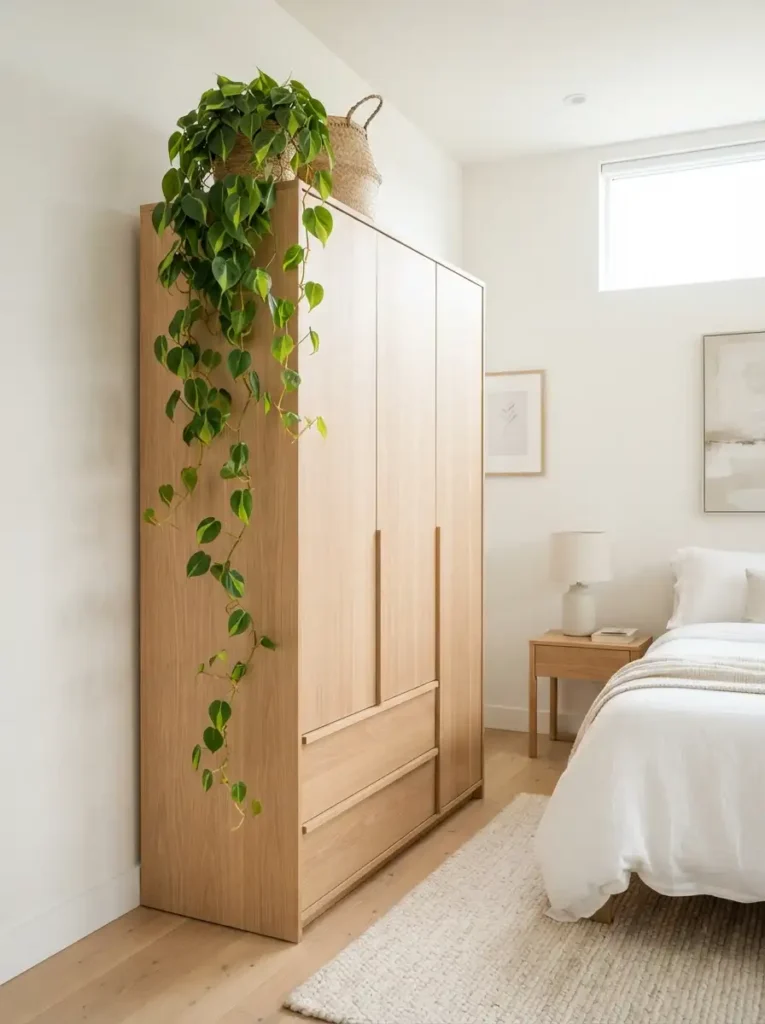
Tall, imposing pieces of furniture like wardrobes, armoires, or tall dressers can often make a room feel heavy or boxy. Plants can be used to soften these dominating structures.
Implementation: Utilize the “dead space” on top of tall furniture by placing low-light tolerant, trailing plants up high.
Styling Tips: English Ivy, Philodendron Micans, or even a robust Spider Plant work beautifully here. Arrange the pots so that the foliage spills over the edges and trails down the sides of the furniture. Use lightweight plastic pots hidden inside decorative baskets to make watering and maneuvering easier.
Design Psychology: This technique breaks up the rigid, harsh lines of large wooden furniture, integrating them more smoothly into the room. It brings life to spaces that are usually forgotten, balancing the visual weight of the room by drawing the eye upward and adding softness to hard edges.
11. Geometric Wall Planters
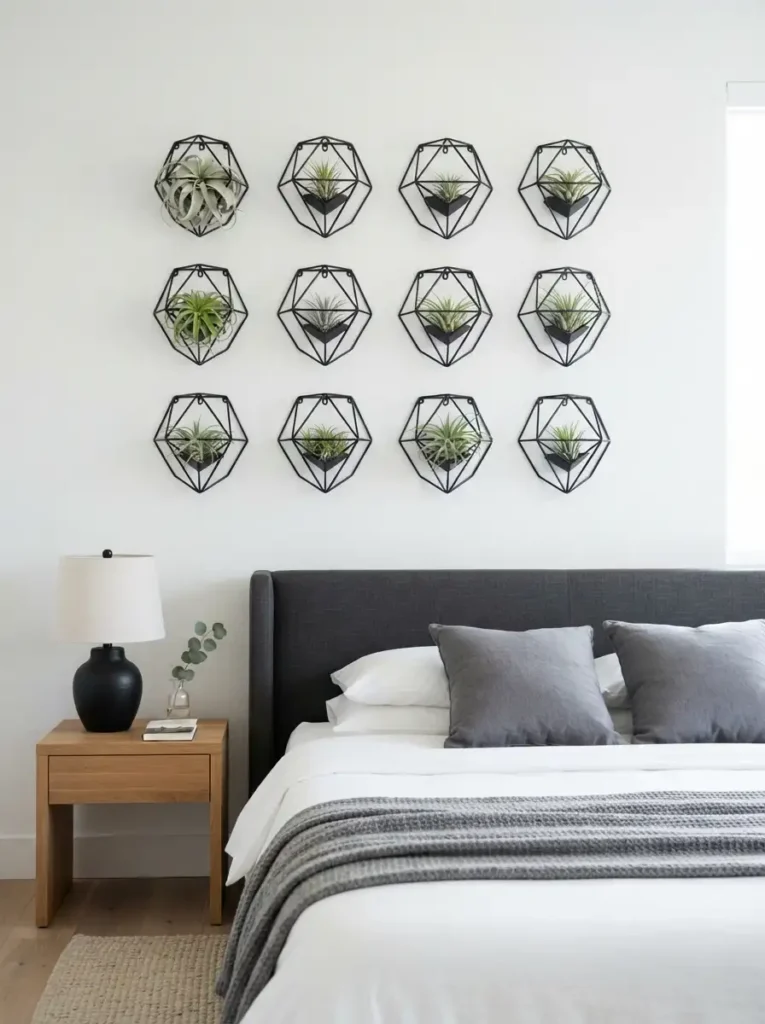
For those who lean toward modern, contemporary, or industrial decor, organic shapes sometimes need a structured vessel to make sense in the space. Geometric wall planters blend the strict rules of mathematics with the wildness of nature.
Implementation: Install ceramic or metal wall planters in the shapes of hexagons, triangles, or diamonds. Arrange them in a honeycomb pattern or an asymmetrical art cluster above a dresser.
Styling Tips: Air plants (Tillandsia) are absolutely perfect for this, as they require no soil and can simply be placed inside the geometric vessels. If you prefer rooted plants, use succulents or a String of Turtles. Contrast a matte black geometric frame with bright green foliage for a striking visual pop.
Design Psychology: The human brain loves patterns, symmetry, and structure. Placing wild, organic greenery inside strict geometric confines creates a highly satisfying visual tension. It looks intentional, curated, and highly sophisticated, bringing order to the natural world.
12. The Sleep-Inducing Herb Haven
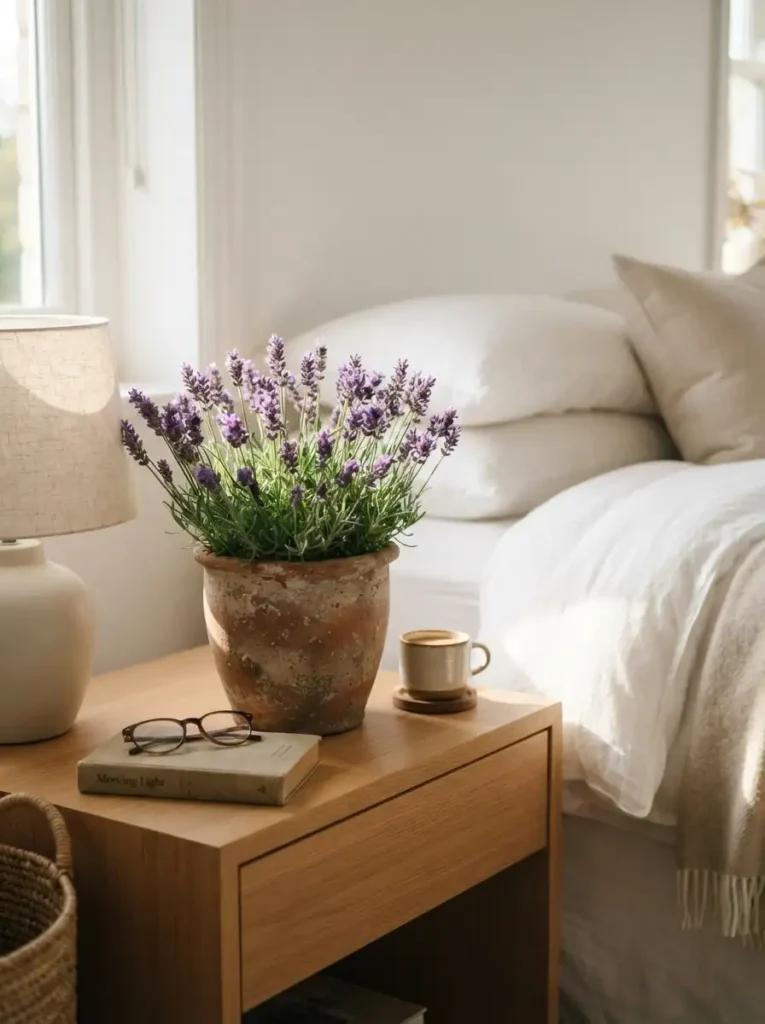
Scent is the sense most strongly tied to memory and emotion. By incorporating fragrant herbs into your bedroom decor, you are designing for the olfactory system as much as for the eyes.
Implementation: Create a small herb garden on a sunny window sill or a well-lit bedside table.
Styling Tips: Plant Lavender, Jasmine, Chamomile, or Lemon Balm in rustic terracotta pots or vintage teacups for a cottage-core aesthetic. These plants require a fair amount of sunlight, so ensure they are placed appropriately. Gently brush your hands over the leaves before getting into bed to release their natural essential oils into the air.
Design Psychology: Aromatherapy has a profound, direct impact on the limbic system of the brain, which regulates emotions and sleep. The natural scent of lavender and jasmine is scientifically proven to reduce anxiety, lower heart rates, and promote deeper, more restorative REM sleep.
13. Terrarium Nightstand Ecosystems
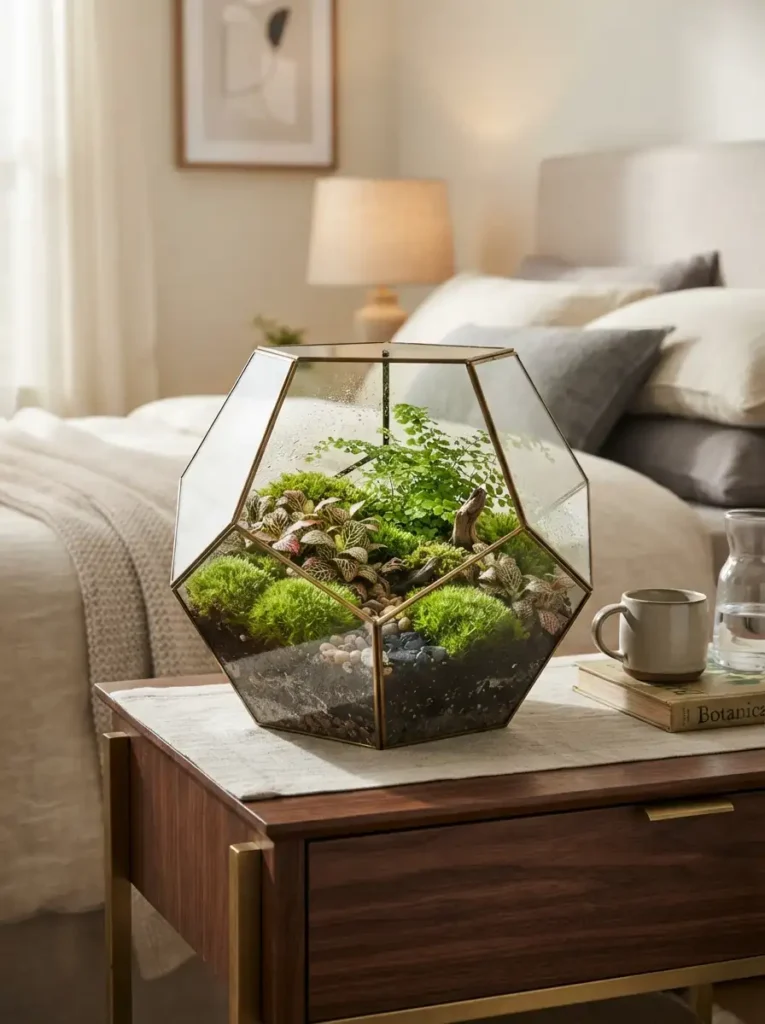
If you are fascinated by micro-environments or have a bedroom that struggles with dry air, a closed terrarium is a magical and low-maintenance addition.
Implementation: Use a large glass apothecary jar, a geometric glass prism, or a recycled vintage bottle to create a closed ecosystem. Layer gravel, activated charcoal, soil, and humidity-loving mini plants.
Styling Tips: Use lush, moisture-loving greenery like Nerve Plants (Fittonia), Polka Dot Plants, and live moss. Add small decorative elements like a piece of drift wood or a beautifully polished crystal. Place it on your nightstand or a low dresser.
Design Psychology: A terrarium offers a sense of fascination and wonder. It is a self-sustaining world captured in glass. Gazing into this miniature, perfect ecosystem before sleep serves as a brilliant mindfulness exercise, helping to detach your brain from the massive, stressful problems of the outside world.
14. Dried and Live Contrast Corners
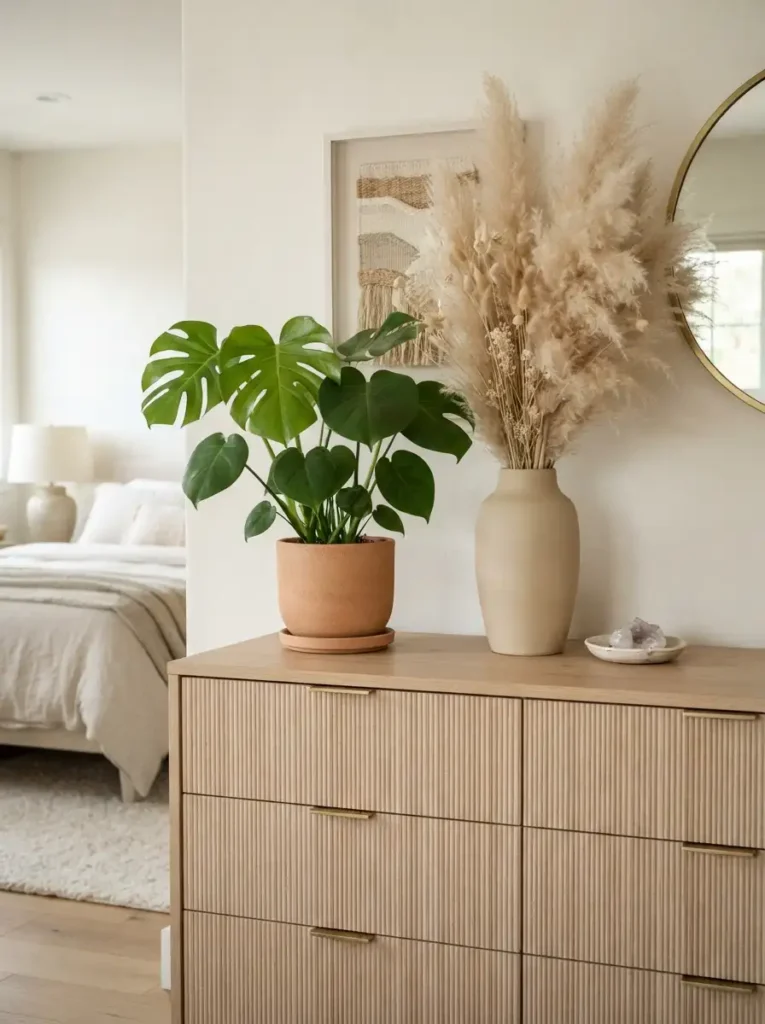
An emerging trend in interior design is the juxtaposition of life and preservation. Mixing live, vibrant green plants with dried, structural botanicals creates incredible textural depth.
Implementation: Dedicate a corner or a wide dresser top to this display. You will need a mix of live potted plants and large vases for dried arrangements.
Styling Tips: Pair a glossy, deep-green Monstera with a tall ceramic floor vase filled with fluffy, beige Pampas grass, dried Eucalyptus stems, or dried Billy Buttons. The dusty, muted tones of the dried plants make the vivid green of the live plants pop even more.
Design Psychology: This decor idea represents the full, beautiful cycle of nature. The dried elements bring in soft, wispy textures and muted earthy tones that evoke a sense of calm and nostalgia, while the live plants inject vitality and freshness. The contrast is highly sophisticated and visually arresting.
15. The Bathroom-Ensuite Jungle Transition
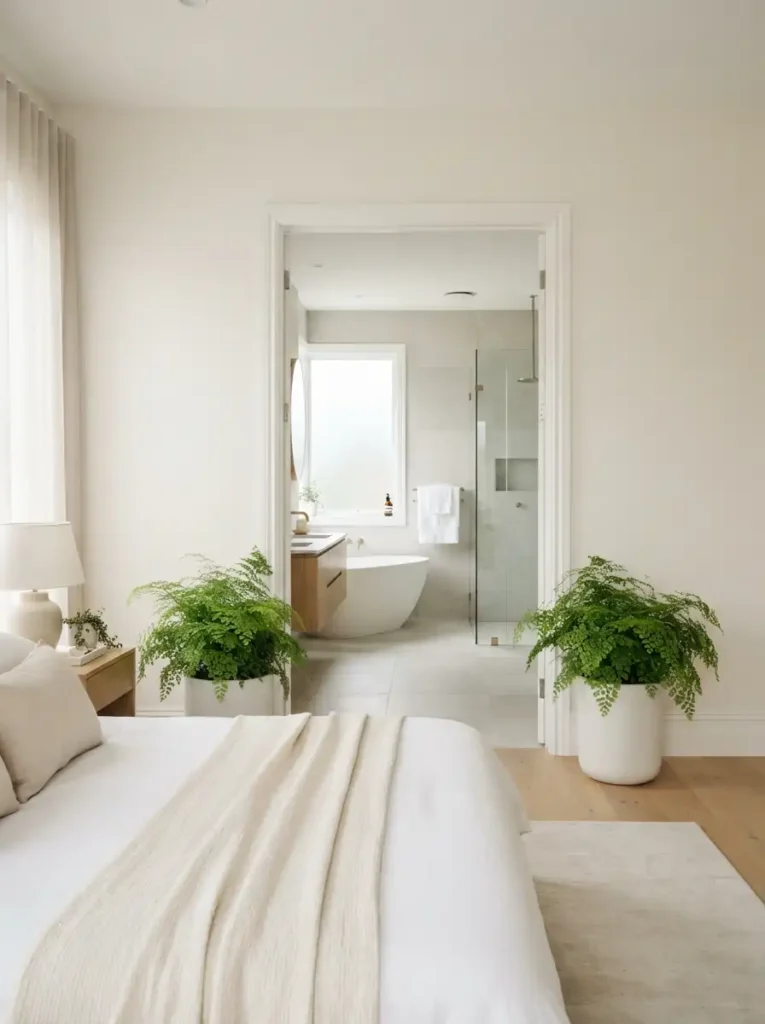
If your bedroom features an en-suite bathroom, the threshold between the two rooms is a brilliant place to concentrate your greenery, acting as a natural room divider
Implementation: Place humidity-loving plants near the bathroom door, where they can benefit from the steam generated by your daily showers.
Styling Tips: Ferns (like the Bird’s Nest or Maidenhair), Calatheas, and Peace Lilies thrive in this environment. Cluster them in pots of varying heights right at the edge of the doorway. Use matching ceramic pots to tie the transition area together cohesively.
Design Psychology: Using plants to frame a doorway creates a psychological zoning effect. It defines the transition from the dry, cozy resting space of the bedroom to the wet, functional space of the bathroom without needing a harsh physical barrier. It makes the walk to the shower feel like a step into a tropical spa.
16. Indoor Trellis Wall Tapestry
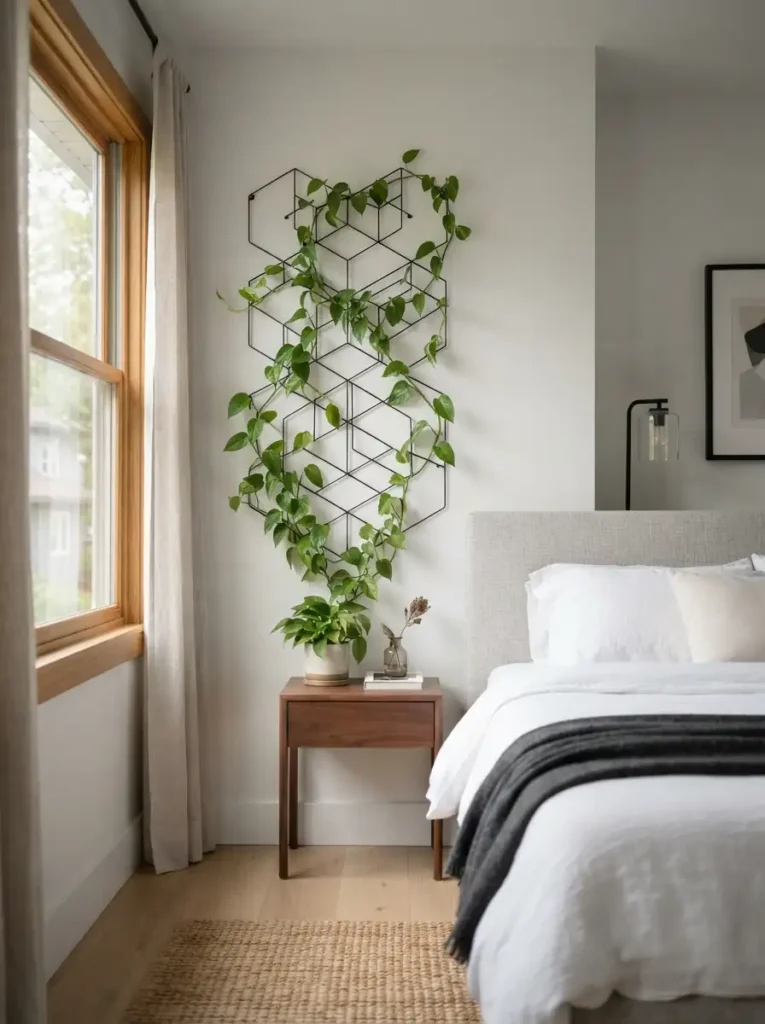
Why hang a traditional painting when you can grow a piece of living art across your walls? Training vines to climb indoors turns a blank wall into an evolving tapestry
Implementation: Install a delicate wire trellis, a wooden lattice, or a series of clear adhesive Command hooks in a specific pattern across a large, blank bedroom wall.
Styling Tips: Plant a fast-growing vining plant like a Hoya, a Philodendron, or a climbing Monstera at the base of the wall. Gently weave the vines through your hooks or trellis as they grow. You can train them to frame a large floor mirror, a doorway, or simply zig-zag across a feature wall.
Design Psychology: Climbing plants symbolize growth, ambition, and expansion. Watching a plant slowly conquer a wall gives the room a sense of dynamic life and progression. It wraps the room in a literal embrace of nature, making the space feel incredibly bespoke and deeply personal.
17. The Feng Shui Wealth and Health Corner
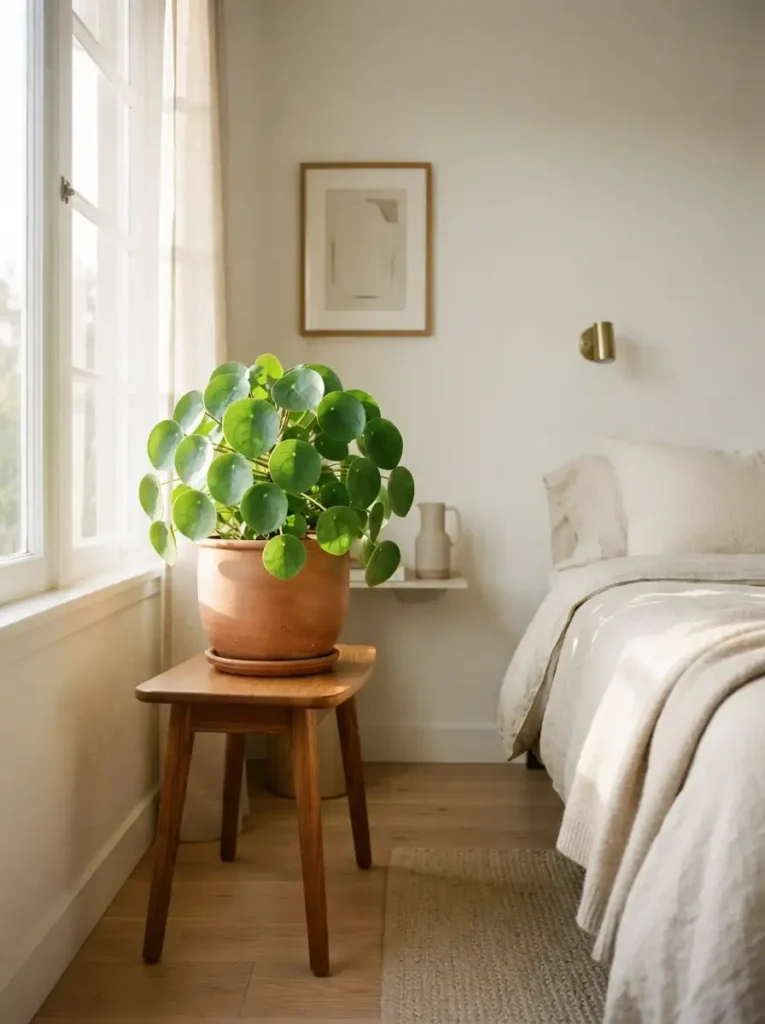
For those who design their spaces with intention and energy flow in mind, the strategic placement of specific plants can be used to balance the chi (energy) of the bedroom.
Implementation: According to Feng Shui principles, the southeast corner of your bedroom is connected to wealth and prosperity, while the east is connected to health and family.
Styling Tips: Place a Chinese Money Plant (Pilea peperomioides), a Jade Plant, or a Golden Pothos in the southeast corner. Feng Shui dictates that plants with soft, round, coin-like leaves are best for inviting positive energy. Avoid placing sharp, spiky plants (like cacti) in the bedroom, as they are believed to project aggressive energy. Use smooth, round pots in earthy tones.
Design Psychology: Whether you strictly adhere to Feng Shui or not, designing with intention promotes mindfulness. Creating a specific corner dedicated to health and prosperity serves as a daily visual affirmation. The soft, rounded edges of the recommended plants naturally soothe the eye and promote a feeling of harmony and abundance.
Breathing Life Into Your Sleeping Sanctuary
The transition of a bedroom from a mere place to sleep into a restorative, living sanctuary is a profoundly rewarding journey. The plants you choose to bring into your most intimate space do much more than sit quietly in their pots; they become quiet companions that grow alongside you. They ask for your care and, in return, they purify the air you breathe, soften the acoustics of your room, and provide a constant, grounding visual connection to the natural world.
Integrating botanical life into your interior design is not about achieving perfection or possessing a flawless green thumb. It is about experimentation and finding harmony between your aesthetic preferences and the environmental realities of your space. Whether you opt for the dramatic flair of an oversized Fiddle Leaf Fig, the mindful observation of a bedside terrarium, or the soothing, sleep-inducing aroma of a potted lavender plant, each leaf and vine contributes to a healthier, more vibrant atmosphere. By thoughtfully applying these concepts, you can construct an environment that not only looks beautifully curated but actively supports your physical rest and mental rejuvenation, ensuring you wake up every morning feeling as refreshed and renewed as the greenery that surrounds you.