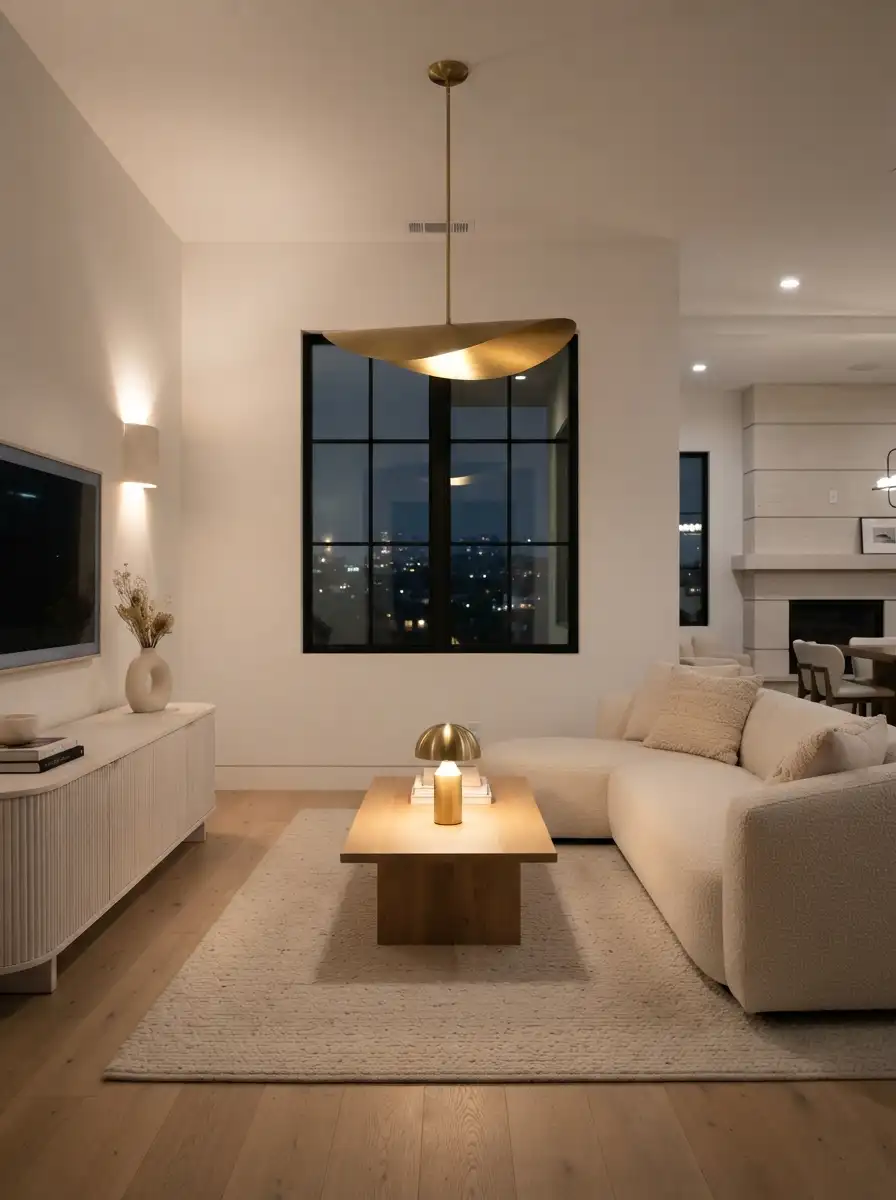
Home lighting trends are fundamentally shifting how we experience our living environments, moving far beyond the simple utility of illuminating a dark room. Today, lighting is recognized as one of the most critical architectural and emotional components of interior design. The way a room is lit dictates its atmosphere, influences our biological rhythms, and defines the spatial boundaries of our homes. Gone are the days of relying on a single, glaring overhead fixture to flood a room with flat, unflattering light. The contemporary approach is highly nuanced, focusing on sculptural aesthetics, advanced technology, and a deep understanding of how light interacts with human psychology and architectural textures.
As we navigate through modern design eras, we are seeing a beautiful intersection of raw, organic materials and cutting-edge LED technology. Lighting fixtures are now expected to serve dual purposes: they must provide perfectly tuned illumination when turned on, and act as breathtaking, standalone pieces of art when turned off. Whether you are building a new house, undertaking a massive renovation, or simply looking to refresh your apartment’s ambiance, updating your lighting plan is the most effective way to elevate the luxury and comfort of your space.
To help you navigate this luminous revolution, here are 14 random, highly detailed, and deeply valuable home lighting trends that are dominating the interior design landscape. Each concept explores the specific implementation strategies, high-end styling tips, and the underlying design psychology that makes these trends so impactful.
1. Architectural Linear Lighting Integrations
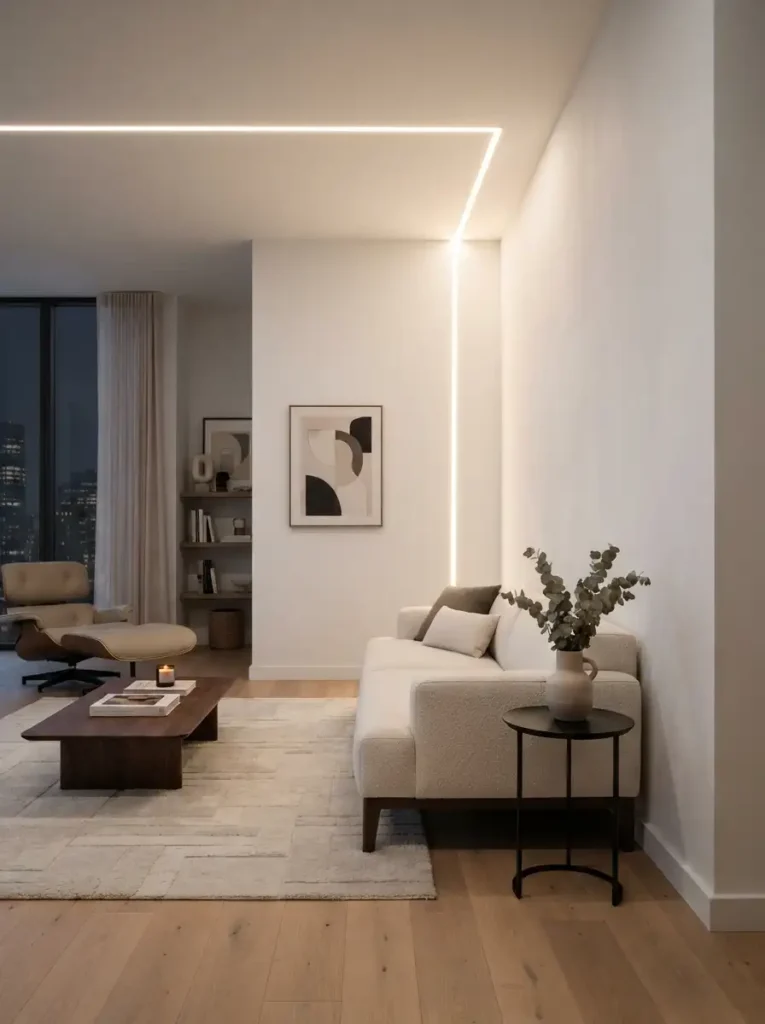
The era of bulky, visually intrusive lighting tracks is making way for the sleek, invisible appeal of architectural linear lighting. This trend involves embedding continuous strips of high-quality LED light directly into the drywall of ceilings, walls, or even along the baseboards.
Implementation: This requires planning during the drywall or renovation phase. Use “mud-in” aluminum LED channels covered with frosted silicone diffusers. These channels are plastered seamlessly into the wall, leaving only a flawless, continuous ribbon of light that sits perfectly flush with the surface.
Styling Tips: Run a continuous line of light from the ceiling straight down the wall to create a futuristic, minimalist frame around a living room TV or a hallway corridor. Opt for a 3000K (warm white) color temperature to ensure the modern look remains inviting rather than stark and clinical.
Design Psychology: Linear lighting draws the eye along the dimensions of the room, emphasizing architectural lines and expanding the perceived scale of the space. It appeals to the minimalist desire for absolute clean lines, removing visual clutter from the ceiling and creating an environment that feels highly customized and effortlessly cutting-edge.
2. The Biophilic Lighting Movement
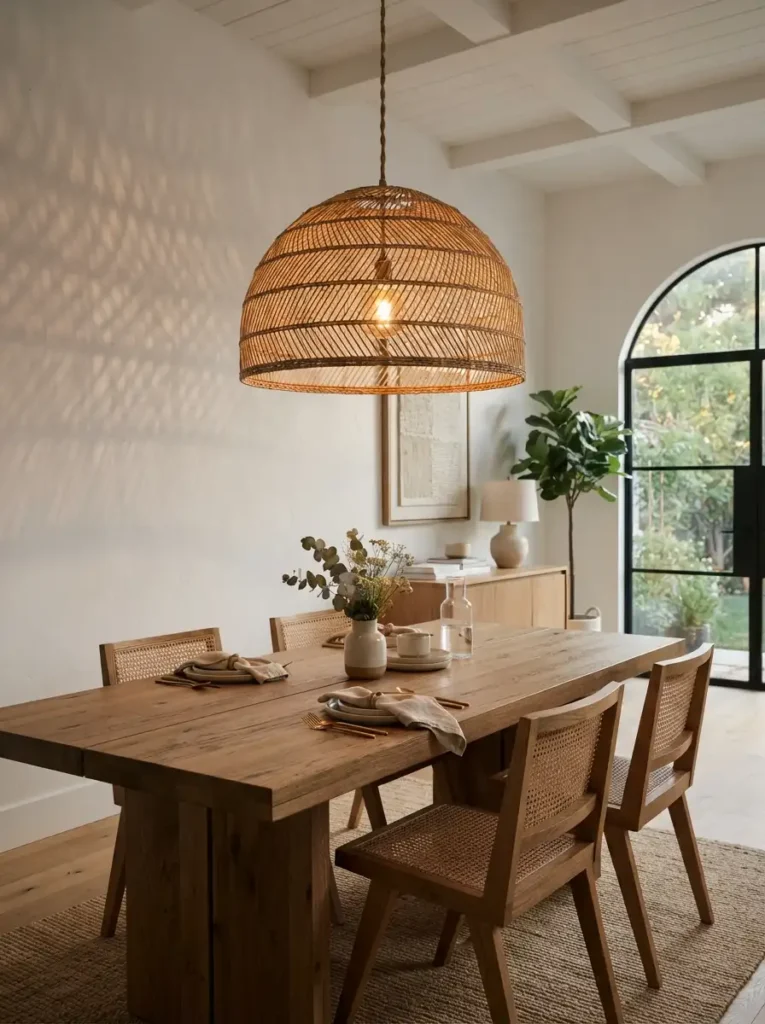
As our desire to connect with the natural world deepens, biophilic design has strongly infiltrated home lighting trends. This concept abandons cold metals and plastics in favor of organic, natural, and sustainably sourced materials that bring the outdoors inside.
Implementation: Replace heavy, traditional chandeliers with oversized pendants made from woven rattan, bamboo, seagrass, raw linen, or slatted wood.
Styling Tips: Hang a massive, dome-shaped woven rattan pendant over a solid oak dining table. To enhance the organic feel, ensure the light bulb used is an amber-tinted Edison-style LED. The woven structure will cast beautiful, intricate, and dappled shadows across the walls and ceiling, mimicking the effect of sunlight filtering through a canopy of trees.
Design Psychology: Natural materials inherently soften a room, introducing tactile textures that contrast beautifully with modern, flat surfaces. The dappled shadow effect actively triggers the parasympathetic nervous system, inducing a state of calm and relaxation by replicating the serene, dappled light found in nature.
3. Layered Ambient Glow (The “No Big Light” Rule)
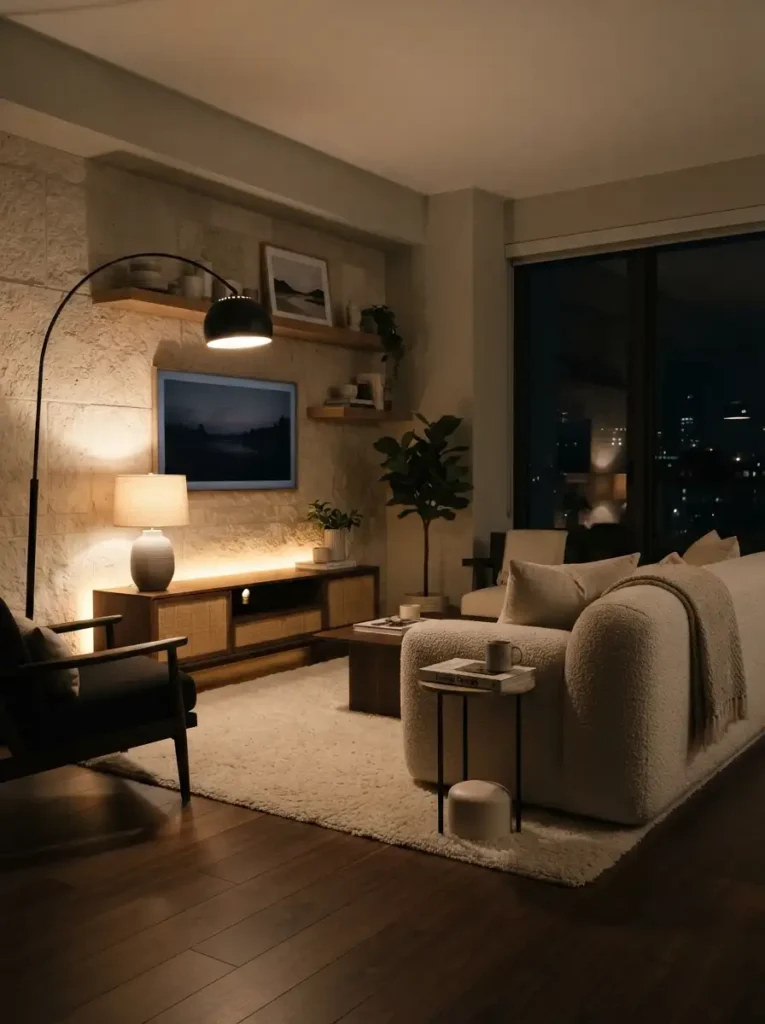
A massive trend sweeping both high-end design firms and everyday households is the absolute rejection of harsh, single-source overhead lighting. The goal is to create a “layered ambient glow” using multiple, low-level light sources distributed evenly around the room.
Implementation: Turn off your central ceiling fixture. Instead, install a combination of wall sconces, strategically placed table lamps, a floor lamp in a reading nook, and hidden LED strip lighting behind your media console.
Styling Tips: Aim for a minimum of three to four light sources in a standard living room. Mix the heights of your lighting—have one light source at eye level (sconce), one at waist level (table lamp), and one at the floor level (baseboard or low floor lamp). Ensure all bulbs are of the exact same color temperature (ideally a cozy 2700K) to maintain visual harmony.
Design Psychology: Layered lighting eliminates harsh, downward shadows that cause visual fatigue. By distributing soft pools of light around the perimeter of a room, you create a cozy, enveloping atmosphere that feels like a protective sanctuary. It encourages intimacy, relaxation, and a significantly slower pace of living during the evening hours.
4. Sculptural Statement Chandeliers as Art
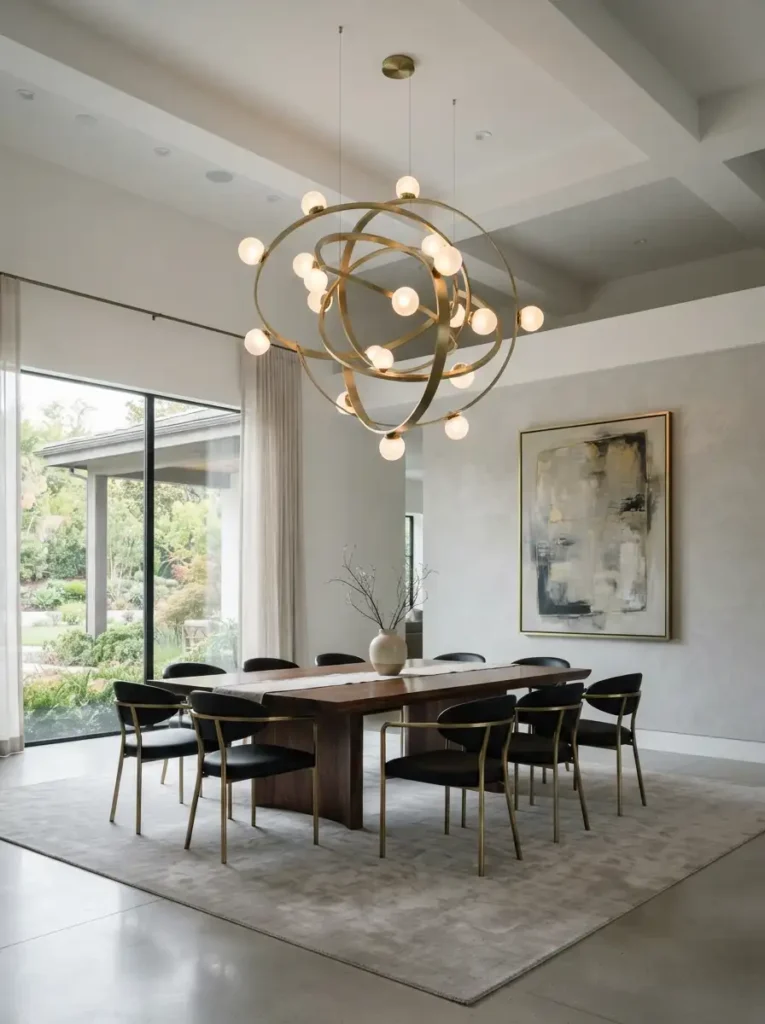
Lighting fixtures are increasingly being designed to serve as monumental centerpieces. These statement chandeliers act as hanging sculptures that define the entire aesthetic of a room, commanding attention whether the bulbs are illuminated or not.
Implementation: Look for fixtures with abstract, asymmetrical designs. Mobile-style chandeliers inspired by Alexander Calder, interlocking geometric brass rings, or chaotic bursts of frosted glass globes are excellent choices.
Styling Tips: Allow the chandelier to be the undeniable star of the room. If you install a highly complex, sculptural light fixture over a dining table or in a grand entryway, keep the surrounding furniture and wall art relatively subdued and minimalist. Use a matte black or brushed brass finish for a sophisticated, timeless look.
Design Psychology: A sculptural light fixture acts as a visual anchor. It gives the brain a designated focal point upon entering the room, satisfying our psychological need for spatial hierarchy. It also communicates bold personal expression, signaling that the homeowner values art, form, and function equally.
5. Circadian Rhythm and Tunable Smart Lighting
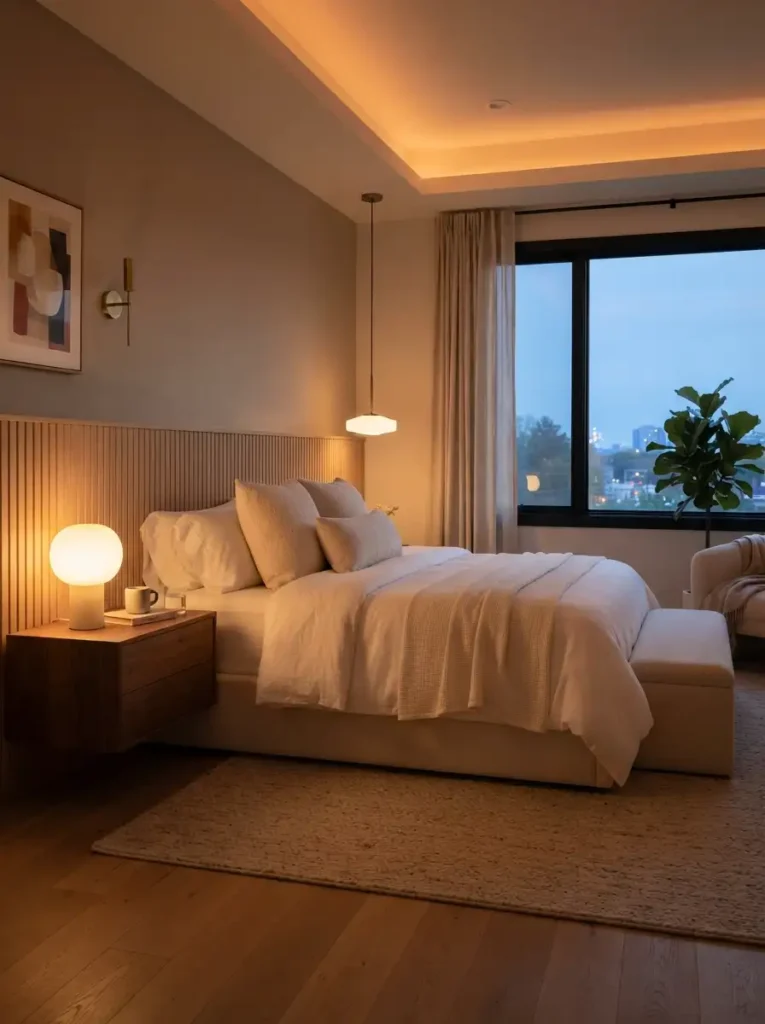
The intersection of human biology and smart home technology has given rise to circadian rhythm lighting. This trend focuses on fixtures and bulbs that change color temperature and brightness throughout the day to mirror the natural progression of the sun.
Implementation: Invest in a smart lighting ecosystem (like Philips Hue or Lutron Ketra). Program your home’s lighting to automatically shift from a bright, cool white (4000K-5000K) in the morning to a soft, warm amber (2200K) as the evening approaches.
Styling Tips: Hide these smart bulbs in fixtures with frosted glass or linen shades to diffuse the light evenly. Use the scheduling feature on your smartphone to ensure the light seamlessly transitions without you ever having to touch a switch, creating an invisible, highly luxurious smart home experience.
Design Psychology: Human biology is deeply tied to the sun. Exposure to cool, blue-toned light in the morning halts melatonin production, boosting energy and focus. Conversely, warm, amber light in the evening signals to the brain that it is time to wind down, dramatically improving sleep latency and overall emotional well-being.
6. The Rise of Portable, Cordless Rechargeable Lamps
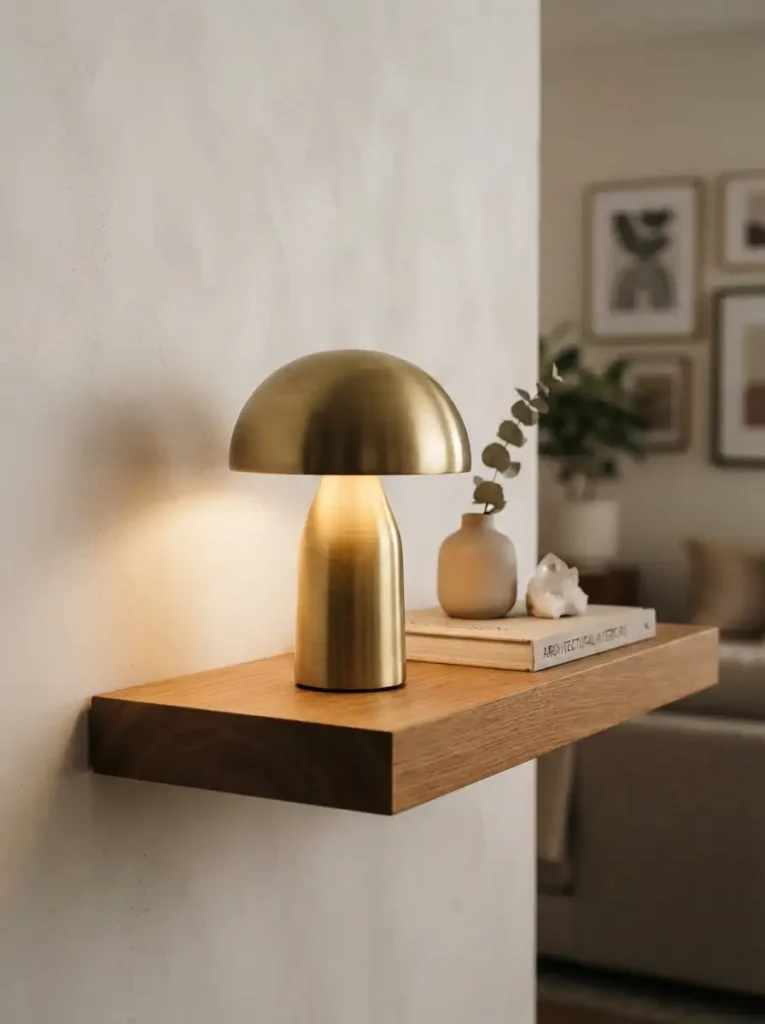
Flexibility is a major luxury in modern living. The advancements in lithium-ion batteries and low-draw LED technology have resulted in a massive surge of high-end, designer portable lamps that require no wall outlets.
Implementation: Purchase beautifully designed, heavy-weighted cordless lamps. Keep them docked on a charging pad during the day, and move them wherever you need them at night.
Styling Tips: Use these lamps to illuminate areas where running a cord would be unsightly or impossible. Place a sleek, metallic cordless mushroom lamp in the center of a large dining table for a romantic dinner, or style one in the middle of a floating bookshelf to highlight your favorite decor pieces without worrying about hiding ugly black wires.
Design Psychology: Cordless lighting provides a sense of absolute freedom and control over your environment. It allows you to dynamically alter the focal points of your room on a whim, adapting the space instantly for different activities—from hosting a cocktail party to reading quietly in a forgotten corner.
7. Wabi-Sabi Plaster and Ceramic Sconces
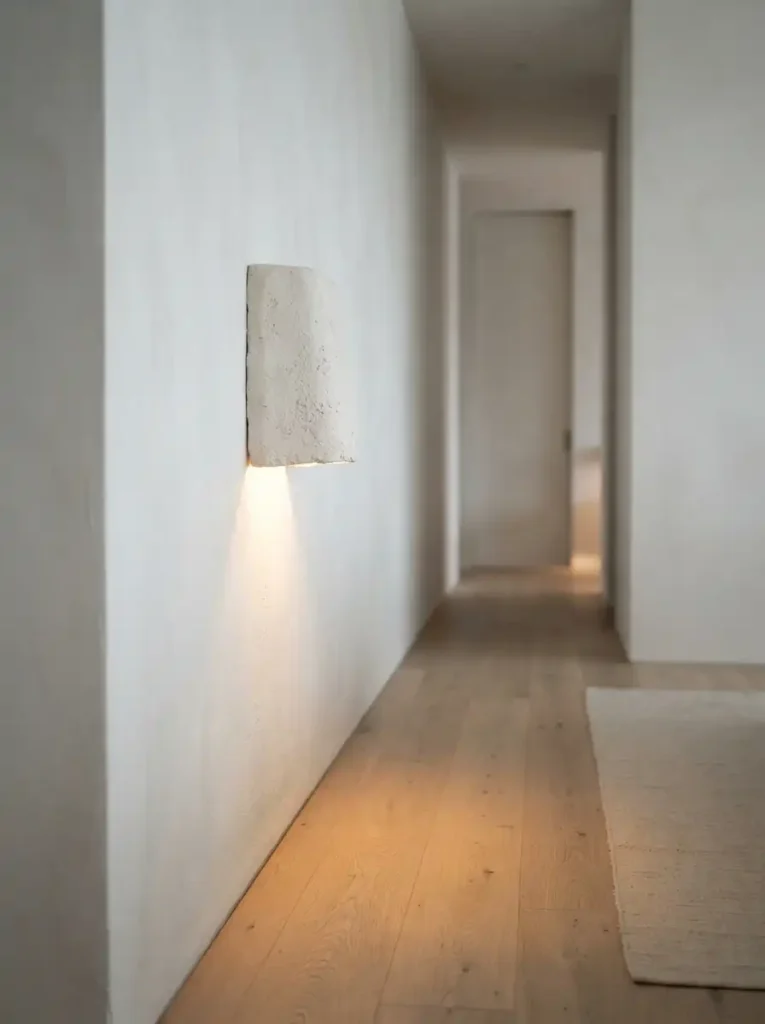
Moving away from highly polished metals, there is a profound appreciation for earthy, imperfect, and heavily textured lighting fixtures. Wabi-Sabi—the Japanese philosophy of finding beauty in imperfection—is heavily influencing wall sconces made of raw plaster, terracotta, and unglazed ceramic.
Implementation: Swap out generic metal wall sconces for fixtures molded from plaster or clay. Some plaster sconces are designed to be painted with the exact same color as your wall, allowing them to camouflage perfectly into the architecture.
Styling Tips: Use these heavily textured fixtures in hallways, staircases, or flanking a fireplace. The beauty of these lights lies in how the illumination interacts with their rough, porous surfaces. Pair them with a warm LED bulb to highlight the chalky, organic texture of the material.
Design Psychology: These fixtures evoke a sense of ancient, timeless craftsmanship. The raw, tactile nature of plaster and ceramic grounds the space, providing a deeply comforting, rustic energy that counteracts the slick, digital screens that dominate our daily lives.
8. Warm-Dim LED Technology
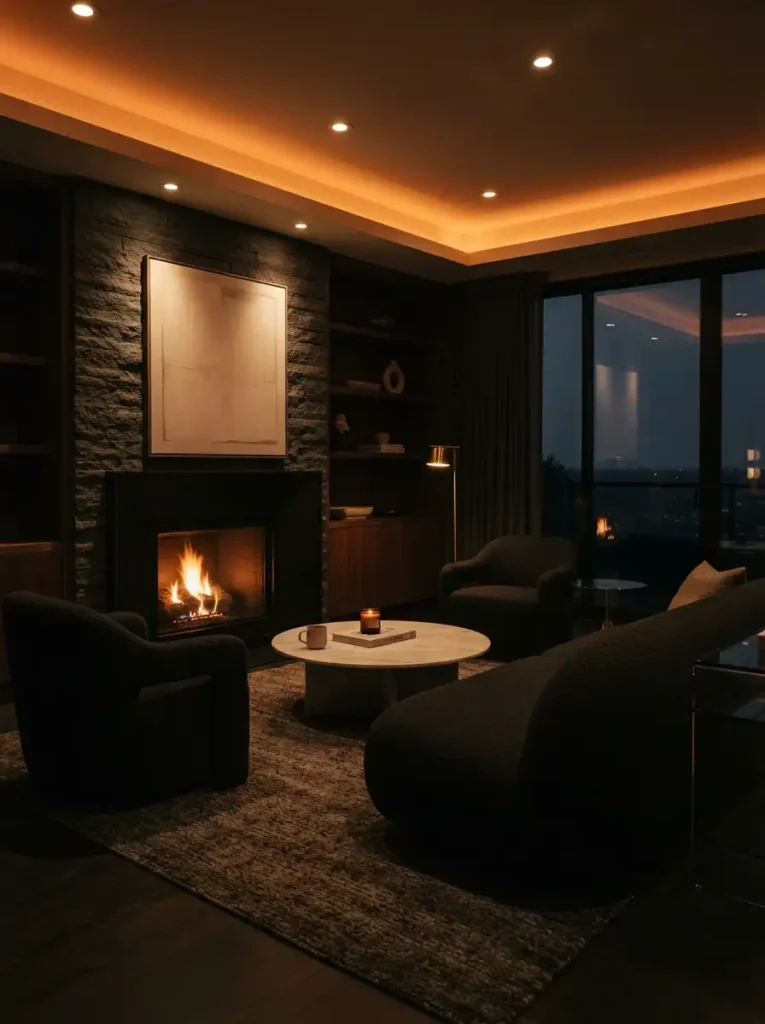
While LEDs have revolutionized energy efficiency, early iterations were heavily criticized for their cold, clinical dimming (turning gray rather than warm). “Warm-dim” technology is solving this, mimicking the cozy, nostalgic behavior of traditional incandescent bulbs.
Implementation: When purchasing recessed lighting, pendants, or smart bulbs, explicitly look for fixtures labeled “Warm-Dim” or “Dim-to-Warm.”
Styling Tips: This technology is absolutely essential for living rooms, dining rooms, and bedrooms. Install these fixtures on a high-quality dimmer switch. When at 100% brightness, the room is flooded with crisp, functional light (around 3000K). As you dim the switch, the light naturally shifts to a deep, fiery amber (around 1800K), creating a roaring fireplace-like glow.
Design Psychology: The human eye associates dimming light with firelight and the setting sun. By ensuring your lights become warmer as they get softer, you tap into a primal, deeply ingrained psychological trigger for safety, intimacy, and relaxation.
9. The 1970s Retro and Space-Age Revival
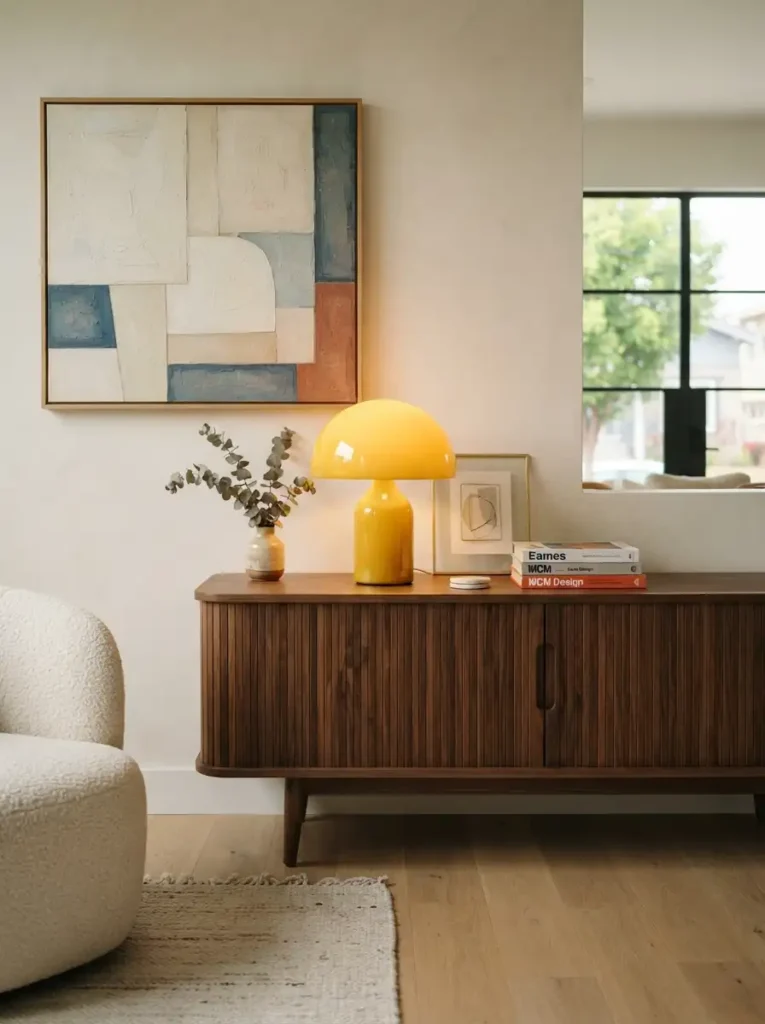
Nostalgia is a powerful driving force in interior design, and the bold, playful lighting of the 1970s is experiencing a massive resurgence. This trend embraces curves, highly reflective surfaces, and a touch of retro-futurism.
Implementation: Incorporate iconic silhouettes from the 70s, such as the dome-shaped “Mushroom Lamp,” multi-tiered Murano glass chandeliers, or polished chrome “Space Age” floor lamps.
Styling Tips: Use a brightly colored, opaque glass mushroom lamp (in vibrant orange or mustard yellow) on a dark walnut bedside table or a mid-century modern credenza. The glossy finish and pop of color act as a vibrant piece of jewelry for the room. Balance the retro aesthetic by keeping the surrounding decor relatively modern to avoid the room looking like a literal time capsule.
Design Psychology: Retro lighting introduces a sense of joy, playfulness, and optimism into a space. The soft, sweeping curves of 70s design break up the rigid, straight lines of contemporary furniture, adding an element of lightheartedness and whimsical charm to the home.
10. Monumental Arc Floor Lamps
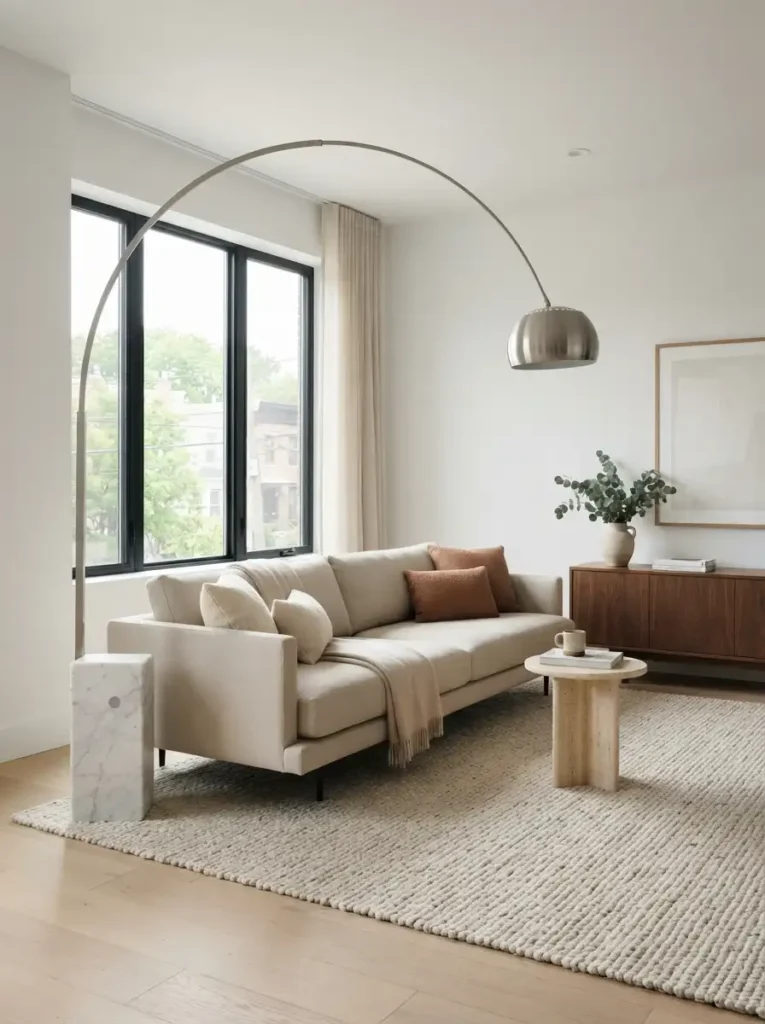
With the rejection of standard ceiling lights, the challenge becomes: how do you illuminate the center of a living room without wiring a ceiling box? The answer is the oversized, monumental arc floor lamp.
Implementation: Source a heavy-based, sweeping arc lamp that reaches high into the air and extends deeply over your seating area.
Styling Tips: Tuck the heavy marble or metal base behind a sofa or an armchair in the corner of the room. Let the dramatic arc sweep over the seating arrangement, positioning the shade directly over a coffee table. Choose a shade made of brushed brass or woven fabric depending on whether you want a modern or organic look.
Design Psychology: An arc lamp is a brilliant architectural trick. It creates an intimate, invisible “ceiling” or canopy over a seating area, making a cavernous living room feel cozy and purposefully zoned. The dramatic, sweeping curve introduces an elegant, dynamic line of energy that instantly elevates the sophistication of the space.
11. Minimalist Wall-Washing and Grazing
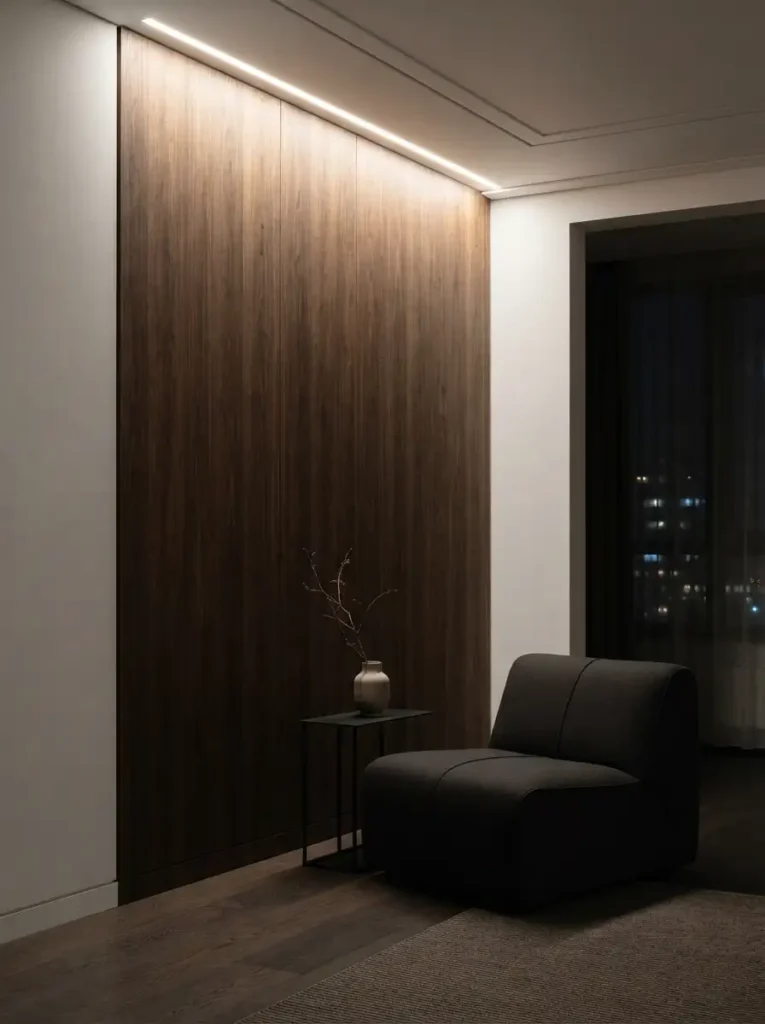
Instead of shining light down onto the floor, designers are increasingly pointing light sideways. Wall-washing and grazing involve illuminating vertical surfaces to highlight textures and create dramatic spatial depth.
Implementation: Install recessed directional downlights close to the wall, or mount a continuous LED strip in a cove at the ceiling’s edge, aiming the light directly down the surface of the wall.
Styling Tips: This technique is mandatory if you have a textured accent wall, such as exposed brick, stone veneer, or vertical wood paneling. The light “grazes” the surface, casting intense, dramatic shadows that highlight every groove and bump. If used on a smooth, brightly painted wall, it “washes” the wall in a soft, even glow.
Design Psychology: Illuminating the perimeter walls instead of the floor tricks the human eye into perceiving the room as significantly wider and taller than it actually is. It shifts the focus from the floor (which is often cluttered with furniture) to the structural boundaries of the home, creating an expansive, gallery-like atmosphere.
12. Backlit Mirrors and Floating Vanity Halos
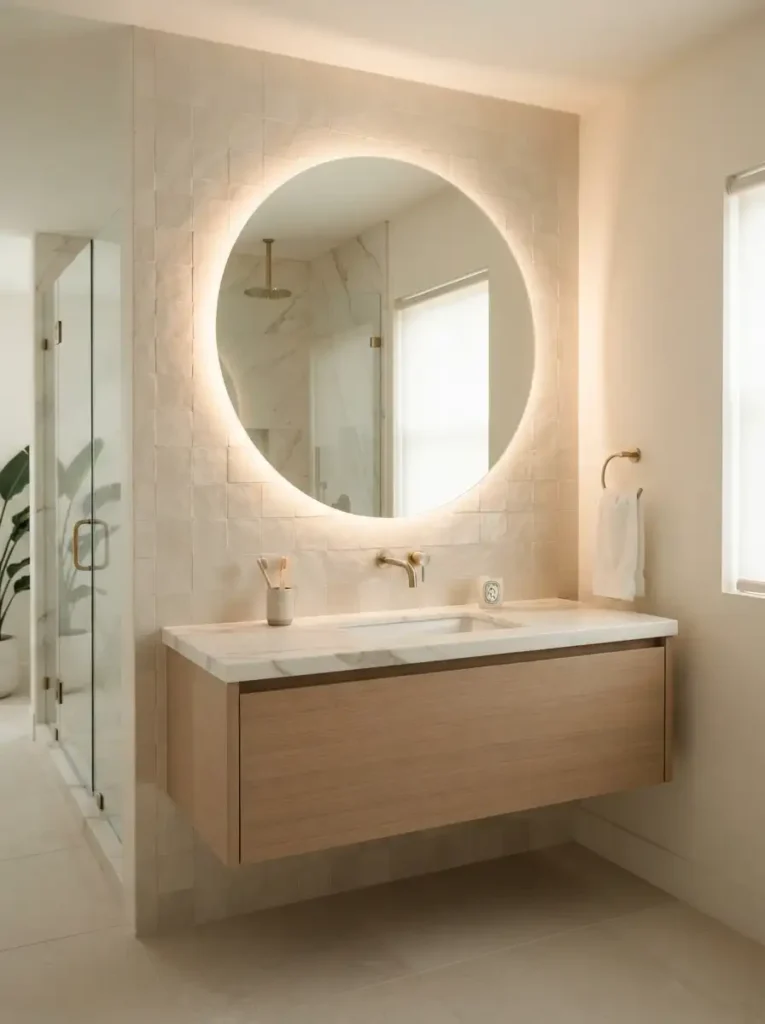
The bathroom and dressing area are seeing a major lighting upgrade, moving away from harsh overhead sconces that cast unflattering shadows on the face, toward soft, encompassing, backlit solutions.
Implementation: Replace traditional over-mirror vanity lights with a large mirror that features an integrated, frosted LED strip hidden behind its edges.
Styling Tips: Choose an oversized, pill-shaped or perfectly round backlit mirror. Ensure the LED produces a high Color Rendering Index (CRI of 90+) and a neutral white light (3500K) to provide the most accurate reflection of skin tones. The light glowing from behind the mirror will wash the surrounding wall, making the mirror appear to hover effortlessly in mid-air.
Design Psychology: Front-facing or top-down light creates harsh facial shadows, which can negatively impact mood and self-image during morning routines. A backlit mirror provides a soft, diffused halo of light that mimics the flattering qualities of a professional photography ring light. It transforms the bathroom from a utilitarian space into a luxurious, confidence-boosting sanctuary.
13. Jewel-Toned and Stained Glass Pendants
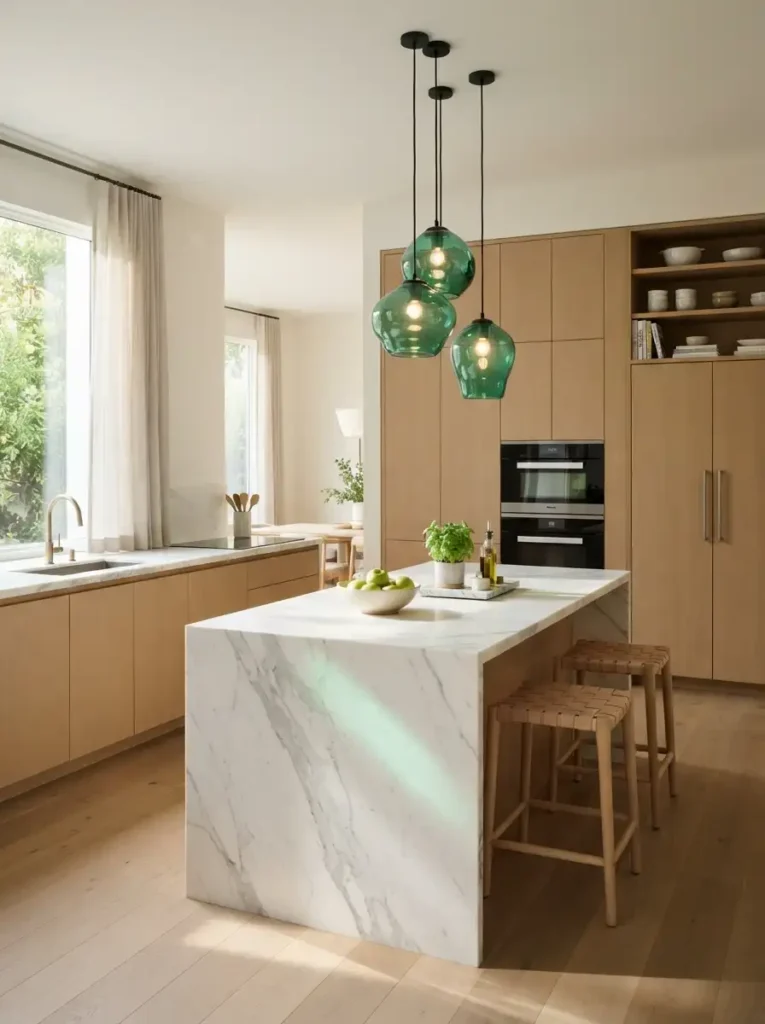
Maximalism and the desire for deeply personalized, colorful spaces have brought saturated, jewel-toned lighting to the forefront. This trend steps away from safe neutrals and embraces deeply colored glass.
Implementation: Introduce pendant lights crafted from translucent, colored glass in shades of emerald green, sapphire blue, ruby red, or amethyst purple.
Styling Tips: Hang a cluster of three uniquely shaped, different-colored jewel-toned pendants over a kitchen island or a small breakfast nook. Keep the kitchen cabinetry and countertops relatively neutral (like warm whites or rich, dark woods) so the vividly colored glass can pop. When illuminated, the glass casts stunning, colorful, watercolor-like shadows across the room.
Design Psychology: Color has a profound impact on emotion. Jewel tones evoke a sense of opulence, royalty, and historical richness. Stained or colored glass lighting acts as a literal filter for your environment, bathing the space in a warm, artistic glow that stimulates creativity and adds an undeniably bespoke, romantic quality to the home.
14. Seamless Indoor-Outdoor Lighting Transitions
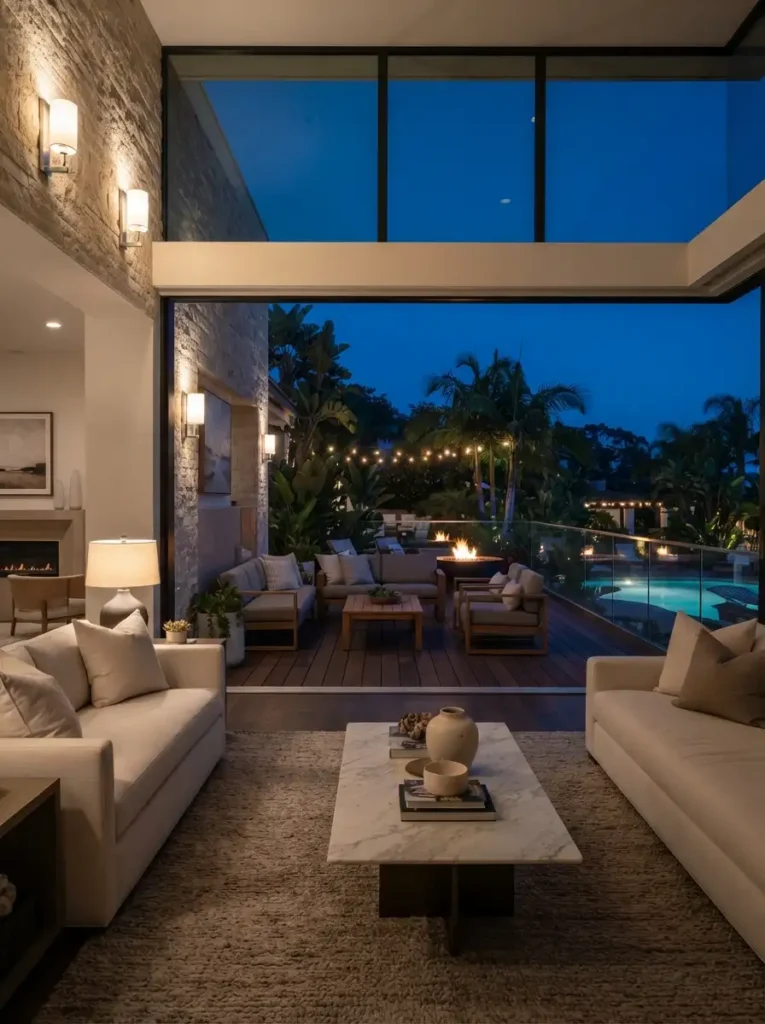
As outdoor living spaces become direct extensions of the home’s interior, lighting design is actively working to blur the physical boundaries between the inside and the outside.
Implementation: Use the exact same design language for your outdoor patio lighting as you do for your indoor living room. Carry the same metallic finishes, the same color temperatures, and even the same fixture styles across the threshold.
Styling Tips: If you have large glass sliding doors, place matching, high-quality wall sconces on the inside of the living room and the outside of the patio. Utilize high-end, weather-proof rechargeable table lamps on your outdoor dining table that look identical to indoor interior decor. Keep all exterior lighting on a warm 2700K setting to match the cozy interior.
Design Psychology: When the lighting on a patio is perfectly harmonized with the interior, the glass doors seemingly disappear at night. Instead of looking out a window into a dark, black void, the eye is drawn all the way out into the illuminated exterior. This psychological trick visually doubles the size of your living space and creates a beautifully cohesive, resort-like living experience.
Guiding Your Home’s Luminous Journey
The way we illuminate our spaces is undergoing a magnificent renaissance. Home lighting is no longer an afterthought selected at the end of a renovation; it is the foundational element that dictates how every other piece of furniture, paint color, and architectural detail is perceived. By carefully considering the temperature, placement, and physical design of your fixtures, you hold the power to completely manipulate the emotional resonance of your home.
Embracing these trends is about finding the perfect balance between high-end aesthetics and profound functionality. Whether you are installing invisible architectural linear lights to achieve a razor-sharp modern aesthetic, utilizing warm-dim technology to replicate the primal comfort of a glowing fire, or adding a massive, sweeping arc lamp to anchor your living room, each decision contributes to a more thoughtful, luxurious environment. True lighting design is an art form—an invisible, glowing brush that paints the atmosphere of your daily life. By layering your light sources, embracing organic textures, and investing in smart, circadian-friendly technology, you are not just decorating a house; you are curating a living, breathing sanctuary that beautifully supports your mood, your routines, and your ultimate well-being.