Garden gates and fencing have dramatically evolved from purely utilitarian structures meant solely to keep pets in and trespassers out. In the realm of modern exterior design and landscaping, the perimeter of your property is now recognized as the architectural frame for your home. It is the absolute first physical touchpoint a visitor interacts with, setting the aesthetic tone for everything that lies beyond it. The days of defaulting to a standard, uninspired white picket fence or a chain-link boundary are over. Today, designers treat fences and gates as vertical extensions of the home’s architecture, blending high-quality materials, cutting-edge engineering, and organic elements to create breathtaking outdoor sanctuaries.
The threshold of your garden is a psychological transition point. When you step through a beautifully crafted gate, you should feel a palpable shift in energy—a clear departure from the chaotic, public world of the sidewalk into the private, curated, and serene environment of your own land. Designing the perfect perimeter requires a delicate balancing act. You must provide necessary security and privacy without making the home feel like an imposing, unapproachable fortress. This is achieved through the thoughtful manipulation of negative space, the layering of organic and industrial materials, and a deep understanding of how light and shadow play across vertical surfaces throughout the day.
Whether you are enclosing a sprawling suburban backyard, defining a compact urban courtyard, or upgrading your front curb appeal, your boundary should be a masterpiece of exterior design. To help you navigate the myriad of options available in modern landscaping, here are 15 highly detailed, transformative concepts for your outdoor boundaries. Each idea explores the practical implementation, the designer styling secrets, and the underlying design psychology that makes these structures so impactful.
1. Horizontal Slatted Wood Fencing
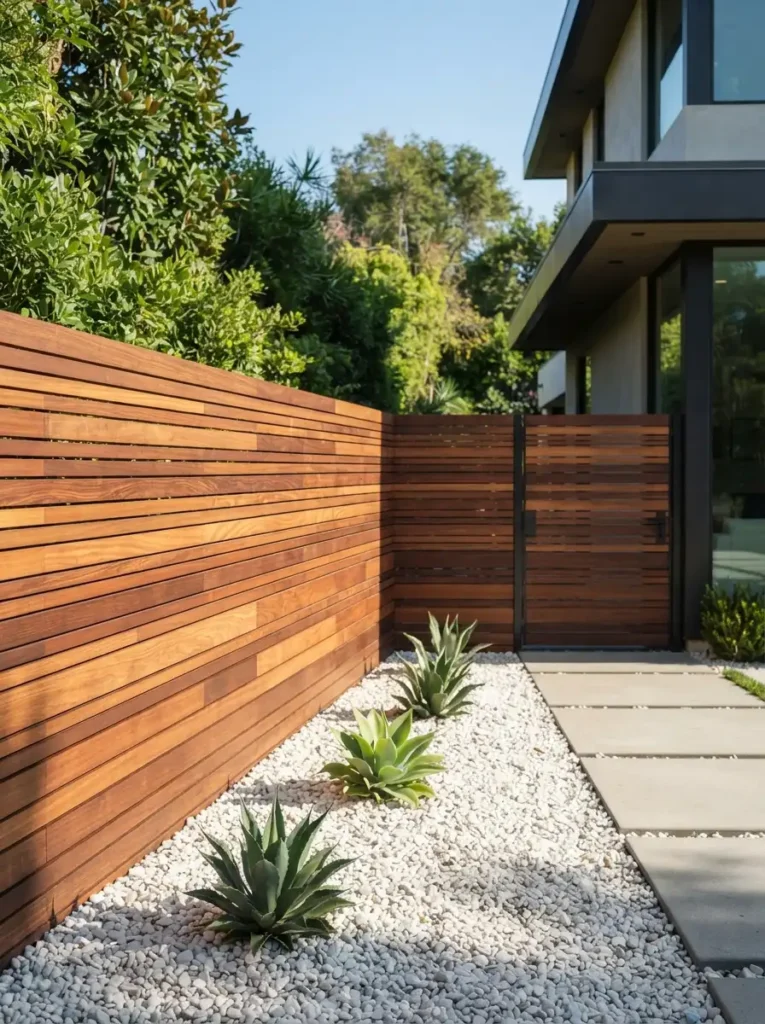
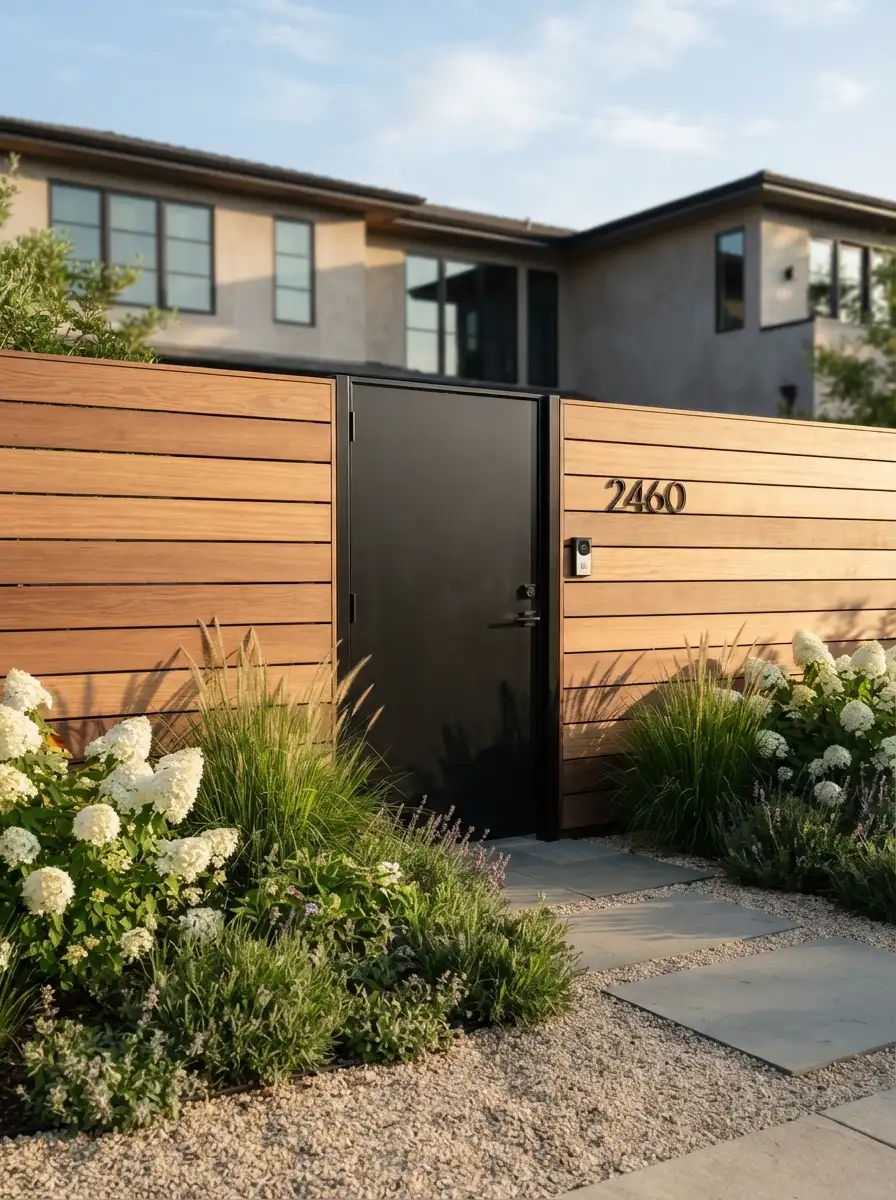
The quintessential staple of contemporary US landscaping is the horizontal slatted wood fence. Moving away from traditional vertical dog-ear pickets, horizontal lines instantly modernize a property, offering a sleek, mid-century modern aesthetic that feels both warm and highly architectural.
Implementation: Utilize high-grade, weather-resistant hardwoods like Ipe, clear Cedar, or Cumaru. Install the wooden planks horizontally across sturdy metal or hidden wooden posts. The secret lies in the spacing: leave a precise ¼-inch to ½-inch gap between each board.
Styling Tips: Do not paint this wood. Instead, treat it with a high-quality, UV-protectant penetrating oil to enhance the rich, natural grain and warm coloring. Pair this fencing with architectural, spiky plants like Agave or ornamental grasses planted at the base to soften the rigid horizontal lines.
Design Psychology: Horizontal lines trick the human eye into perceiving a space as wider and more expansive than it actually is. The slight gaps between the boards allow wind to pass through and offer just a sliver of light transmission. This provides robust privacy without making the yard feel like a suffocating, solid wooden box.
2. The Shou Sugi Ban (Charred Wood) Perimeter
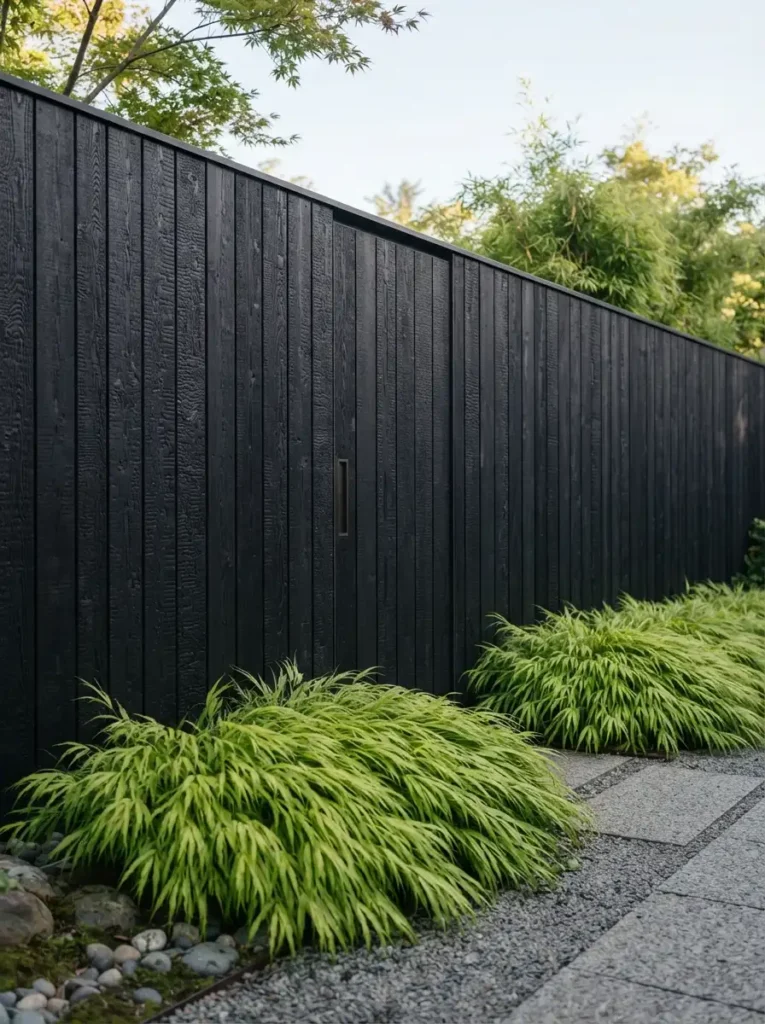
For those seeking a striking, high-contrast aesthetic that requires almost zero maintenance, the ancient Japanese technique of Shou Sugi Ban (Yakisugi) is dominating high-end exterior design.
Implementation: This technique involves deeply charring the surface of wooden planks (traditionally cedar) with an open flame, cooling it, brushing it, and sealing it with natural oil. This process carbonizes the exterior, making the wood waterproof, fire-retardant, and highly resistant to insects and rot.
Styling Tips: Use Shou Sugi Ban for both your fencing and a matching, seamless flush gate. The resulting color is a mesmerizing, iridescent charcoal-black. Plant bright, vibrant chartreuse foliage (like Japanese Forest Grass) or white blooming hydrangeas against the fence. The dark background will make the greenery visually explode.
Design Psychology: A charred wood fence introduces the element of fire and profound historical craftsmanship into the landscape. Matte black boundaries act as a “shadow” in the garden, receding visually and forcing the eye to focus entirely on the vibrant living plants in front of it. It represents Wabi-Sabi—finding beauty in the passage of time and natural alteration.
3. Corten Steel Laser-Cut Gates
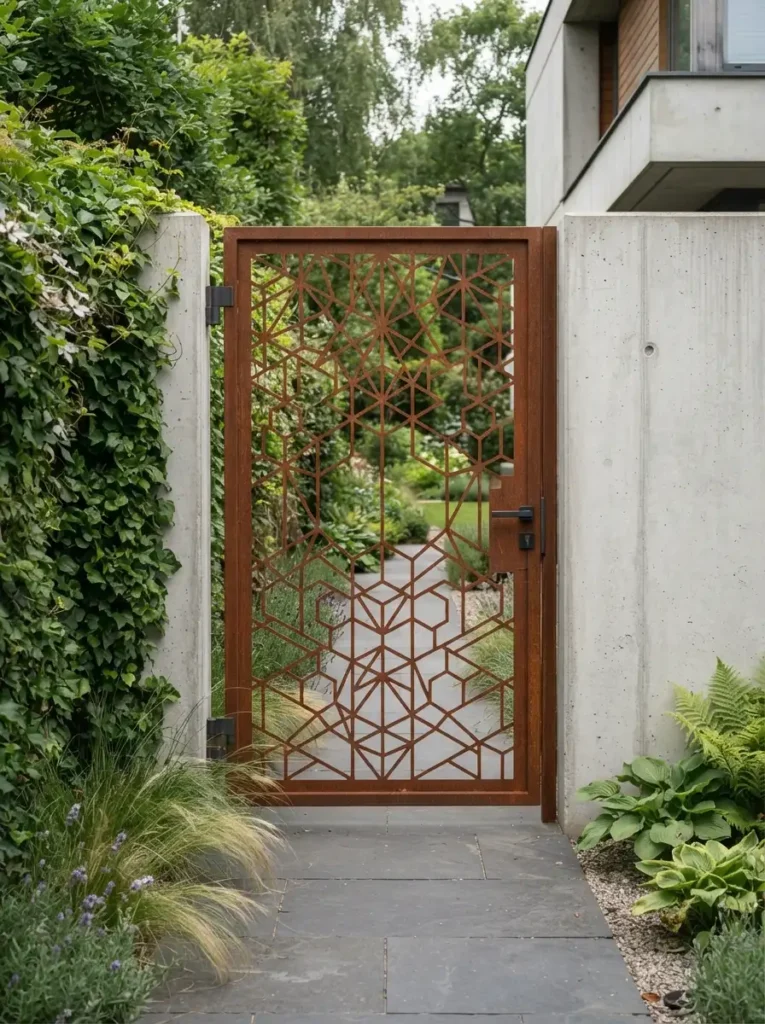
Industrial materials are increasingly finding their way into organic garden spaces. Corten steel, also known as weathering steel, offers a brilliant fusion of ultra-modern manufacturing and earthy, natural color palettes.
Implementation: Commission a custom garden gate made from heavy-gauge Corten steel. Have a local fabricator laser-cut a geometric pattern, an abstract botanical motif, or a modern asymmetrical design directly into the metal.
Styling Tips: When first installed, Corten steel looks like standard gray metal. Over a few months of exposure to rain and humidity, it will develop a stunning, protective outer layer of rust. Pair this rusted, orange-toned gate with deep green vines or a flanking wall of raw, poured concrete for a masterful textural contrast.
Design Psychology: Corten steel is a living material that actively responds to its environment. The rusted finish provides an earthy, fiery warmth that feels at home in nature, while the precision of the laser-cut design communicates high-tech, modern sophistication. It satisfies our psychological craving for both structural security and artistic expression.
4. Living Fences and Pleached Trees
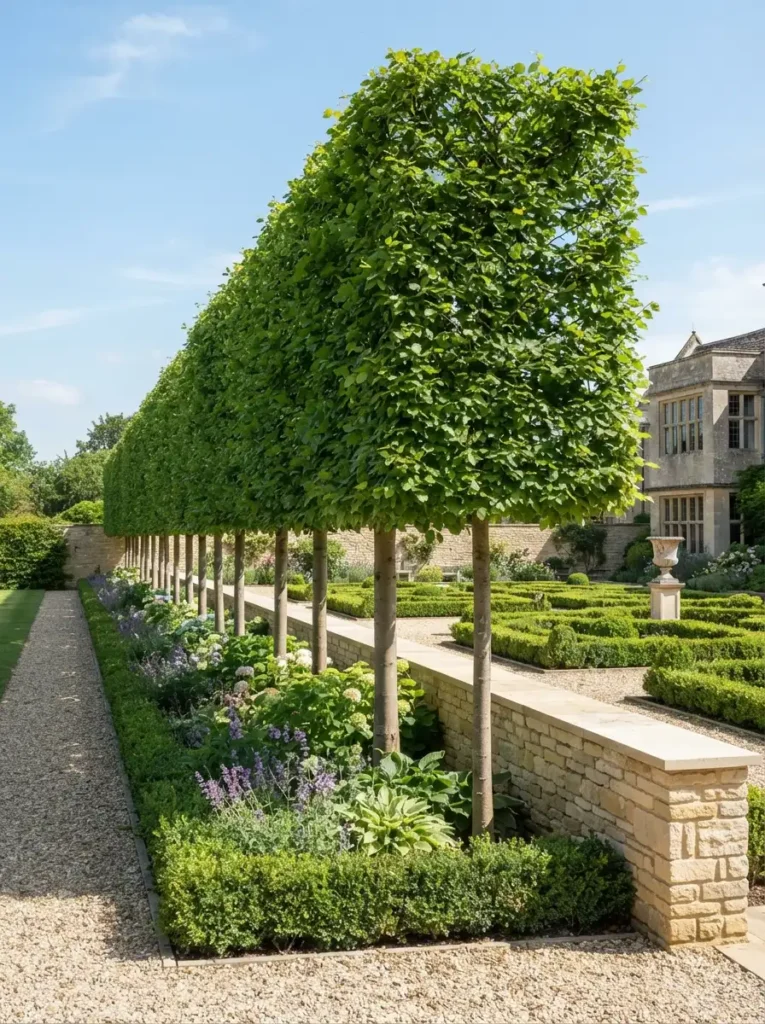
A boundary does not have to be constructed from dead wood or cold metal. Biophilic design champions the “living fence,” a profound way to enclose a property using manipulated living architecture.
Implementation: Utilize the European technique of “pleaching.” Plant a row of trees (like Hornbeams, Lindens, or Beech trees) in a straight line. As they grow, aggressively prune the lower trunks bare, and weave/tie the upper branches together horizontally along a wire trellis framework.
Styling Tips: This creates a solid, elevated rectangular hedge that looks like a floating green wall. Underneath the bare trunks, build a low, knee-high natural stone wall. The result is a highly manicured, formal, and breathtakingly lush perimeter.
Design Psychology: A living fence literally breathes life into the neighborhood. Psychologically, it softens the harshness of property borders, presenting a friendly, green face to the street while still providing an impenetrable visual block to your second-story windows. It represents patience, stewardship, and a profound respect for nature.
5. Matte Black Aluminum Minimalist Fencing
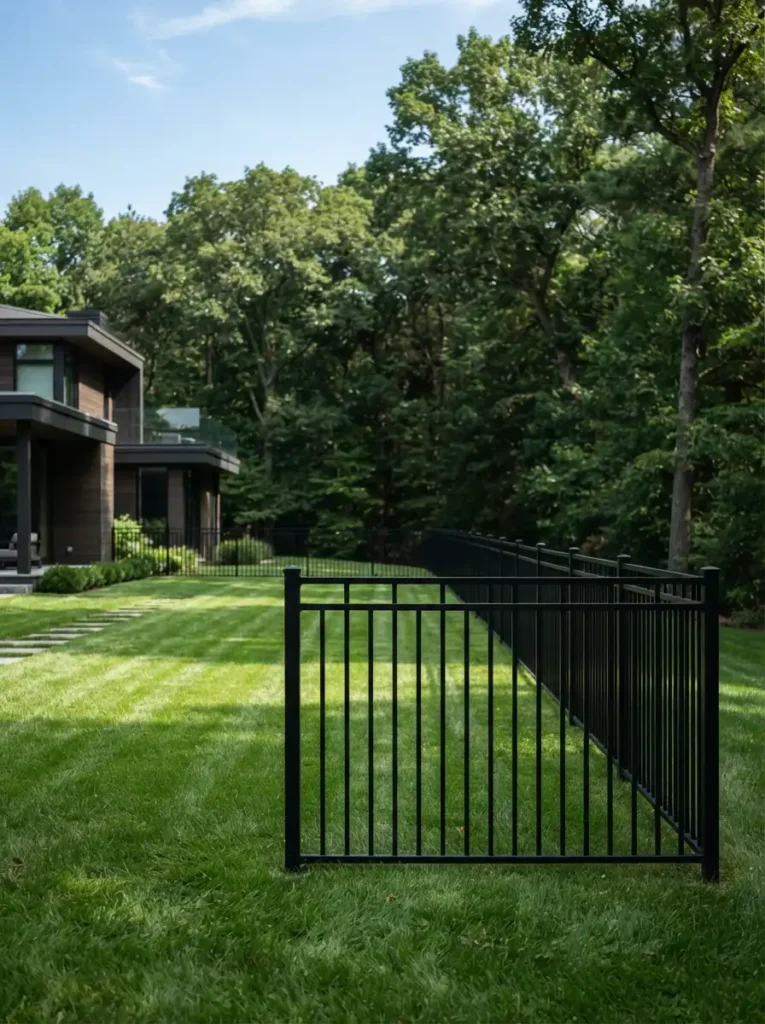
If you want the security of a metal fence without the heavy, gothic ornamentation of traditional wrought iron, sleek matte black aluminum is the ultimate modern solution.
Implementation: Install prefabricated aluminum fencing featuring simple, clean, square vertical pickets with absolutely no spear tops, scrolls, or decorative finials. Ensure the finish is a powder-coated matte black, not glossy.
Styling Tips: This fencing is perfect for enclosing a pool area or defining a boundary that looks out onto a beautiful view (like a lake, forest, or golf course). Let creeping vines like Star Jasmine or Clematis lightly climb the black metal to integrate it into the garden.
Design Psychology: Matte black minimalist fencing is designed to be invisible. The human eye struggles to focus on thin, matte black vertical lines against a bright, distant landscape. Therefore, the fence effectively disappears, providing the psychological comfort of complete physical security without obstructing your connection to the expansive world beyond.
6. The Hidden “Secret Garden” Moon Gate
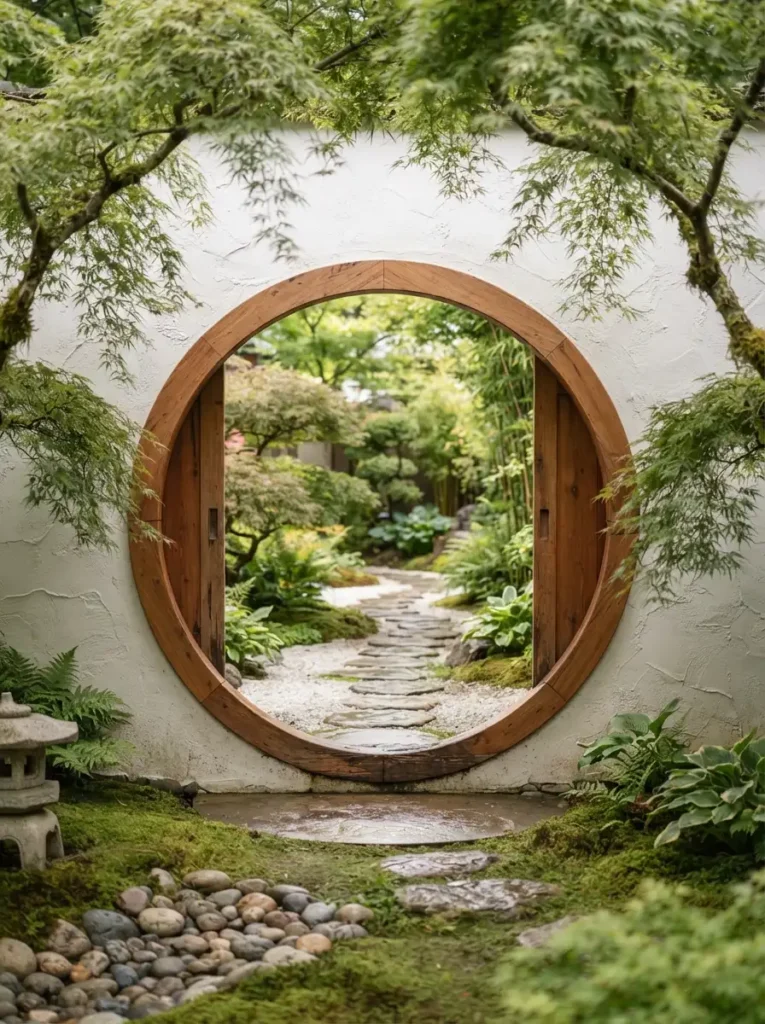
To create a profound sense of wonder and transition, moving away from standard rectangular gates and embracing the ancient Chinese architectural concept of the “Moon Gate” offers unparalleled elegance.
Implementation: Construct a circular opening in a solid brick, stone, or stucco garden wall. The gate itself is custom-built as a perfect circle, typically out of rich, warm cedar or copper, pivoting on a central vertical axis or swinging open from a heavy hinge.
Styling Tips: Frame the circular opening with softly draping weeping foliage, like a Japanese Maple or a cascading cedar. Illuminate the inner rim of the circle with hidden, waterproof LED strip lighting so the portal glows ethereally at night.
Design Psychology: A circle represents wholeness, perfection, and the continuous cycle of nature. Walking through a circular Moon Gate requires a slight psychological shift; it feels less like opening a door and more like stepping through a portal into a magical, separated realm. It invokes intense curiosity and a deep sense of peace.
7. Gabion Wall Fencing with Natural Stone
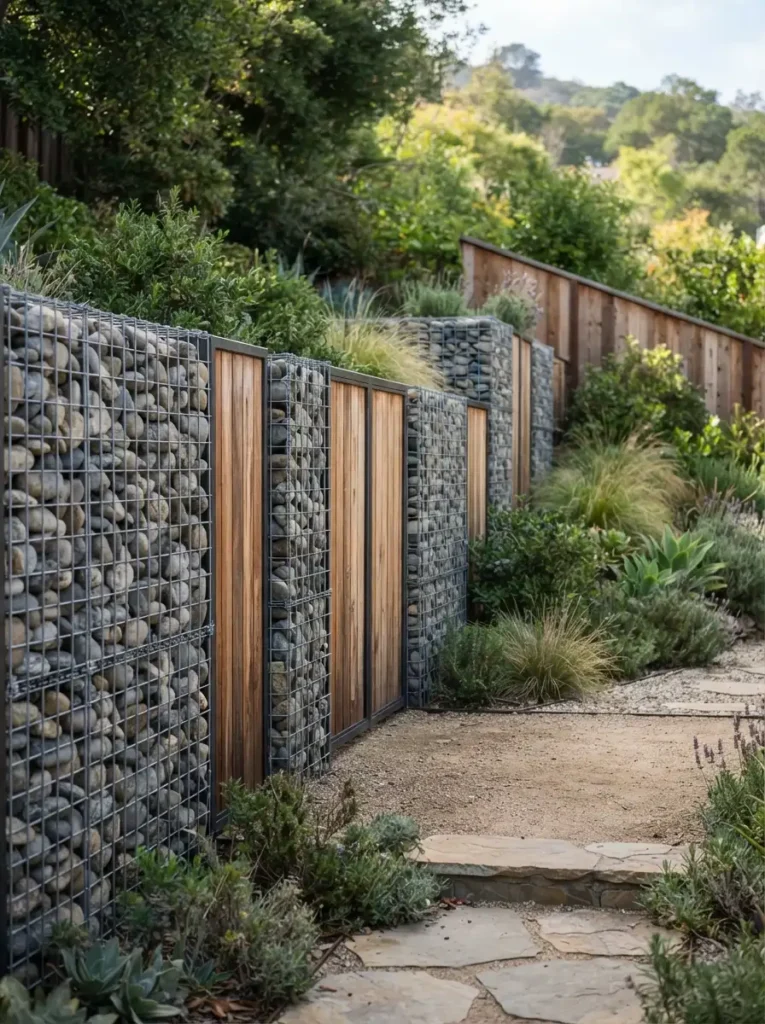
For homeowners looking for an indestructible, highly textural, and environmentally integrated boundary, gabion walls offer a brilliant blend of modern industrialism and natural geology.
Implementation: Gabion fencing involves constructing thick, rectangular cages out of heavy-duty galvanized steel wire and tightly packing them with natural stones.
Styling Tips: Use local river rock, crushed basalt, or smooth granite to fill the cages. To break up the heaviness of a continuous stone wall, alternate gabion pillars with sections of horizontal slatted cedar. Top the gabion baskets with a smooth slab of flagstone to allow them to double as outdoor seating.
Design Psychology: Gabion walls carry immense visual and physical weight. They communicate an unshakable sense of permanence and fortress-like security. However, because they are filled with natural stone, they do not feel alien to the landscape. They evoke the grounding, ancient feeling of a rocky riverbed or a mountainside, deeply anchoring the property to the earth.
8. Frosted Glass and Aluminum Privacy Screens
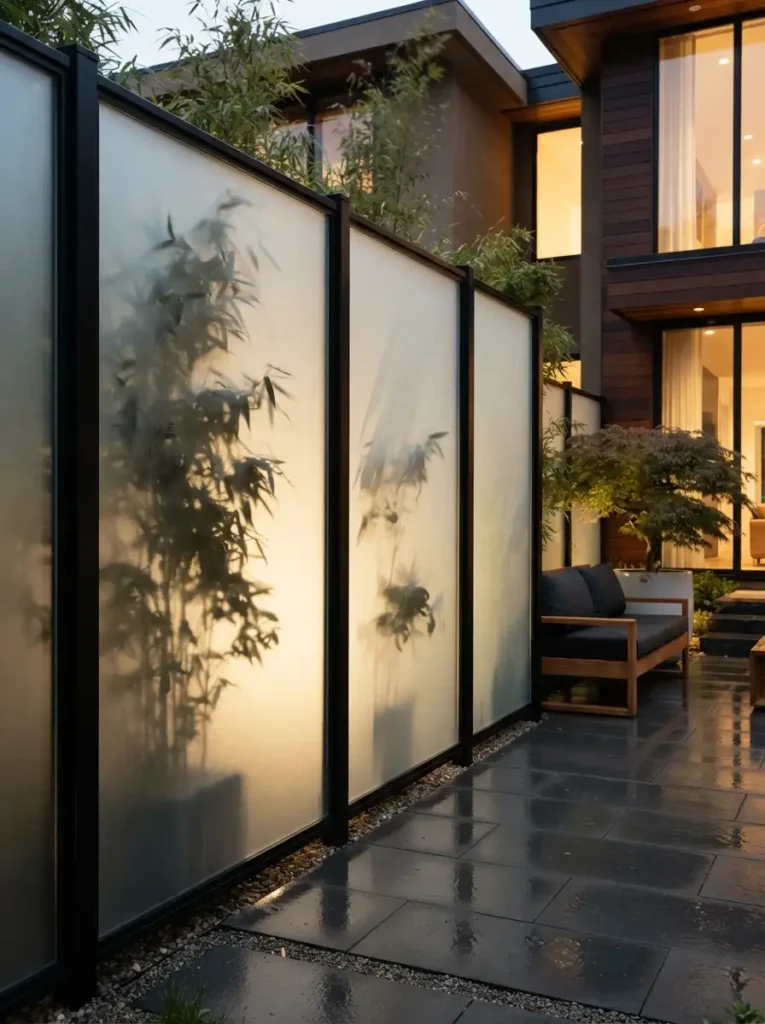
In dense urban environments or high-end coastal properties where you want absolute privacy without sacrificing natural light, frosted glass fencing is a luxurious, cutting-edge solution.
Implementation: Install heavy-duty, tempered, frosted, or “acid-etched” architectural glass panels framed in sleek, anodized aluminum channels.
Styling Tips: Backlight the glass fencing at night. Place structural plants (like Bamboo or tall Cacti) between the light source and the glass. When viewed from the outside, the plants will cast stunning, blurred, artistic silhouettes against the glowing frosted panels.
Design Psychology: Solid walls in a small urban courtyard can induce feelings of claustrophobia. Frosted glass completely obscures the details of the yard from prying eyes, but it allows 80% of the ambient sunlight to pass through. This luminous quality makes the boundary feel weightless and ethereal, completely eliminating the “boxed-in” feeling of a small yard.
9. Woven Wattle and Willow Fencing
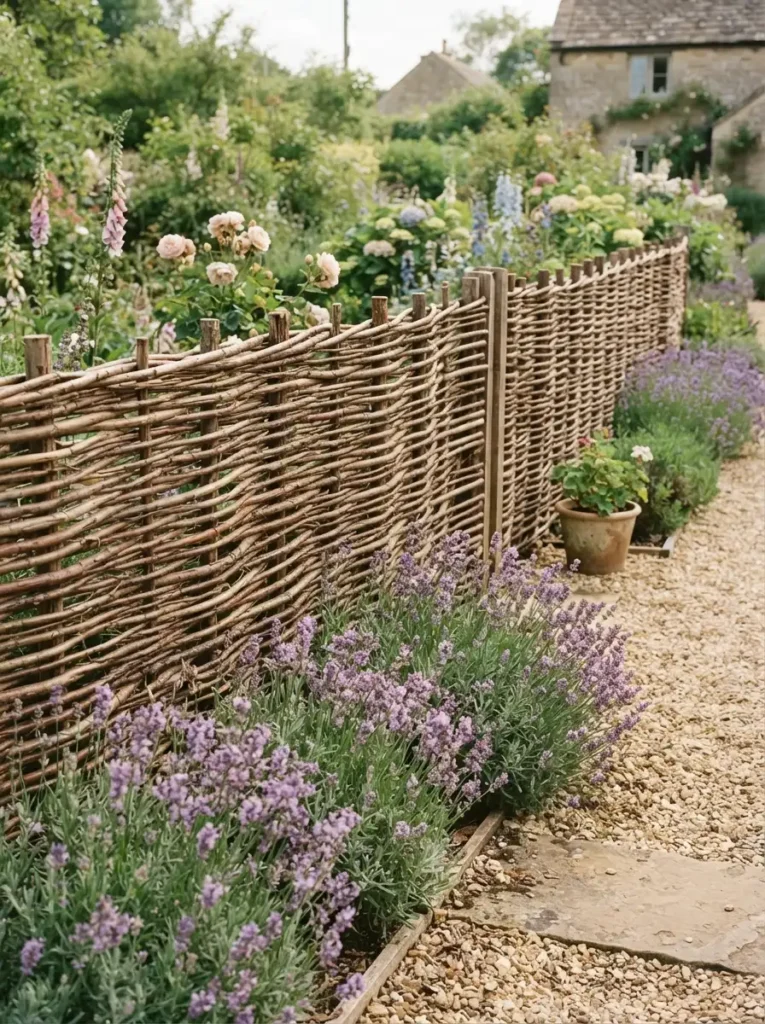
For those cultivating a romantic, English cottage garden, an organic modern aesthetic, or a highly sustainable landscape, ancient woven fencing brings incredible, tactile charm to a property.
Implementation: Wattle fencing is created by weaving thin, flexible branches of hazel, willow, or bamboo horizontally between upright wooden stakes. You can purchase these in pre-woven panels for easy installation.
Styling Tips: Use a woven willow gate as the entrance to a vegetable garden or a designated wildflower meadow. The rough, organic texture pairs beautifully with soft, billowy plants like lavender, climbing roses, and cosmos.
Design Psychology: Woven branches represent one of the oldest forms of human craftsmanship. Incorporating this ancient technique into a modern landscape grounds the space in history and tradition. The intricate, basket-like weave provides a highly tactile, soft visual texture that feels deeply nurturing, eco-friendly, and authentically connected to the earth.
10. Biophilic Integrated Planter Fences
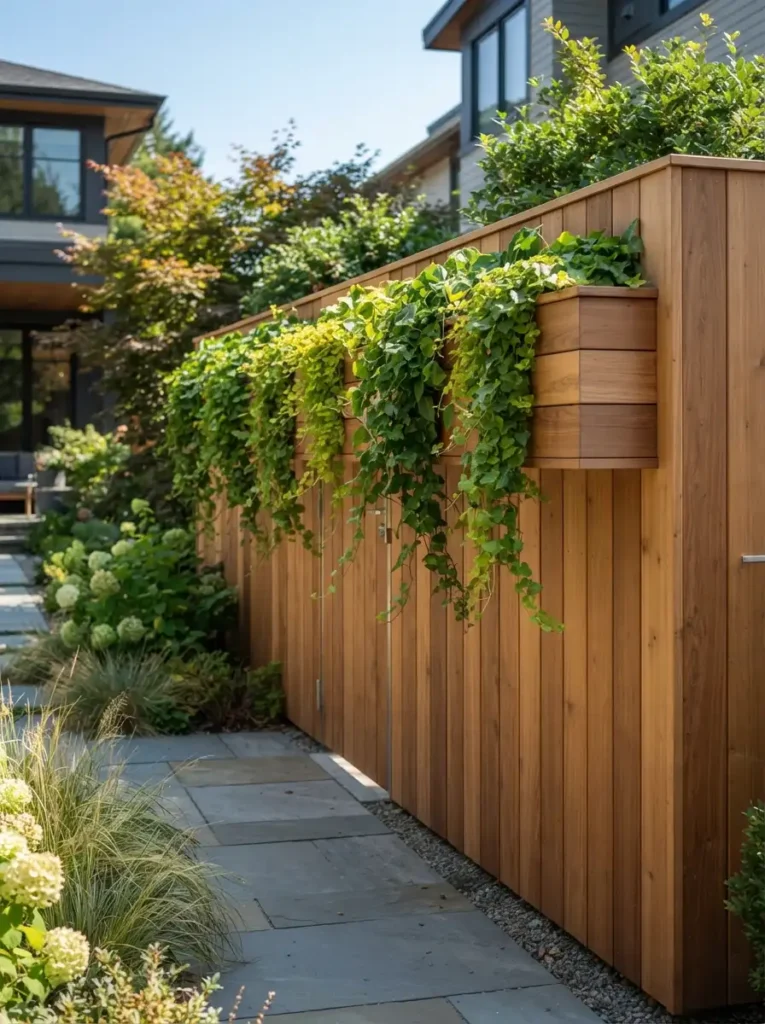
Why should a fence just be a flat wall when it can double as a vertical garden? Integrated planter fences maximize square footage and inject life directly into the boundary itself.
Implementation: Construct a deep, structural wooden fence with a hollowed-out top trough or staggered, built-in horizontal planter boxes running the length of the perimeter. Ensure the planters are lined with heavy-duty waterproofing membranes and have proper drainage tubes running down the posts.
Styling Tips: Fill the integrated planters with trailing plants like Creeping Jenny, String of Pearls, or cascading ivy. As the plants grow, they will spill over the edges, creating a waterfall of greenery that softens the hard wooden architecture.
Design Psychology: Integrating planters into the fence blurs the line between the built environment and the natural one. It turns a static, defensive barrier into a dynamic, nurturing ecosystem. This approach makes the yard feel lush and abundant, appealing to our innate biophilic desire to be surrounded by thriving, vibrant life.
11. Wrought Iron with a Modern Matte Finish
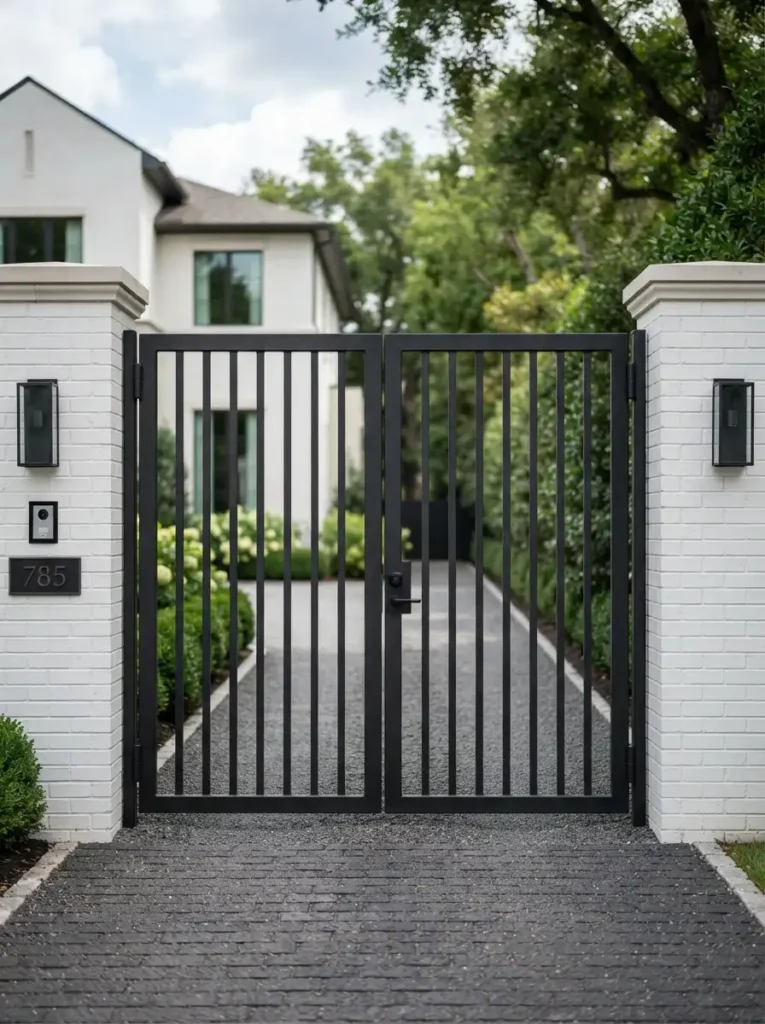
Wrought iron is a classic, but traditional ornate designs can feel heavy, dated, or overly gothic. The modern approach strips the iron back to its barest, most elegant essentials.
Implementation: Commission a heavy, solid wrought iron gate and fence, but insist on a completely unadorned design. Use thick, solid iron bars arranged in a simple vertical pattern, housed within a heavy iron frame. Finish it in a matte, textured charcoal or flat black.
Styling Tips: The beauty of this fence lies in its sheer physical weight and undeniable quality. Pair it with monumental brick pillars or smooth stucco columns. Flank the iron gate with large, classic urns filled with structured boxwood topiaries.
Design Psychology: Solid iron communicates wealth, history, and uncompromising security. By removing the ornate scrolls and sticking to clean, minimal lines, the fence transitions from an outdated Victorian aesthetic to a timeless, authoritative modern presence. It demands respect while remaining elegantly understated.
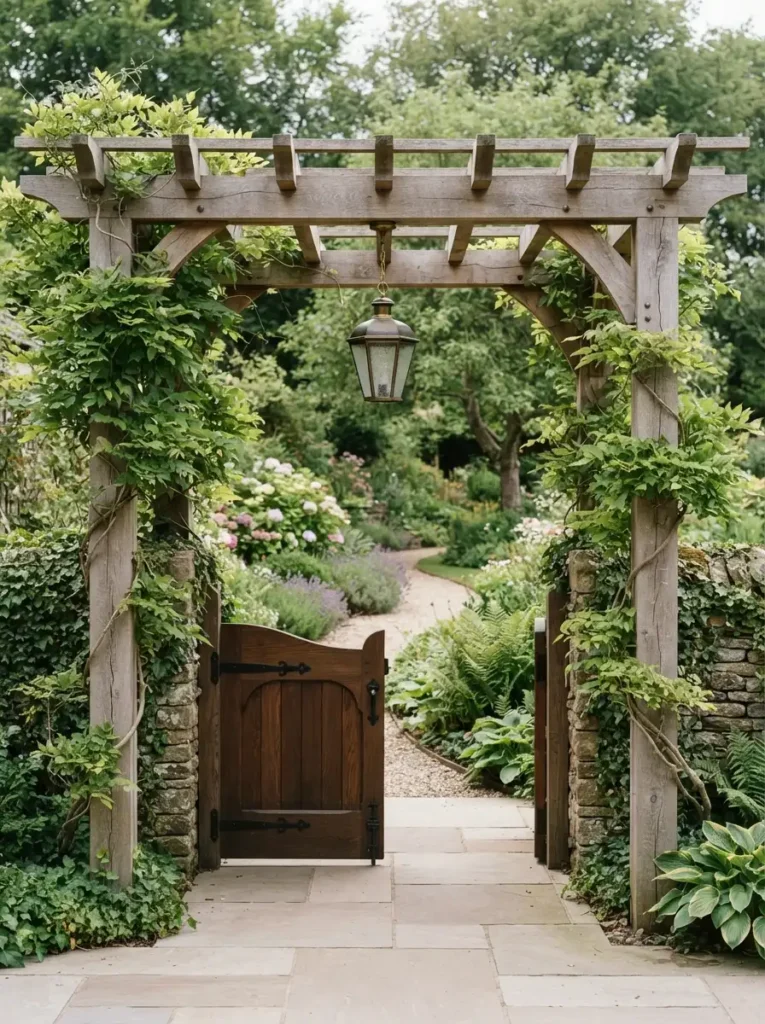
12. The Architectural Pergola Gate Entrance
A garden gate shouldn’t just be a door you walk through; it should be an experience. Adding an overhead architectural element completely changes the dynamic of entering a property.
Implementation: Build a sturdy wooden pergola, arbor, or flat-roofed modern overhang directly above your front gate. Ensure the structure is deep enough that a person is fully sheltered underneath it before they even open the latch.
Styling Tips: Train fragrant climbing plants like Wisteria, Climbing Jasmine, or Bougainvillea to grow up the posts and canopy over the pergola roof. Install a beautiful, heavy brass pendant light hanging directly from the center of the overhead structure to illuminate the gate hardware at night.
Design Psychology: An overhead structure taps into the psychology of “prospect and refuge.” Standing beneath a solid canopy provides an immediate, subconscious feeling of shelter and safety. It defines the entrance not just as a boundary line, but as an outdoor foyer—a welcoming, protective threshold that respectfully transitions a guest from the street into your private world.
13. Slatted Bamboo for Zen Gardens
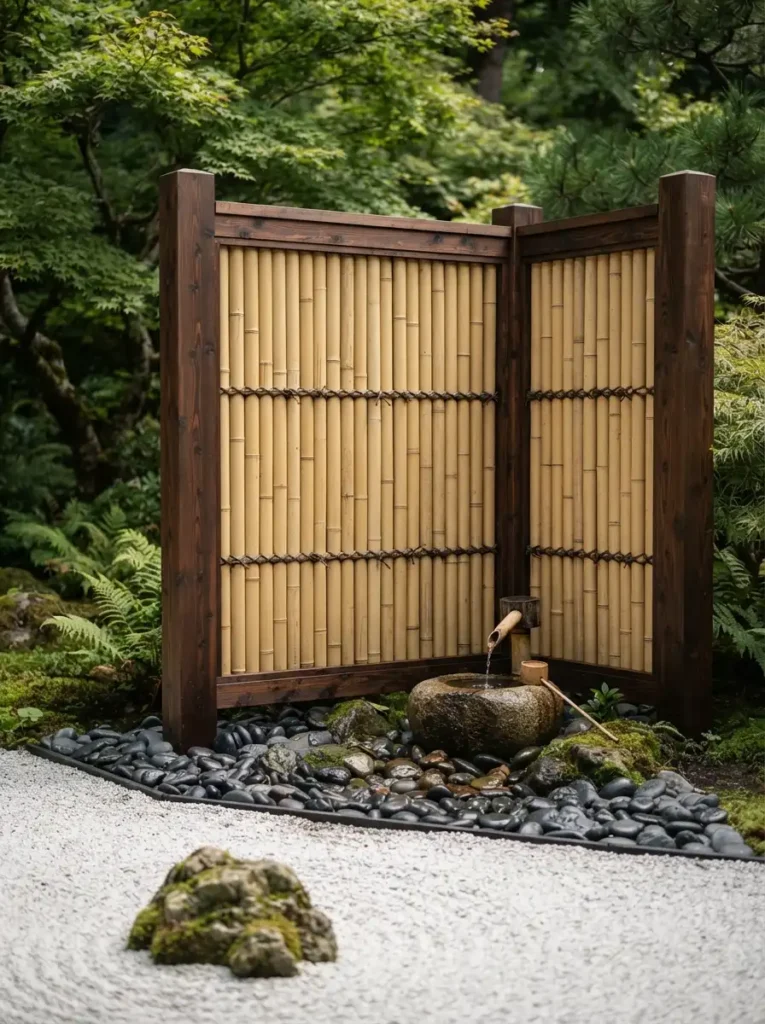
Bamboo is incredibly sustainable, rapidly renewable, and offers a sleek, uniform aesthetic perfect for creating private, Zen-inspired wellness retreats in your own backyard.
Implementation: Avoid cheap, flimsy rolled bamboo fencing. Instead, use high-end, thick, kiln-dried whole bamboo poles, framed securely within heavily stained cedar borders.
Styling Tips: Use this fencing to enclose an outdoor soaking tub, a meditation deck, or a modern fire pit area. Surround the base of the bamboo with smooth black river stones and a gentle, bubbling basalt water feature to complete the sensory experience.
Design Psychology: Bamboo has a profound acoustic quality; when the wind brushes against it, it creates a hollow, soothing natural chime. Visually, the perfectly straight, vertical lines of the bamboo stalks promote a sense of deep order, tranquility, and mental clarity, essential for spaces dedicated to stress relief and mindfulness.
14. The Low-Profile Front Yard Border
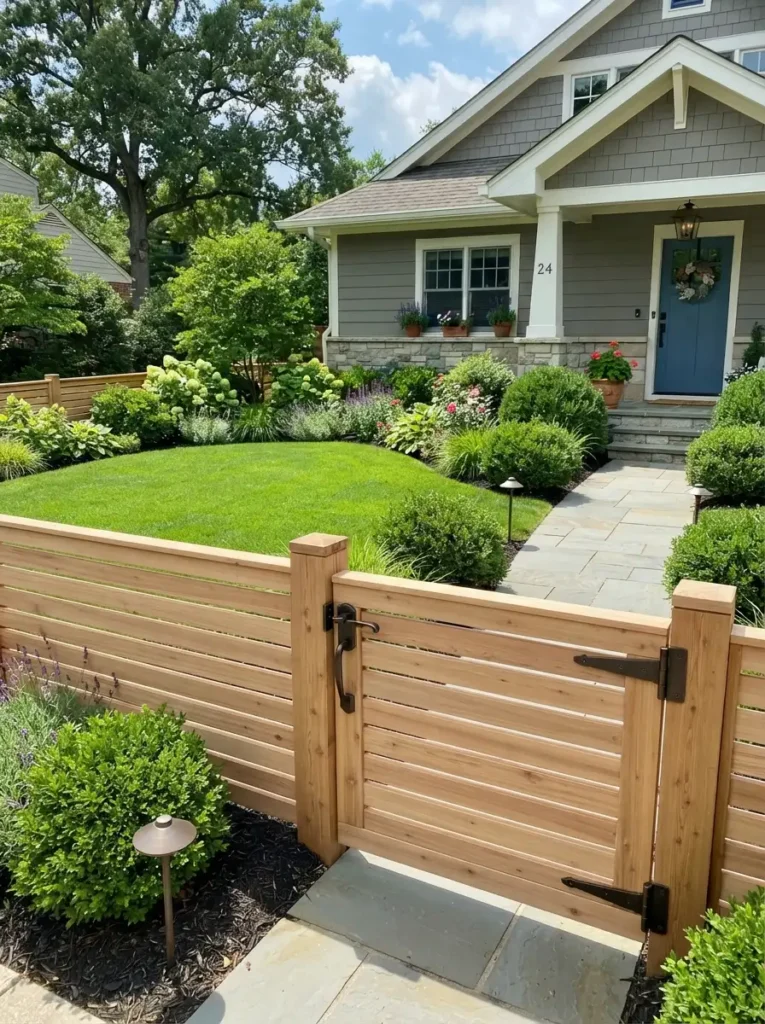
Not every fence needs to be a 6-foot-tall privacy wall. In the front yard, the goal is often just to politely define the property line without turning your back on the neighborhood community.
Implementation: Install a low-profile, 3-foot-tall fence. This can be a modern horizontal slat design, a low gabion stone wall, or a minimalist black aluminum rail.
Styling Tips: Pair the low fence with a gate that is identical in height. Because the fence is low, the gate hardware (the latch and hinges) becomes a major focal point. Invest in heavy, luxurious, hand-forged bronze or brass thumb-latches.
Design Psychology: A low fence establishes a psychological boundary rather than a physical barrier. It politely signals to dog walkers and delivery drivers where the public space ends and the private sanctuary begins. It allows your beautiful home exterior to be seen and admired by the street, fostering a sense of community connection and welcoming curb appeal.
15. Smart Gates with Integrated LED Washing
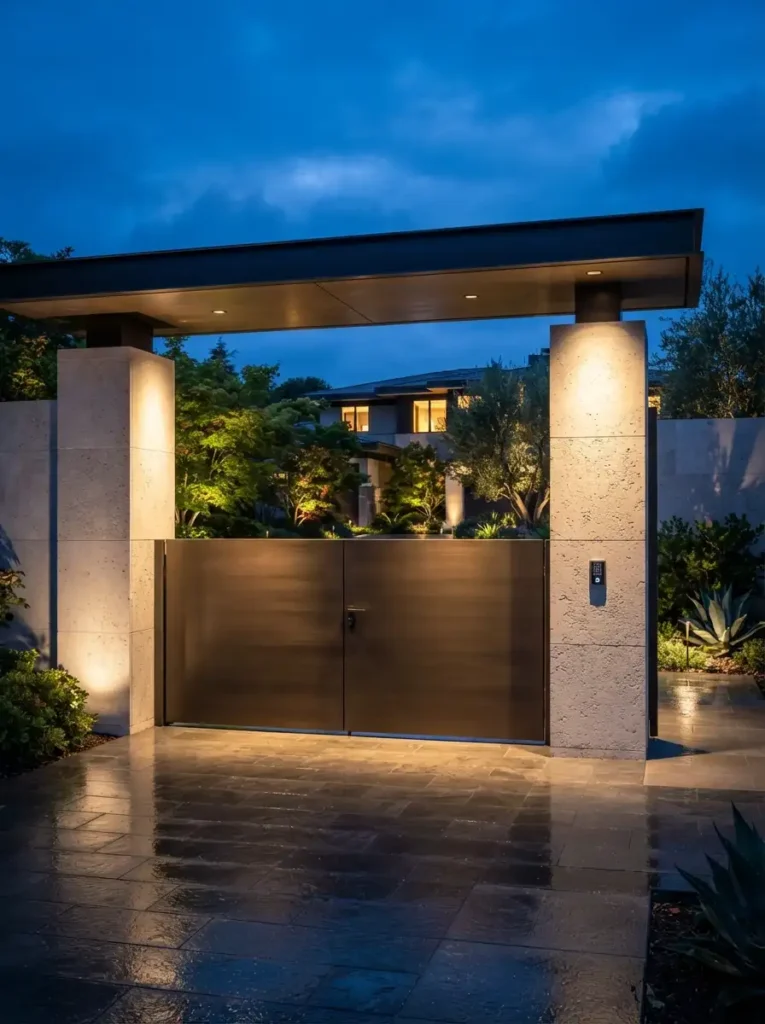
The ultimate luxury in modern exterior design is the seamless integration of high-end smart technology and sophisticated lighting directly into the architecture of the gate.
Implementation: Install a solid driveway or pedestrian gate on an automated, whisper-quiet electric track. Hardwire the structure with downward-facing, hidden LED grazing lights that wash a warm, 2700K glow down the face of the gate. Integrate a flush, minimalist video intercom and keyless biometric (fingerprint) entry system into the adjacent pillar.
Styling Tips: The technology should be virtually invisible. Hide the motors and wires underground or within custom pillars. The focus should be entirely on the architectural beauty of the glowing gate at night.
Design Psychology: Convenience is the pinnacle of modern luxury. A smart gate provides absolute, effortless control over your environment. The integrated LED lighting creates a dramatic, theatrical sense of arrival, ensuring that coming home after dark feels like entering a highly secure, exclusive, and welcoming private resort.
Defining Your Landscape’s Architectural Narrative
The perimeter of your property represents the opening chapter of your home’s story. By moving away from standardized, off-the-shelf fencing and treating your garden gates and boundaries as legitimate architectural installations, you completely elevate the emotional and visual impact of your property. Every material you choose sends a specific psychological signal. The fiery warmth of Corten steel speaks of modern artistry, the lush abundance of a pleached living fence whispers of biophilic connection, and the sleek invisibility of matte black aluminum offers uncompromised, expansive views.
Creating a stunning outdoor sanctuary is not just about the flowers you plant or the patio furniture you select; it is about how successfully you separate that space from the noise of the outside world. Take the time to evaluate the architecture of your home, the natural colors of your local landscape, and your personal need for privacy. By implementing these 15 elevated, high-value concepts, you transform your boundary lines from mere property markers into profound, beautiful thresholds that proudly welcome you into your own personal retreat every single day.