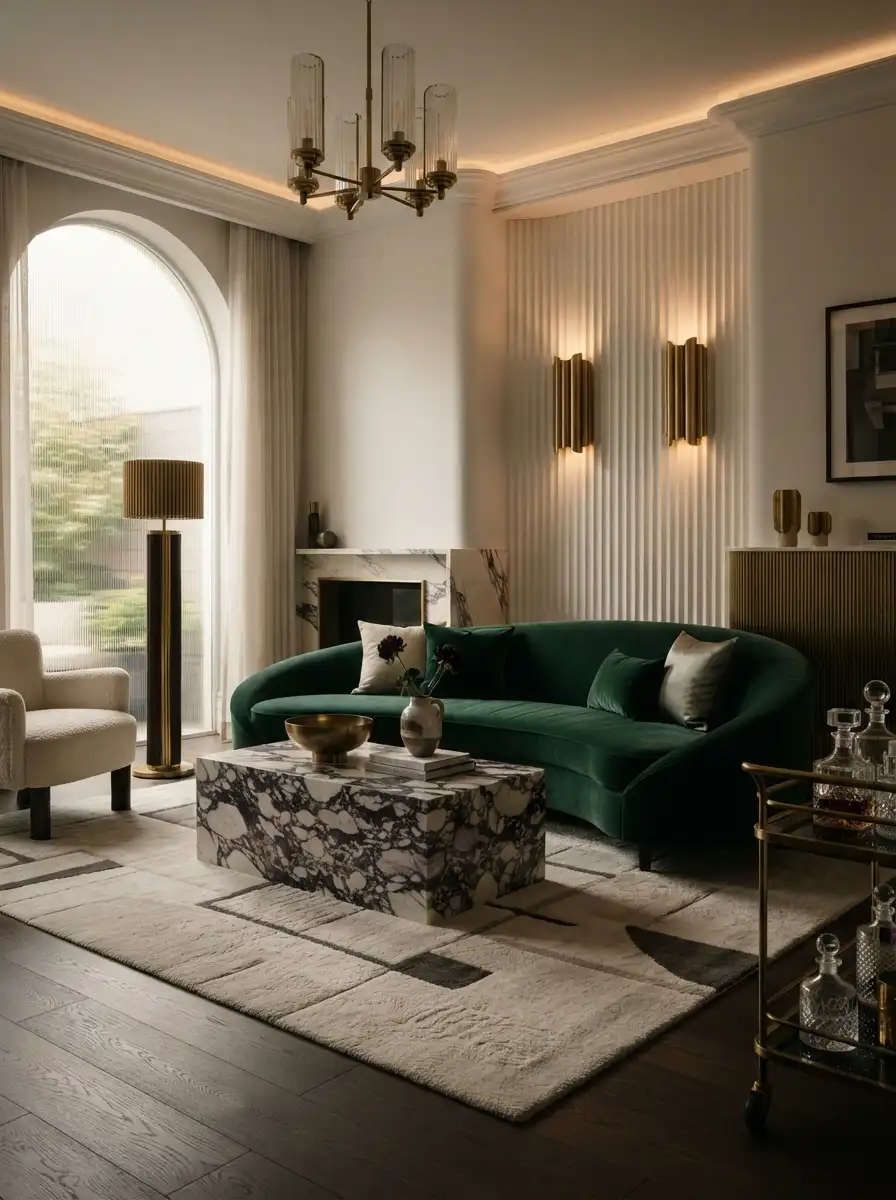
For the past decade, the interior design world has been heavily dominated by the “organic modern” movement—a beautiful, but highly restrained, aesthetic focused on pale woods, white bouclé, and rustic minimalism. But as with all great design eras, the pendulum is swinging back. We are currently witnessing a massive, thrilling shift toward something much richer, moodier, and infinitely more glamorous.
Enter: Neo Deco.
Neo Deco (or Modern Art Deco) is a brilliant, contemporary revival of the iconic 1920s and 1930s Art Deco movement. However, if you are picturing the loud, overwhelming, themed-party aesthetic of The Great Gatsby—complete with cheap geometric gold foil prints and harsh black-and-white contrasts—it is time to completely reframe your perspective.
The new iteration of Art Deco is incredibly sophisticated. Neo Deco strips away the gaudy, literal interpretations of the past and instead focuses on the foundational principles of the era: unparalleled craftsmanship, bold geometric silhouettes, deeply luxurious materials, and a sense of cinematic symmetry. It blends the opulent, tactile materials of the 1930s (think burl wood, mohair, and heavily veined marble) with the clean, uncluttered restraint of modern 21st-century living.
If you are craving a home that feels less like a sterile gallery and more like a bespoke, high-end boutique hotel or a chic Parisian apartment, this is your ultimate design aesthetic. Here are 14 stunning Neo Deco interior design ideas that will help you build a space that feels deeply luxurious, effortlessly glamorous, and beautifully timeless.
1. Embrace the Tactile Luxury of Fluted and Reeded Textures
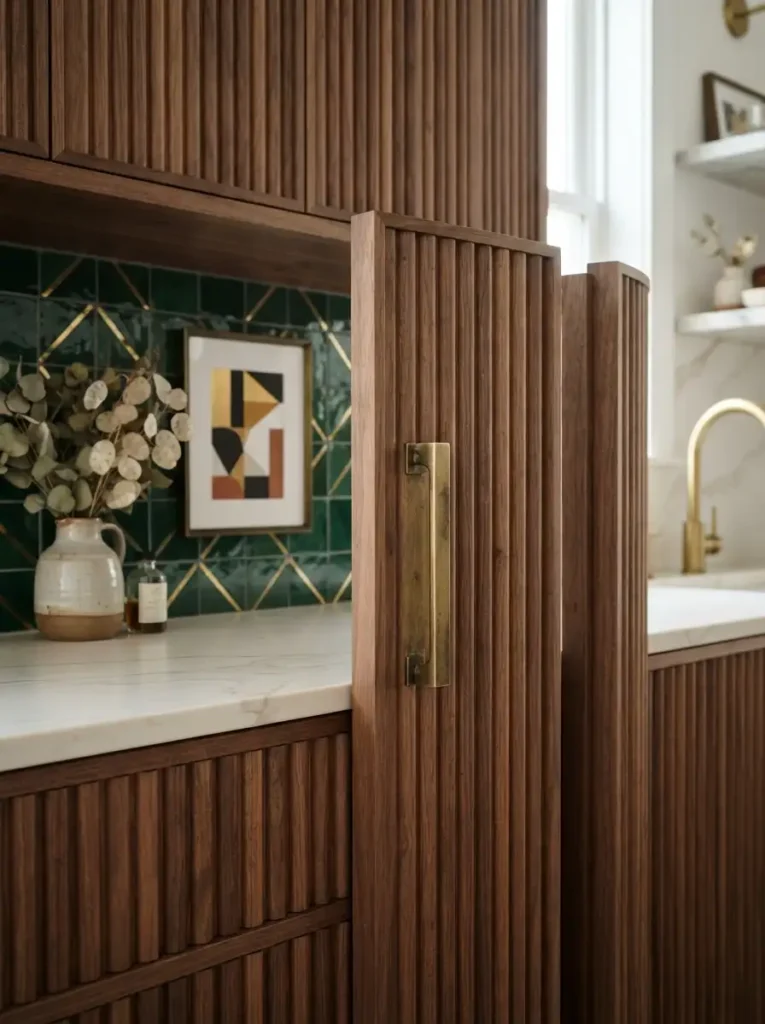
If there is one absolute hallmark of the Neo Deco movement, it is the heavy use of fluted (concave) and reeded (convex) textures. The original Art Deco era loved vertical lines because they naturally draw the eye upward, evoking the soaring geometry of 1920s skyscrapers.
Today, this texture is being used in incredibly elevated, modern ways to add depth to otherwise flat surfaces.
How to execute this look:
- Cabinetry: Opt for custom tambour (slatted wood) on kitchen islands or bathroom vanities.
- Glasswork: Replace standard clear glass on shower doors or cabinetry with reeded glass. It obscures the view just enough to provide privacy while catching the light beautifully.
- Architecture: Use fluted plaster molding along your walls or underneath a fireplace mantel.
Why it works:
Fluting adds immense visual interest and physical texture without relying on busy, printed patterns. It creates a rhythmic, architectural backdrop that feels highly customized and expensive.
2. Anchor the Room with Burl Wood Furniture
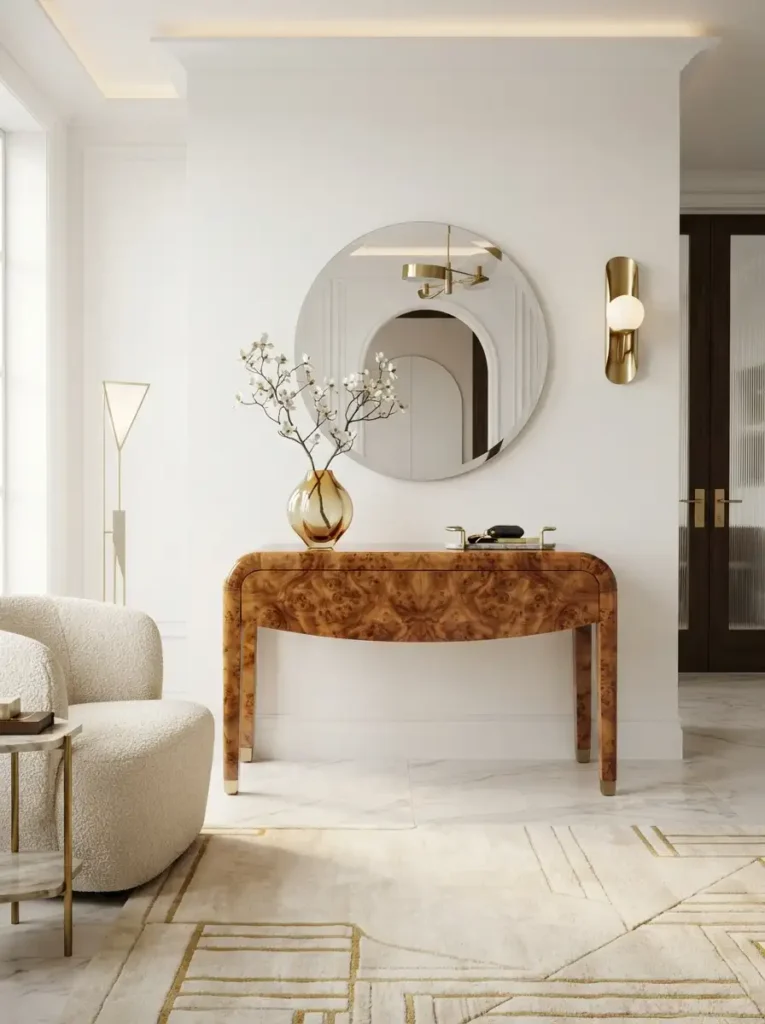
During the original Art Deco period, exotic, highly patterned woods were the ultimate symbol of wealth and worldliness. Today, burl wood has returned as the absolute darling of the high-end interior design world.
Burl wood is created from a specific, natural knot or growth on a tree, resulting in a mesmerizing, swirling, almost marble-like wood grain.
The Neo Deco approach:
Skip the mass-produced, flat-grain oaks and maples. Instead, invest in one incredible statement piece made of heavily lacquered burl wood.
- A massive burl wood dining table
- A sleek, geometric burl wood console table in the entryway
- Burl wood nightstands featuring warm brass hardware
The chaotic, organic swirl of the burl wood grain provides a brilliant contrast against the strict, geometric lines of the Neo Deco aesthetic, acting as a piece of natural art in the room.
3. Play with Bold, Geometric Silhouettes
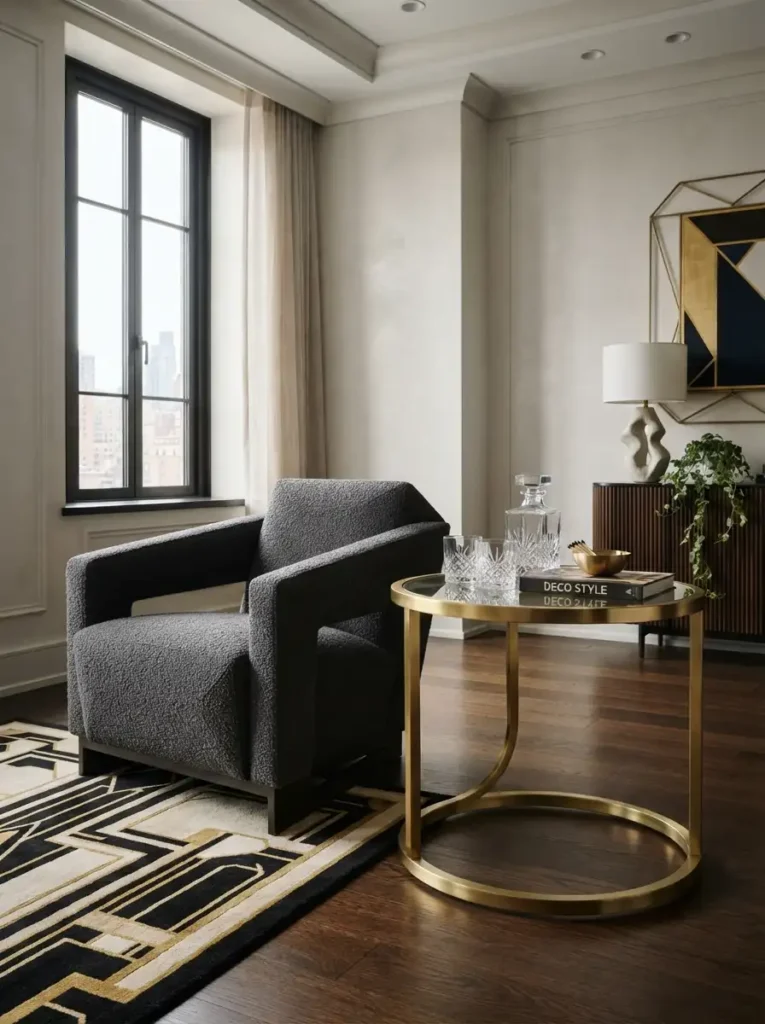
Neo Deco design thrives on the fascinating interplay between stark, rigid geometry and sweeping, sensuous curves. It is never just a room full of sharp right angles, nor is it a room full of formless, soft blobs.
The designer styling trick:
You must intentionally pair hard and soft shapes.
- Place a heavily curved, crescent-shaped velvet sofa directly across from two sharply angular, square club chairs.
- Use a perfectly round, oversized mirror above a stark, stepped, rectangular fireplace mantel.
- Choose a coffee table featuring a smooth, circular glass top resting on a sharp, zig-zagging brass base.
This intentional geometry creates a tailored, sartorial tension in the room. It feels incredibly deliberate and architectural, ensuring the space looks like it was designed by a professional.
4. Layer Deep, Saturated Jewel Tones
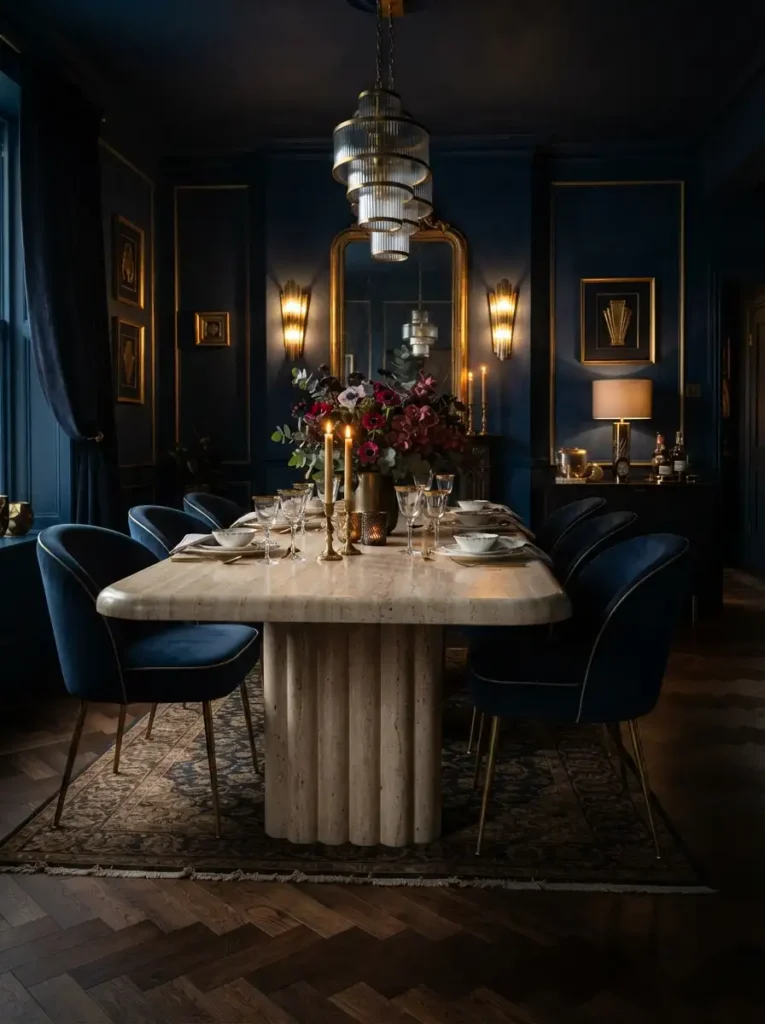
While traditional modernism relies almost entirely on white, beige, and gray, Neo Deco embraces color with open arms. However, the colors are never bright, neon, or primary. The Neo Deco palette is rooted in deep, moody, and highly saturated jewel tones.
Colors to build your palette around:
- Deep emerald and malachite green
- Rich sapphire and midnight navy
- Warm, muddy burgundy and oxblood
- Deep plum and aubergine
- Warm ochre and mustard
How to balance it:
To keep the room from feeling like a dark cave, balance these rich jewel tones with an abundance of warm, grounding neutrals. Pair a deep emerald velvet sofa with warm cream walls, or use a rich burgundy rug underneath a pale, monolithic travertine dining table. The contrast feels incredibly glamorous and cinematic.
5. Make a Statement with Dramatic, Sculptural Lighting
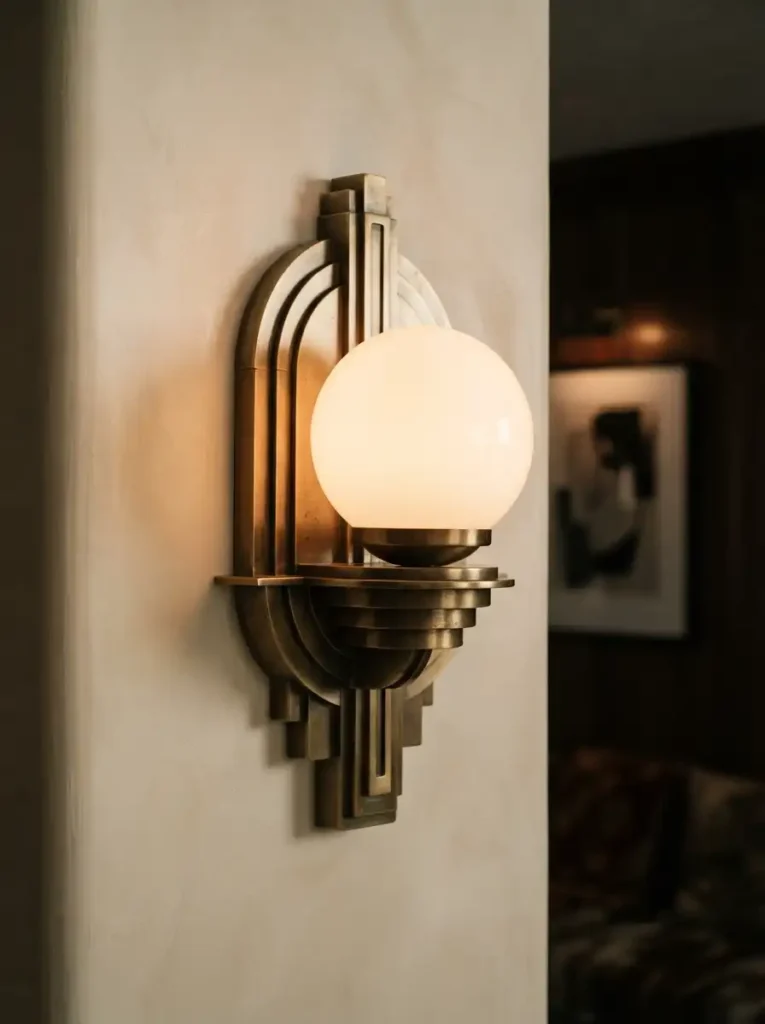
In Neo Deco design, lighting is never simply functional; it is the jewelry of the room. This aesthetic demands lighting fixtures that act as floating, glowing sculptures.
What to look for:
- Opal Glass Globes: Milky white glass globes suspended by heavy brass rods (a direct nod to 1930s Parisian streetlamps).
- Tiered and Stepped Silhouettes: Pendants that feature stacked, tiered geometric shapes, resembling the top of the Chrysler Building.
- Alabaster Sconces: Thick, heavy, illuminated stone that casts a warm, moody, and incredibly luxurious glow against the walls.
Ditch the recessed overhead “can” lights whenever possible. Neo Deco relies heavily on the glamorous, flattering ambient light provided by multiple dramatic sconces and sculptural floor lamps.
6. Focus on Luxurious, Highly Tactile Upholstery
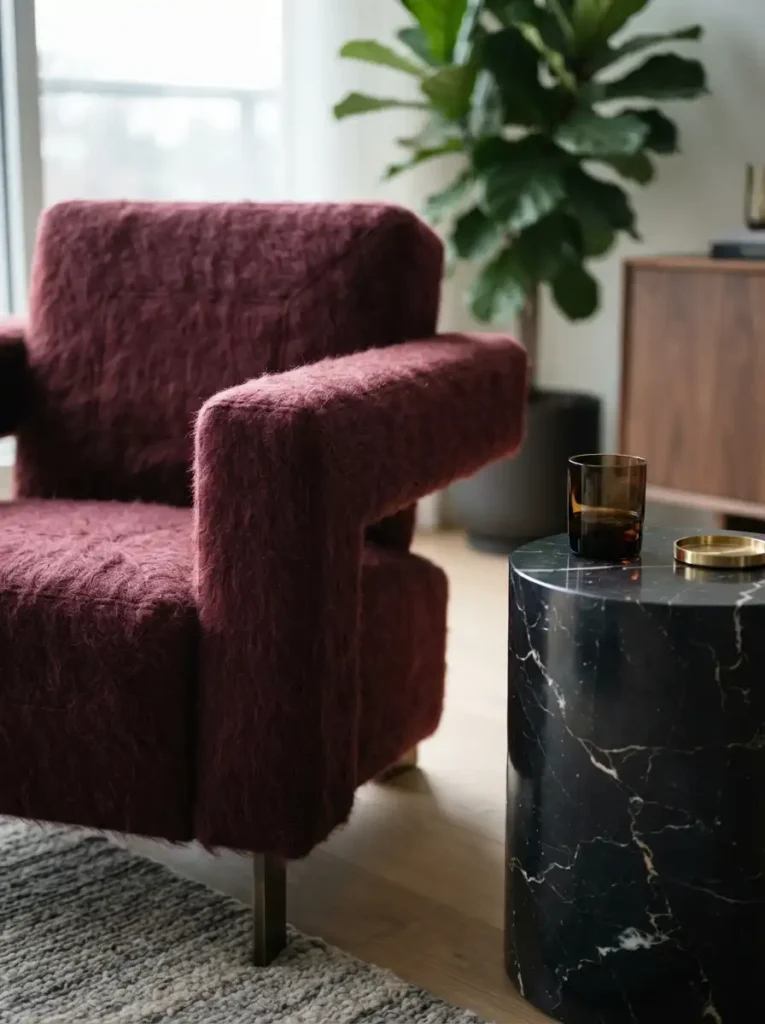
Because the structural lines of Neo Deco furniture are often quite rigid and geometric, you must soften the room through incredibly luxurious upholstery. The tactile experience of the room is just as important as the visual one.
The fabrics of choice:
- Silk Velvet: Nothing catches the light and casts a moody shadow quite like a heavy cotton or silk velvet.
- Mohair: The absolute pinnacle of high-end upholstery. Mohair is exceptionally durable, deeply textural, and has a subtle, expensive sheen.
- Bouclé (with structure): While bouclé is often associated with the “organic modern” look, applying it to a highly structured, geometric Deco chair gives it a fresh, elevated spin.
The heavy, plush nature of these fabrics creates a beautiful, necessary friction when placed next to the cold, hard surfaces of glass, marble, and brass.
7. Anchor Rooms with Heavily Veined, Dramatic Marble
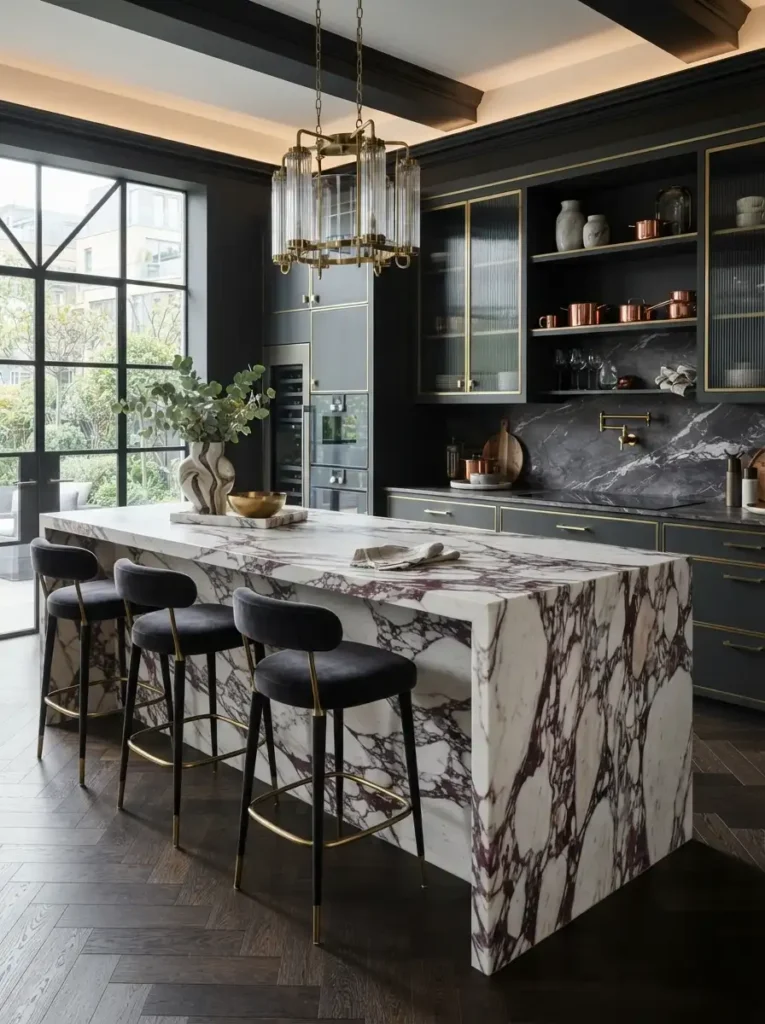
The days of subtle, quiet, barely-there Carrara marble are slowly fading into the background. Neo Deco champions stone that is bold, unapologetic, and highly dramatic.
Stones to incorporate:
- Calacatta Viola: A stunning marble featuring a creamy white background shattered by thick, dramatic veins of deep burgundy and cabernet.
- Nero Marquina: A stark, true-black marble with striking, lightning-bolt veins of bright white.
- Verde Alpi: A deep, mesmerizing emerald green marble.
How to use it:
Use these dramatic stones for a waterfall kitchen island, a heavily carved, stepped fireplace surround, or a solid, monolithic coffee table. Because the stone itself acts as a massive piece of abstract art, you can keep the rest of the room’s decor relatively minimal.
8. Introduce High-Gloss and Lacquered Finishes
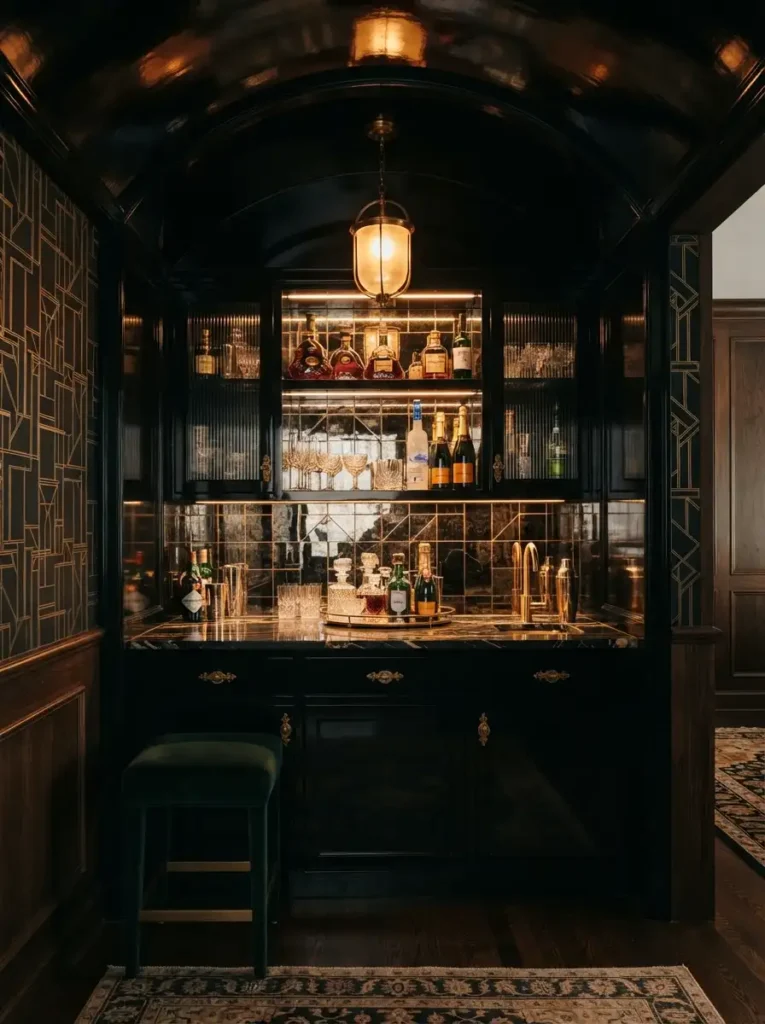
The 1930s were obsessed with the future, speed, and sleekness, which translated into a love for highly reflective, mirrored, and lacquered surfaces. Neo Deco brings this back in a very chic, modern way.
The modern application:
Instead of a room full of mirrored furniture (which can quickly look like a cheap 1980s nightclub), use lacquer intentionally to bounce light around the room and create depth.
- Paint your dining room ceiling in a high-gloss, reflective finish to make the room feel infinitely taller.
- Use heavily lacquered, high-shine cabinets in a moody butler’s pantry or wet bar.
- Invest in a sleek, black lacquered console table to act as a dramatic anchor in a bright, neutral hallway.
The glossy finish adds a layer of undeniable, dripping glamour that matte paint simply cannot achieve.
9. Warm the Space with Heavy, Living Brass
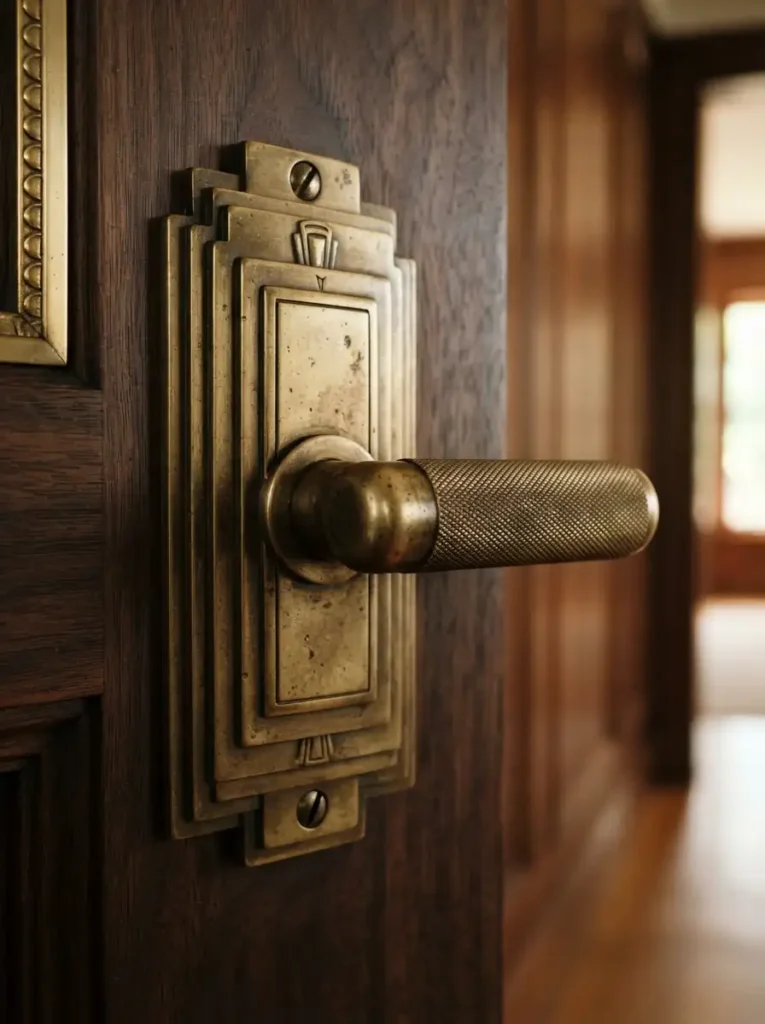
Chrome and stainless steel had their moment in the ultra-minimalist era, but Neo Deco requires metals that possess warmth, weight, and history.
The metal to choose:
Focus heavily on unlacquered brass, burnished bronze, and antique gold. You want metals that look substantial and heavy, as though they were forged in a foundry, rather than thin, cheap, and mass-produced.
The designer detail:
Look for hardware, lighting fixtures, and furniture legs that feature knurled details (a diamond-patterned texture etched into the metal) or stepped geometric bases. The warmth of the brass perfectly complements the rich jewel tones and heavily veined marbles of the Neo Deco palette.
10. Embrace the Elegance of Symmetry
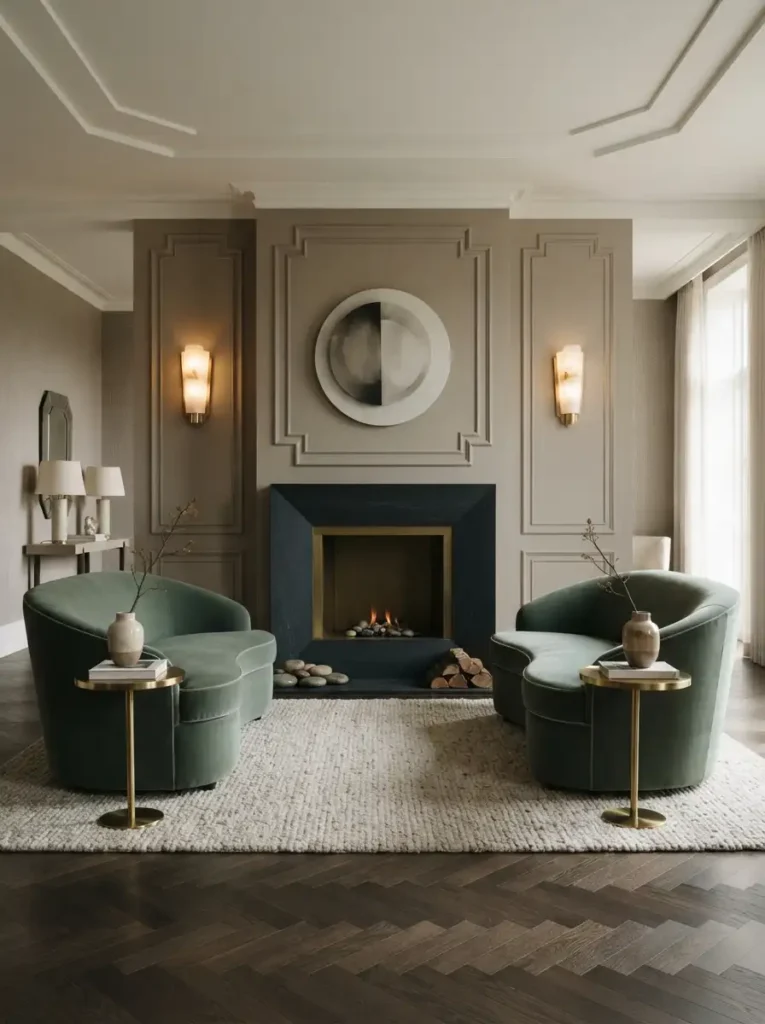
Modern design often favors asymmetrical, relaxed, and “perfectly imperfect” layouts. Neo Deco, however, finds beauty and profound luxury in strict, tailored symmetry.
Symmetry inherently tricks the human brain into feeling calm; it implies order, intentionality, and formality.
How to design symmetrically:
- Flank a dramatic fireplace with two perfectly identical velvet lounge chairs and two matching alabaster sconces.
- Use matching, oversized burl wood nightstands on either side of the bed, topped with identical, sculptural table lamps.
- Center a massive, dramatic art piece perfectly over a perfectly centered sofa.
This tailored, rigid layout makes a living room feel less like a casual family den and much more like a high-end, exclusive members-only club.
11. Incorporate Stepped and Ziggurat Architectural Details
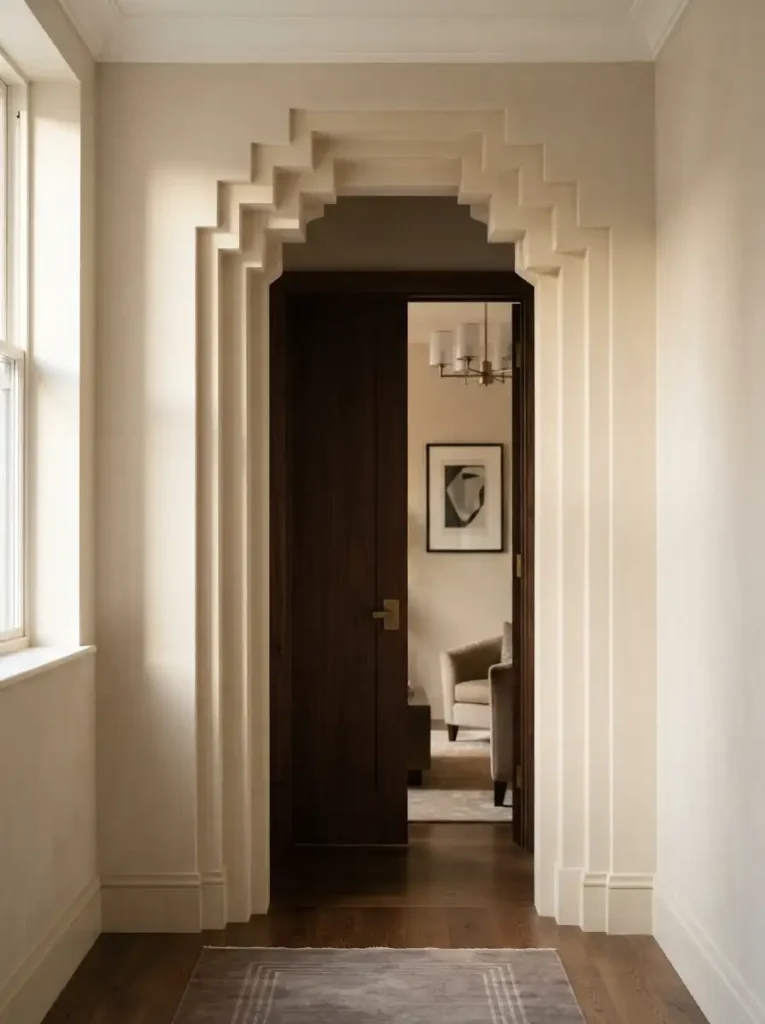
The ziggurat—a terraced, stepped pyramid shape—is perhaps the most recognizable architectural motif of the Art Deco era. In Neo Deco, this shape is used subtly to add historical weight to modern spaces.
Subtle applications:
- Look for interior doors or cabinet fronts that feature a stepped, recessed panel profile rather than a standard shaker style.
- Choose crown molding or baseboards with a tiered, stepped design.
- Select mirrors or picture frames that step inward toward the glass, creating a sense of deep, architectural perspective.
These small, stepped details add a layer of highly bespoke craftsmanship to the room, proving that true luxury lies in the architectural details.
12. Use Geometric, Hard-Edged Flooring and Rugs
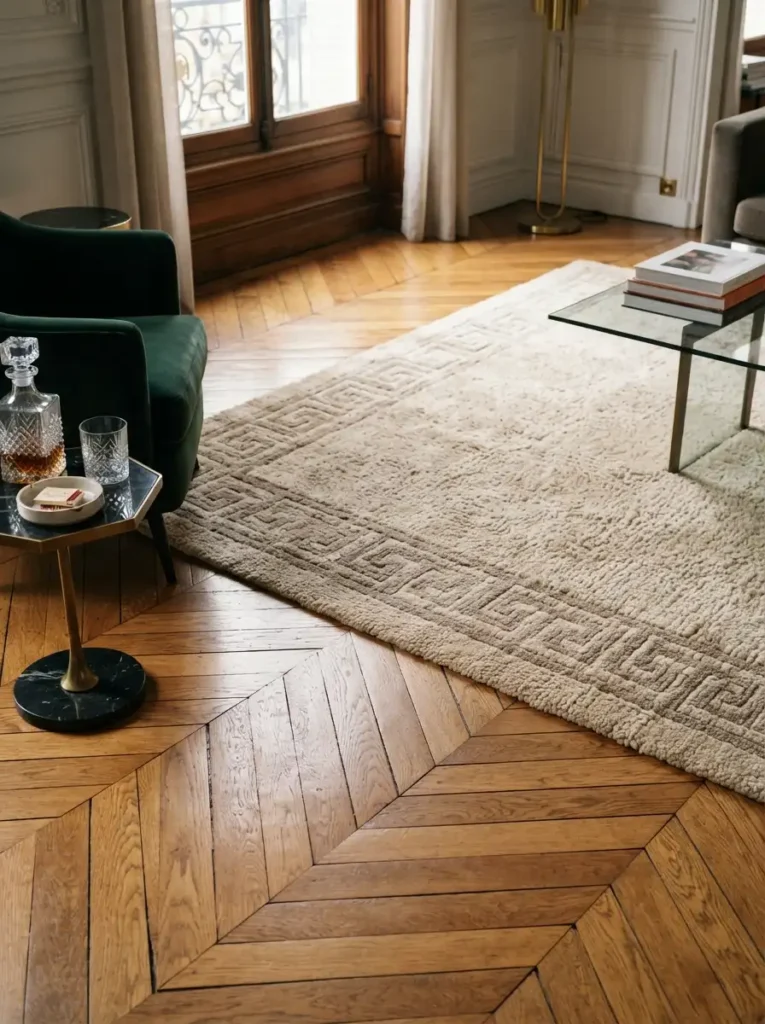
While the upholstery in a Neo Deco room should be soft and sweeping, the floors should provide a rigid, geometric foundation.
The high-end flooring approach:
If you are renovating, consider laying your hardwood floors in a classic Chevron or complex Versailles parquet pattern. The sharp, zig-zagging lines of Chevron flooring are deeply rooted in Parisian Deco design.
The rug solution:
If changing the floors is out of the question, use your area rugs to introduce geometry. Look for thick, hand-knotted wool or silk rugs featuring subtle, tonal geometric borders, repeating arches, or Greek key motifs. Avoid overly distressed, bohemian, or floral rugs, as they will completely clash with the tailored Neo Deco aesthetic.
13. Curate Cinematic, Large-Scale Mirrors
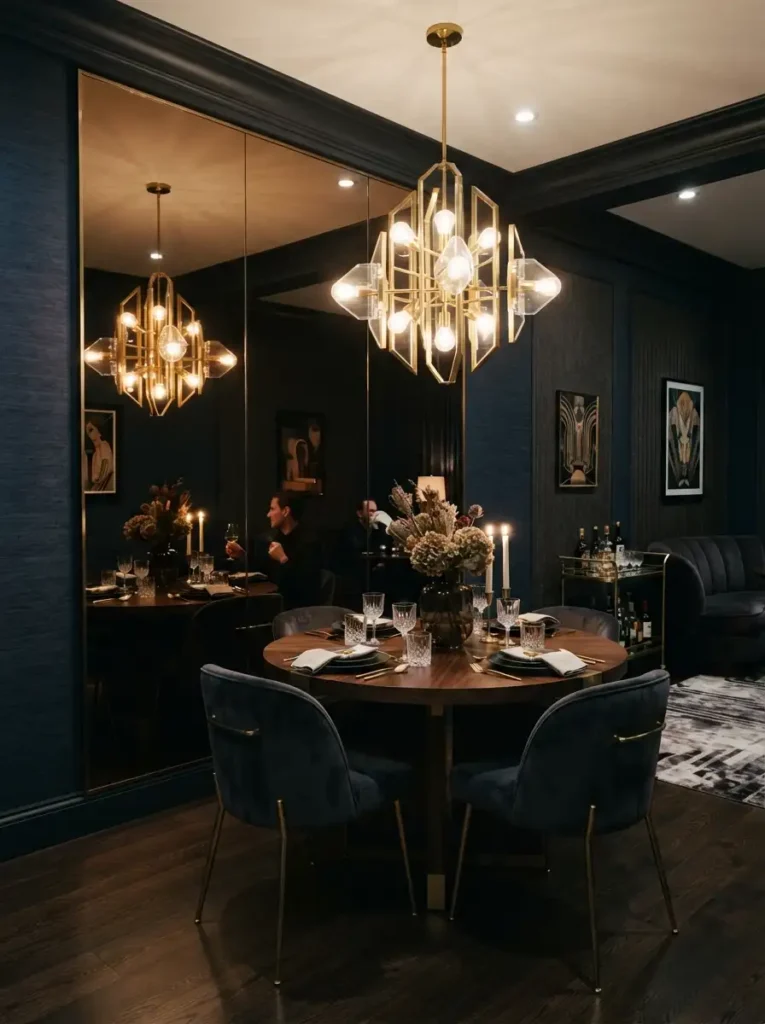
Mirrors in a Neo Deco home are not just for checking your reflection; they are crucial architectural tools used to expand the space and multiply the glamour of the room.
The Neo Deco mirror:
Skip the rustic, chunky wooden frames. Instead, seek out massive, large-scale mirrors with sleek, frameless edges or thin, heavy brass borders.
The vintage touch:
For a truly authentic, moody Neo Deco feel, look for mirrors featuring antiqued, foxed, or bronze-tinted glass. A bronze-tinted mirror wall in a dining room or behind a home bar creates an incredibly cinematic, smoky, and glamorous atmosphere, reflecting the flickering candlelight and the warm brass fixtures beautifully.
14. Style with Glamorous, Bar-Centric Entertaining Spaces
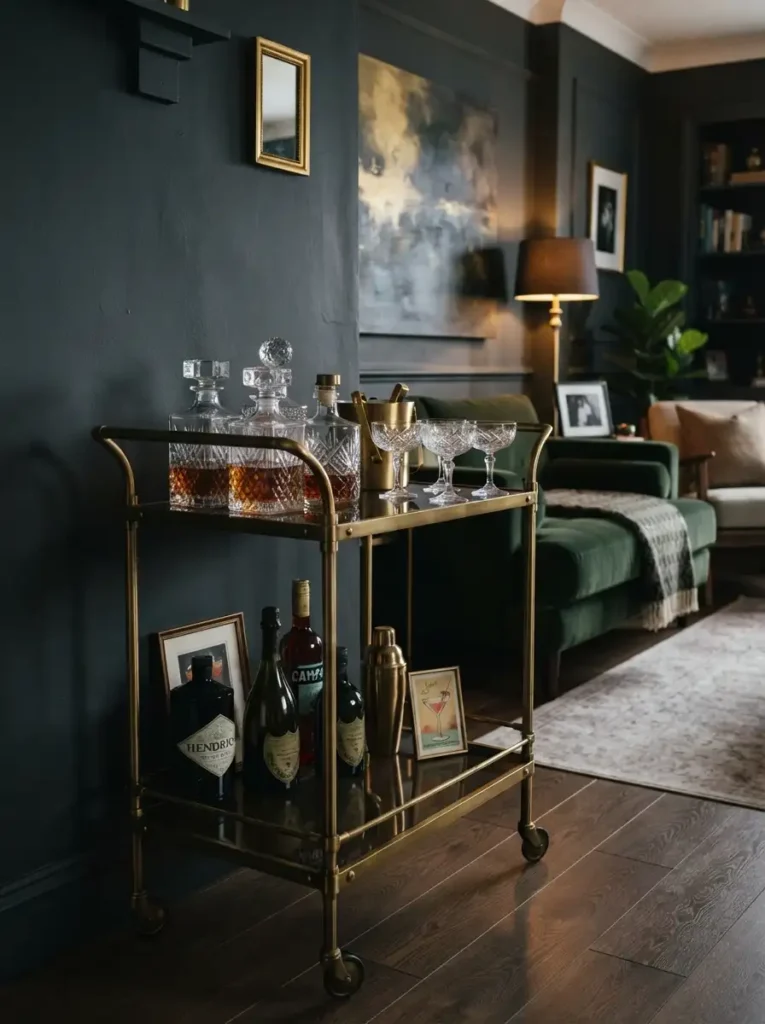
The 1920s and 30s birthed the modern cocktail culture. Entertaining at home became an art form, and the architecture of the home shifted to accommodate the glamour of the evening cocktail hour. A true Neo Deco home must lean into this culture of hospitality.
How to create the vibe:
You do not need a massive, dedicated bar room to achieve this.
- Invest in a stunning, tiered brass and smoked-glass bar cart.
- Convert a small hallway closet or an awkward living room alcove into a bespoke, jewel-box wet bar, complete with dramatic marble counters, reeded glass cabinets, and a high-gloss painted ceiling.
- Display your liquor in heavy, cut-crystal decanters on a vintage mirrored tray.
By dedicating a specific space in your home to the art of making a drink, you instantly inject the space with a sense of celebration, sophistication, and old-world hospitality.
Why Neo Deco is Trending Right Now
The world of interior design is heavily influenced by cultural moods and economic shifts. For the last ten years, the prevailing trend has been “minimalism”—stripping everything back to bare white walls, simple linen sofas, and a distinct lack of ornamentation. It was a reaction to the clutter of the early 2000s, meant to make our homes feel like clean, Zen-like sanctuaries.
However, after years of looking at ultra-minimalist, completely beige boxes, people are incredibly bored. We are craving personality, romance, and a sense of occasion.
Neo Deco is surging in popularity because it delivers:
- Maximalism-Lite: It offers the richness, color, and luxury of maximalism, but uses strict geometry and symmetry to keep the room feeling clean and organized.
- A Craving for Glamour: As we spend more time at home, we want our spaces to feel special. We want the romance of a boutique hotel and the cinematic moodiness of a high-end restaurant right in our own living rooms.
- Investment in Craftsmanship: Consumers are tired of fast, disposable furniture. Neo Deco relies on high-quality, heavy materials (burl wood, solid brass, real marble) that are built to outlast trends and be passed down as heirlooms.
- Nostalgic Escapism: The aesthetic offers a beautiful, romanticized escape to a bygone era of jazz, tailored suits, and exquisite architecture, providing a visual sanctuary from the hyper-digital modern world.
The Elegant Takeaway
Neo Deco interior design proves that a home can be incredibly glamorous and luxurious without ever crossing the line into gaudy or themed territory.
By brilliantly marrying the unmatched craftsmanship, opulent materials, and bold geometric silhouettes of the 1930s with the clean, uncluttered restraint of modern design, you can create a space that feels deeply bespoke. It is an aesthetic that asks you to dress up for dinner, to light the taper candles on a Tuesday, and to celebrate the art of beautiful living.